# please view on iPad or larger screen
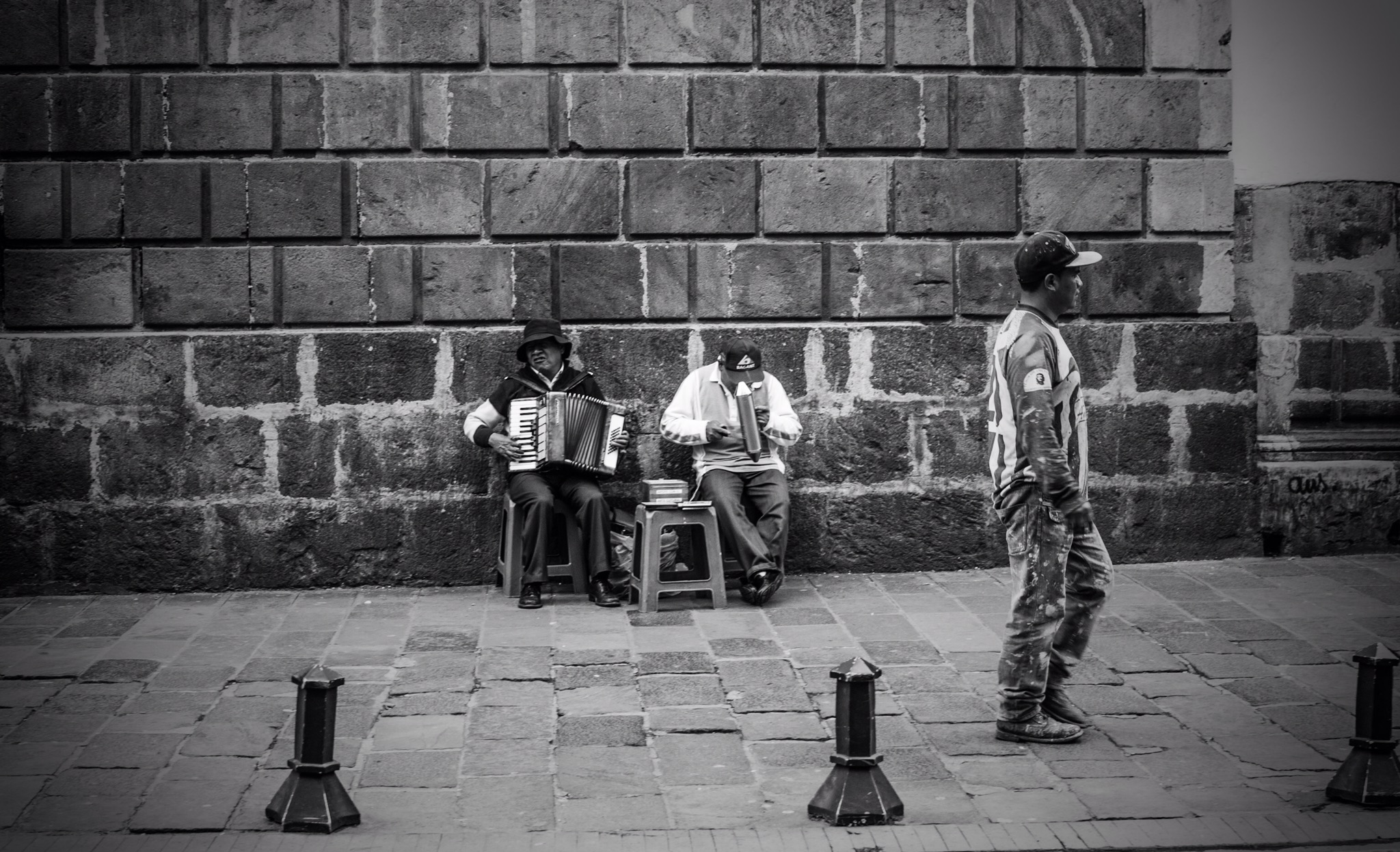
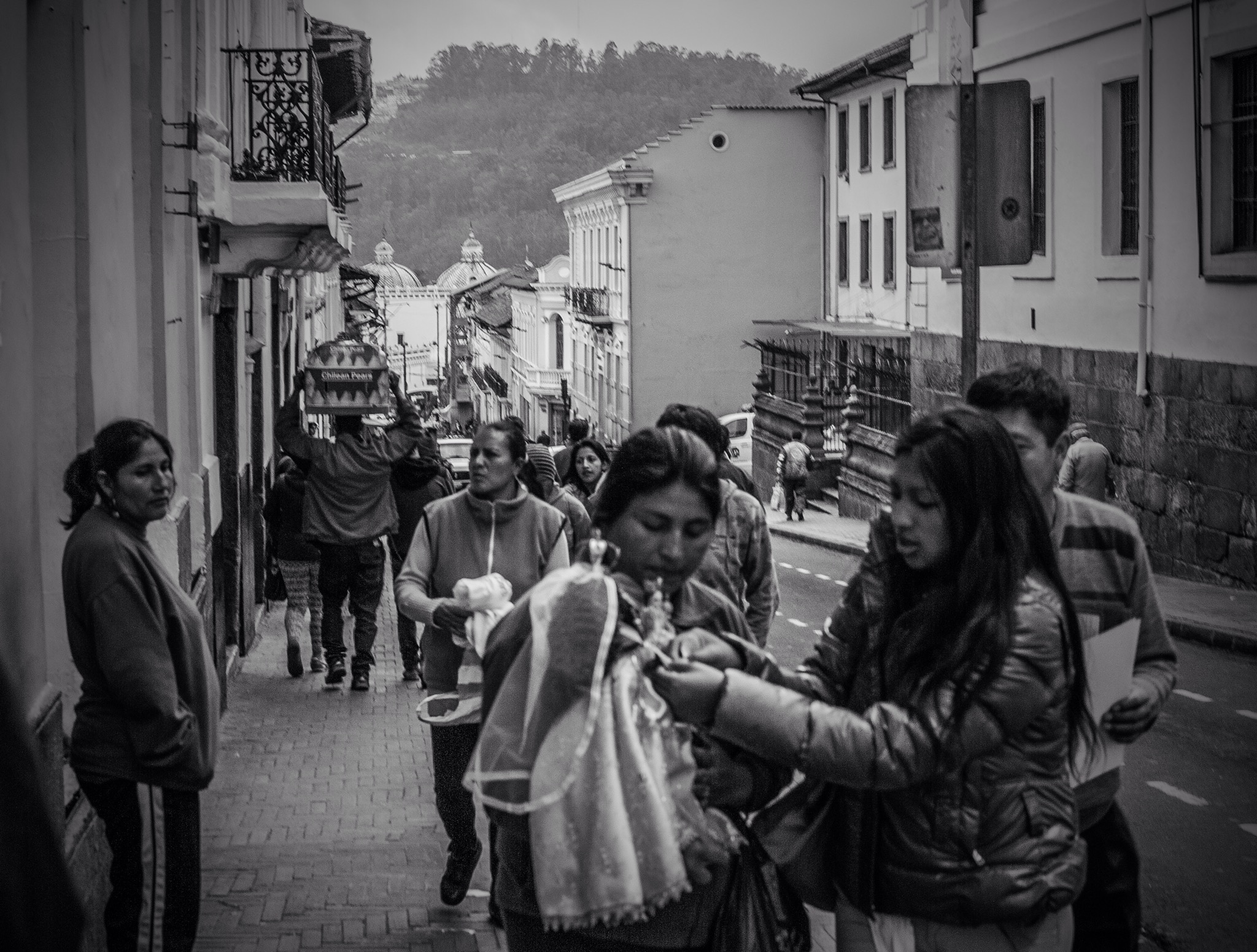
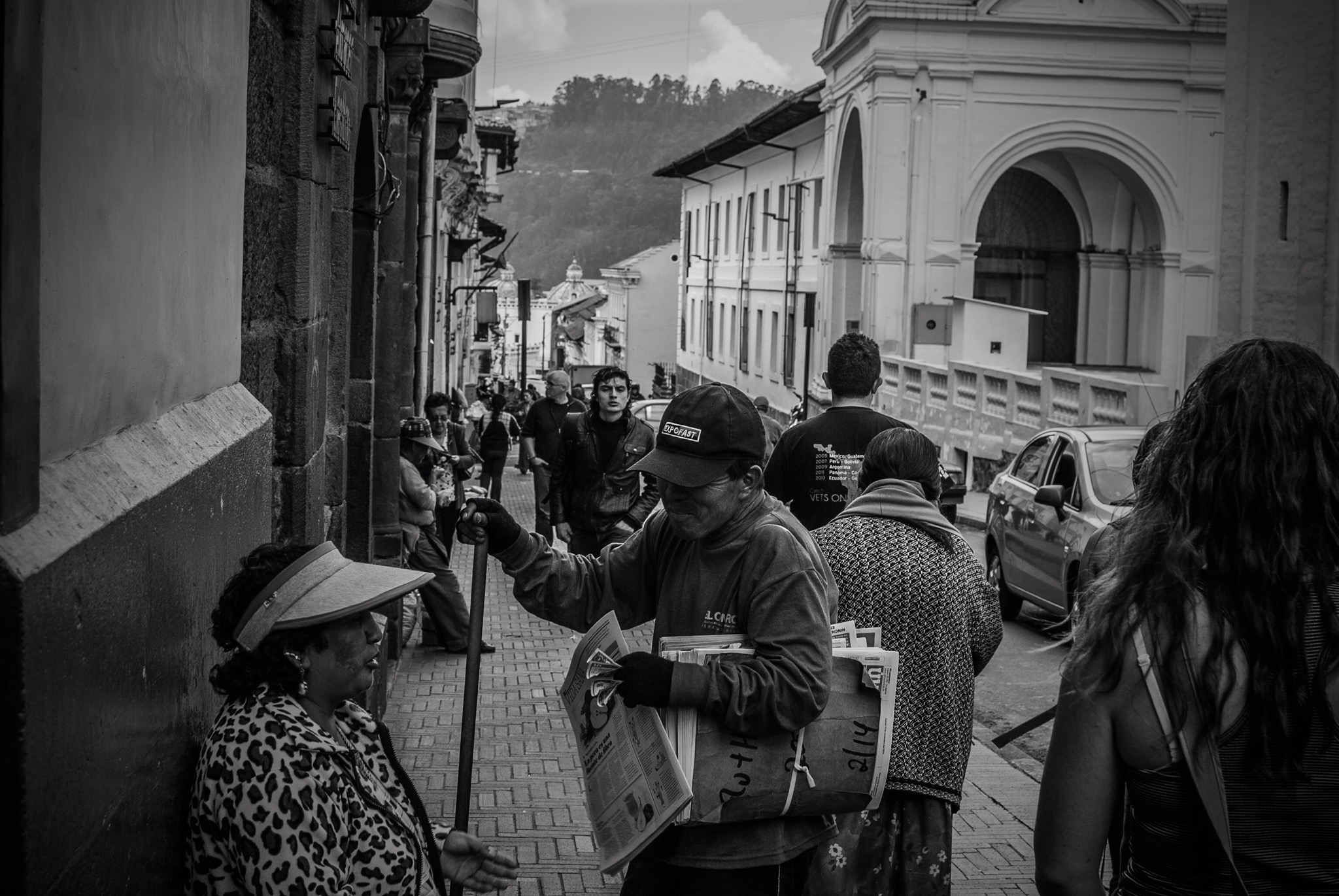
Quitoans

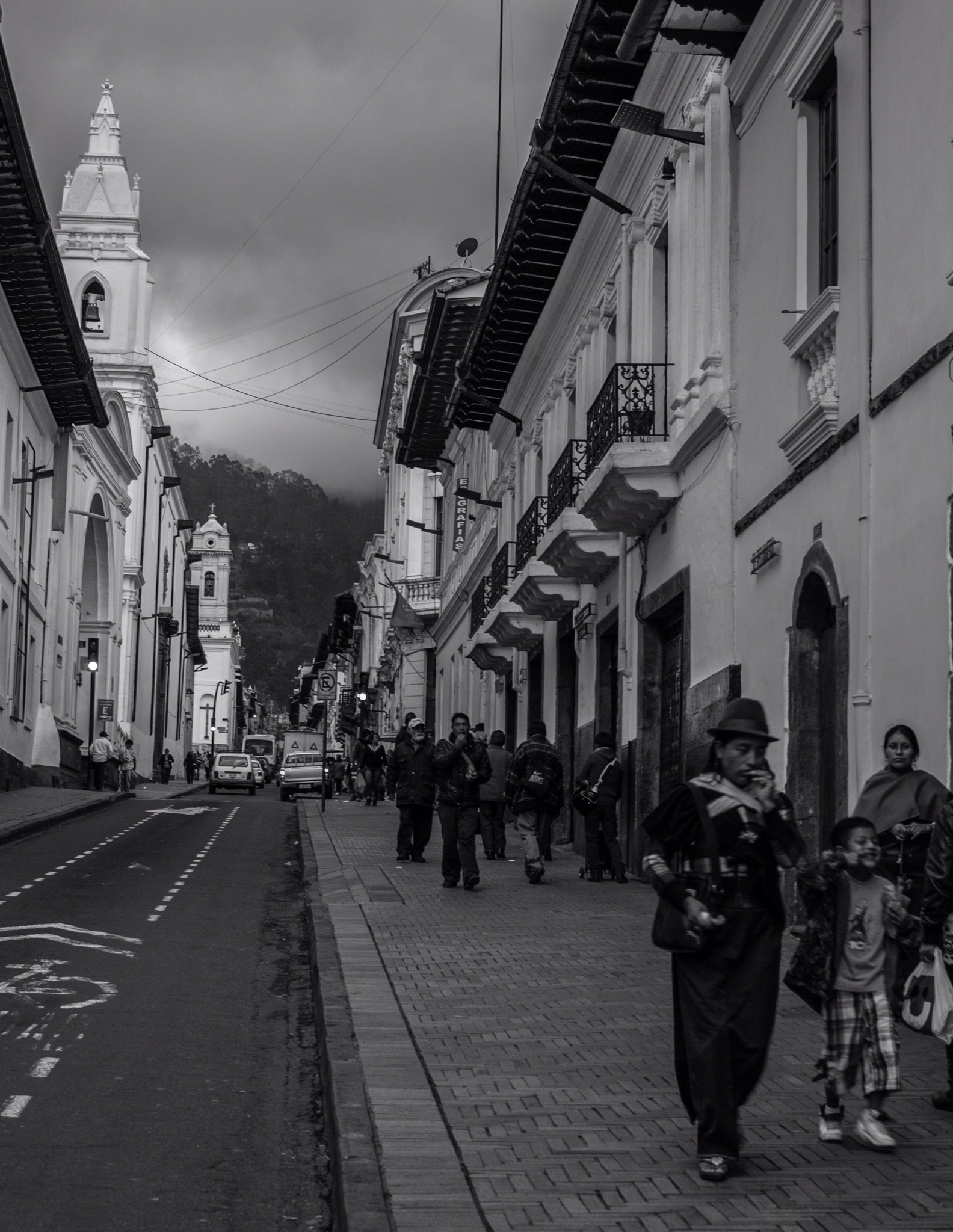
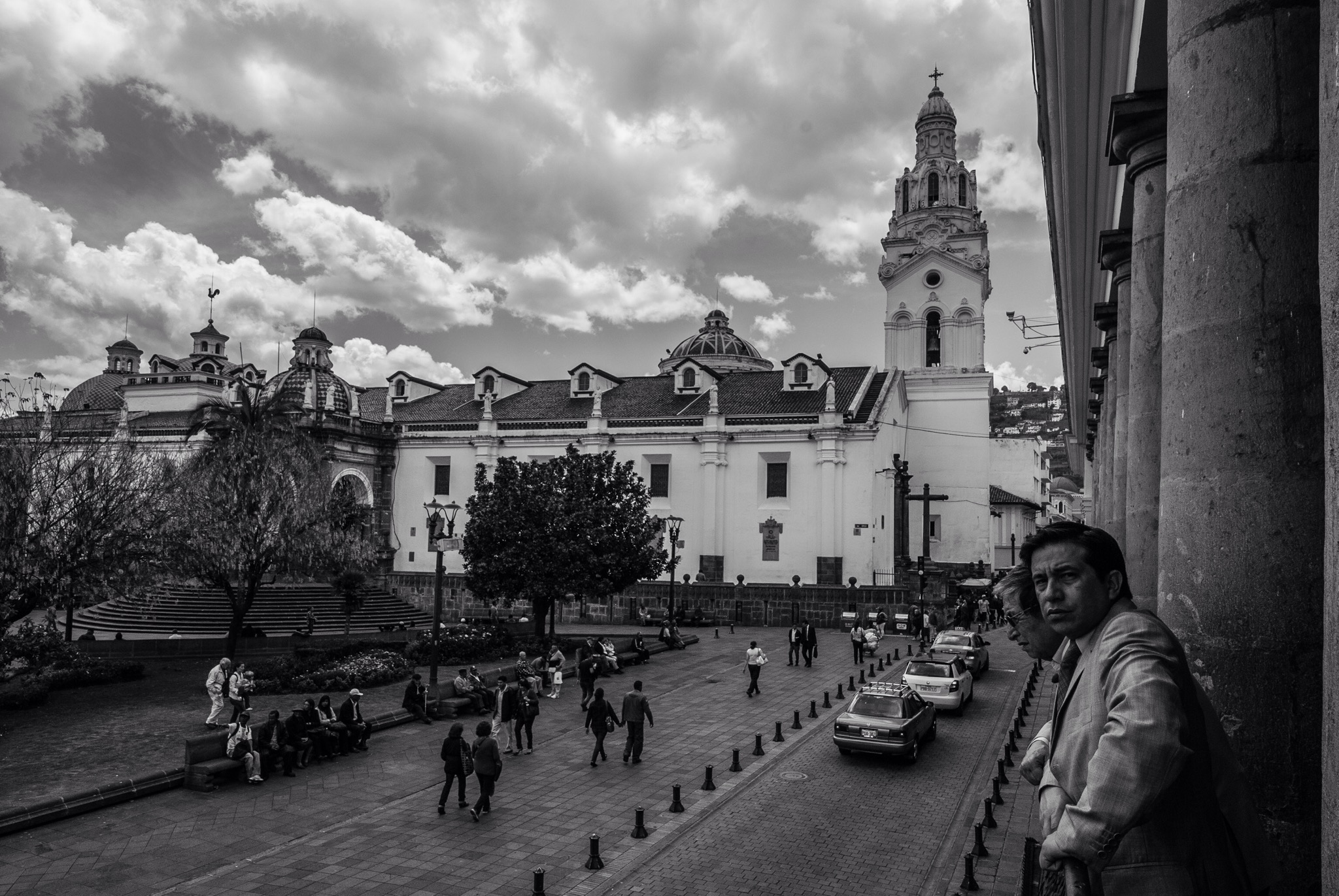
Quito Basilica


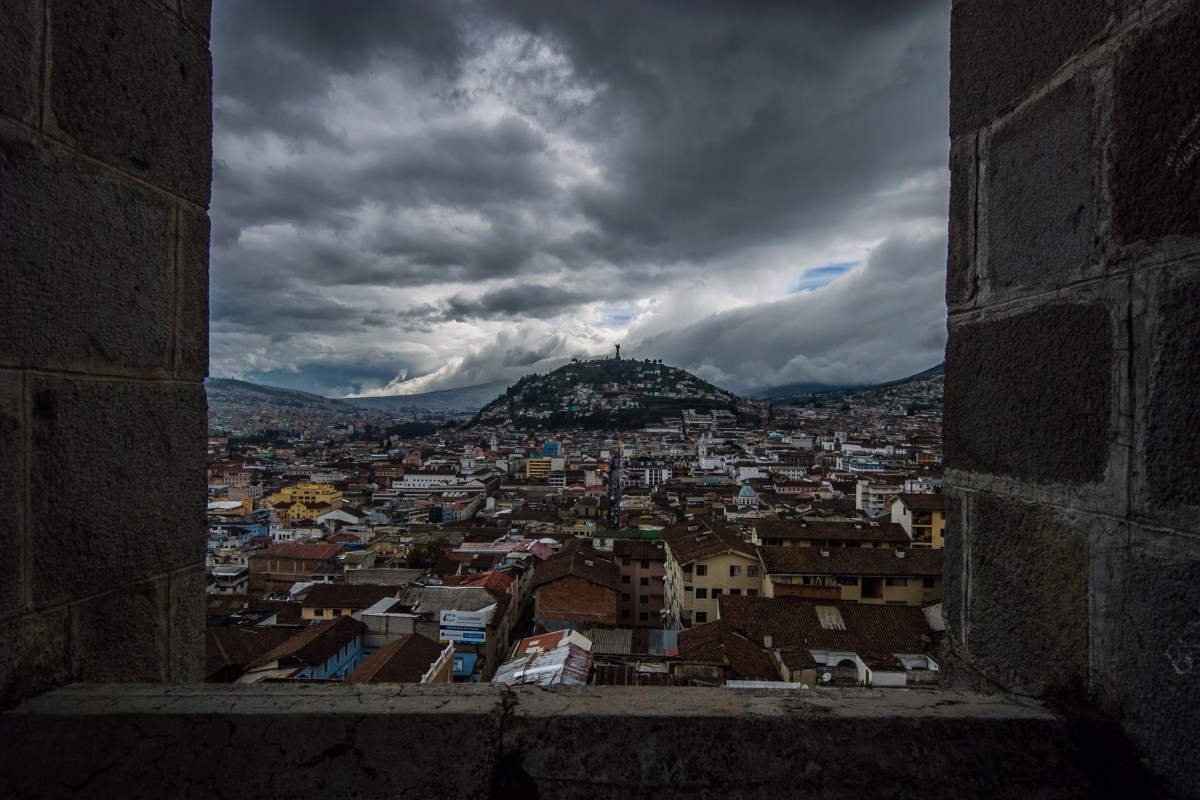
Tourists in Quito
# please view on iPad or larger screen
Quitoans
Quito Basilica
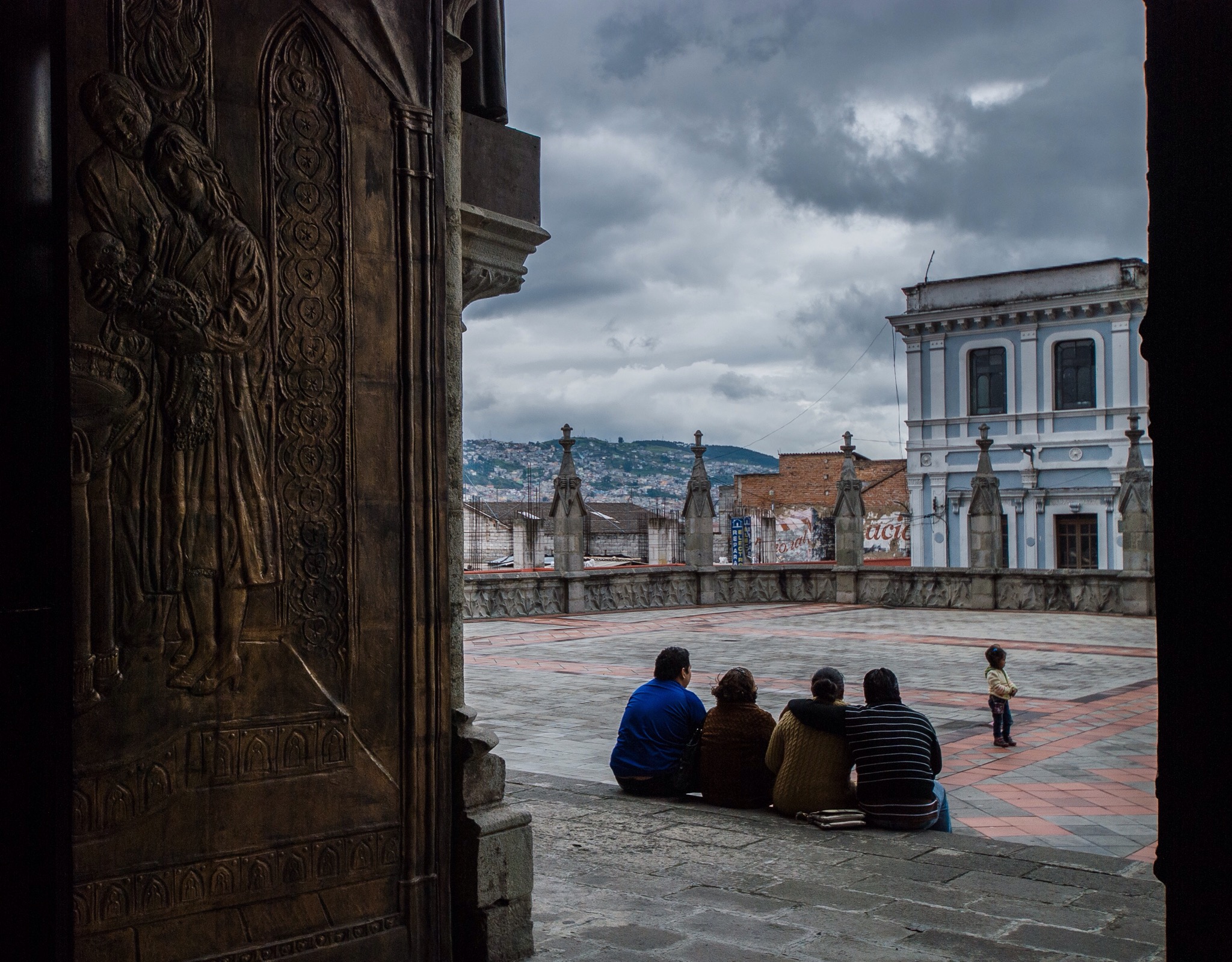
Tourists in Quito
When entering a new place, a new town, a new city: it’s impossible not to carry in some expectations. We read in guidebooks and hear from other travellers an array of influencing information. So what does that mean when the bus stops? Of course it means that we embark on a game of ‘shape up or we’ll ship out’, often a game played involuntarily by unwitting contestants. As we enter Quito we are still metaphorically scrubbing ourselves of the remaining stench of Bogota. Ok that’s a little unfair but Bogota did nothing but reinforce a prejudice we have built over many years that cities are best left to people that aren’t us.
At this stage it’s very exciting to declare that Quito not only lives up to the guidebook blah blah, it’s taken a chink out of the anti-metropolitan armour we so unashamedly wear. I guess this is the bit where I wax on about the romance, beauty and culture that Quito offers? I want to, I really do, any excuse for a bit of linguistic masturbation, but I’ll refrain. What’s more than more is that unspoken breakdown of scepticism, the scraping of the barnacles from the hull of our ideals.
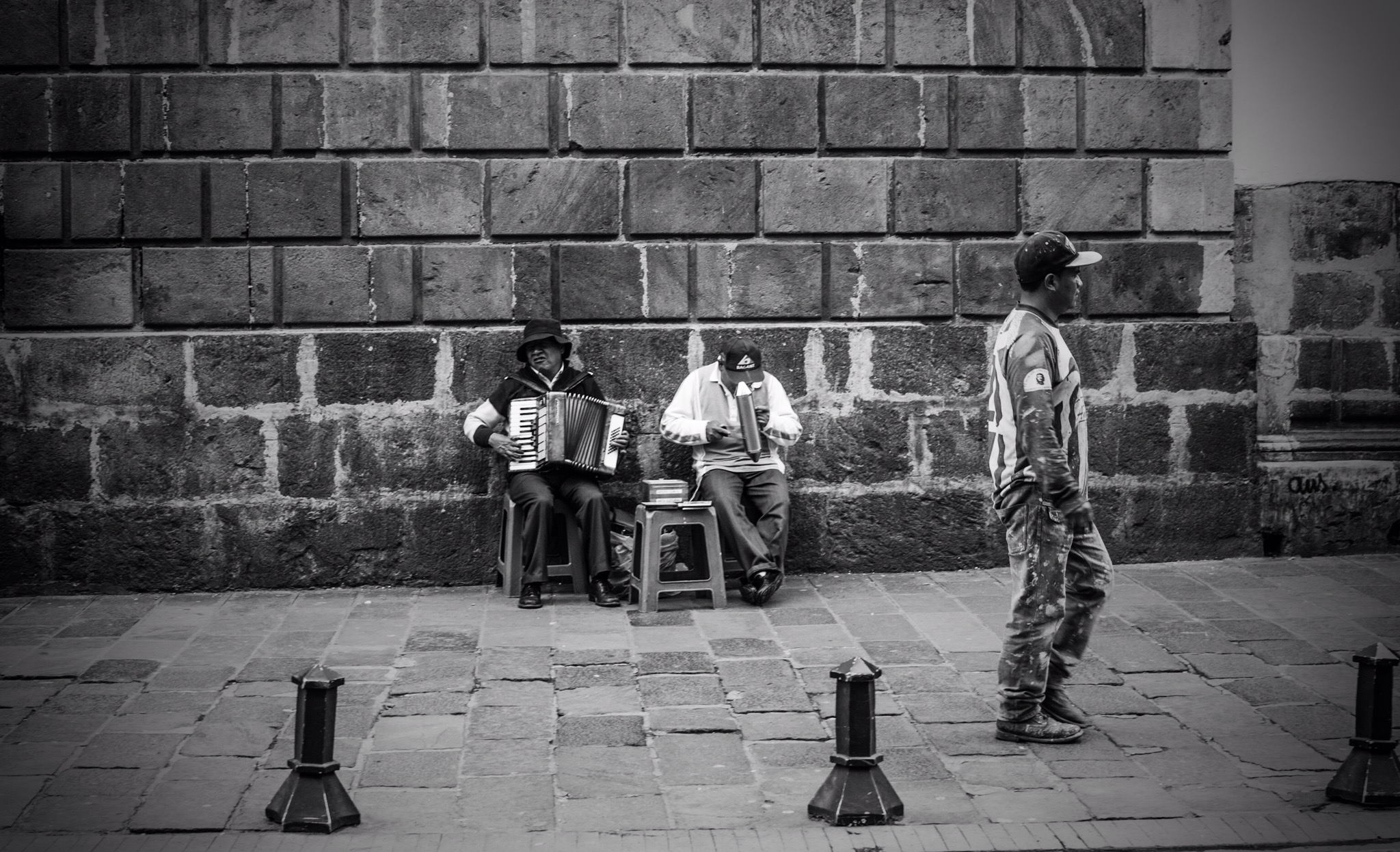
For us it’s a groundbreaker, it’s an old chook with plenty of new tricks and it’s not shy to show them. It’s in this respect that Quito is so particularly exciting. Capital cities are meant to represent the people of their nation, and Quito has that little element that has been lingering just around the corner for us this whole time in Ecuador. An elusive trend filling our time here has been the extremely understated way in which Ecuador has a touch on the pulse of style while proudly brandishing its history and culture to the fore. Whereas many cultures seem to struggle blending the old and the new, an ugly bridge connecting two beautiful shores, Quito embodies all that is so elegant about how Ecuador seems to tackle the bumpy road of modernisation. The ugly bridge made beautiful.
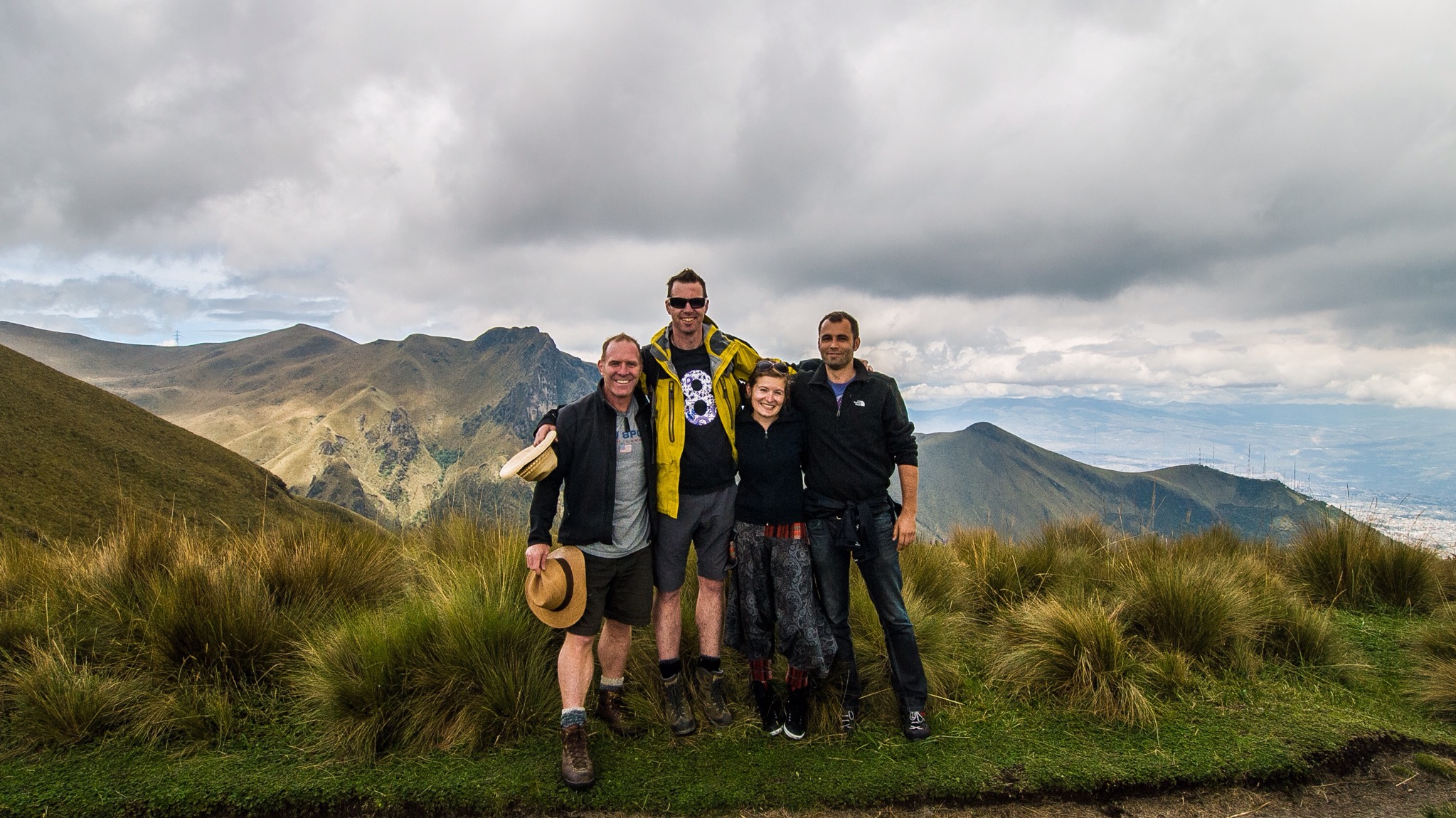
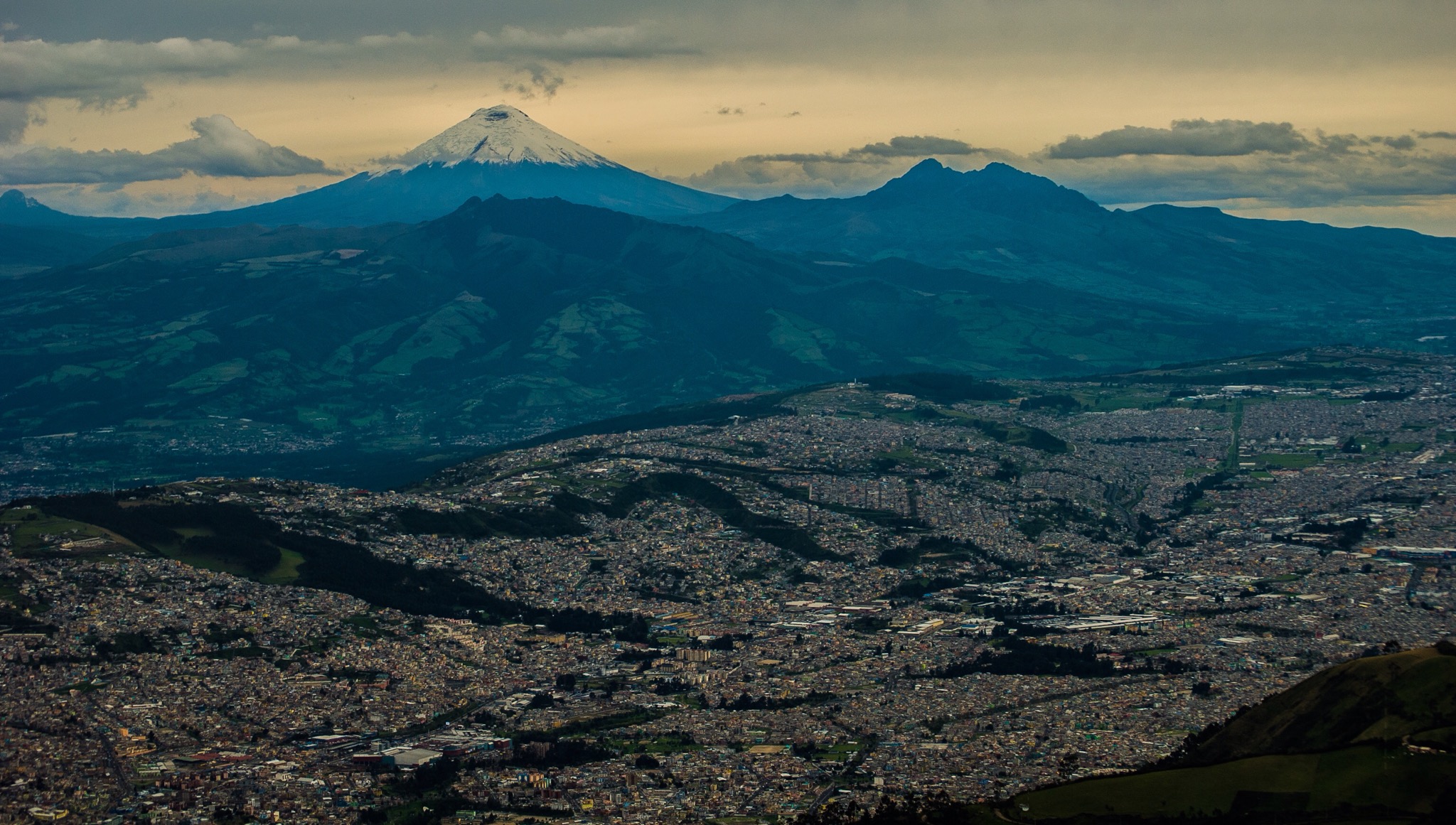
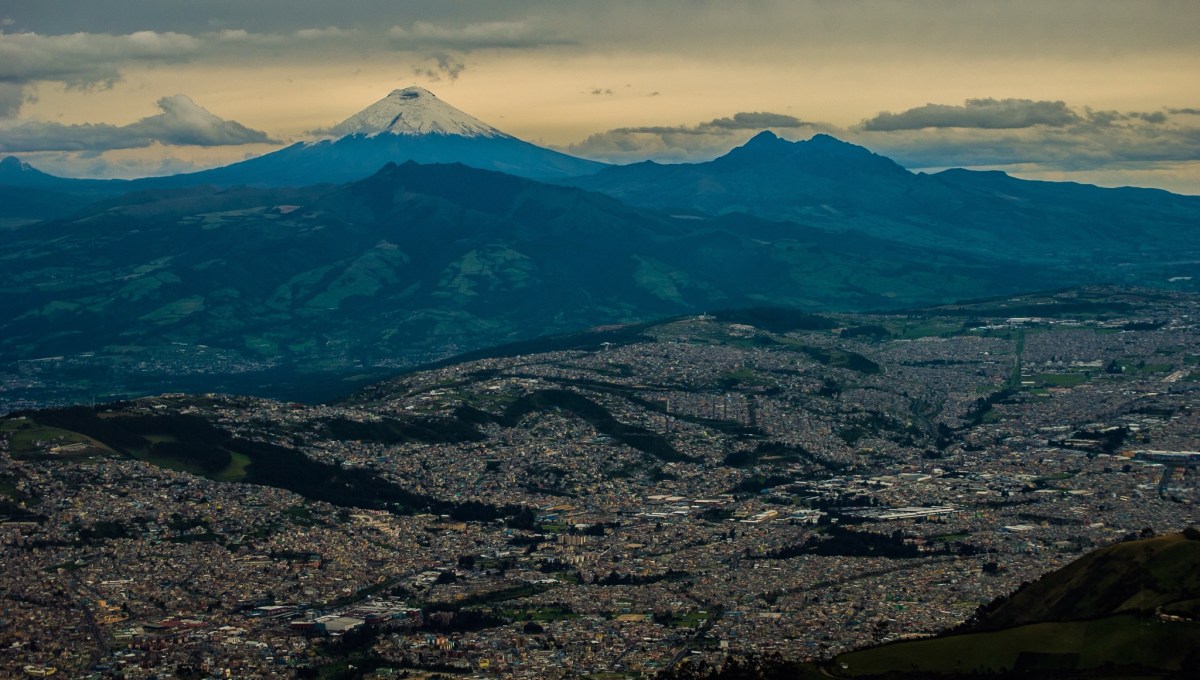
With a great short hike on the high hills that enclose the space that Ecuador spills out of, we get a grand picture of this very big town that is really a small town gotten large. Where so many places, not just cities, become a different beast as they grow, Quito is Quito, proudly cuddling its warm culture while sending its bolder side out to flourish. This is no more evident than in La Mariscal, the ‘New Town’ as it were. Here a hive of bars and clubs astutely bypasses the too-common forest of polished chrome and pine veneer to embrace a stylish, trendy balance of hipster, suave and swagger more in the sights of the likes of New York, London and indeed Sydney. With seemingly effortless ease, Quito astutely nails what many other cities awkwardly struggle to capture.
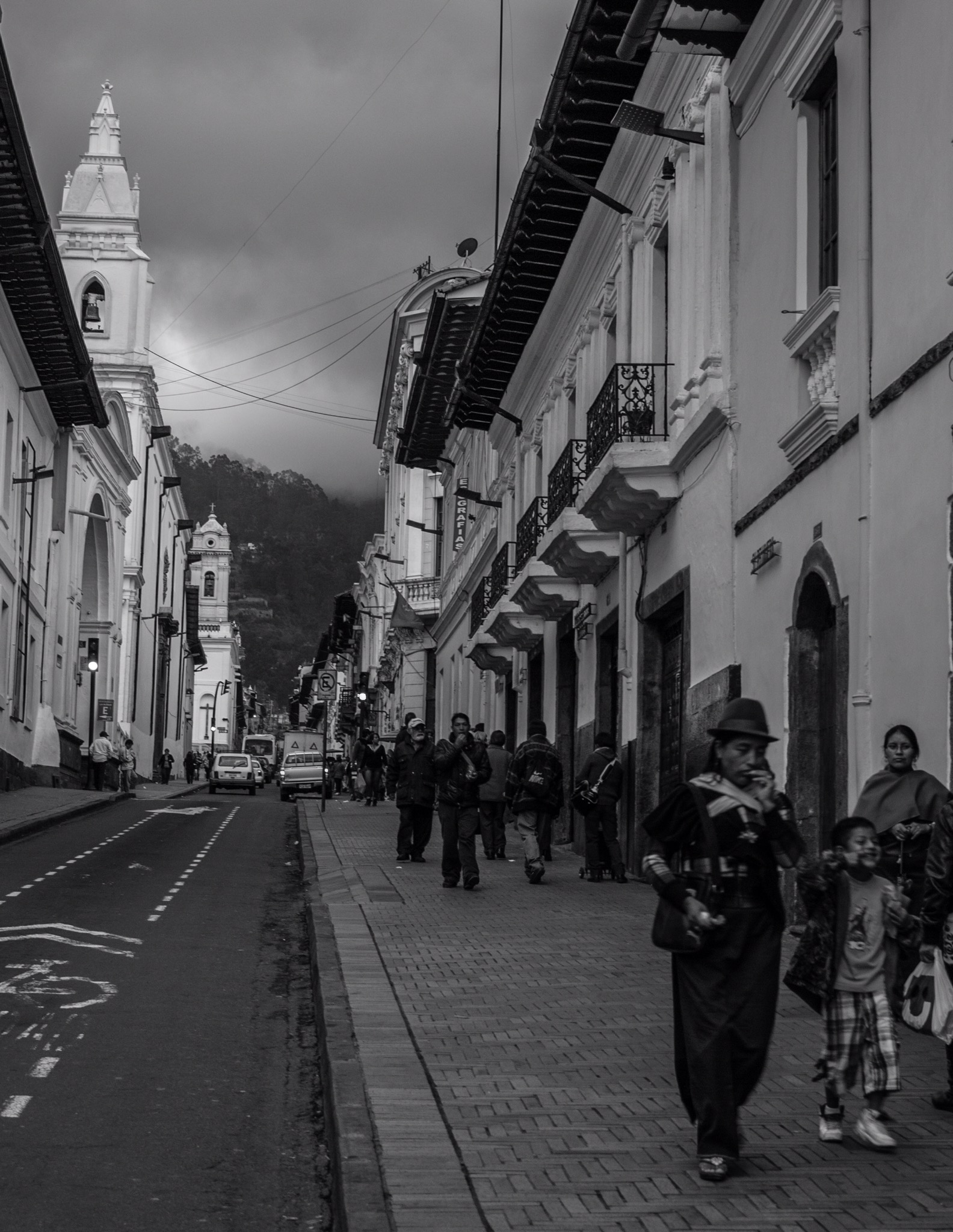
When it comes to not only embodying it’s populous but leading it, Quito is a leader of some renown. Quito seems to embrace the economic surge that is gripping this continent while elegantly rejecting the tacky western pre-packaged baggage that often accompanies such an influx of money. It’s visiting the supermarket it could never afford and leaves with a trolley empty of over marketed packets of marginal nutritional value.
Yes Quito, whatever you’re doing, keep doing it. Here’s to you remaining the champion of your people, the people that make you a champion.

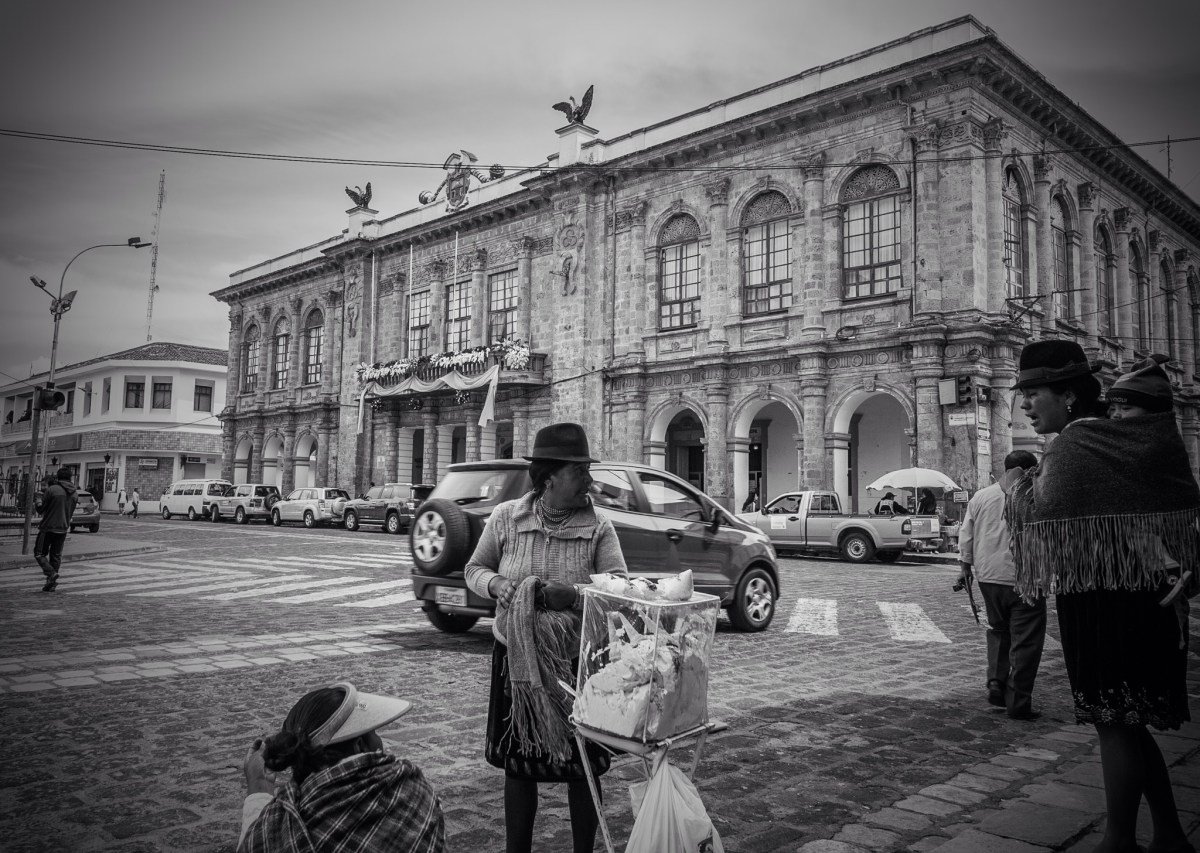
We arise to our second day in Quito, already impressed by the grandeur of the architecture and landscape, it’s time to have a look around. We take in a free walking tour to have a poke around, further reinforcing the impression that Quito is a city of notable romance. While the walking tour was fun, the highlight is the central market and having the best market food we’ve had since Oaxaca Mexico. We gulp down some delicious coconut and fruit juices for a buck each before sitting down to the serious food. We ordered our food doing the usual travelling thing, look around and try match up what you’re ordering with the goodies you see around: at this market there seems to be two dishes, so we go for one each. What comes out is nothing short of food-gasm. A tuna soup is rich, hot and delicious but the star of the show is the fried fish with prawn ceviche salsa. The fish has a light crunch and utterly falls apart inside, what a find, Quito just keeps delivering.

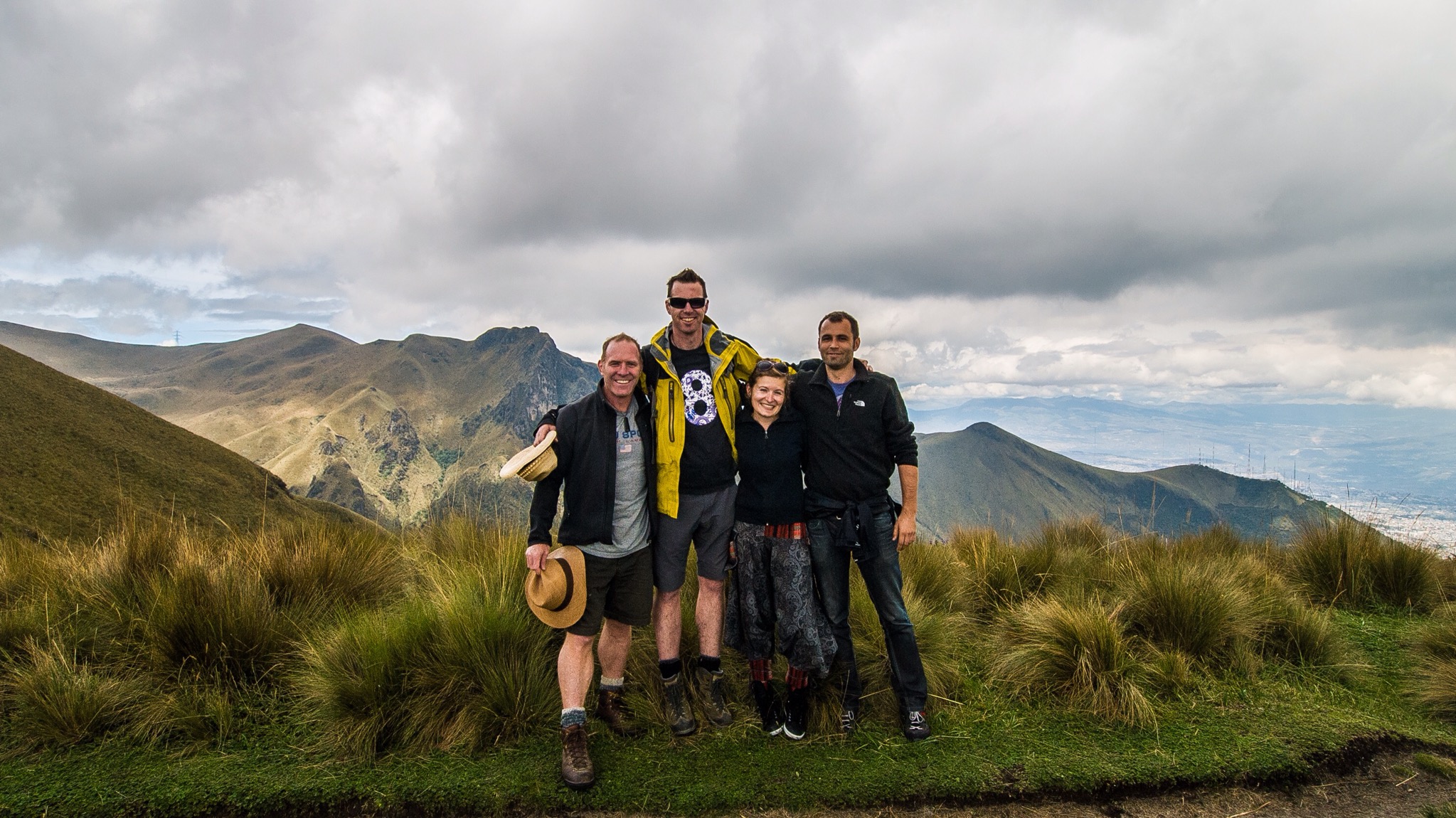
At this point we link up with a crazy polish couple, Ola and Piotr along with a few Americans to do a bit of a sightseeing trip. First port of call is the Virgin of Quito, a huge statue high on a hill overlooking the historical centre. The statue is pretty cool on account of its size but the real winner is simply another commanding view of Quito, it’s historical, beautiful, sprawling and busy. It turns out also that the back side of the virgin is the poorer part of town so apparently this religious icon permanently gives the ass to the poor folk, fitting really.
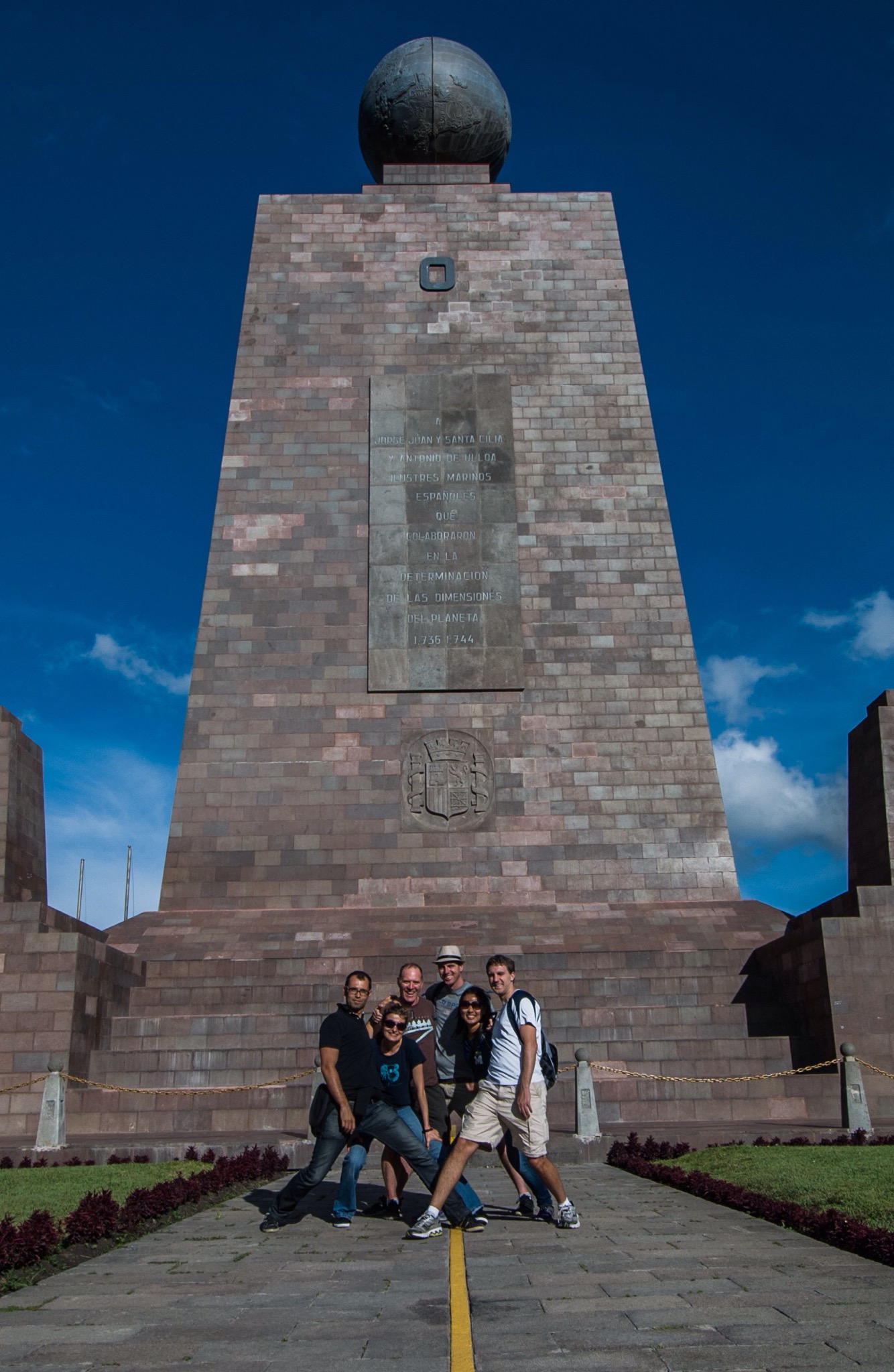
Ticking boxes all over the place, now we’re off to Mitad del Mundo, the centre of the world at zero degrees latitude. Of course here we’re at a bit of a landmark and we take the customary photos with a foot in each hemisphere with our new found mates. It’s a little sad to say but the most entertaining part of this little tourist must-do is that the whopping big monument is in the wrong place, the equator is about 300m north of the spot, an awesome cock up if ever there was one. But undeterred, an afternoon of beers makes everything better. Given the sprawl that is Quito, sucked into a narrow valley we’re barely on the outskirts of town and a good hour away from our hostel, a tad tipsy we leg it back completely unconcerned about the discrepancy, we’ve had a great afternoon either way.
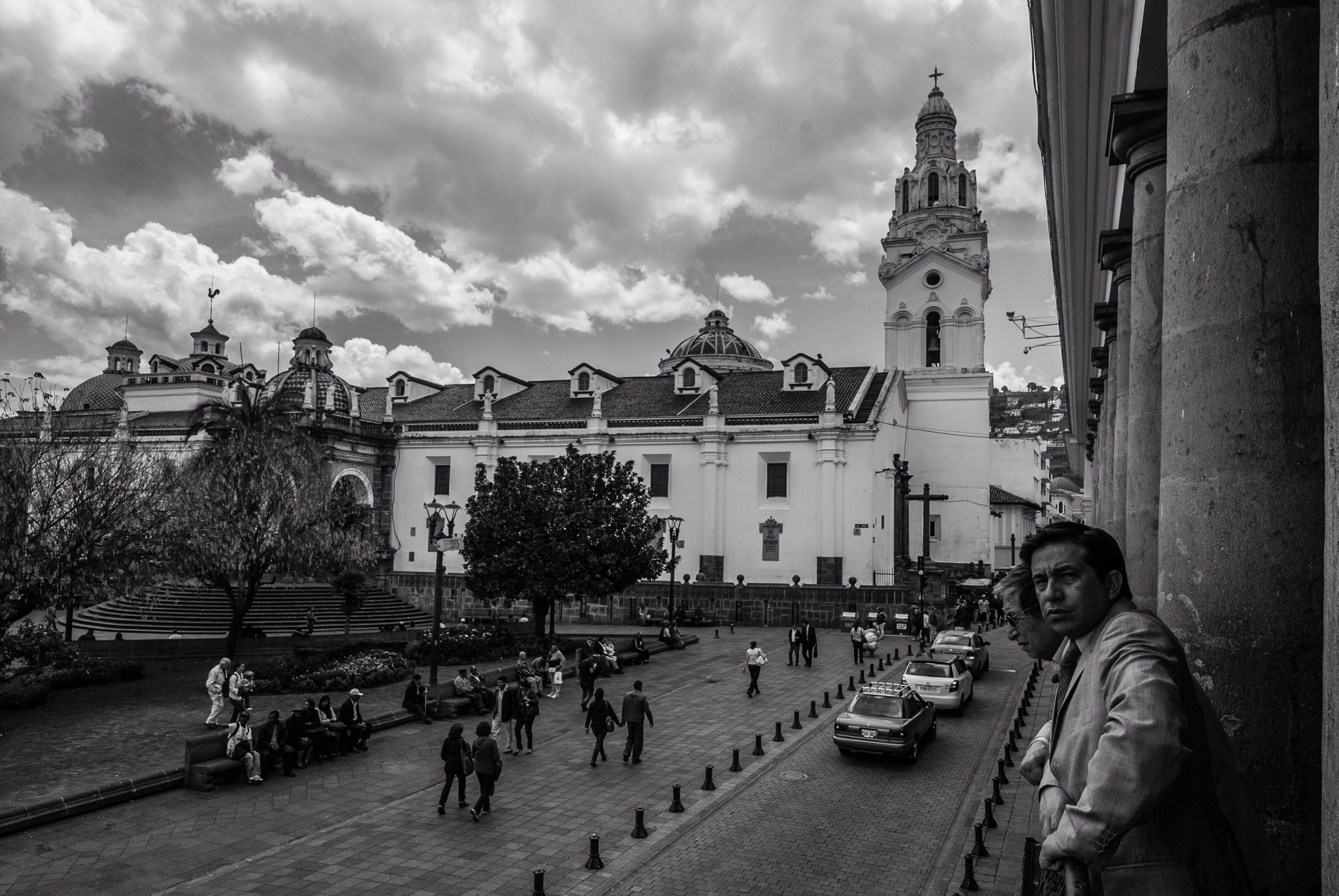
Quito has also offered up the most social time of our trip. It’s no doubt part of our headspace and a bit of dumb luck but Quito’s encouraging ease, intoxicating grandeur and welcoming tranquility are the perfect ingredients to meeting new mates. So much so that we end up on a 5th floor terrace with a million dollar view of historical Quito skyline with our new friends for dinner. The view here is utter romance, centuries old buildings are artfully lit up all around as we down yet more beers and delicious food. It turns out that Quito is a sister city to Krakow, the home town of Ola, our new best friend crazy neuroscientist Polish tornado. From this vantage point it makes perfect sense, this very latin city seeps all the romance and whimsical fantasy that we expect from historical Europe.
In inspiring company to the backdrop of a truly captivating city we momentarily whisk ourselves away to a sense of romantic cinema from a time gone by. The concoction of factors that make up Quito are nothing short of theatrical, and right now we feel centre stage.

Quito, the second highest capital in the world, a relatively small and sprawling city clinging around a mountainous landscape that seems just too aggressive to host a major city. We arrive fresh thanks to the awesome Ecuadorian busses and we’re off to have a poke around the city. On first looks, we have to say that we’re loving Quito already. First impressions are filled with cool colonial architecture, beautiful squares, decent food and a coffee that was totally drinkable. And we’re not being facetious here, coffee in South America is a bit of a minefield.

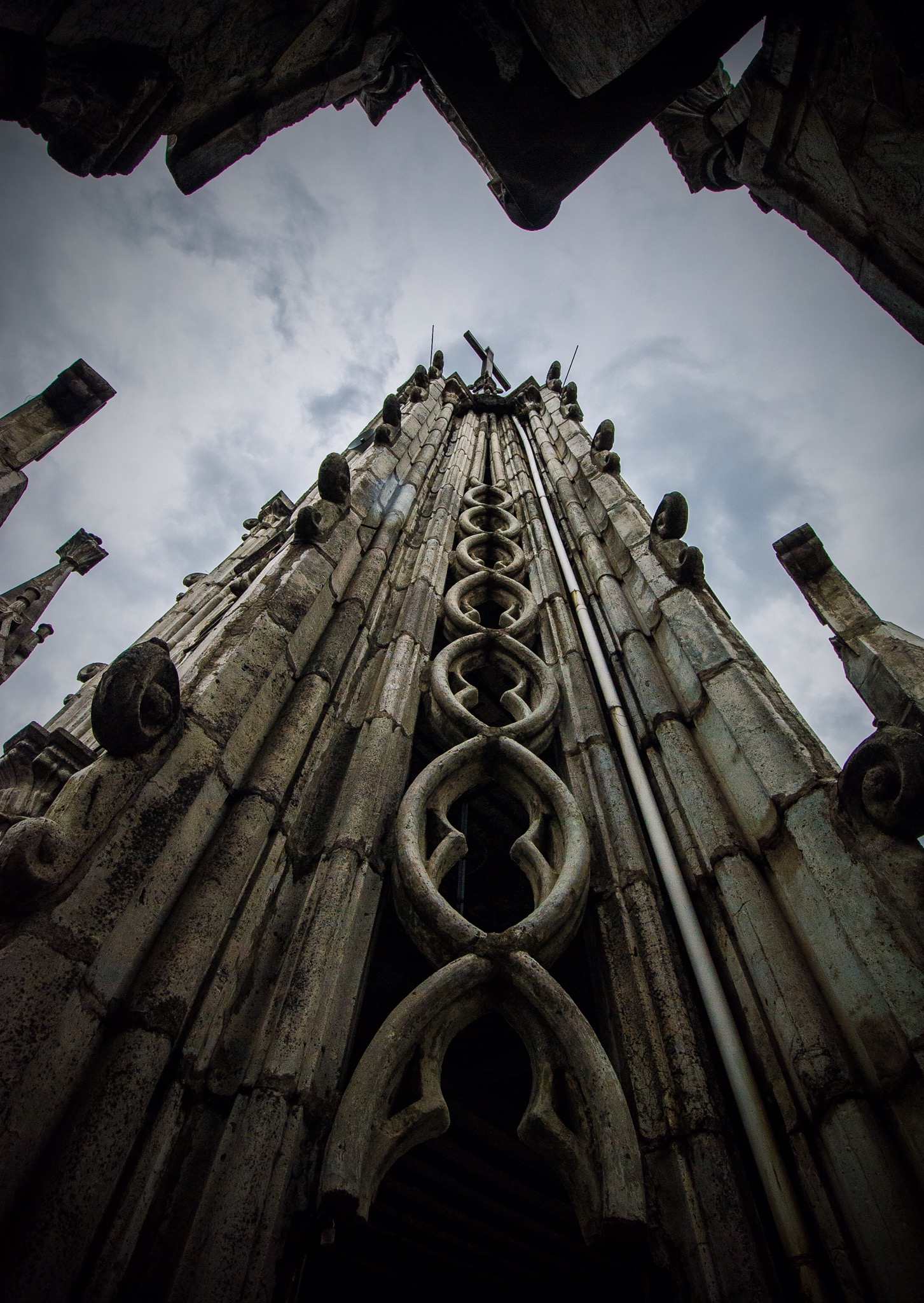
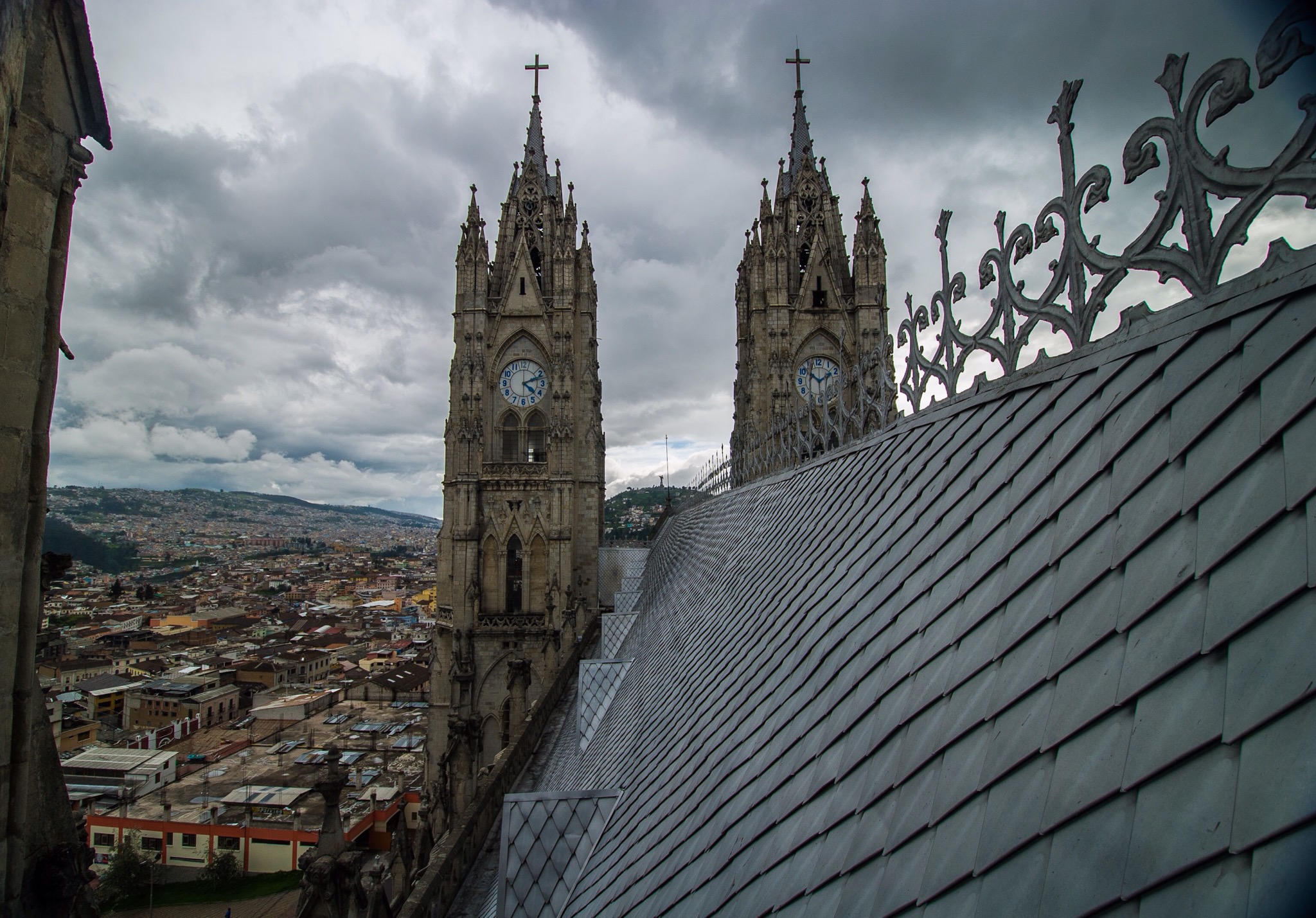
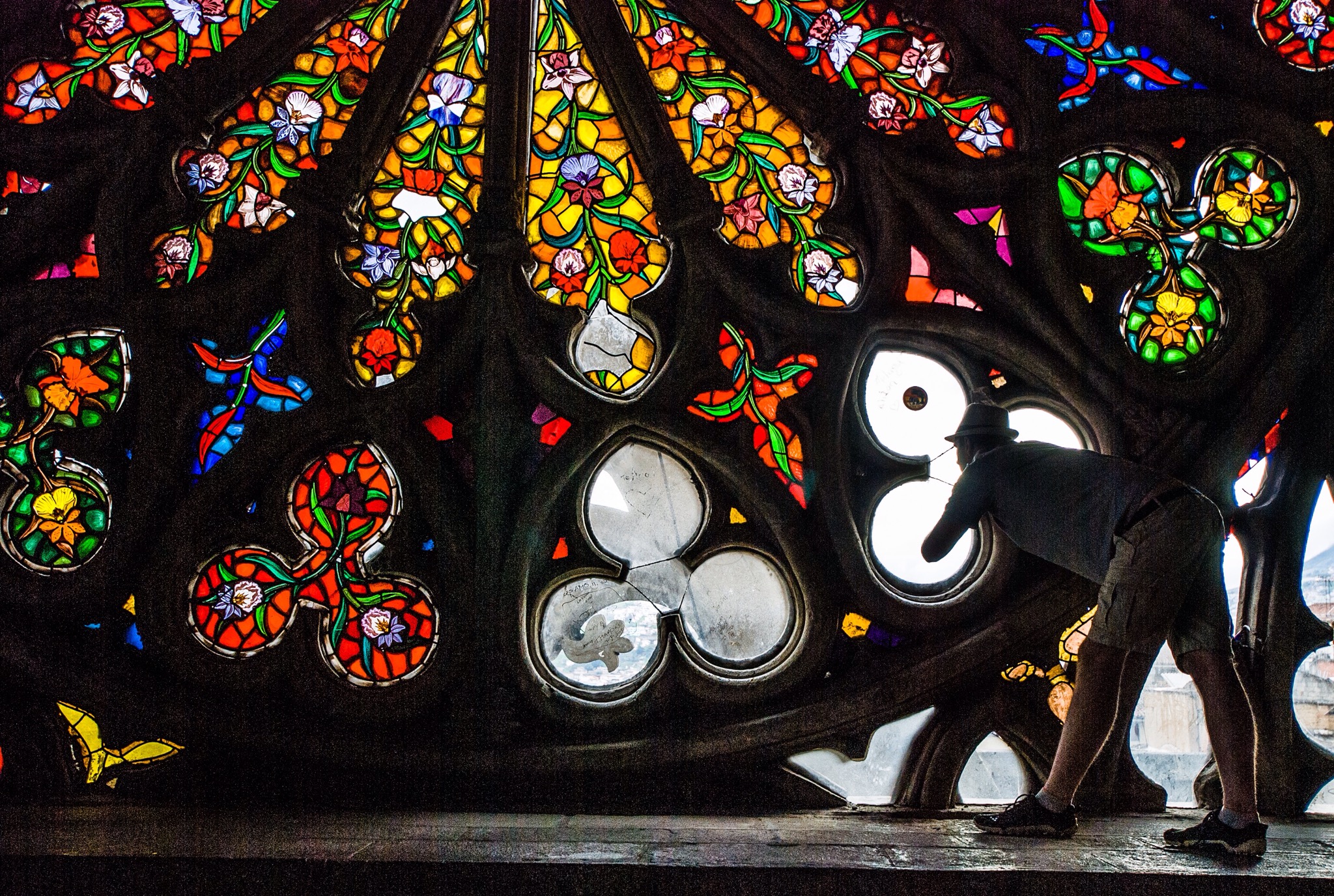
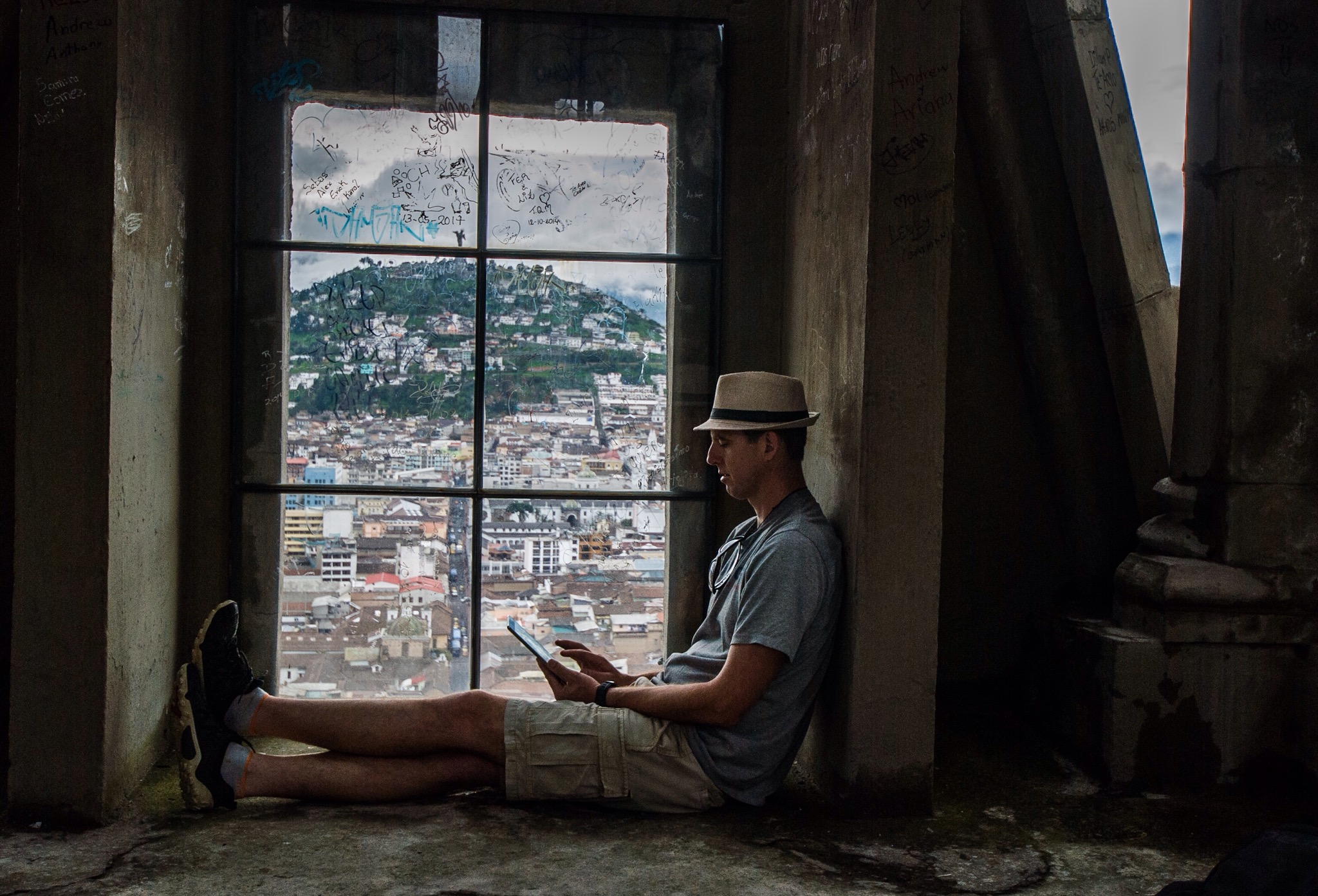
Our first stop is into the basilica, the largest neo-gothic church in the world, one of the tourist tick-a-boxes that one must do in Quito. We slug it up the slope, nothing here is flat and of course the biggest church is right on a hill, this aggressive landscape a true feature of character for Quito. We arrive with a little huff and puff and holy crap this thing is a monster. The first thoughts to come to mind is that this is exactly the imposing, sinister looking church that hosts hollywood chase scenes and vampire cults, it’s pretty impressive to say the least. The building is quite cool to start with, what’s more interesting is that we can climb up into it and; cue sparked interest.
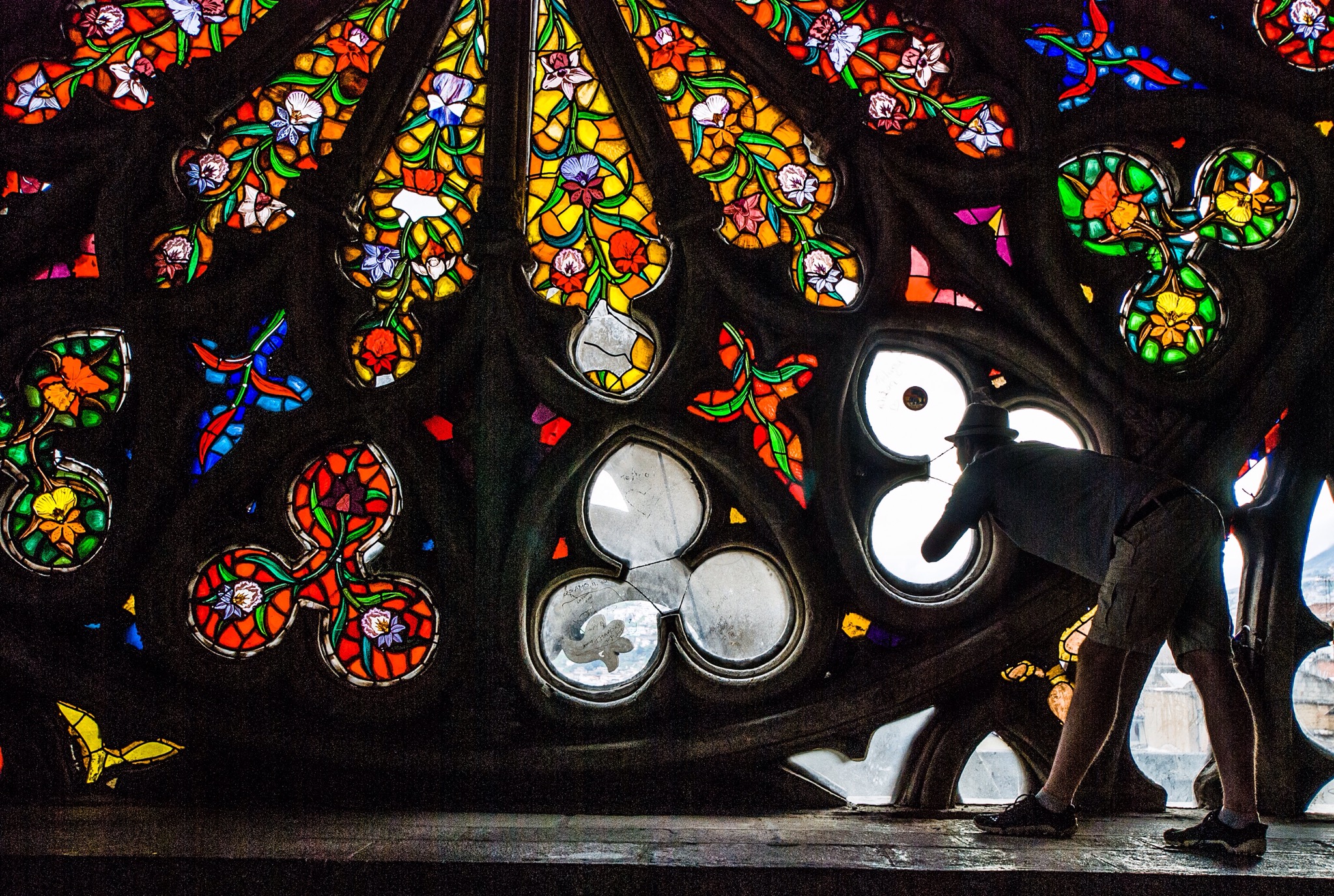
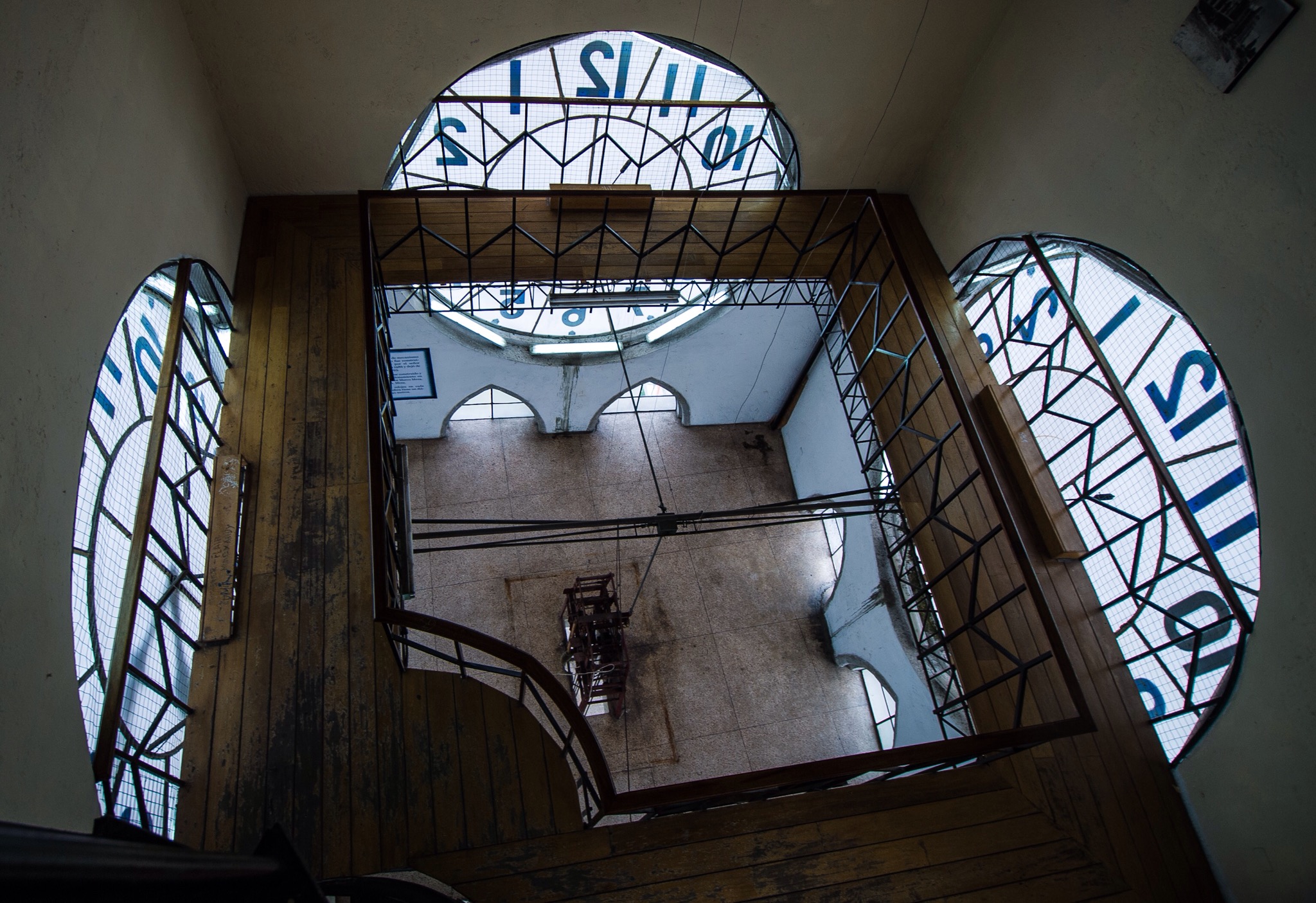
We fork over a whopping $2 and begin our climb up the tight winding staircase no doubt not intended for public use, we’re already feeling like we have an uncommon access to a type of building that is so often more secretive and conservative than accessible. As we get up to the balcony for a picture perfect view over Quito it becomes obvious that we can not only climb up into it, we have a fairly open access to climb throughout this whole thing, this is amazing. Walking a boardwalk in the skeletal ceiling above the main arches we’re truly in the bones of this beast, it’s a bit eerie and chilling to say the least. And on and on we go, scaling tight access ladders to scamper to the highest perches overlooking not only the city but the scales of the metal roof more akin to a fantasy dragon than a place of worship. The scenes and sights are just awesome, this climb is not for those uncomfortable with heights, even we have a wide eyed look downwards. We eventually make it behind the huge clock face in the tower and even above that, the sense of privilege to be able to access all these places is astounding, what an amazing first up stop to our visit here.

Quite buoyed by the instant appeal of Quito we decide to have a bit of a night out. With both of us taking turns being ill so far tis trip the socialising and drinking has been at an appalling minimum, this is a tragedy that simply must not continue. We’ve been in the historical centre of town today, soaking up the picturesque streets and vistas but now it’s time to head just a tad further north into La Mariscal, the more modern, trendy area of Quito. A beer is called for so we stop into a German microbrewery, of course. The first thing that hits us here is that although this part of town is more for bars, clubs and tourists it’s not at all cheesy, in fact this area is really on the pulse in terms of being cool. Hipster bars boast a retro feel with street art on the walls, live music, newspaper clipping wallpaper and super trendy atmosphere, avoiding the trappings of superficial shiny crap. There’s not really that many tourists about either, this is Ecuador through the eyes of a trendy Melbourne laneway bar, and they do it with style and panache, Quito just keeps on delivering.
Time for food arrives and it’s time to spoil ourselves, we decide to have a nice dinner out. With a nice bottle of wine, Ecuadorian fine dining that includes pigs feet and delicious sea bass we’re in heaven. We sit in a big dining hall entertained by a 3 piece band, guitar, harp and drum. This is a great backdrop and the star of the show is the guitarists whistling, this is something truly out of this world. This guy is making sounds that would put some songbirds to shame, it’s impossible to truly describe, it has us stunned.
With extremely contented smiles we venture back to the bars. On the way we’d spotted what looked like a gay bar and veritably bursting with curiosity we just have to go in for a beer. After being asked for ID at the door we take our giggles inside to have a look around. There’s a funny thing with gay bars, they seem to transcend culture, it doesn’t matter where you are in the world, what culture you’re in they generally all feel a little bit the same. We find ourselves dancing to a cheesy remix of Lana Del Ray being touched up by all and sundry, yes, they’re all a little bit the same.
We finish the night with one last gin and a couple of rums in yet another cool bar. Yes we’ve got a skinfull and Quito has delivered a cracker of a first day. It remains a hugely positive sign of any city that having a good day is not a lot of work. We found great things to do, beautiful sights, good food and bars without breaking a sweat. Some places seem to require a high level of local knowledge but Quito seems to just simply be a cool place to be, a fantastic surprise for these big city cynics. Bravo Quito!

Well D-Day has arrived, we’re off to have a crack at Volcano Cotopaxi, and we’re a little excited to say the least. At 2pm we drive up to 3800m, the refuge where we’ll spend the afternoon. It is only the afternoon mind you, we’ll be up at 10pm to get dressed and start climbing, yes 10pm. This ungodly and challenging time slot gives the chance to catch the sunrise as well as the necessity to descend before the sun melts the snow crust making it a safety issue. Descent must begin by 7:30 so we’re in for 7 or so hours of pain/ fun. The challenge ahead is falling heavily upon us as we sum up a quantity of gear more befitting the years travel we’re on, not a few hours of hiking. With a quick delicious meal in our bellies we settle down and pretend like we have a chance of sleeping.
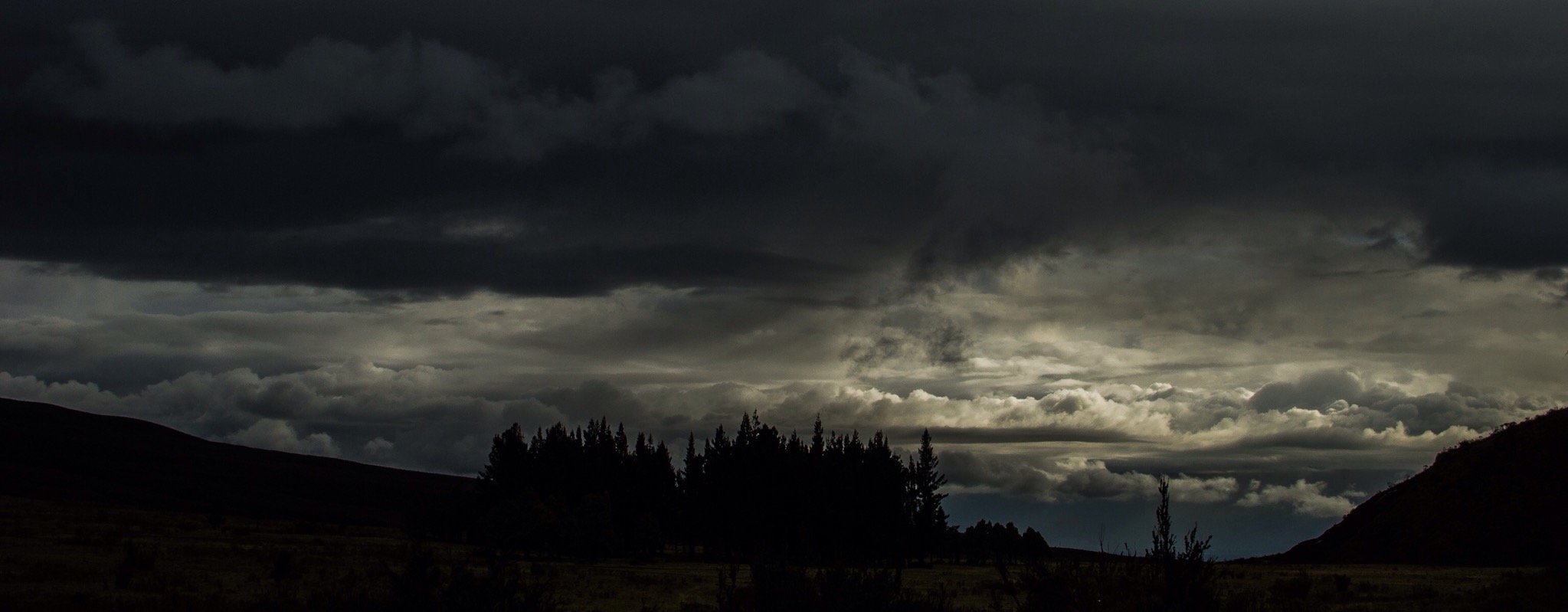
At 10pm the call goes out and none too soon, thank god we’re under way. We scoff down a quick breakfast and off we go, up to the starting point; a mere 4600m. This whole preparation is happening at a fairly hectic pace, we were at 2800m just eight hours ago, and with the pulse thumping and more than just a little bit of adrenalin we take a first moment to take a breath, as challenging as that is up here. We gaze out from our perch, strangely on top of the world and still beneath it all, Cotopaxi rears unapologetically into yet another layer of clouds barely showing the first tapering of its girth. From here we can see clearly over a range of impressive peaks little more than silhouette monsters under the bed; in a star and snow-lit ambience the lights of Latacunga and even distant Quito blaze the layers of cloud beneath us, an amber glow opposing our frozen paradise. This perspective in itself is a little bit breathtaking (pardon the pun), encompassing all the grandeur that mountains have a want to do.
But the fleeting moment of grace is over before appreciation can take hold, we have to walk. This is by far the most serious hike I’ve ever undertaken and the sense of beauty is quickly replaced by that of competitive challenge. Unlike activities such as scuba diving, the more genuine end of the mountain stick is not one for passivity, the atmosphere of challenge and conquest is invasive. We make it just a small way up to the refuge at 4800m and we’re doing well, keeping a good steady pace ahead of the other groups. Even as I write this I find the constant repetition of altitudes intrusive but that’s the world we’re climbing into. Gone are thoughts of food, comfort, safety, money: Here the basic needs model is replace by a monolithic purpose, where am I? A magic number defines every corner of what you’re trying to do, achieve, be.
It’s about 1am and we reach the glacier that represents, in some ways, the true beginning. We’re around 5000m and we put on our crampons, huge spikes attached to your boots that, with an ice axe, help you navigate your snow journey upward, and we’re already well over my previous highest altitude. With an ebbing of the excitement and settling into the routine, we’re feeling good, ready for the six more hours of trudging up into the glowing night. Roped together in a line of three with our guide, we’re in lock step for the remainder of the trip. Here, a rare opportunity to soak up the place we find ourselves: The rhythmic crunch of snow underfoot, the ‘thunk’ of the ice axe breaching snowy crust, the glowing darkness, the deafening silence. Yes, we are carried away, a frozen dream.
But dreams precede an awakening. I get a bit of a weird feeling in my stomach, probably at about 5100m. This is not good, feeling ill and headaches are a common sign of altitude sickness. We stall for a bit to take a moment to readjust and take on some chocolate before we push off. It’s pretty slow going here, with a small headache forming I’m feeling a little worried, altitude shouldn’t be kicking in just yet, I stop regularly and attempt to manage my way through it, this dreamy landscape slipping into a darker apparition as the minutes tick by.
Lengthy linguistic description evades me now, all that encompasses my world is two or so hours of feeling ill, with a headache. Not to mention slowly coming to terms with the fact that, being roped together, I’m probably making the summit impossible for the two others of my current ‘family’ and possibly putting us all in some degree of danger. I feel defeated and bizarrely quite ashamed, I refuse to admit that I’m probably succumbing to altitude and convince myself of all the reasons I’ll be fine. It’s 3am and the night glows with promise, or mockery, I can’t tell. After slipping further into altitude sickness torment. The only way I can describe this is being helpless. My legs feel fine and strong, no aching at all, my heart is barely pumping but my head is burdened with not only a strong headache but a disproportionately immense sense of failure and shame. It’s the dead of night, after 4am and about five hours of climbing, it just hurts.
I’m writing this now with a clear head but these feelings are still so clear to me, I’m not accustomed to this sort of physical ineptitude. One thought I recall that was with me for about the last half an hour is that I feel more helpless now than when I fractured my back.
Holding tears of shame back I query the guide for advice on altitude. He makes it pretty clear that it’s gotten me but still leaves me the decision to continue or not, he won’t give my supplicant ego the escape of a decision. On we go, we must push. Four or so steps later I keel over again. There’s no mitigating way out of this, emotions of failure, shame, regret and insignificance load five feeble words, ‘I have to go down’. There it is, the last slick of integrity scraped off the gutter of the space my self esteem used to be. As we turn the view down is frightening. We’re so high, hundreds of metres of glacier sprawl below us and further below that a distant world that seems so far away, foreign. It’s beautiful beyond measure.
That was then, this is now.
It’s a day later now and my headspace is clearer and I’m retrospectively stunned at my feelings and state after the attempt at Cotopaxi. I’d count myself as a fairly level tempered person, not prone to irrational emotional swings. With ascension more than 500m above my previous highest and a fairly uncontrollable catch stopping my progress I should be happy with the experience, pushing myself into somewhere new. I’m feeling some of that now. What amazes me is the bodily disobedience over a physical and mental space I often govern quite firmly. For a short time I became a depressed, self-hating saboteur, far from the person I know myself to be.
To make things worse, Charlie was doing it easy and to his credit was overwhelmingly supportive, a gift he’ll never know the enormity of. I wanted a challenge, and I got one. Whether I want to try this again I’m yet to decide, I can’t say I’m entirely back to myself yet, but that’s what mountains can do I guess. I’ve loved the experience of humility that volcanos bring, the appreciation for their power, that humility temporarily turned to defeat and with it I am left with a greater appreciation than the already significant awe I had before.
Cotopaxi, I can’t feel any love for you right now, but in time I’m sure I will feel it, if not love, at least appreciation. Until next time, you win.
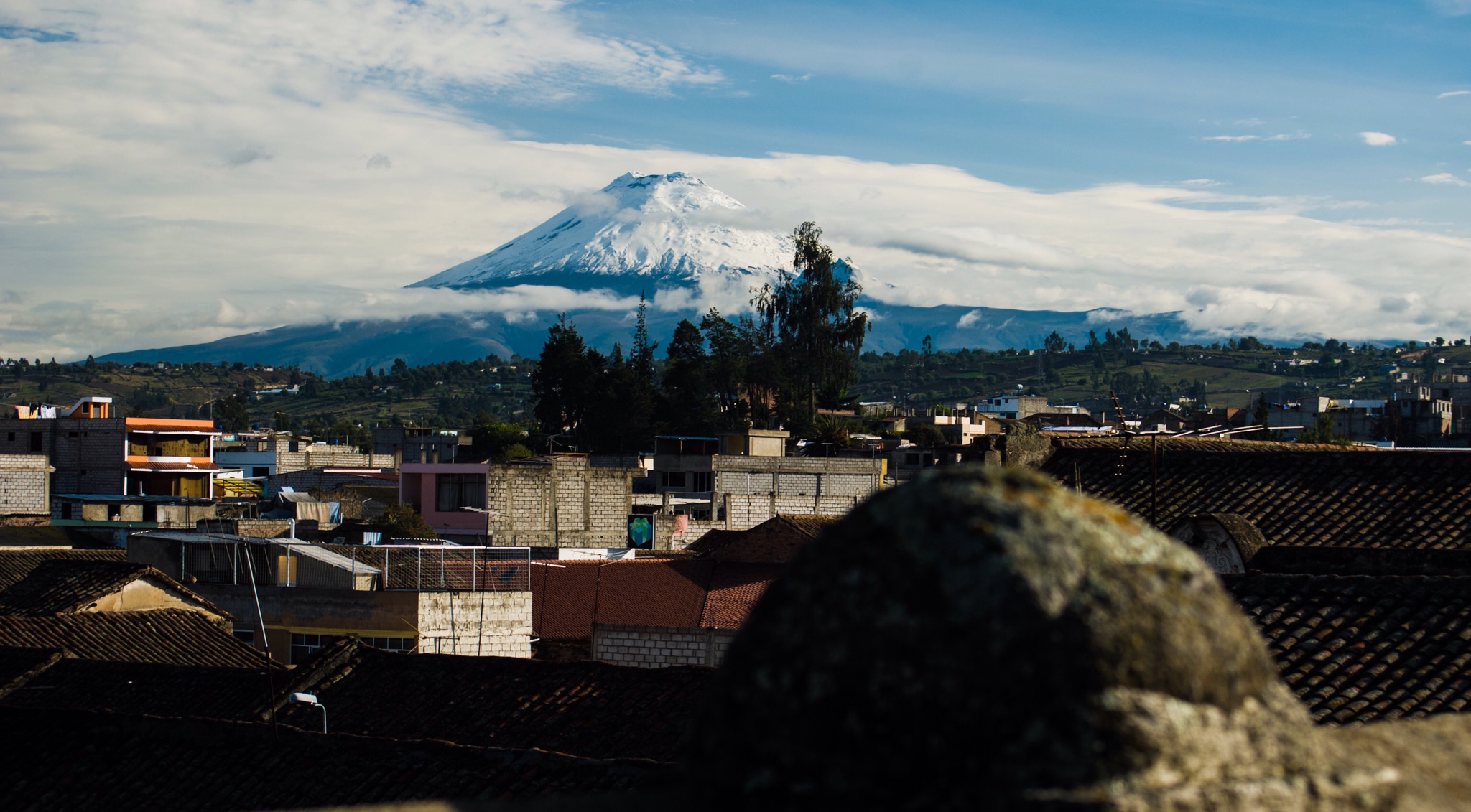
Enough of the dedicated pursuit to practicing for old age, we’re in Latacunga for one main purpose; not surprisingly, a volcano. Volcano Cotopaxi (5897m) is the iconic heart of Ecuador and the highest active volcano in the world, and we’re going to have a crack at summiting it. A weird little fact: When it comes to being the furthest point from the centre of the earth or the closest to the sun, what’s your guess? Everest? Well no, it’s Chimborazo (6310m), very nearby to here in little old Ecuador. It seems the bulge in the earth gives these mountains some claim as the highest in the world, but altitude above sea level is the feature that thins the air and creates the hostile environments. So as Everest and the himalayas remain the mountaineering crown for testing human limits but for us little weekend walkers, Cotopaxi remains exciting, challenging and not without its fair share of romance.
Latacunga by all reports is a bit of a functional town, without a lot of aesthetic appeal. Luckily enough we’re coincidentally in town for La Mama Negra festival. Now before I continue I have to declare the most socially inappropriate festival of all time. The origins are noble, it’s related to uprising, liberation and independence from the Spanish, all good right? that is all fine and dandy but lets just have a look at it from an outsiders point of view. The whole thing seems to eb a pantomime with 5 main cast members, dignitaries, military, a tranny crossdresser and La Mama herself. The first thing we see of the festival is a big overweight man in drag with black-face makeup holding a douche, yes, a douche. As if the racist presentation isn’t enough she’s also the patron saint of anal hygiene.
On our first night we wander into town and through surprisingly beautiful parks and squares, Latacunga is a not the climbing hovel of a nest it appeared to be. And a lucky strike, we stumble on what seems to be an opening ceremony for the festival. We find numerous brass bands, a shitload of military pageantry and officialdom out the wazoo, yes this festival crosses social awkwardness all the way to civil propriety. This should be fun.

Latacunga also maintains the good Ecuadorian trend of decent food, nothing flash, but heavenly unprocessed food, halelujah! Sadly on the coffee front, we have a great advertisement for drinking tea. The streets of latacunga are maintaining the first impressions of Ecuador that we were lucky to be greeted by in Otolavo. Possibly the most refreshing and appealing aspect of Ecuador is the balance between humble tradition and a graceful sophistication.
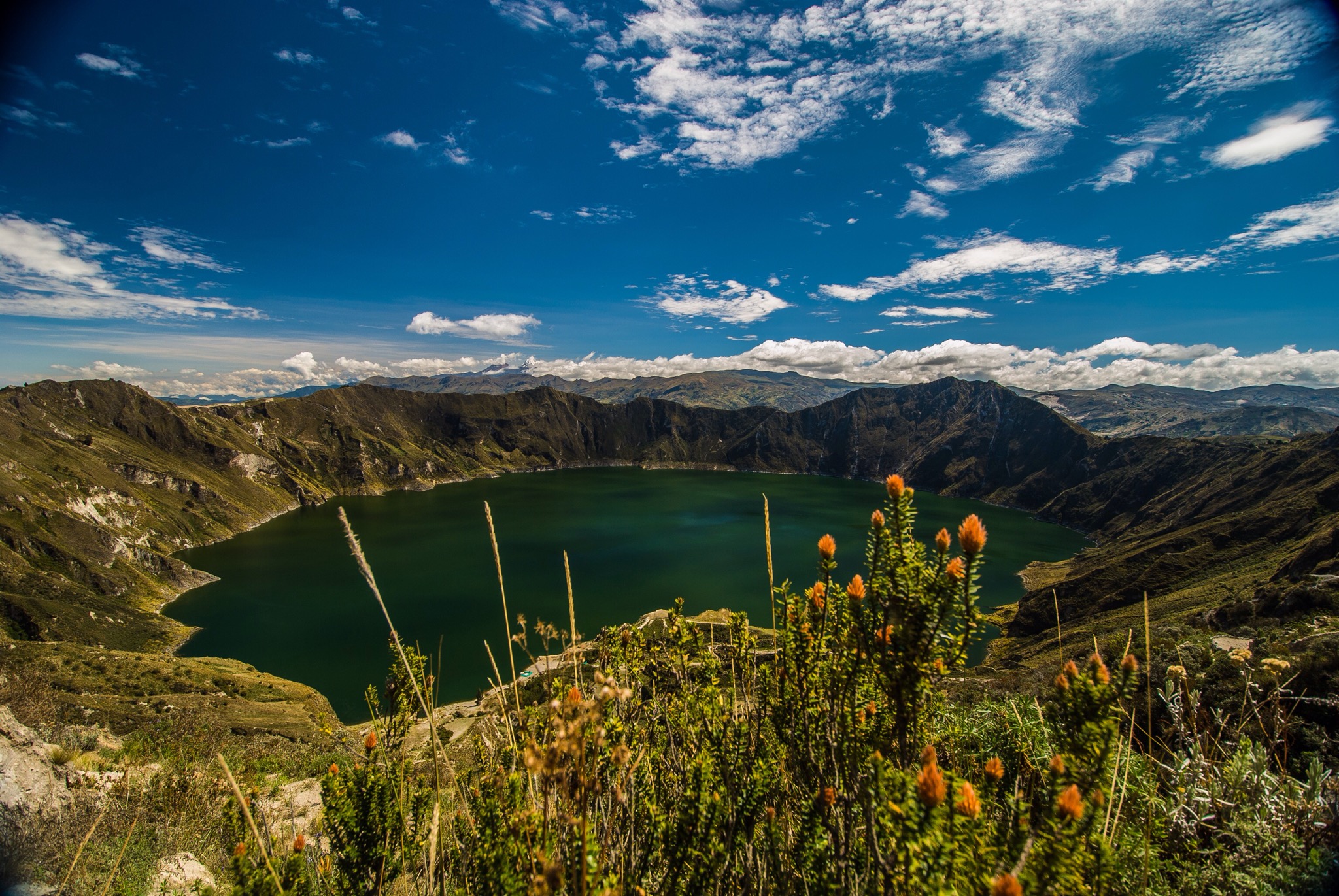
And not surprisingly, we head off to another Volcano, these things are seriously addictive. But before it’s a visit to a small village market that attracts vendors from throughout this high altitude valley. The market starts at 4am and finished at 10am, not one for me clearly. This market is humming with activity, a hive of industrious trade. The colours boom, the traditional dress captivates and the sense of authenticity simply drips from every sight and sound.
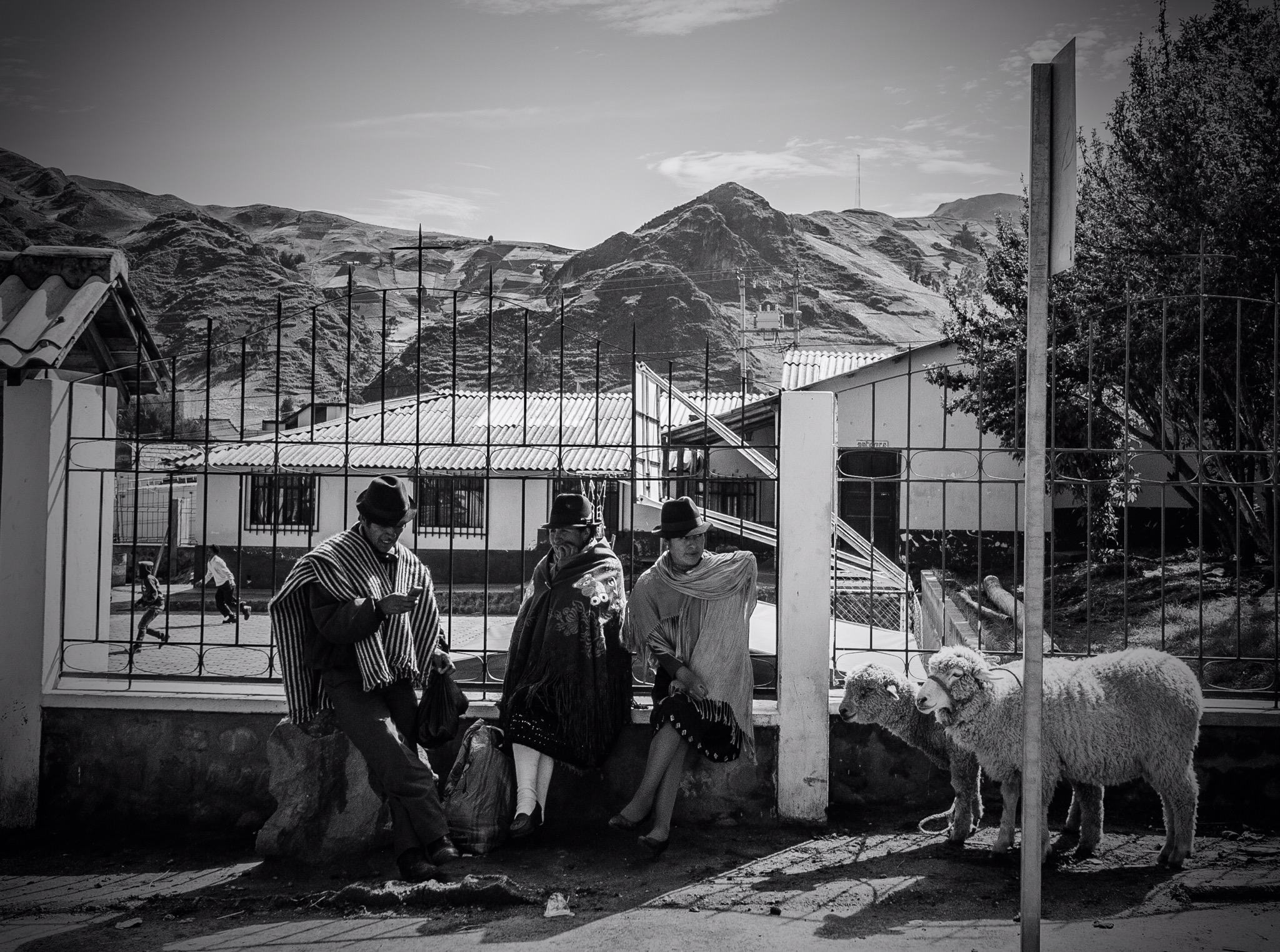
Quilotoa is another extinct volcano with a lake not too dissimilar to Cuicocha. As if the trip itself wasn’t awesome enough in itself, this was an important acclimatisation exercise for our go at Cotopaxi, best training location ever, Cranbrook stairs can kiss my you-know-what. The crater of Quilotoa is at a whopping 4000m and we take an important walk from the crater rim down to the lake. I’ll simply never quite get over a volcano crater, so aggressive, leaving little to the imagination about the violence and power it represents. This lake plummets a massive further 250m down, simply fodder for imagination beyond compare. Apparently in the thin air the walk up is about an hour or so but we smash it in 35 minutes. Bring on Cotopaxi, i’m gonna call it now, Cotopaxi is as good as smashed!
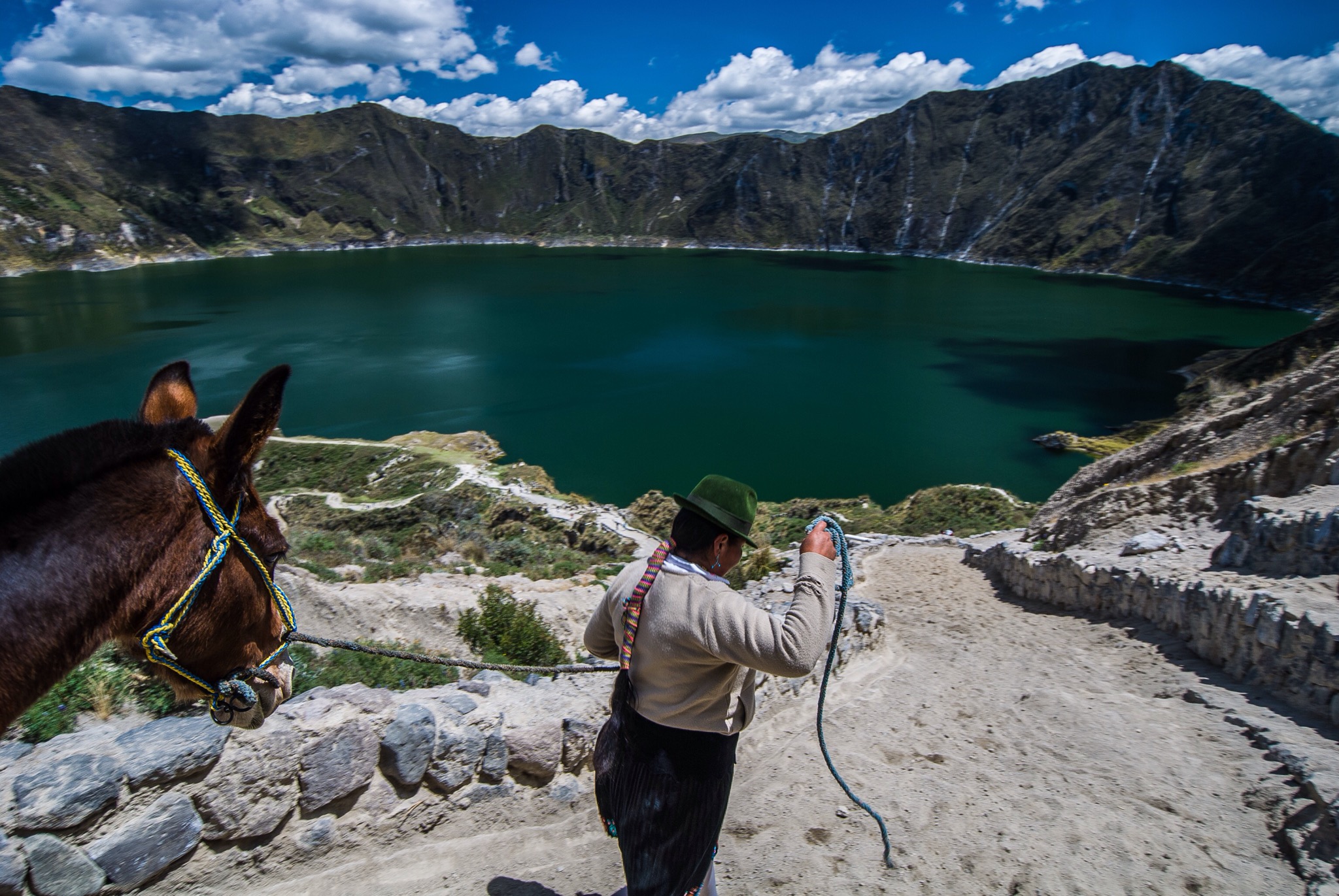

Otovalo is for us a place of one big deep breath. On one hand we’re in an environment that is relaxing and pleasant to be in, on the other hand this altitude literally takes your breath away. So we’re off and about to have a look around Otovalo and see what we can see, first stop, Lago Cuicocha, just a little bit out of town. We’re also going to have a poke at a bird sanctuary, Parque Condor for a good old bit of cheesy tourist time.
Lago Cuicocha:
We manage to score a lift with a couple of nice Americans that are staying in the same place as us which removes the potential of an awkward bus and taxi trip. After a bit of stuffing around at the visitors centre we’re off to find the end of the trail as walking this one backwards is apparently better, who knows why but I guess we’ll find out. The signposting isn’t what it could possibly be but we manage to find the end of the trail with a notice asking to not enter that way, but we’re living on the edge so we drag our new friends into our rebellious endeavour.
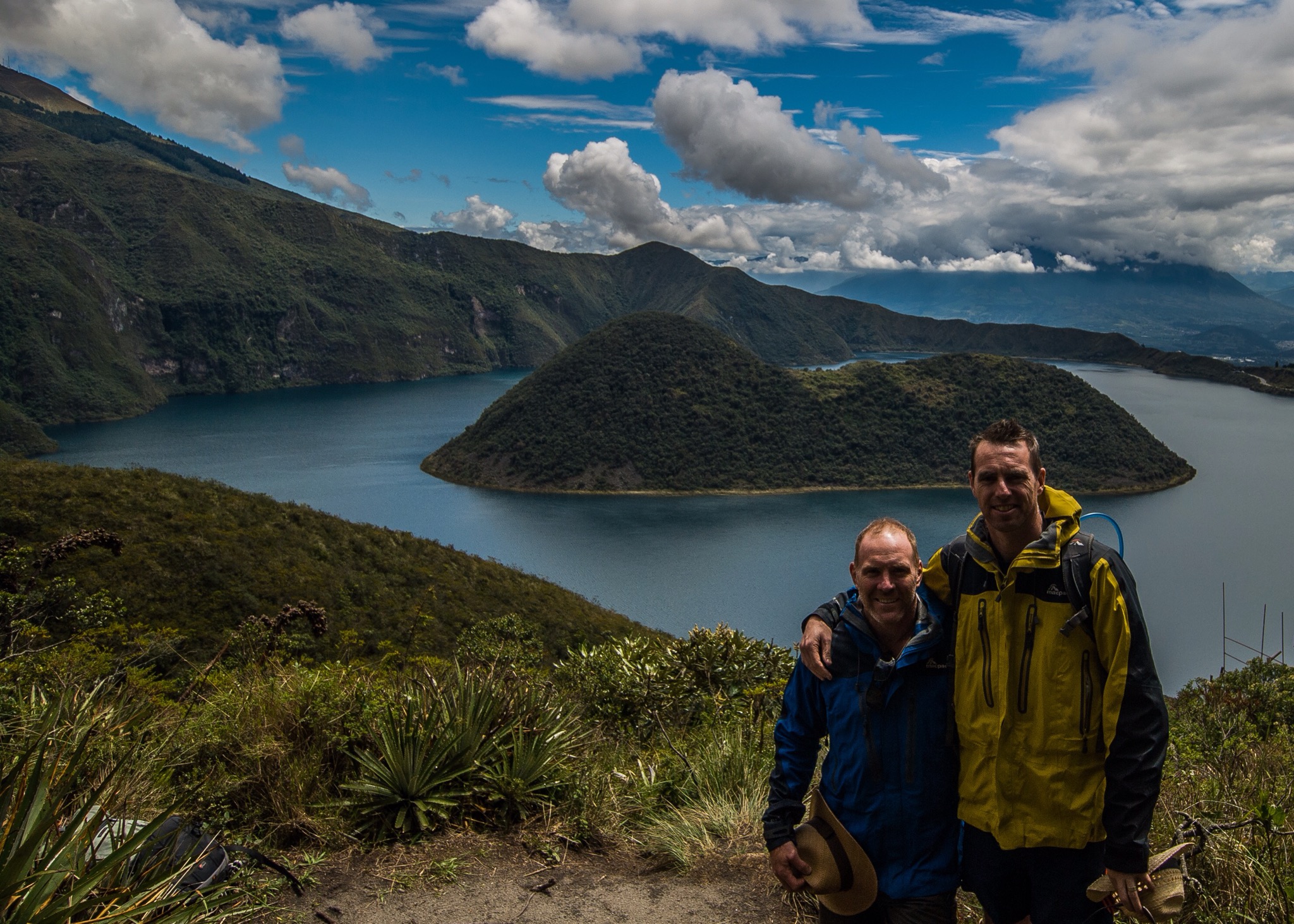
There is one particular feature of this lake that we’re quite interested in; it’s a volcano, and we’re basically developing an unhealthy obsession with volcanos. As we now know, a volcano is extinct essentially when a lake forms in the crater and this is what we’ve come to see. The walk takes about three hours and we skirt the precipitous ridge of the volcanic crater, a subtle hint to the drama of this location all but covered by the passively serene atmosphere.
The walk is slow, gentle and relaxing, a completely different experience to the volcanic ascent of Purace. The altitude is lower, leading to lush vegetation and none of the imposing nature of an active volcano. The tranquil waters replace a feeling of imposing insignificance with a welcoming serenity, oddly polar expressions of a singularly violent expression. The walk proves to be not only greatly relaxing but also layers a new perspective on experiencing volcanos. It’s quite amazing that an event that epitomises destruction can create an environment equally inviting and foreboding. I wonder if I can find a cheesy tourist shirt: I (heart) Volcanos? Completely buying it if I see it.
Parque Condor:
OK we’re going to a bird sanctuary, we shamelessly adopt our tourist caps and wander into the emptiness of a low season tourist venture. There’s a heap of quite big enclosures that house a range of birds that are nothing short of pant wettingly cool, and geez they’re bloody big! But the impressive nature of them is a little starkly contrasted with the fact that they’re in cages; to be honest it’s a sad piece of the pie that’s a little hard to get past.
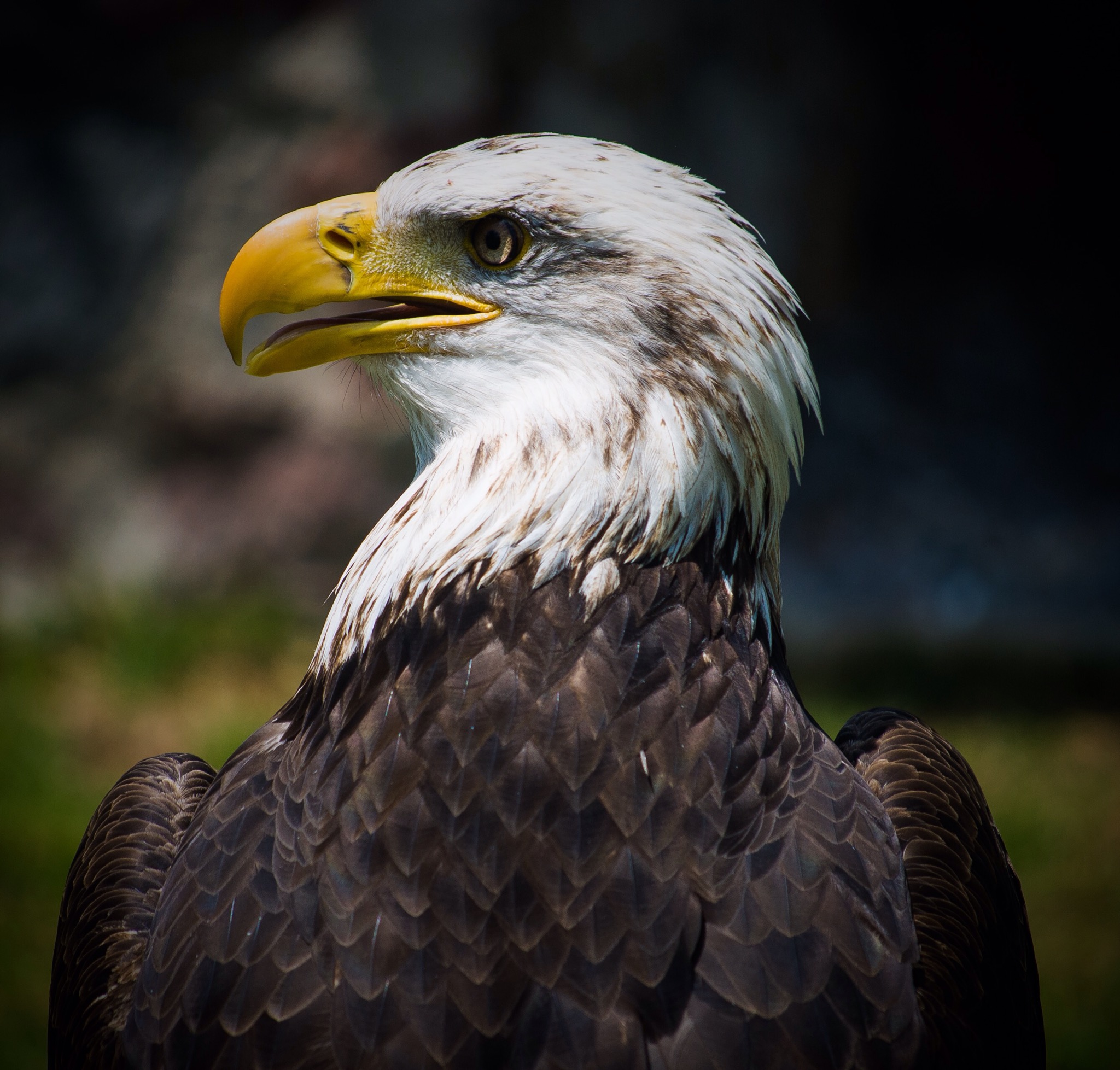
We do however get to see an amazing and balancing side to this place: an open arena demonstration, now this makes looking at the birds in enclosures like a bit of a waste of time. The location of the park is something on its own, perched appropriately on a mountain overlooking the town and opposing two other volcanos, simply spectacular. Seeing these birds literally launched off the ledge to soar over their domain is awesome, spreading their wings as far as they please before returning at their leisure for food: and off they go again.
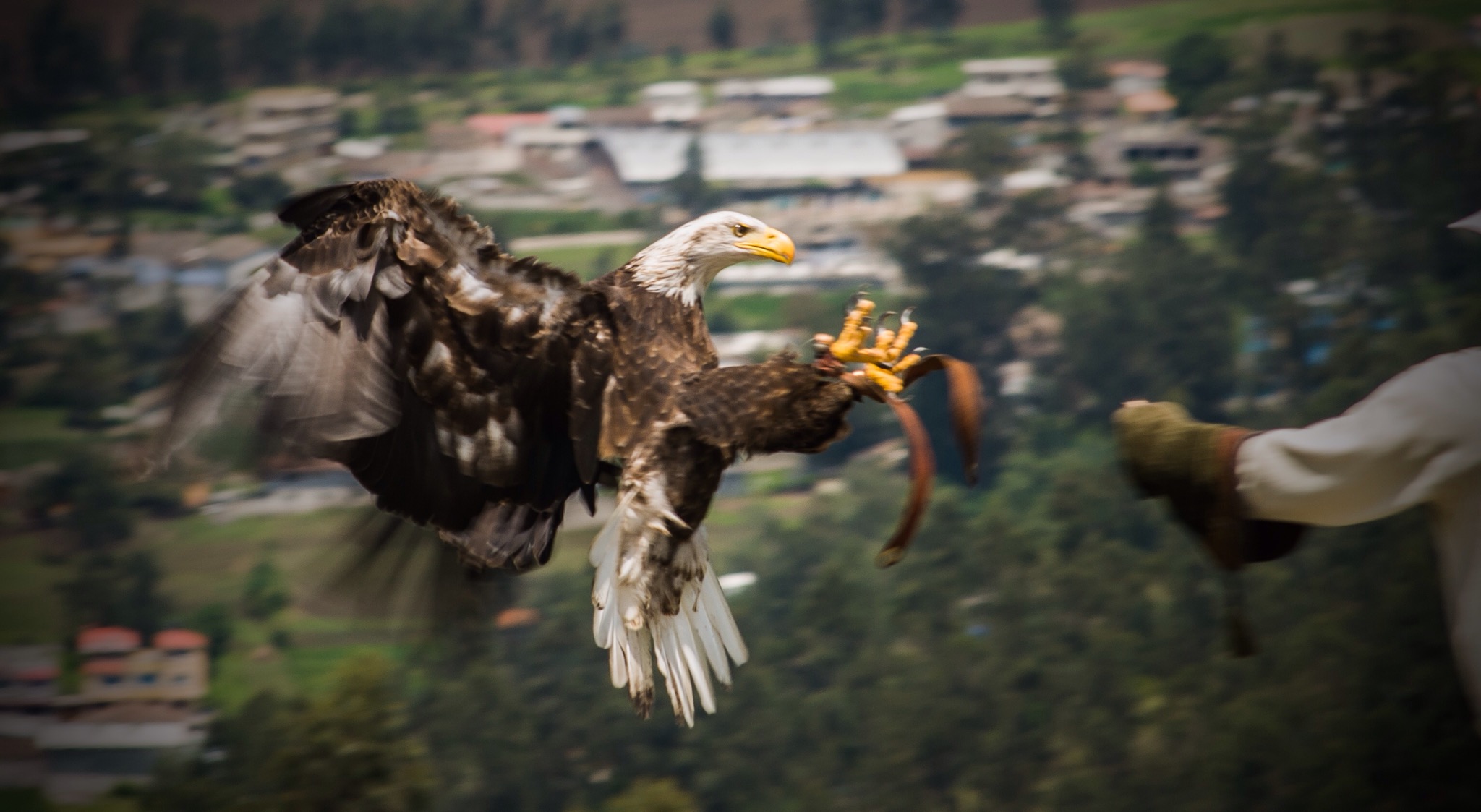
We often marvel at birds of prey when we get to sight them in the wild, this just adds a greater perspective on exactly how awesome they are. And worth saying again, they’re really bloody big, far bigger than we tend to think of as they soar so high above us. Of course there is the condor, the king of the Andes. This bad boy doesn’t fly today which is a bugger but just seeing one so close… wow! and as I had suspected, they stand about as tall as most Ecuadorians, they really are the kings of the Andes, we’ll definitely have a different appreciation when we see one next.

So we clock out of intrepid adventure world and take on a more elderly pace for a moment. Is it terrible to say that it’s quite nice to be a bit of an old lady for a moment? When we truly grow old we’re going to be so far ahead of the curve!

Entering into a new country is always a little exciting, new culture to see, another stamp in the passport and an adventure begins anew. I’ve never done a walk across a border either which definitely adds to the theatre, so it’s country number four for the trip, lets see what Ecuador has in store for us. Today’s been a bit of a mega travel day, the day after climbing Purace and we’re a bit nackered. After 14 hours of taxi, bus, bus, taxi, collectivo, bus and local taxi (which is a ute where you just jump in the back) we finally arrived in Otovalo.
Our first day wandering around Otovalo/ Ecuador is, like Colombia, a surprise, it’s a little different to what we expected, this time in the best possible way. Otovalo jumps out with a few instant characteristics, it’s clean, it’s spacious, the park is stunning and the atmosphere is more chilled than a 60’s housewife on valium. Above all though there’s a comprehensive saturation of traditional culture, starting with pretty much everyone being about 4′ tall, Charlie is seriously a giant in this place, lets not get into what sort of genetic freak I feel like. The women particularly have a really interesting style which is very unique, topped off with the typical Ecuadorian short brimmed hats; the hats are gold, everyone wears them and we simply have to have one.
Beyond fashion though there’s an interesting feeling in Otovalo that has often been notable by its absence in many places we’ve travelled in before and indeed I’ve never really put my finger on it before being right here. It’s only a first look but it seems that what we would call indigenous culture isn’t distinctly separated from culture in general. Across the world it seems that ‘indigenous’ or ‘traditional’ has no place in a more modern version of society, as if somehow the passing of time is a path that a culture cannot travel. As we wander around I’m curious as to why so much of the world, Australia included, puts culture and tradition in the same basket as fashion and underpants: things that inevitably die with the passing of their relevant season?
But lets not make a social commentary rant upon half a day of wandering a new town, I’ll ascend the high horse later possibly, right now it’s all about soaking up the contrast between Colombia and Ecuador. We’ve had a pretty respectable coffee, a great brekky and the atmosphere is ebbing away tension by the second. What we’re most happy with is that this is a pretty small town and it’s filled with examples of ‘just getting it’ from the food, beautiful parks, and the best market we have found, filled with genuinely local and interesting things. So many places seem to attempt to adopt a western ideal but in Otovalo we see a good blending of what’s handy and helpful from the modern world with a sophisticated retention of what’s distinctly Ecuadorian.

Yes on first glance we’re I’ll throw it out there, Ecuador is looking like a bit of a winner. Adding to this is that of all the countries we’ve seen Ecuador has been an economic and social basket case as recently as the last five years. With the fallout from Spanish pillaging, so many countries in South America seem to have gone through a very lengthy period of unrest as they grapple to regain their independent feet as such, typically corruption and greed are the first mice to move into the vacuum left by colonial rule. Where many countries have been on a relatively even keel for a few years now, the seemingly genteel Ecuador has been smashed from pillar to post farther into recent history than most. Apparently only in the last few years there’s been a bit of money (oil) and spending on infrastructure and social policies, it’s a balance that seems to really hit the spot right now.
The question remains: If Ecuador remains on an upward economic trajectory, will the culture we see now be consigned to kitsch history?<

#please view on iPad or larger.
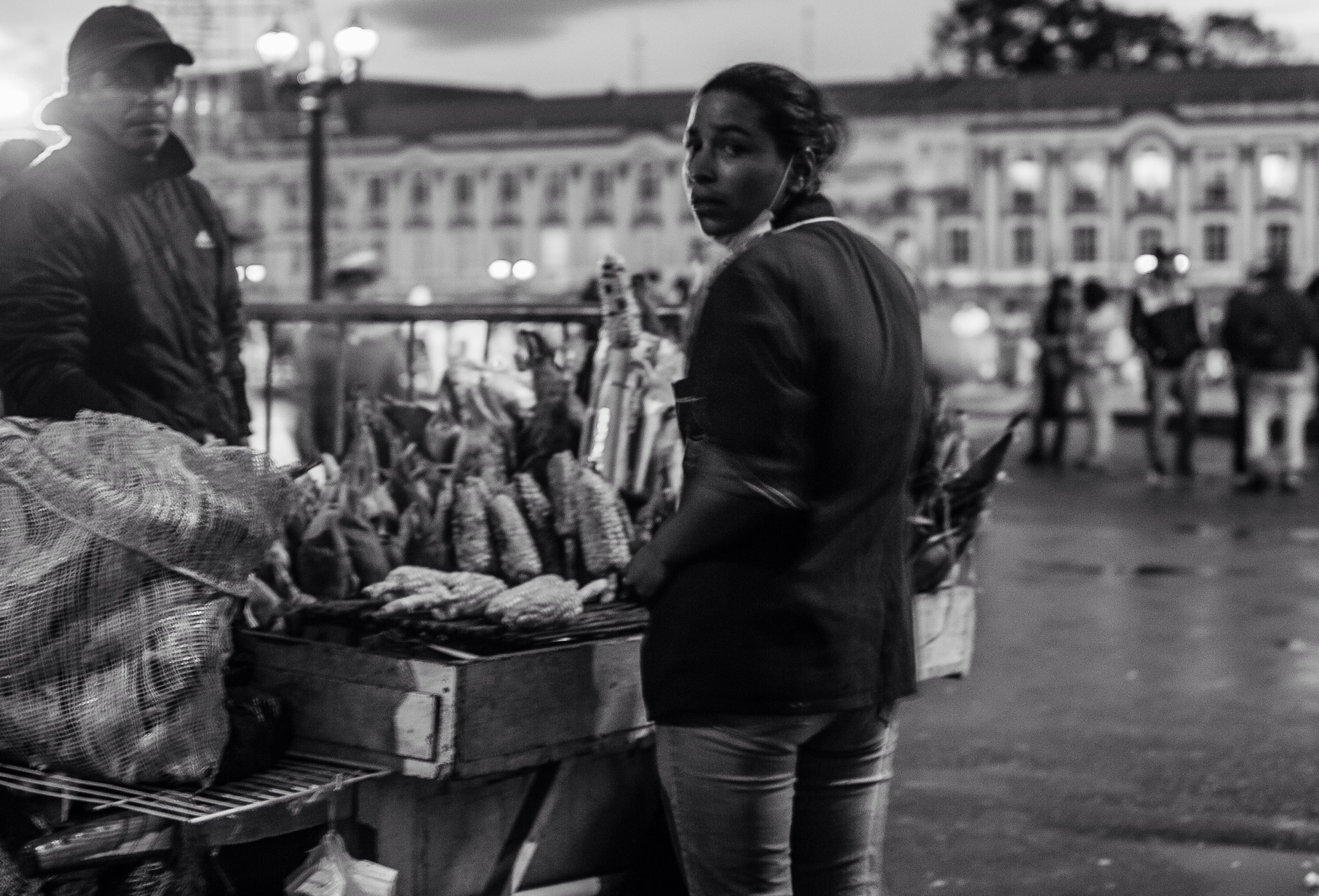
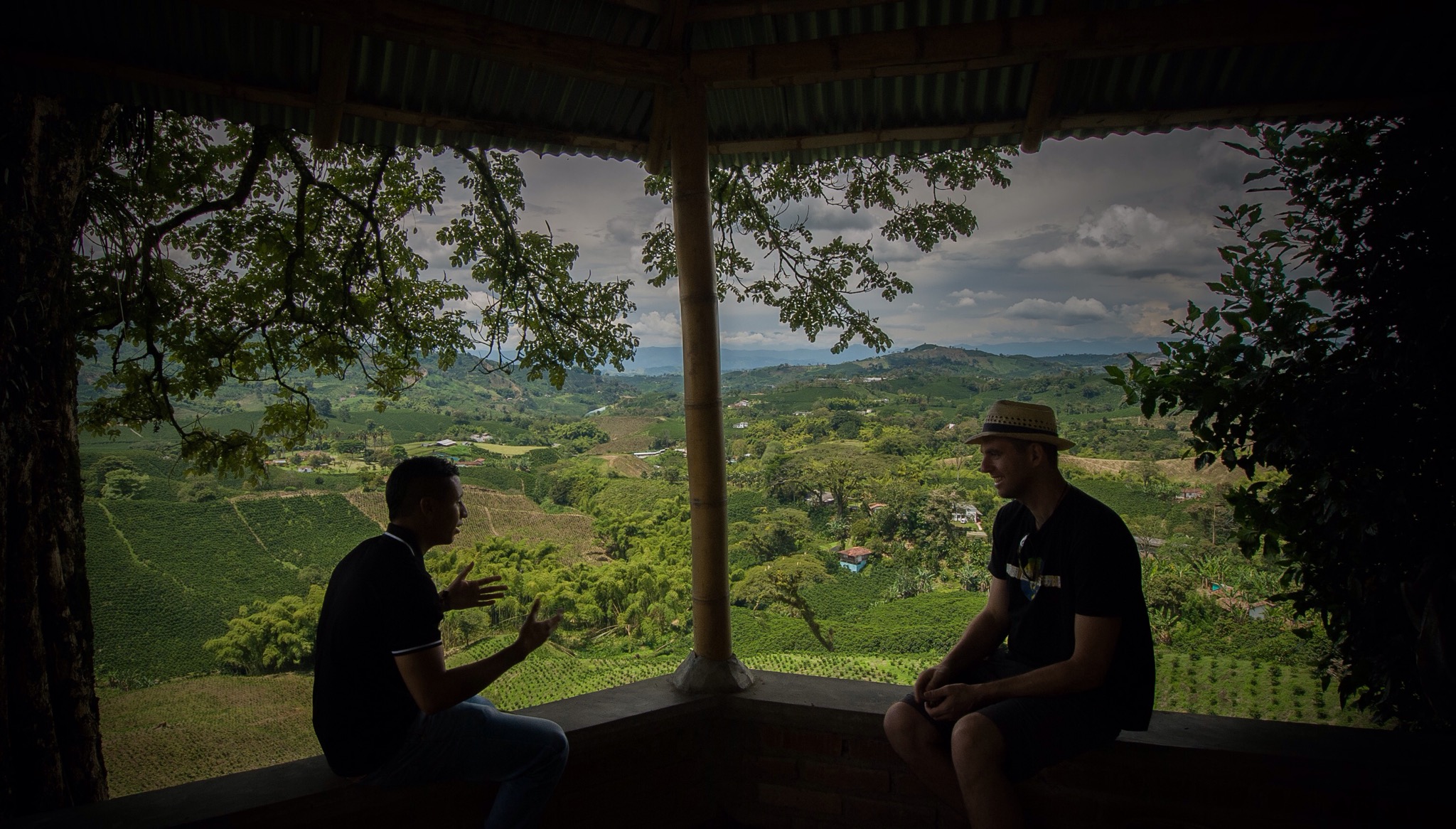
People of Colombia


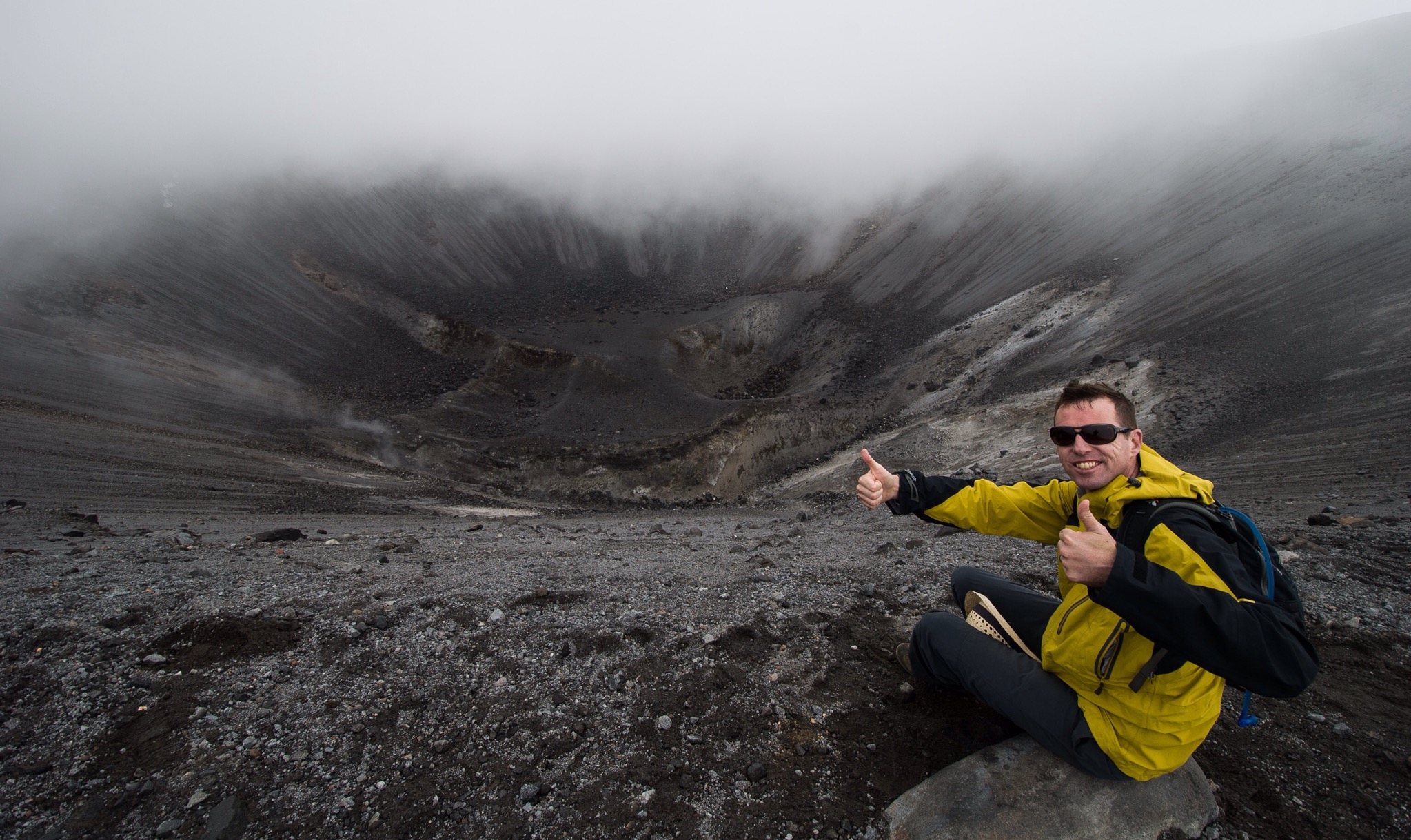
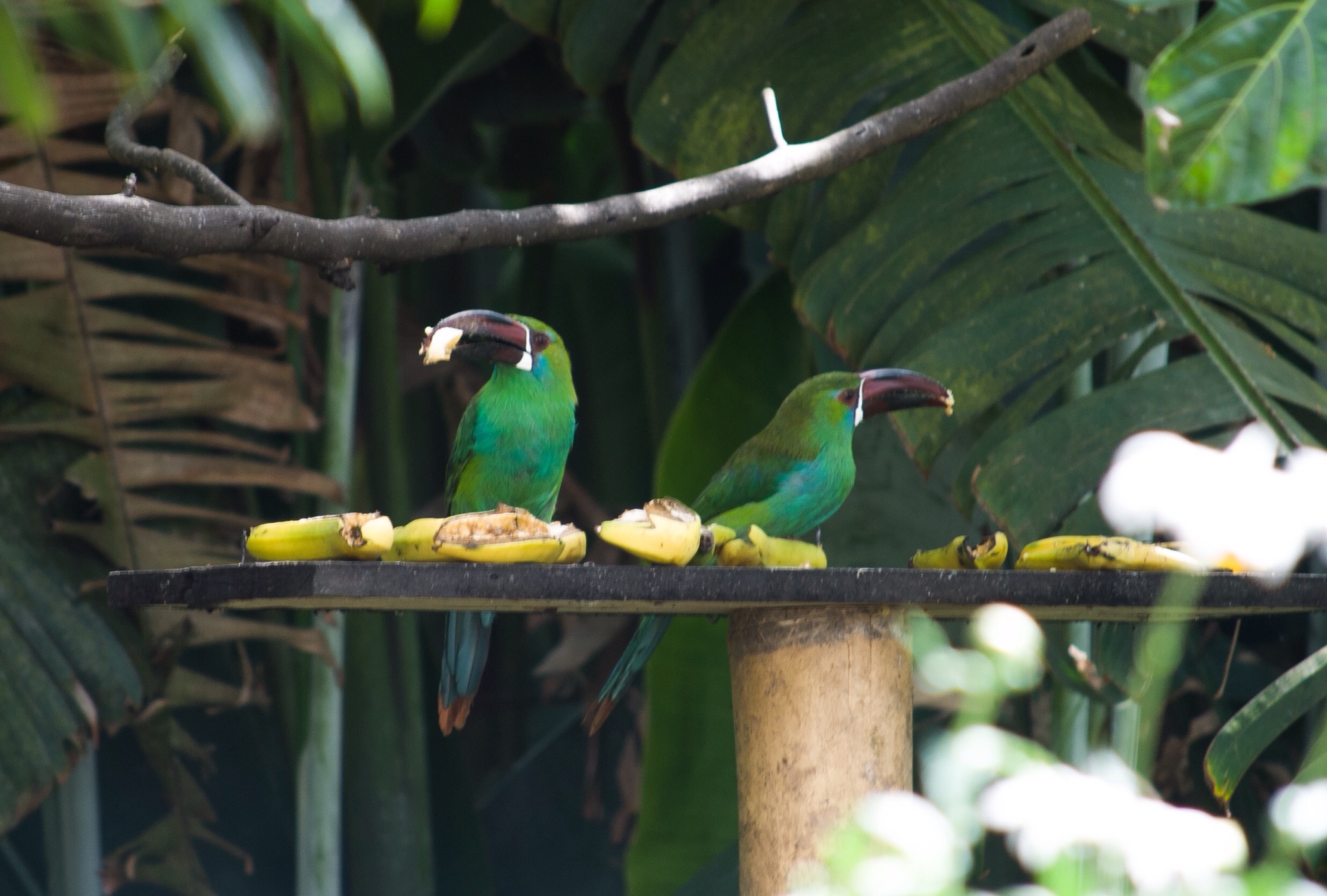
Wildlife and hiking in Colombia


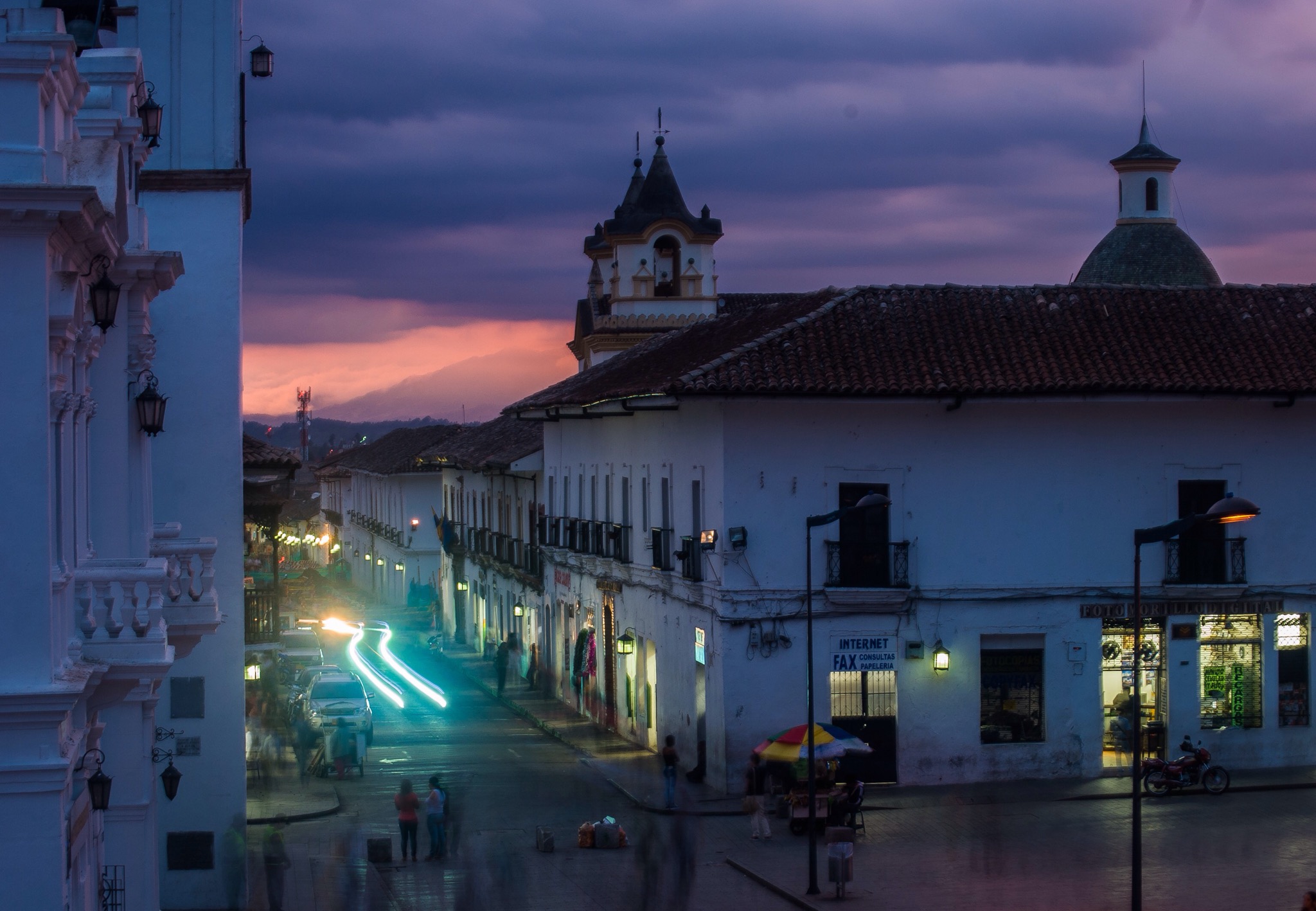
Colonial buildings of Colombia


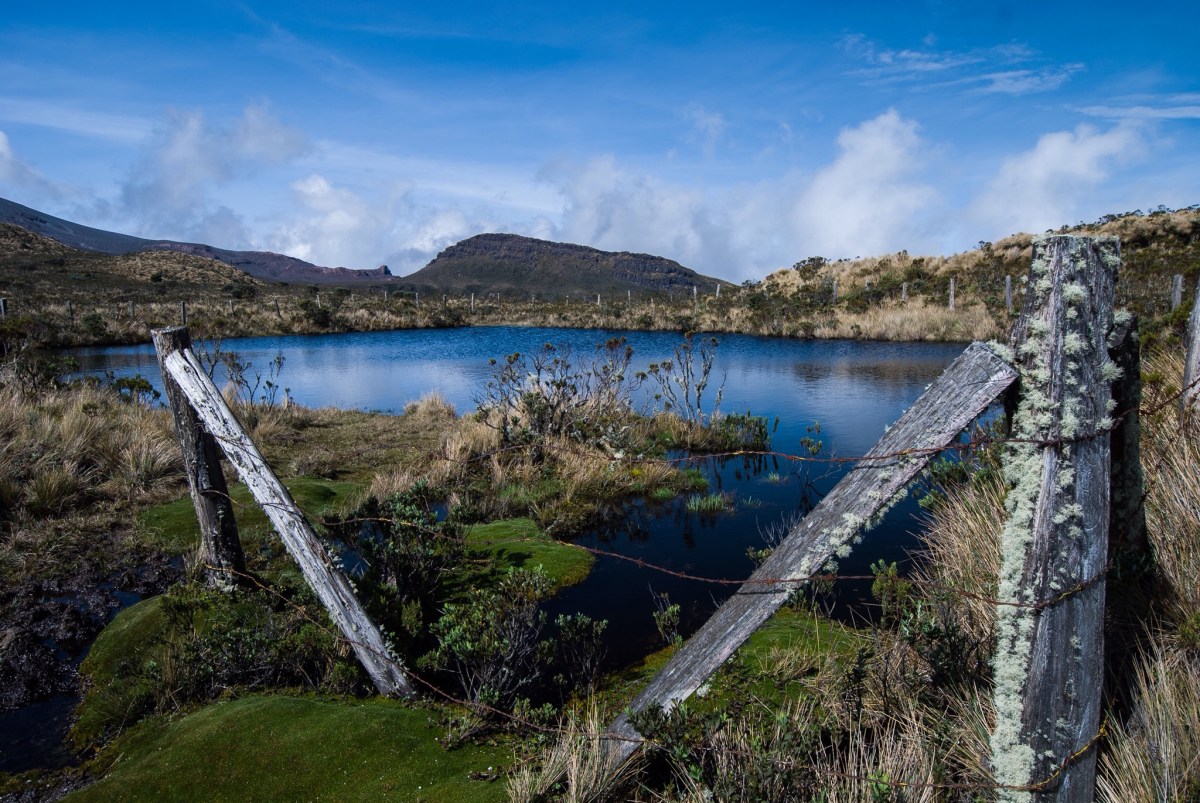
Yes it’s top five time, not top ten this time, yes that is an indictment on Colombia but lets just gloss over that shall we. Colombia did come home with the goods towards the back end of our trip so we’ll focus on that.
Disclaimer time: we are very aware that we’re short term tourists, not informed social beacons, so this is a ‘what we saw’ only, a snapshot of what was presented to us. We’ve been struggling to put our fingers on exactly why Colombia simple didn’t quite hit it for us, the obvious start is that Charlie was sick and damaging the porcelain for the better part of a week. But it’s not only that, Colombia’s recent past is, like so many South American countries, littered with unrest, corruption and misdirection. A relative boom in recent years is evident, possibly this has led to some cash and the inevitable embracing of superficial plastic crap. What is evident is that when it comes to social touch-points (places to eat/ drink, plazas and public spaces, architecture, food etc) there’s little we have seen with much grace, ingenuity, innovation or panache, it’s all a little bit ‘Coca Cola’ really.
On the other hand… Colombia boasts the Andes, Caribbean coast, historical identity and so much more. Yes Colombia is beautiful, yes it is gracious, yes it is captivating, inspiring, cultured and all of those things. What we have discovered is that it just takes that little bit of adventure to get off the beaten track. From wildlife to coffee culture and the extremes of Alpine severity the big cards in Colombia’s deck are the natural ones, not human invention. So with that said, here’s our highlights of a Country that is surprising, gifted and definitely not without inspiration; if you care to look.
5- Monserrate:
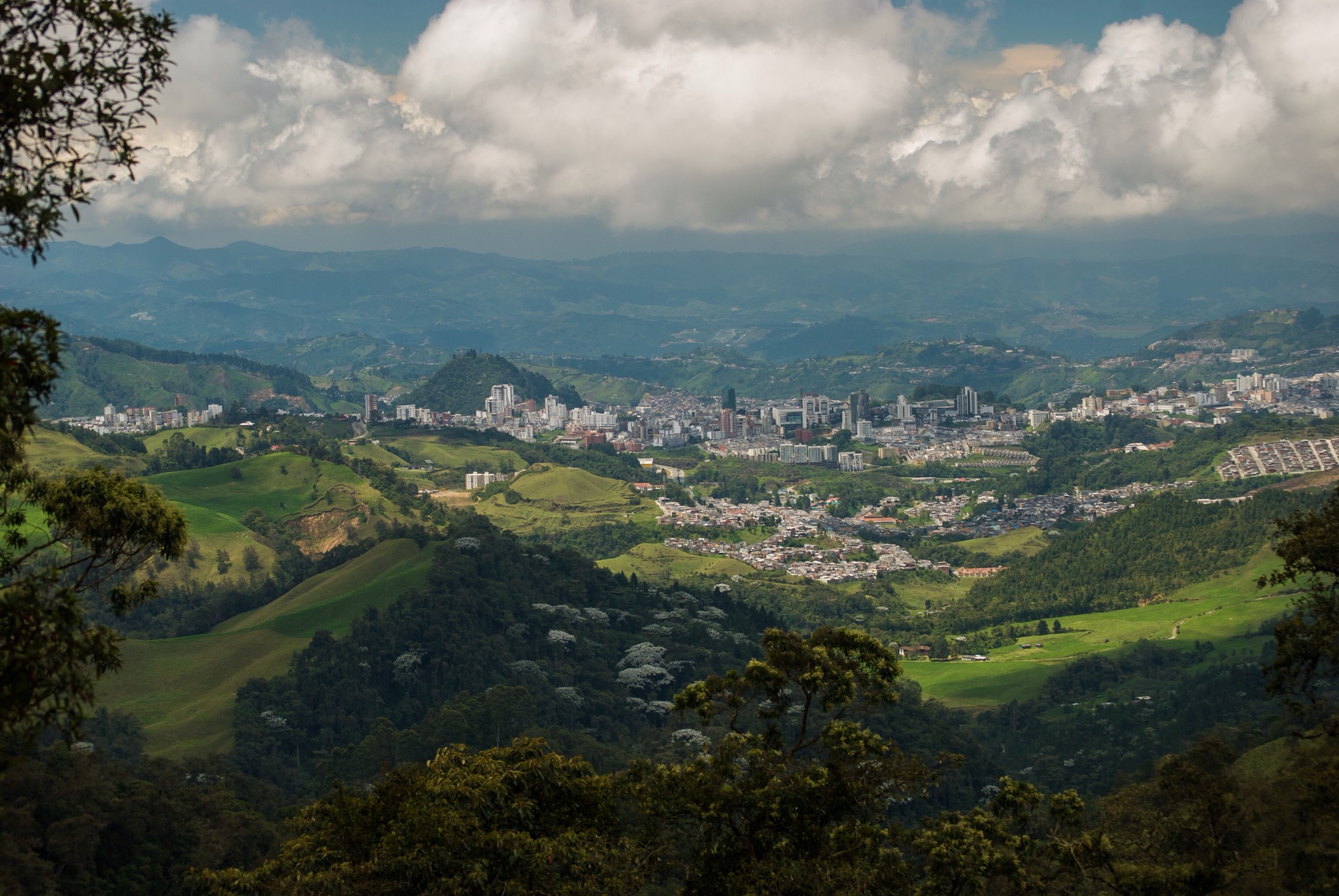
Being a great city is one thing, having a natural jewel is another. Sydney has our harbour, Melbourne has hipsters and Bogota has Monserrate. In truth the real gem here is the small but abruptly steepling range of mountains that Bogota wedges itself up to like grout to a tile. Monserrate is a particular peak and a diamond in this crown. In this big gritty shitty city, Monserrate is equal parts grandeur, grace and relief, a counterpoint to balance and give perspective to the sprawl it so commandingly oversees.
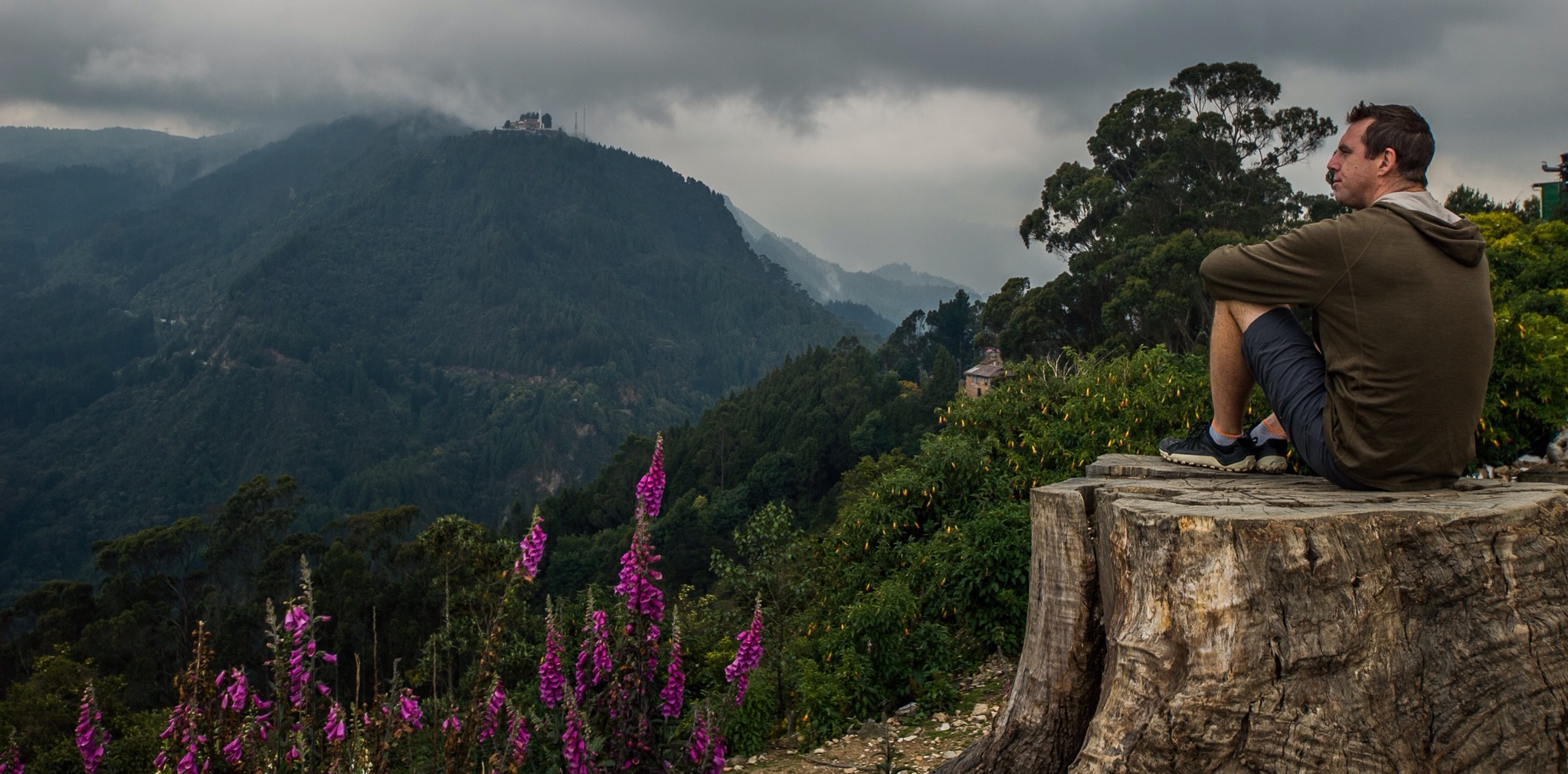
4- Museo de Oro (The Gold Museum):
The only ‘man-made’ entrant to the list is a museum, yes a museum. What truly gives it the status we hold it to is what it gives beyond the expectations the city sets. First of all it’s extremely well set out, providing a space that you genuinely want to be in. Beyond that it’s a truly comprehensive view into history, art, culture, spirituality, politics and so much more. And in this regard the museum shows it’s light, through all this the feeling of a classroom is elegantly bypassed and replaced with an enticing atmosphere of intrigue.
3- Rio Blanco:
Holy crap this place was just about as much relief for us as it was grand in its own right. Having a dip into nature is always something that invigorates and at this time of our trip it was more than invigorating, it was a gift. Throw in a bear, amazing vistas, rare sightings and the picture is one of tranquility and peace. But the star of the show is the hummingbird haven. With this element to the pie, peace and tranquility and layered with excitement and wonder, a real gem that cannot be overlooked.

2- Hacienda Guayabal:
We all pay just enough attention to the provenance of our coffee in our favourite cafe to soak up the smugness of knowledge but not so much as to bother our busy days. In this regard we are primary sinners. When we had our tour of Hacienda Guayabal, that fleeting ‘beans- from Colombia’ takes on a whole new meaning, coffee is no longer a snobby critique, it’s a culture and a history. In Australia we associate romance to wine in its entirety but coffee remains the domain of the cup. We profess no genuine knowledge beyond the knowledge that there’s so much more to know.
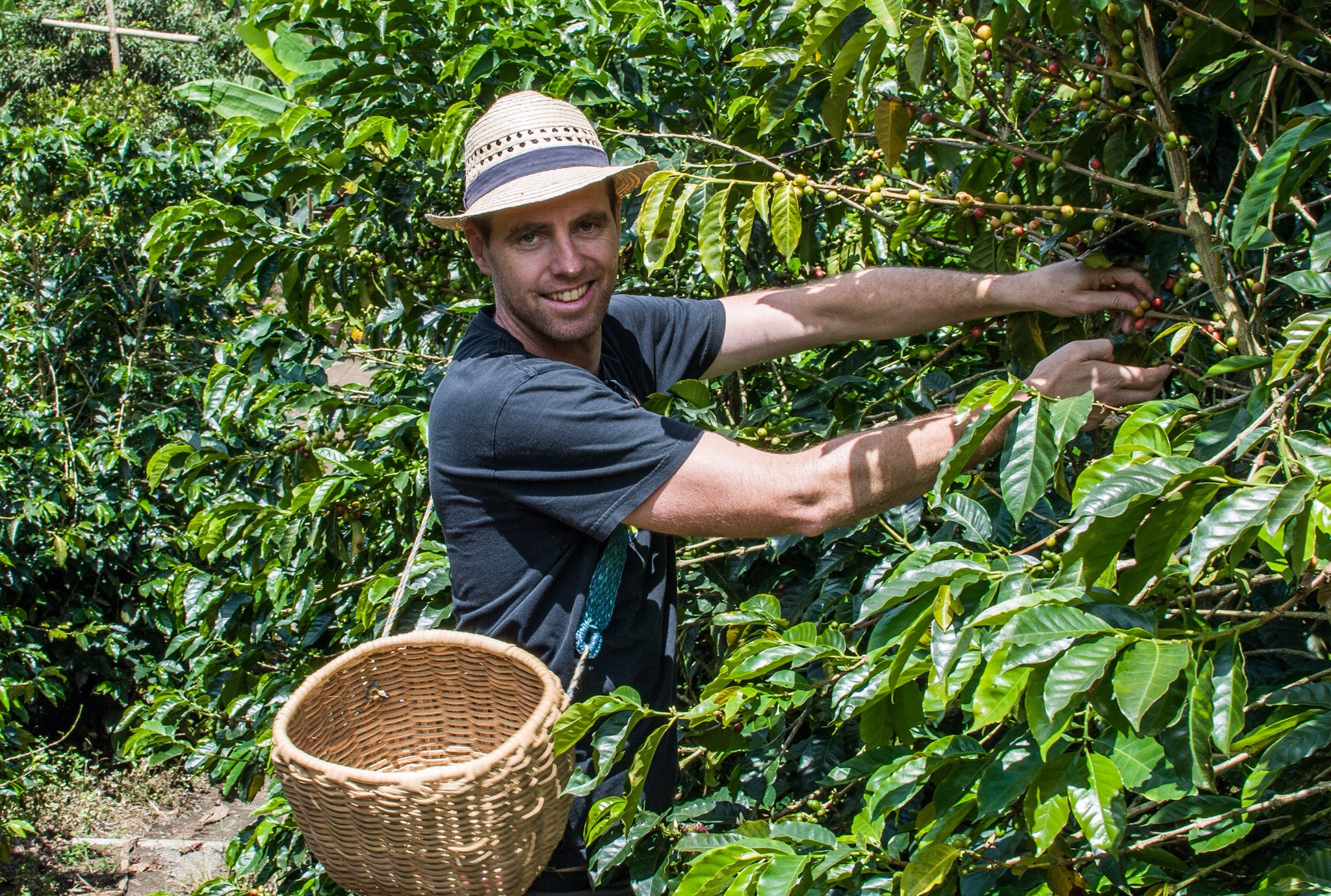
1- Volcan Purace:
Possibly going to be the biggest no brainer of a number one in this entire trip. Hiking in big mountains is one thing, there’s a teasing mystique about a volcano that sets it apart. It’s all about the peak, the crater. It’s a more focused drive than usually exists on a hike and when the crater reveals itself as the otherworldly vision that carries all the weight of the humility that nature can give: it’s something unique that cannot be overlapped or paralleled to anything else. It’s extraordinary.
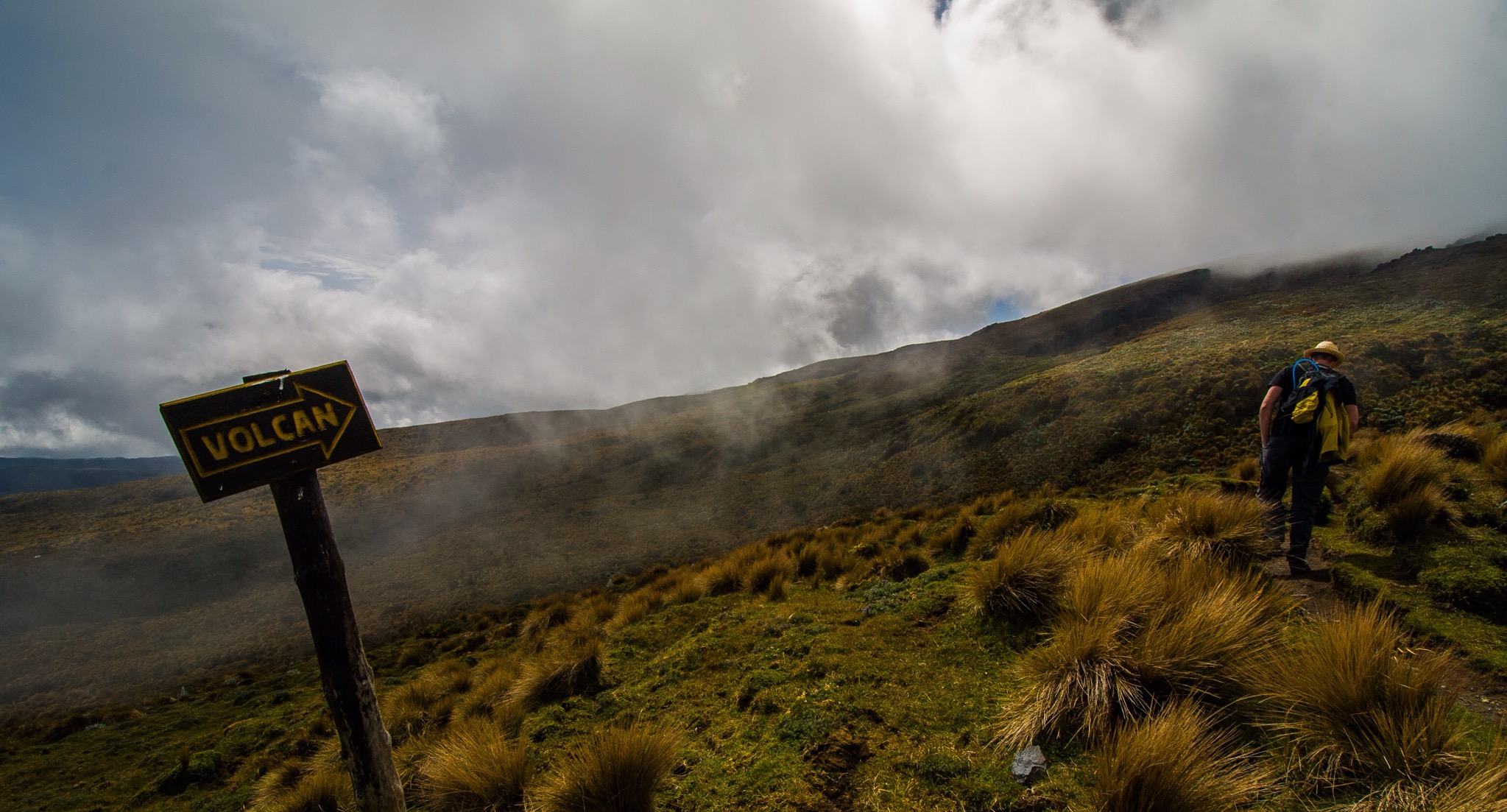
 Charlie and Steve's Excellent Adventure