Menu Close

Charlie and Steve's Excellent Adventure

Tasting the world one meal at a time

While you were working – The Next Chapter, Koh Rong Sanloem, Cambodia

 The time travel machine that is Cambodia continues it’s jarring shifts between eras and the varying faces of this little country that continue to surprise. From the 12th century in Angkor to the late 20th in Phnom Penh, Cambodia has so much history unobscured, placed in such bold light that seeing a Cambodia today isn’t always obvious. From the heart of the country and the heart of past glory, and tragedy, we ventured to the coast and in Kampot we caught a glimpse of Cambodia today; ready views to the past backdrop a window to the present. Fittingly the balance of old and new is delicate and poised, Cambodia neither rests on nor ignores a complex past story to take just the right elements into a future so hopeful. The story gains layers by the year and never a page is forgotten or discarded; such a little country for such a grand saga. 

 Time travel really is the order of the day, the boat rocks on a passive swell as we climb aboard towards what few people think of when thinking of Cambodia, tropical Islands. Pristine beaches, pure white sand turquoise seas are the staples of postcards and calendar pages for the summer months. They never seem to be taken in Cambodia. People come from far and wide to visit neighbouring Vietnam and Thailand and sometimes accidentally venture back in time through Cambodia on the way from one to the other. I wonder if in the future more than the occasional hardy traveller will come to this part of the world with Cambodia as the first thought rather than the after? 

The best part of an hour sees the past and present behind us and the future beneath our feet in fine white sand. Opting out of the party island, Koh Rong, we’re on Koh Rong Sanloem; the calmer cleaner little brother. As if getting off the track and out to the islands wasn’t enough, or onto the less trodden island wasn’t sufficient adventure, we’re walking a bush track across the island across to the quieter of the quieter beaches. Humid wet heat surrounds us as we brush past large tropical plants in a scene reminiscent of William Golding’s classic novel, Lord of the Flies. We aren’t abandoned, lost or fighting for our lives but this separation from the world leads to the frontier adventure feeling that fits so snugly into our off piste tendencies.

Charlie Winn

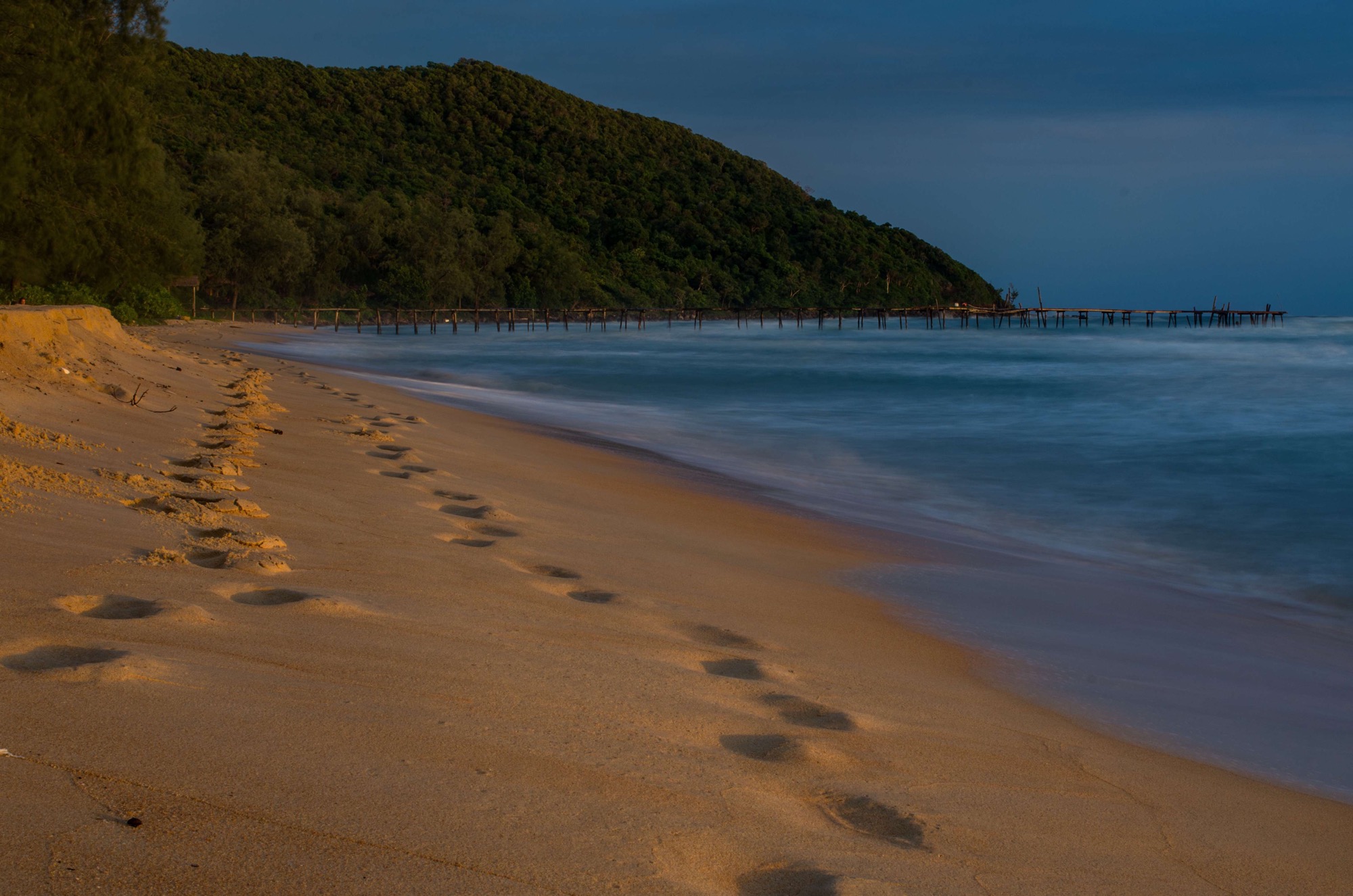
Footsteps on Sunset beach, at sunset. Koh Rong Sanloem, Cambodia

  Eventually the jungle relentlessness gives way, light is visible through the density before us, not just above us as the world opens up not so much to a beach, but a discovery. The more visited side of the island faces the mainland, protected in a sheltered little nook but this side, the side for those who venture further faces the open ocean. A rickety pier reaches out bravely through a churning ocean more choppy froth than turquoise serenity, a gathering storm front builds over the ocean as only tropical storms can. A deeply drawn breath, the familiar salt carried on a breeze that feels like it’s a permanent fixture whispers to us the worth of the trek, the voyage. It’s a voice from home heard so clear this far away, a story told over oceans by generations of salt water people. 

Just a short walk, not far up the beach to our bungalows on sand a little more golden than white but fine and soft all the same. Sand that swallows your foot in the wet areas near the shore rather than holding you aloft on firm rings of dry sand as each footfall compresses the water from it. The sand swallows each foot only to give it back without protest, so willingly. We Australians take beaches for granted, we’re spoiled for what so many find such wonder in, but in an odd travelling quirk we’re desperate for some beach time; the cleansing salt, water with some life in it, a sun that sets ahead rather than above. It’s a short walk really, this flirtation with home told on a breeze so far away from home but we’re climbing the stairs now to our timber bungalow carved so timidly into a forest that doesn’t want to give it the space but like the sand gives graciously. 

Charlie Win

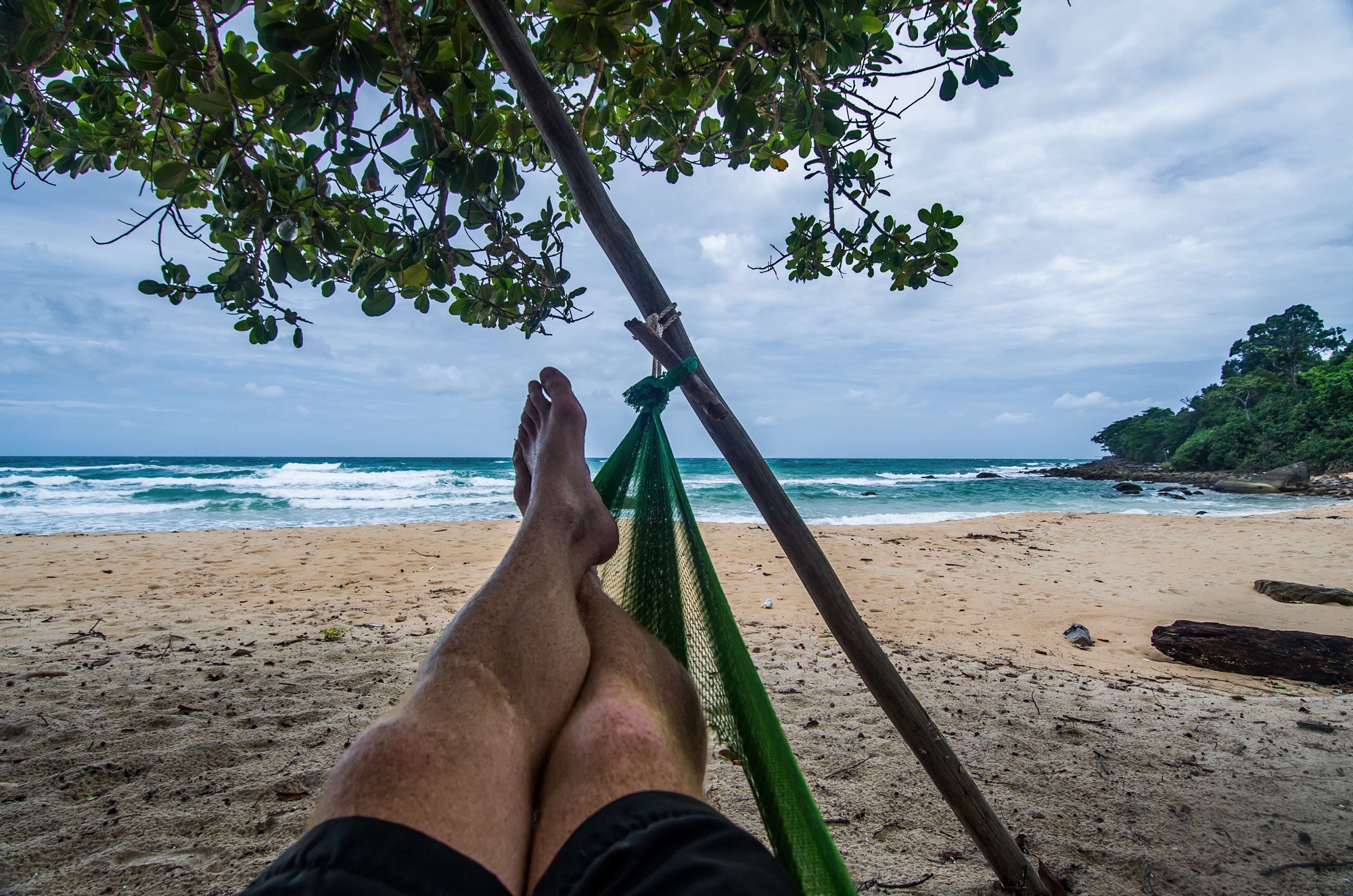
Relaxing in a hammok, Sunset beach, Koh Rong Sanloem, Cambodia

  I think of the Caribbean, the Greek islands, Thailand, Australia even; this scene could be in any of the places that snatch up a reputation that should be shared a little more liberally. It’s only a matter of time really; soon enough there will be TV advertisements to discover the islands of Cambodia, the tropical oasis yet to be discovered except that by then discovery will have moved on. The storm breaks as only tropical storms do, suddenly and with all the vigour of an ocean alive commanding the air above it. In the moments before the flash drenching washes over us and a few splatters threaten through our thatch roof the churning ocean that refuses to be tamed thunders down it’s promise. The world knows little of this rage but in time it will, the complex story that is Cambodia is yet to have the new chapter written but the next layer to the story is surely full of promises of a salt breeze and choppy seas crowned by a hopeful horizon at a days farewell.    

While you were working – Version.2015, Kampot, Cambodia

 Upon entering Cambodia we reflected on the 1980 song ‘Holiday in Cambodia’, released just after the murderous regime of the Khmer Rouge crumbled it was a concise lash out at the whining comfortable middle classes. Instead of complaining about trivial problems that aren’t really problems at all, the song so elegantly said: what you need, my son, is a holiday in Cambodia. So outrageous it was, the suggestion of taking a holiday to war-torn Cambodia, so concise the cutting commentary; yet here we are taking the once outrageous words literally on our own holiday in Cambodia. It’s been 25 years and Cambodia is a very different country now, rendering the once provocative song neutered. That was the idea. 

 Unlike many nations who choose the easy option of a blind eye, Cambodia not only doesn’t shy away from its past, it tackles it with humility and honesty that’s sometimes more honest than you’re ready for. Rejecting the very human desire for hatred and revenge, Cambodia instead seeks justice and resolution with calm rationale never shying away from the difficulty of a shameful past. We planned on the 2015 version of the Cambodian holiday but at S-21 and Choeung Ek we got a sobering dose of the 1980 version after getting the 12th century version in Siem Reap. The past here is not easy to escape; what strength of resolve this nation gathers by facing its pain rather than choosing the blind eye. 

Charlie Winn

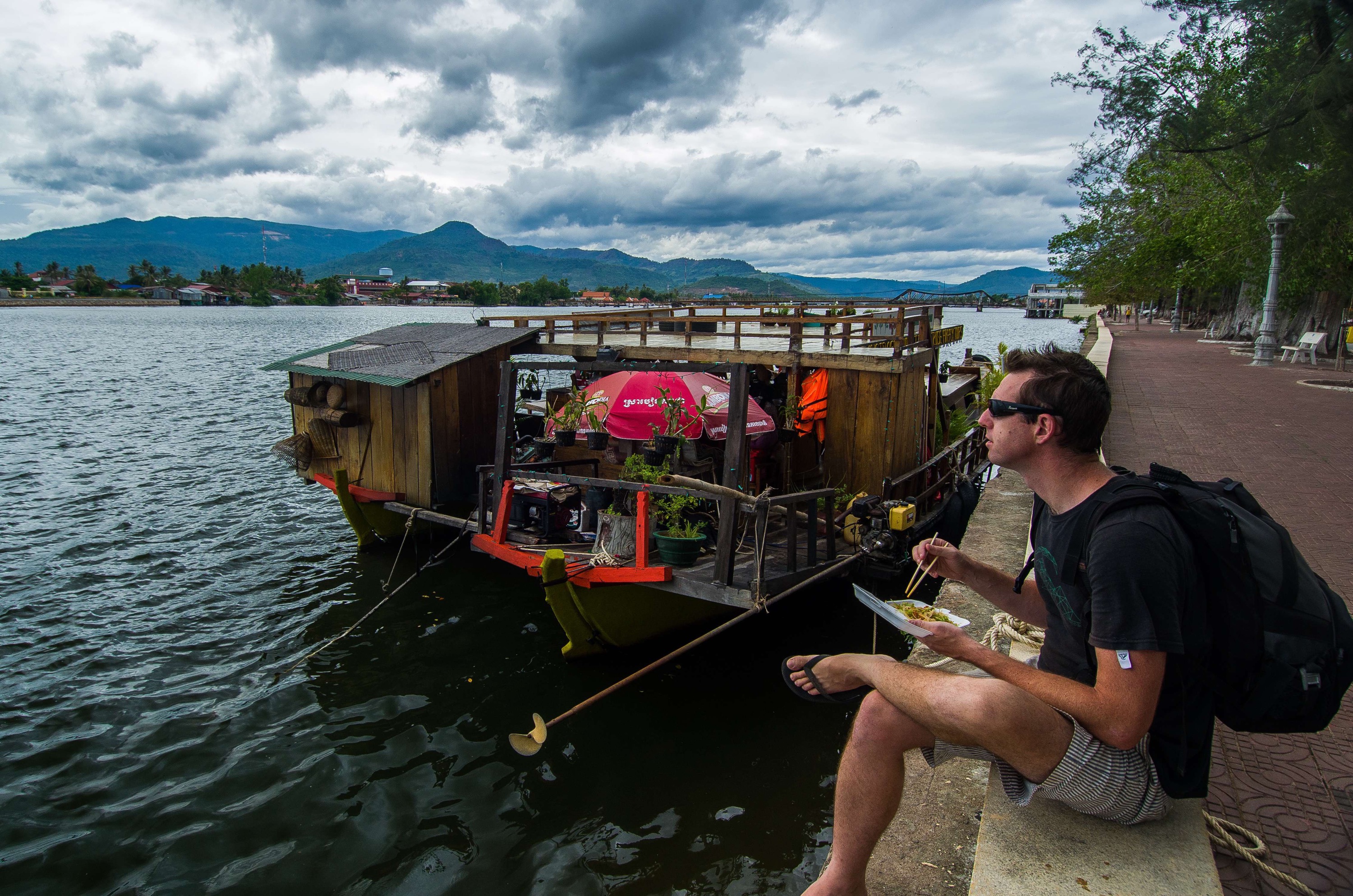
Papaya salad by the river, Kampot, Cambodia

 When we travelled in China the very counter concept was the confronting element to travel within; China’s own equally tragic atrocities are not only ignored, Mao is still largely adored. Comments abound in the guest books of S-21 prison about China’s involvement in supporting the Khmer Rouge as Cambodia denounces and faces up to the atrocities of Pol Pot yet China continues to ignore that their own disaster even happened. Contrary to the fantastic time we had, we were happy to leave China far behind but it’s insidious reach just keeps on calling back to us. Where all around us in Cambodia we see cheeky smiles, warm dispositions and courageous honesty China revealed a sad confirmation of it’s own bad cliches; the new money of China more obsessed with Louis Vuitton branding and designer cigarettes than bringing sight to the blinded eye. Yes, China still has a portrait of their Pol Pot looking over Tiananmen square. 

 As difficult as it is to resist outrage, times have indeed changed and thankfully Cambodia is a far different country to what it was in 1980, our original hopes of a present day holiday in Cambodia haven’t been dashed. Kampot is a small town of tatty shopfronts, broken footpaths, dated signage and gardens that need a bit of work. It’s also the definition of charming. Kids in gleaming white school shirts to match the big smiles, a relaxed vibe and great food sit beside the Kampot rivers eventual opening to the ocean. Known famously for Kampot pepper, this little town takes us the next step in our time travel journey; from ancient Angkor, through recent disaster of the Khmer Rouge we’re finally up to date, maybe this is what Cambodia is today. We like it. 

Charlie Winn

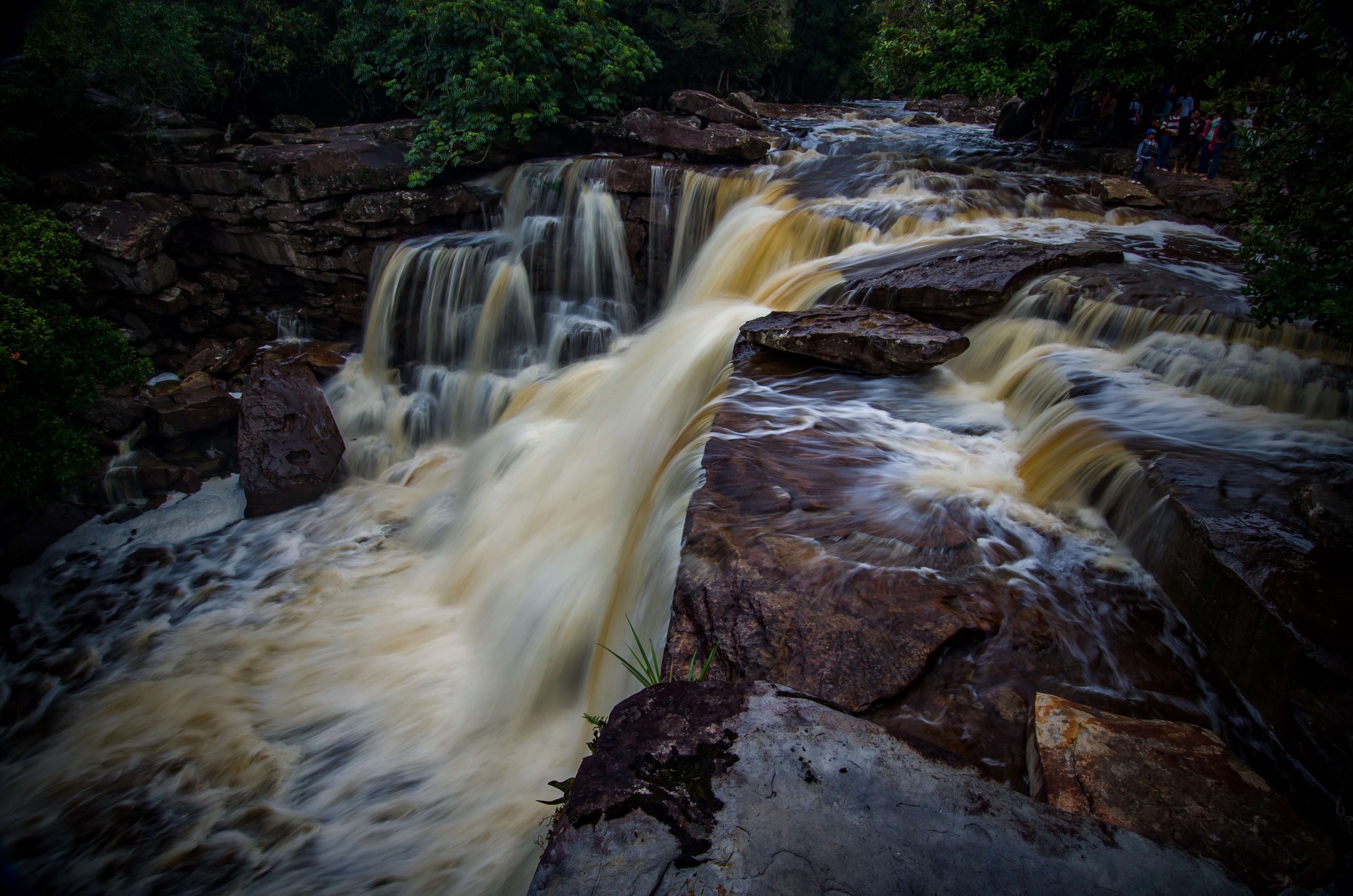
Waterfall on Bokor Mountain, Kampot, Cambodia

 Blessedly freed from the emotional punch in the face that was the last two days it’s time to get some wind in the hair and hit the road, cast off the restraining shackles and finally make a liar of the song. Our throbbing 50cc scooters aren’t exactly the definition of masculinity but they do the job, in truth the absurdity of these little machines is a liberating triviality, a harmless bit of fun that the last two days didn’t permit. First challenge, Cambodian roads. There’s no road rules, just an overall ethic: we’re all in this together. There’s few conventions I can determine other than just let people go, you’ll get your turn and whatever you do, keep smiling. Signs and lights are nearly non existent, traffic flows like water currents joining from all angles. Elegantly this country solves the problem of using mobile phones while driving; at home we don’t do it because it’s the law, here you don’t because it wouldn’t be possible, you would die. 

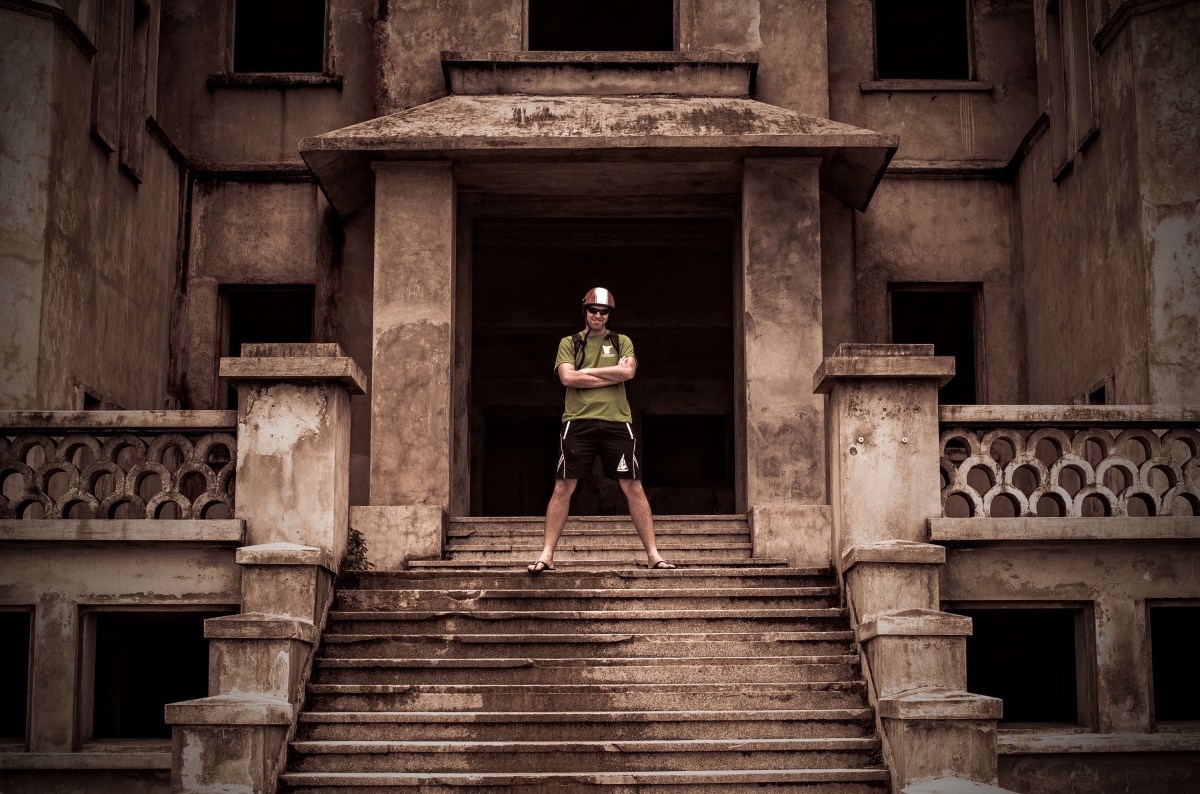
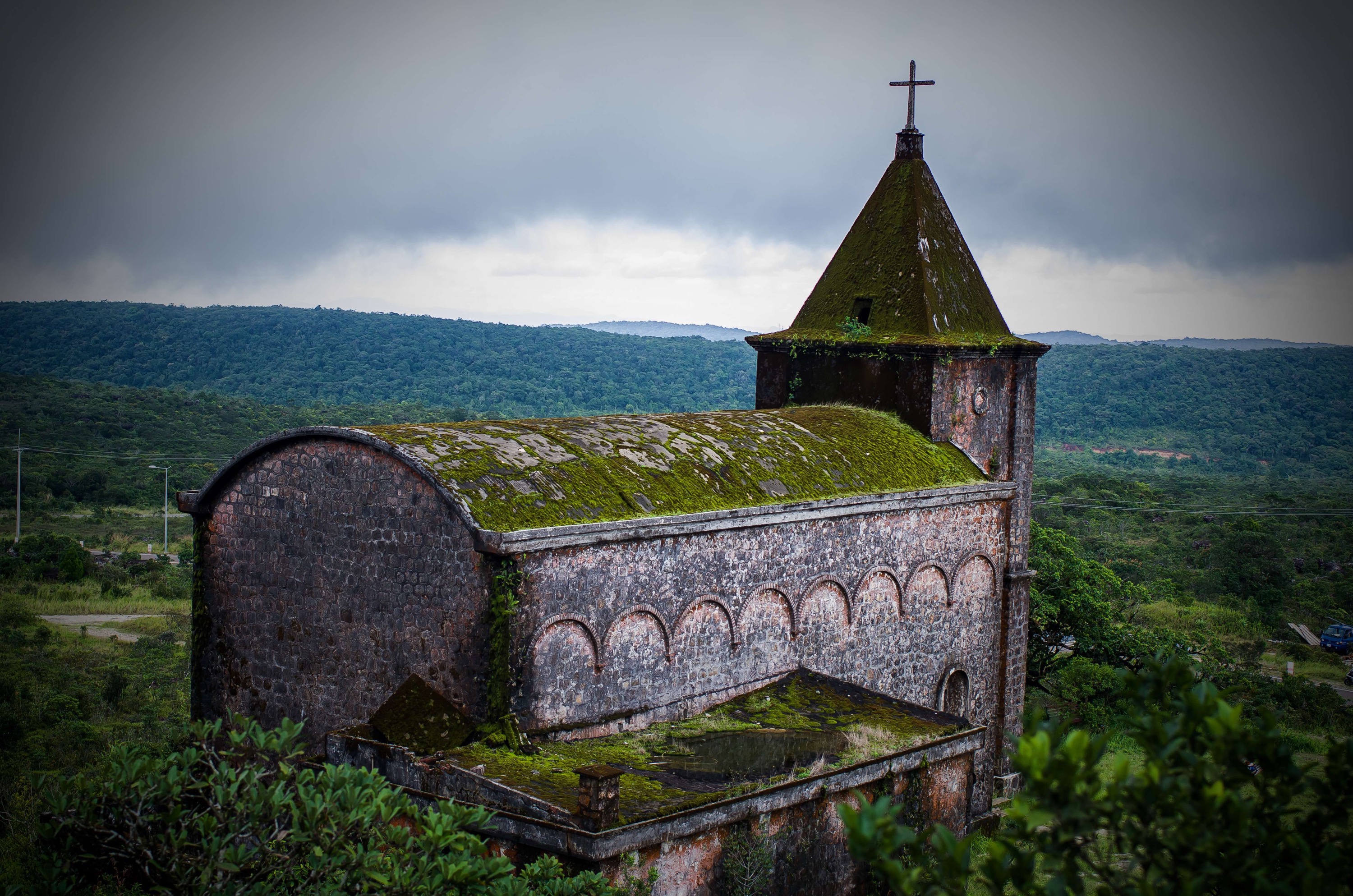
 Reaching a top speed of zero on account of our disabled speedometers our scooters scream like overworked lawnmowers too early on a Sunday morning all the way up to nearby Bokor mountain. Across an escarpment that looks from the town of Kampot to Vietnam to the open ocean ahead we find grand buildings, casinos, resorts and churches placed so oddly up in this alpine escape. Grand buildings only as past imaginings, most of them are abandoned or deserted, open shells of a place that once was going to be. Life spills from some buildings to operate beyond a tourist musing but this otherwise idyllic location remains a ghost town calling forth stories of a future that was going to be from a past that never became a present that once was. Somehow travelling in Cambodia keeps shunting us to different times, the present just isn’t big enough to hold the massive stories of this small country.  

Charlie Winn

Inside the abandoned church on Bokor Mountain, Kampot, Cambodia

  But cling to the present we do, the poor little scooters scream in protest on our way to Kep, another town on the coast. We’re getting familiar with the one road rule here and when it comes time to fill up on petrol we find ourselves at a tiny street-side stall disconnected from any other shopping venture, just a small cart on an arterial road. Petroleum regulations are endless and strict in Australia, it’s only as we scoot away that I ponder just how normal it feels to fill up from an old glass coke bottle for a dollar. We needed something, you buy it; so simple. The small scale retail ideal that we love in Australia but seems as likely to see the light of day as a Bokor mountain casino is anything but a hippie fantasy in Cambodia. 

 Small scale vendors are never more represented than in the food market. A papaya salad from one stall and a sugar cane juice from another has us sitting on the beach with a smiling world around us wishing the impossible wish that we could do this at an Aussie beach. In the place of fast food junk, Cambodia dispenses with the marketing, the packaging, the branding, the design, the logistics, the warehousing and the retail costs to cut the crap and give the consumer exactly what they want at the price they want and with the ethical story behind it all to boot. There’s a dense social commentary on consumerism here but with my tank full of ‘coca cola’, divine food and a blessedly under developed beach even musing about that concept seems corruptive.  

Charlie Winn

Abandoned church from the escarpment, Kampot, Cambodia

  The mood is relaxed, carefree; far from tragedy and powerful grandeur. So relaxed it feels perfectly normal to have a beautiful young girl charge at us wanting a photo, she tells us excitedly “I like photo with foreigner, they’re my favourite food”. The lost in translation would be laugh-out-loud funny if it wasn’t so innocent, sincere and blessedly free of past severity. Life’s simple in modern Cambodia even though history, old and new, writes a more complicated tale. A salad, a street cart, a mis-quote and a beach; we’re finally having the version.2015 of a holiday in Cambodia.  

While you were working – A Very Long Queue, Phnom Penh, Cambodia

 Yesterday was yesterday; gone, faded into the vague crossover of night and never to glimpse daylight again. But some days don’t surrender meekly, resign to be remembered as a watermarked number in a small square along with the 364 others. Yesterday the dividing line of a calendar day was bridged by stubborn thoughts; we saw the sights, had some beer, the sun sank and it rose again but the ritual of time compartmentalisation didn’t seem to work as usual. Yesterdays visit to S-21 was not so easily forgotten and in the other half of a day that claws beyond its bounds we’re at Choeung Ek, where the victims of S-21 came to become what our language hasn’t developed a word for yet; victim seems inadequate.

 A set of headphones cocoon my ears to a world inside my skull, I have my thoughts that shout from yesterday and the accented voice of a man who’s words I step in rhythm to. There’s memories scratching at my recent mind: gored corpses strapped to small bed frames, men crying out through gritted teeth as another electric shock is administered to their testicles, women wailing incoherently from another scorpion bite while their breasts are mutilated. Children screaming because it’s the only option. The enclosed world of these headphones and the man who’s politeness now just seems clinical is too effective, the wrestle begins between seeing a tragedy that happened and running away from the feelings that place us in the middle of it.   

Charlie Winn

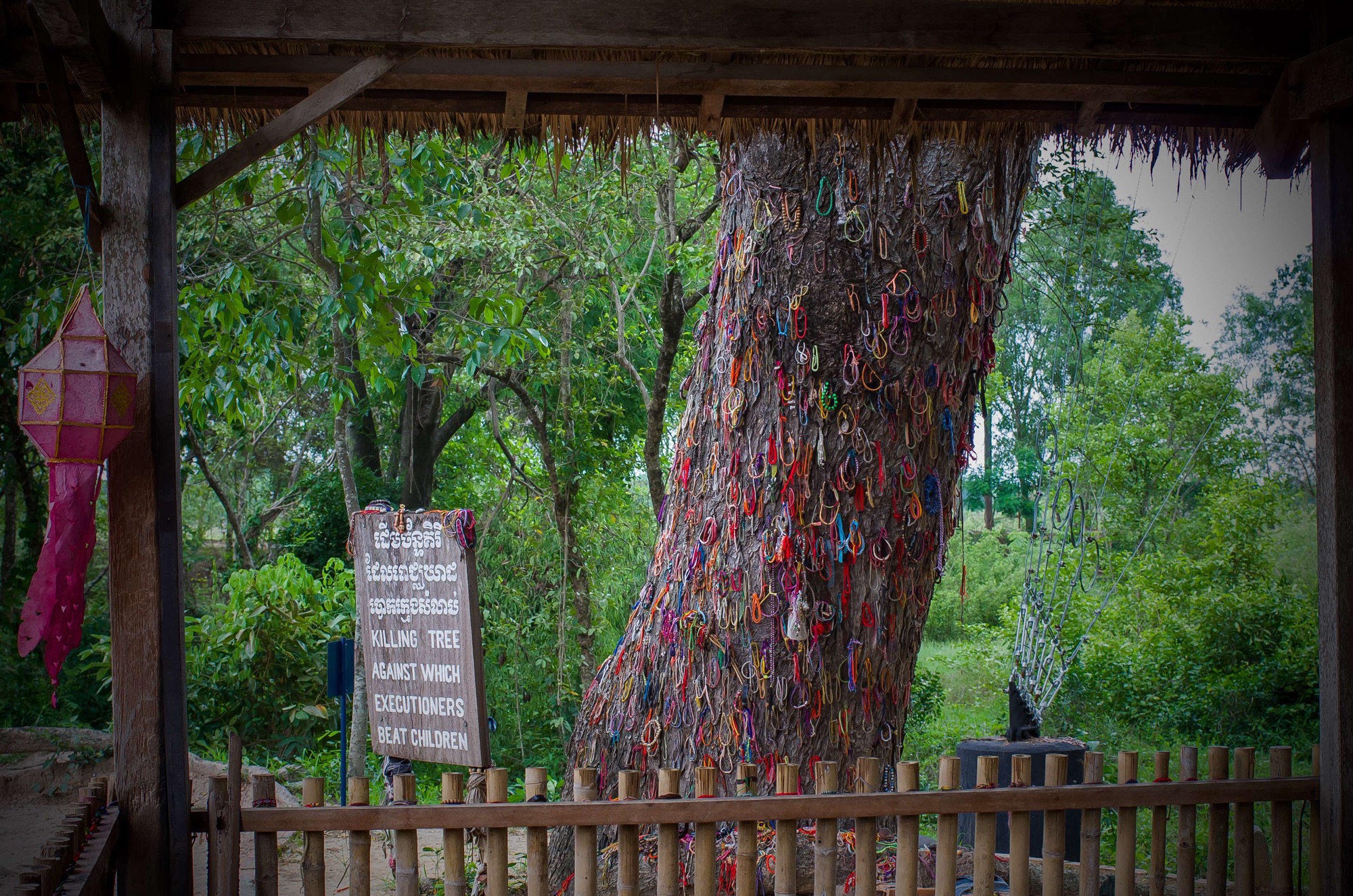
The killing tree, Choeung Ek (aka The Killing Fields) Phnom Phen, Cambodia

  I’m not a victim here, neither is Charlie. He’s in his enclosed world, we touch base occasionally in a relieving escape from the headphones but our journeys are largely separate, alone; so fitting. There’s 2 million stories to the broader saga of the killing fields, Choeung Ek is just one of about 300 such sites in Cambodia where a quarter of a nation was thrown into mass graves, murdered with iron bars, hoes or machetes to save on valuable bullets. Around two million people form a sea of faces but as this polite man talks me so impassively through the horror, the face I see is Cheav’s, my colleague now safe in Australia but born in Battambang, Cambodia. Cheav would have been an infant at the time this place scripted its infamy and there is no doubt a story of his family but it’s not a topic easy to raise. Every one of the 20,000 people dumped in this area little bigger than a couple of football fields has a story and each one of them links itself inextricably to the face I know. 

 Once five or more metres deep, the depressions in the ground we see all around us are mere dents in the earth to mark where the mass graves were as time attempts to erase the past. The polite man talks to me still and I jumble between unbidden assaults of imagining what it is to be a victim here and placing the face I know to the stories I am hearing. Either option is horrific but in this cocooned world I have precious few choices as I dance from one wrenching immersion to another.  

Charlie Winn

San Phra Phum (spirt house) to provide shelter for the dead victims’ spirits. Choeung Ek (aka The Killing Fields), Phnom Phem, Cambodia

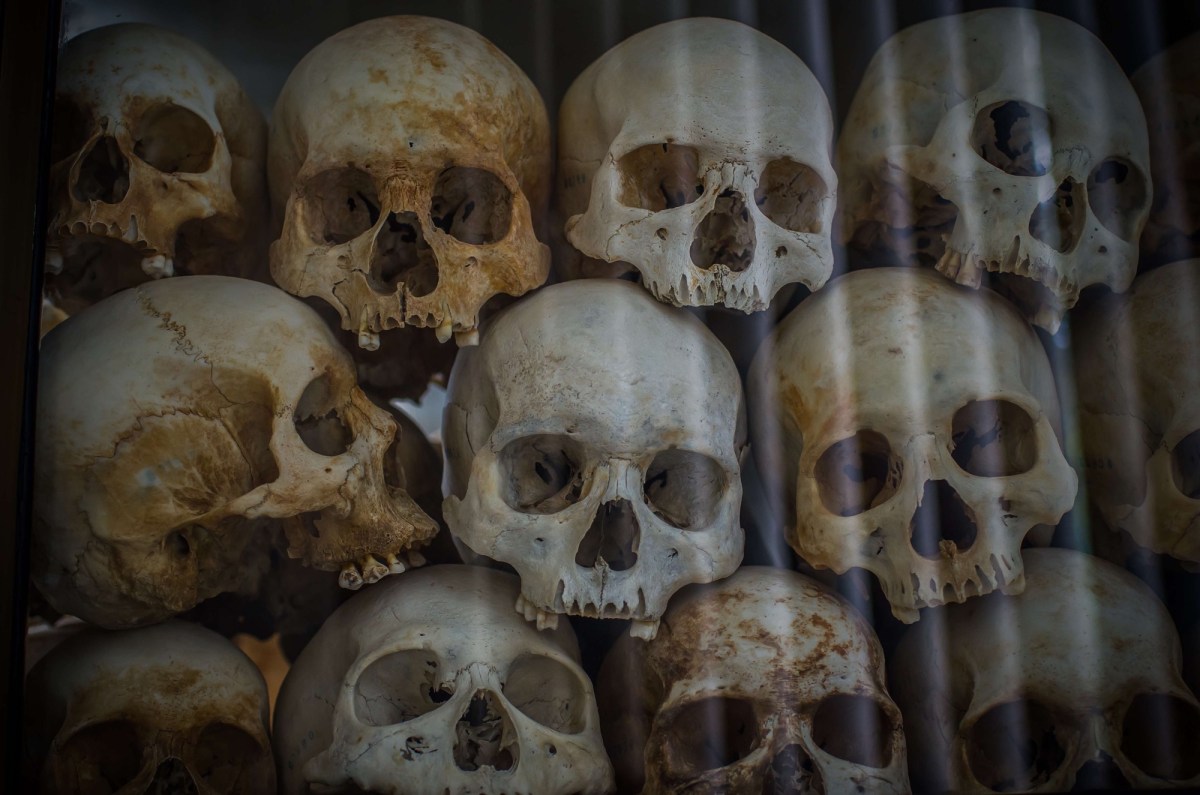
  Horror for the deaths, outrage for the injustice, anger for the ignorance and woe, simple weeping helpless woe are the world of my earphones I can’t escape. Cheav keeps popping into my mind, his huge grin mocks the turmoil of my gut but that’s the only face of his I know, he’s always smiling just like this voice refuses to resign to sorrow. Where does fortitude like this come from? The fields are alive, I can feel it, the dead refuse to rest. Literally. On paths we walk the bones of victims crests the dust as the years wash away soil, unmistakable body parts lurch from the ground like the undead returned along with the scraps of tattered cloth they were buried with. 20,000 bodies in this place alone, the enormity of this disaster can’t be refined to just the graves we see or the shrines of exhumed bodies. The name is too apt, The Killing Fields, yes they’re whole fields, as if the graves aren’t horrific enough. 

 I’ve spent this whole time wanting to get out of this insular ear-phoned world but the first sign from outside of it offers only more suffocation, whether it’s woe in my own thoughts or those thoughts made real climbing from the ground all around me. This is all too much. These two days in one are too effective at being too much, only they push you further. The killing tree. The grave beside the tree is for mothers and their babies. Grabbed often by the feet the babies were swung in wide arcs to smash their heads against the tree which is now full of tributes, and dumped into the pit. Bullets were too valuable. Through the operating years of this place Cheav would have been between the ages of one and five. His smiling face mocks me, I want to turn away or run but all around me are just more graves with dead people still climbing to the surface in between the graves all these years later. Fittingly in this place there’s nowhere to run, only places to try not to cry.  

Charlie Winn

Victims sculls which have been classified by age, gender and cause of death. Choeung Ek (aka The Killing Fields), Phenom Phen, Cambodia

  I know the earphones will come off soon, I know that I can just walk a short distance and be away from the world of the dead but this knowledge does little to help. There’s millions of stories all around me that queue up behind the one that I know, the one that luckily wasn’t but so easily could have been. So oddly a smiling face represents the millions to me that can’t smile anymore, so grotesquely discordant that it only feels appropriate. there’s a family in Australia, Cheav and Sam with their three kids that have the same smile, Lincoln even smiles when he’s whining about something. It’s crude to think, so blunt but if the wrong babies skull had its brain splashed to the world there’d be one less family and five less smiles in a world that right now can’t do with a single one less.  

 As the smiling face of Cheav is banished with great effort the queue of two million people take a step forward into my view. I can’t do this two million times; the Khmer Rouge obviously could. With relief we cast off the earphones and finally indulge in running away, the breeze rushes past us as the tuk-tuk speeds through the poorer parts of Phnom Penh and back to comfort. What a novelty, walking away from the killing fields, how people must have dreamed of such a thing when they were living the last moments of something we run from, unable to bare the mere thought of. We’ll see the sights, have a beer and the sun will go down and come up again as usual, this time we hope those unbidden thoughts can be put to rest unlike the dead of the killing fields.

While you were working – Soft Hands, Phnom Penh, Cambodia

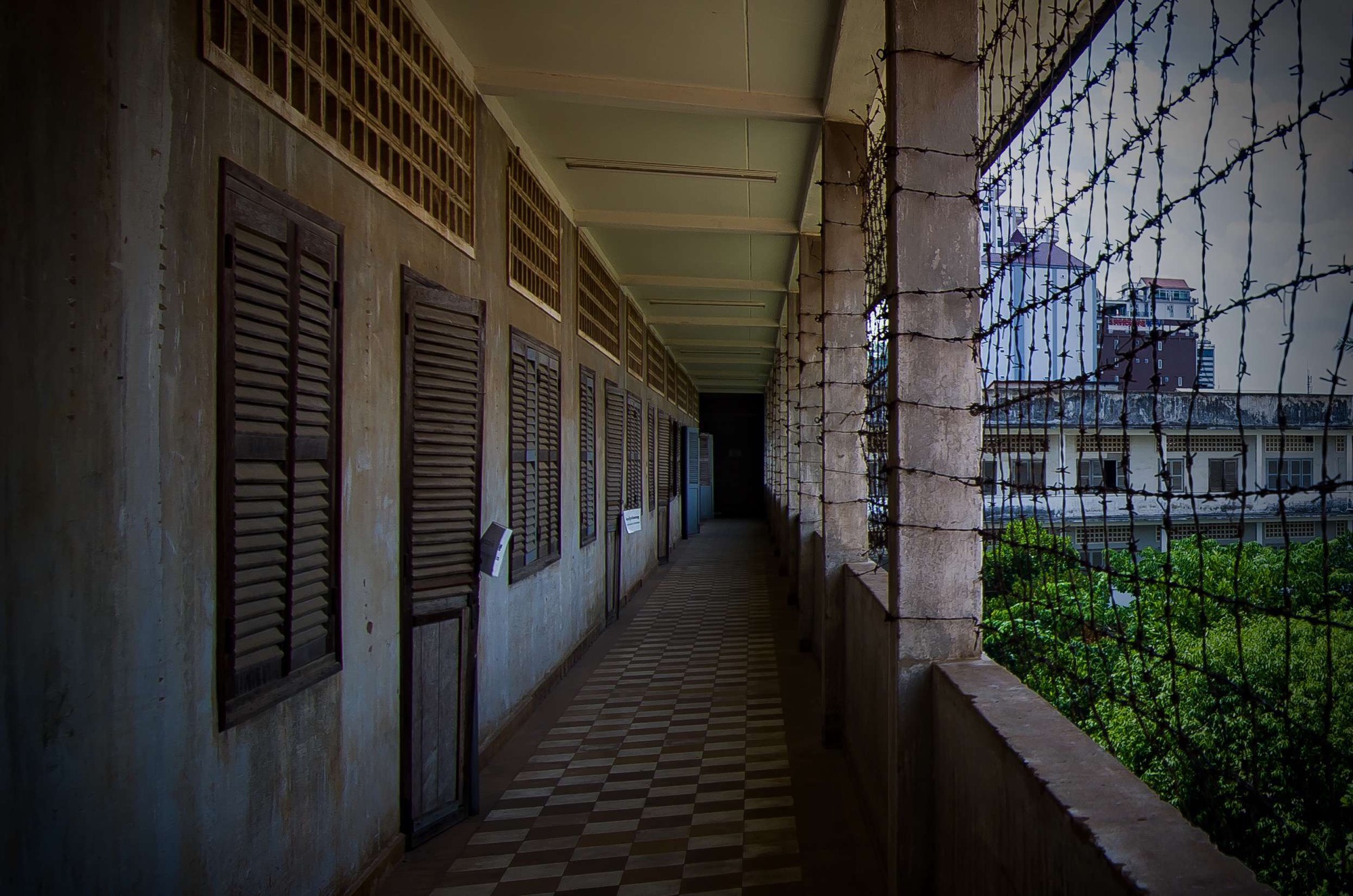
 Back to school, the words that every kid hates to hear but it’s back to school for us today at S-21 in Phnom Penh. It’s not strictly a school any more; education facility is a more apt description as rust streaks stain the bare concrete facades of the three storey school blocks of functional architecture too stark to feel like a school nowadays. There’s no bright colours left, they faded in the patch of time when this place was neither a school or an education facility, when it was something very different. In that time, youthful hope was snatched away along with the bright colours, smiling children and proud parents collecting them at the end of a day. From 1975-1979, this school was a prison, it was a torture facility, it was where Cambodians came to die. The buildings remain; square blocky uniformity flanks a central area that nearly, if you try really hard, feels like it could be a playground. Nearly. Irony drips in the story of a school becoming a place of torture but under a regime that outlawed education maybe irony isn’t the right word at all. 

 Stepping through the gates the bustling streets outside cease to produce any noise, there’s a punch in the gut coming in this vacuum of severe concrete buildings, we just know it. No it’s not a school anymore, it could never be a place for children again. The history lesson comes first in this journey as this place reaches out to regain some sense of the educational intent it once strived for. We all know, or should know, of names like the Khmer Rouge, Pol Pot and the Killing Fields; for many these names are all people know of Cambodia, a rich and diverse nation refined to an atrocity. As always, the pointed end of the story that makes the news has a background that played out before S-21 even scratched a consciousness.  
Charlie Winn

Former school classrooms, converted into a torture and detention centre, S-21, Phnom Phen, Cambodia

  Pol Pot and his cadres swept to power on the back of Chinese finance as global communism of the time was cracking in two: China supporting Cambodia, Russia supporting neighbouring Vietnam. Within two days of seizing Phnom Penh the population were marched into the countryside to ‘protect’ them against US bombing. In truth Pol Pot was following Mao’s script to the letter; destroy the family unit, eradicate education and thinking, scar humanity into compliance. Dreams of a self sustaining nation living a utopian existence were fed to the world and many took it all in, Sweden particularly became vocal supporters of the Khmer Rouge while torture and killings were rife. Standing in the playground my thoughts swim with the tug-o-war between China and Russia, the spill over of war from America and Vietnam, the apologists in Sweden for the Khmer Rouge. The big kids fight over the Cambodian playground but the only population not represented seems to be the Cambodians.

 Four years, or thereabouts, is all it took for the Khmer Rouge to obliterate a quarter of its own population before Pol Pot’s paranoia and extremism fractured his support. His own people turned to the Vietnamese for help and after the relatively short reign of terror the Khmer Rouge were again marginalised into a small guerrilla group hidden in the jungle. Crisis over, time to mend. Incorrect, the story continues as the powers of the west remained fuelled by communist paranoia and refused to legitimise the Vietnamese led liberation of Cambodia; far easier to overlook mass genocide than shake hands with a ‘red’. Thirteen years later, in 1993, the Khmer Rouge were still representing Cambodia with a seat in the UN. The playground bickering spilled onto the streets and involved the world and still Cambodia was yet to be granted a voice. 
Charlie Winn

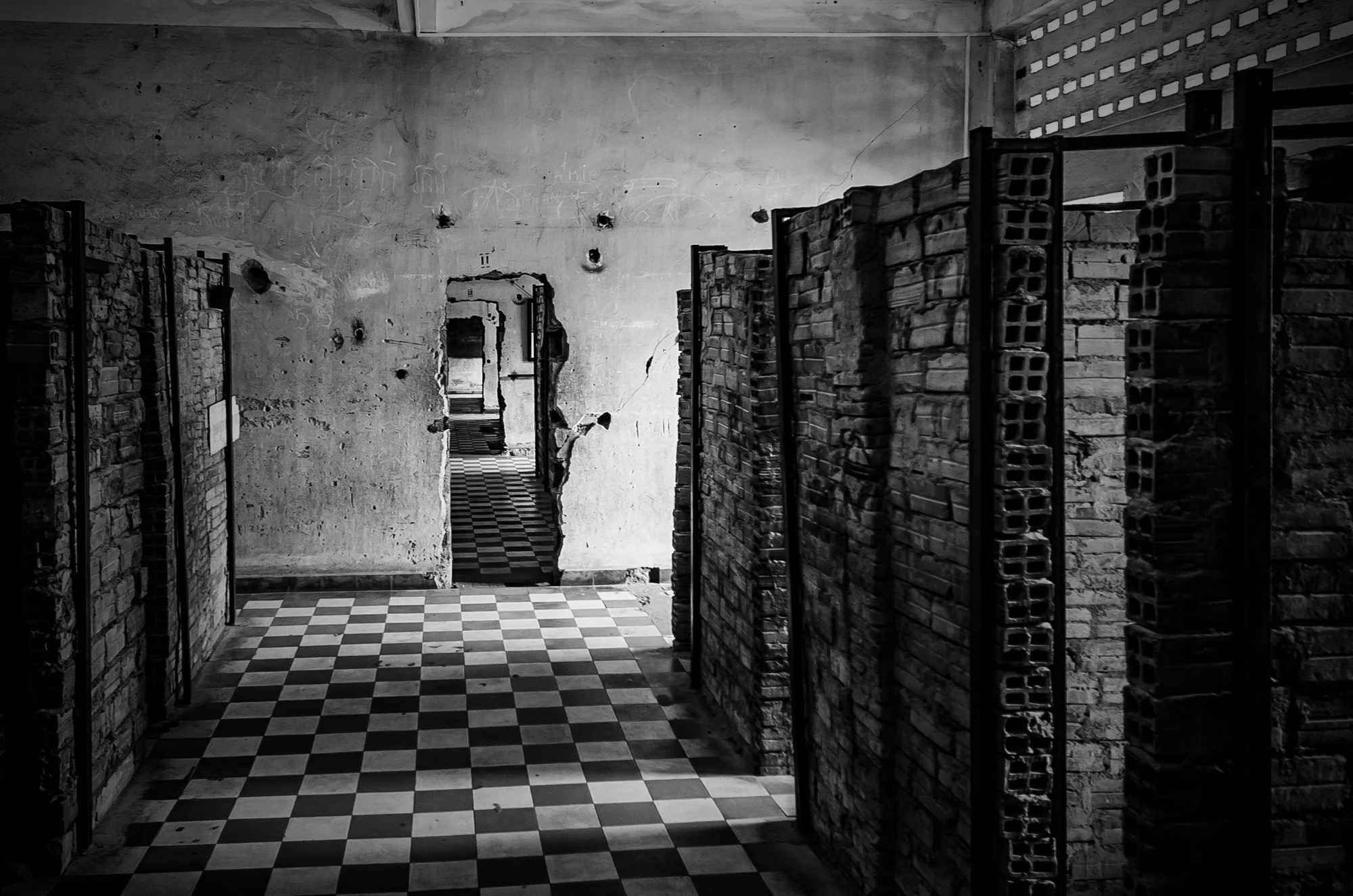
Inside the old school classrooms which were converted into cells. S-21, Phnom Phen, Cambodia

  S-21 might never be a school again but education remains its primary function. This place of innocence and growth became a place of torture to process victims, so much of life used to begin here but in that slice of time life only ended. A classroom of dirty walls that no longer houses stick drawings in brightly coloured crayon of families holding hands or sports ribbons is now just worn and scratched bare with the stains of blood and excrement so permanent. Gruesome pictures of decaying bodies, gore spilled liberally with distorted limbs look down upon small bed frames that in another place might be kitsch, rustic and cute. The beds that the deformed corpses remain chained to in the pictures look eerily similar, a closer inspection of a bent bar here, a missing rod there draws pause; the bed in the middle of the room is the bed in the picture. Vomit threatens to lurch forth as we involuntarily recoil. 

 The next room another bed and another grotesque image, the next room the same, and the next and the next all stories of horror fiction played out over too many years. Up to level two, the repetition is debilitating. Like the prisoners here there’s no escaping the grip of what this place is. Level three; stories form of mothers chained down and stung by scorpions, fathers bodies twisted and broken. Building one torments us while we scurry a little faster than usual urged on by a desire to put the torture behind us. Hearts beat a little faster, breaths are drawn shallower, eyes are glazed; and we’re only burdened by thoughts. Yes this could never be a school again. 

 Building two; just when you thought you had escaped building one. To say that visiting S-21 is a sobering experience is to undersell it, it’s horrific. Through classrooms amended to house numerous small cells wrapped in shrouds of barbed wire we tread the halls of horror that now layer heavily with sadness. Entire floors of buildings are dedicated to photographic displays of the victims, S-21 was meticulous in its killing and in a twist of fortune, the dead are now anything but faceless. Row upon row, room upon room looks down upon us in black and white, a nation of faces all with numbered tags to mark the livestock in the abattoir. S-21 was for political prisoners, which meant that you were educated, spoke another language or had just signs of education like soft hands. So many are children. Pol Pot famously said that ‘To take out grass you must remove the roots’, entire families were routinely eradicated. The rooms continue forever in a sea of photographs, still life’s of stilled lives. At work I use repetition and consistency of imagery to sell things; things like shampoo. To have these same marketing strategies used against me is enough to draw back the bile once more, it’s too effective to be used this way.  
Charlie Winn

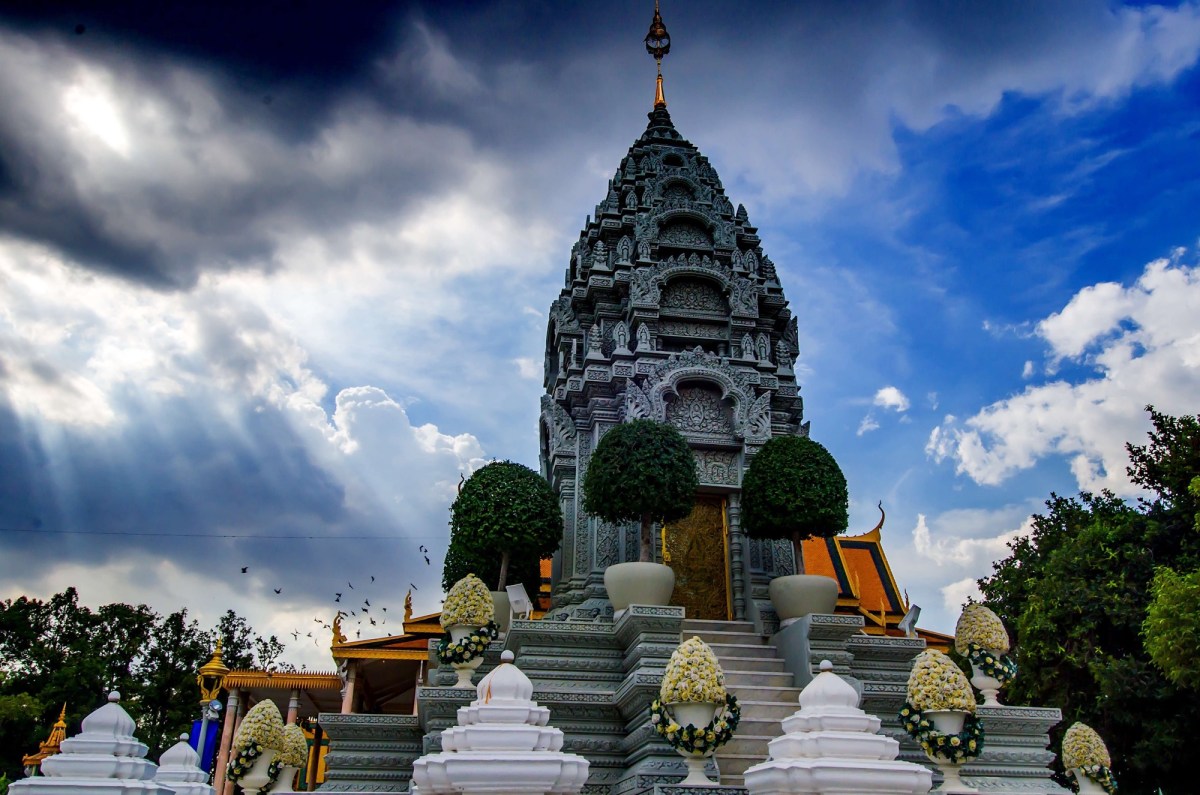
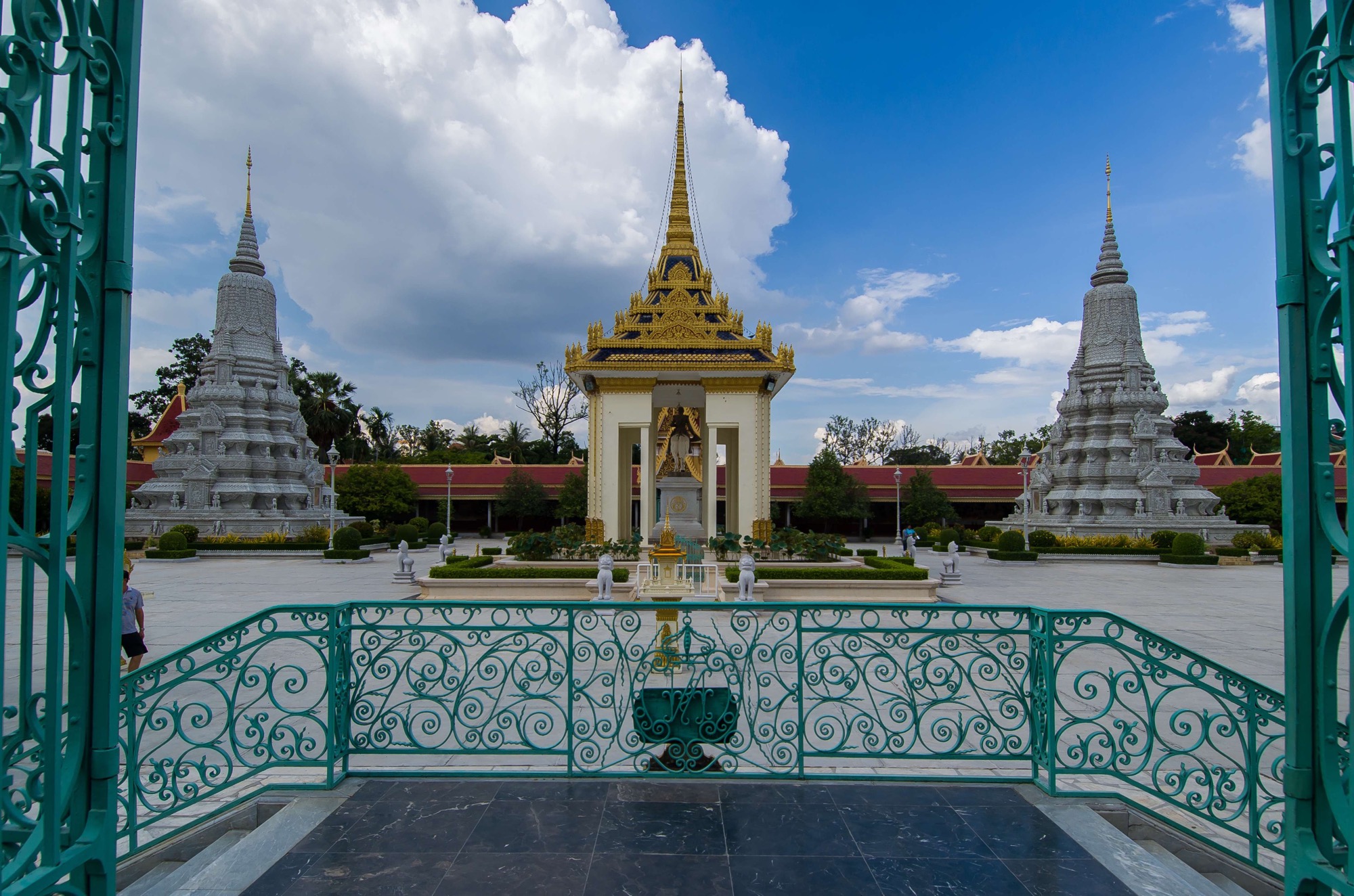
The Royal Palace, a welcome change of pace after S-21, Phnom Phen, Cambodia

  The education continues as we read testimonials of survivors and victims alike, what strikes me is the maturity and honesty of this place. There exists no vehement desire for retribution, no fanatical creation of enemies to hate as politics unbelievably takes a back seat, this is a place for healing and Cambodia can only be commended for the balanced and honest way of acknowledging what has happened. Testimonial after testimonial draws forward words of warning to never let this happen again in place of very understandable hatred, even the criminal proceedings that are still underway are underpinned by notations of the credible legal representatives of the perpetrators. Hats off to you Cambodia, we could never begrudge you for indulging in fervent vengeance but in its place you choose justice. I don’t know if I could be that brave.

 In the power struggles of the world’s playground the Cambodian people had no voice, no one to represent them, they were faceless. Eventually we come to a photo that stops me as nearly all have threatened to do, a young boy, maybe twelve or thirteen years old. Around his neck is the number one. The first political prisoner, the term political prisoner applied to a child just riles my anger; I keep thinking of the crime of soft hands. The first victim, the first rebel to threaten the state was a small boy staring at the camera unknowingly, distracted. The big kids rumbled in the playground while Cambodia had no face, had no face worth noting except for the nation that stared into the camera. 

 We farewell the playground back through the gates as the streets of Phnom Penh regain their sound and life. We aren’t talking much now except to console our rocked worlds so shaken even though we knew most of what happened here; we knew it but we couldn’t stop the onslaught that stole the colour from a place to play. The playground in truth was far bigger than this one, it was the world of the great powers and in the innocence and naivety of political prisoner number one Cambodia now has a face that the world can see, should have seen all along. The boy who’s mother had soft hands. 


While you were working – Many Faces, Phnom Penh, Cambodia

 So starkly sits Siem Reap, this comfortable, clean modern town nestled in beside one of the worlds great archaeological sites: the great city of Angkor. Sipping delicious coffee in a chic cafe the world of Siem Reap whizzes by in the early hours before our bus to Phnom Penh and into another layer of the complicated story of Cambodia. Where in the 12th century Angkor was the largest city in the world with the Khmer empire spanning much of what we now call south east Asia, Cambodia as a nation is just climbing back to its feet from knockout blows delivered by both outside forces and it’s own decay. How the mighty have fallen. From the dizzying heights of an imaginative flight back in time visiting the great temples we jump on our bus towards a contrasting story, a tragedy of Angkorian proportions written in still wet ink on the timeline of this culture’s epic saga. 

Charlie Winn

Pigeon around one of the spires of Angkor Wat, Cambodia

  Angkor was the greatest place on earth, arguably the seat of this planets most concentrated power but unlike the stories that follow many of histories greatest civilisations Angkor never fell to the crushing blow of a conquering invader. Many factors contribute to a great demise but overall Angkor was, put simply, left behind; a christmas toy that no longer amused a privileged child. Chasing easier trade routes the power of Angkor moved closer to the Mekong, a global wonder left to the creeping reach of a relentless jungle, treasures abandoned by the skewed priorities of the powerful. The mini van pulls up and now we too have left Angkor behind to stand on the banks of the Mekong in Phnom Penh, this part of the Mekong more of a harbour than a river.

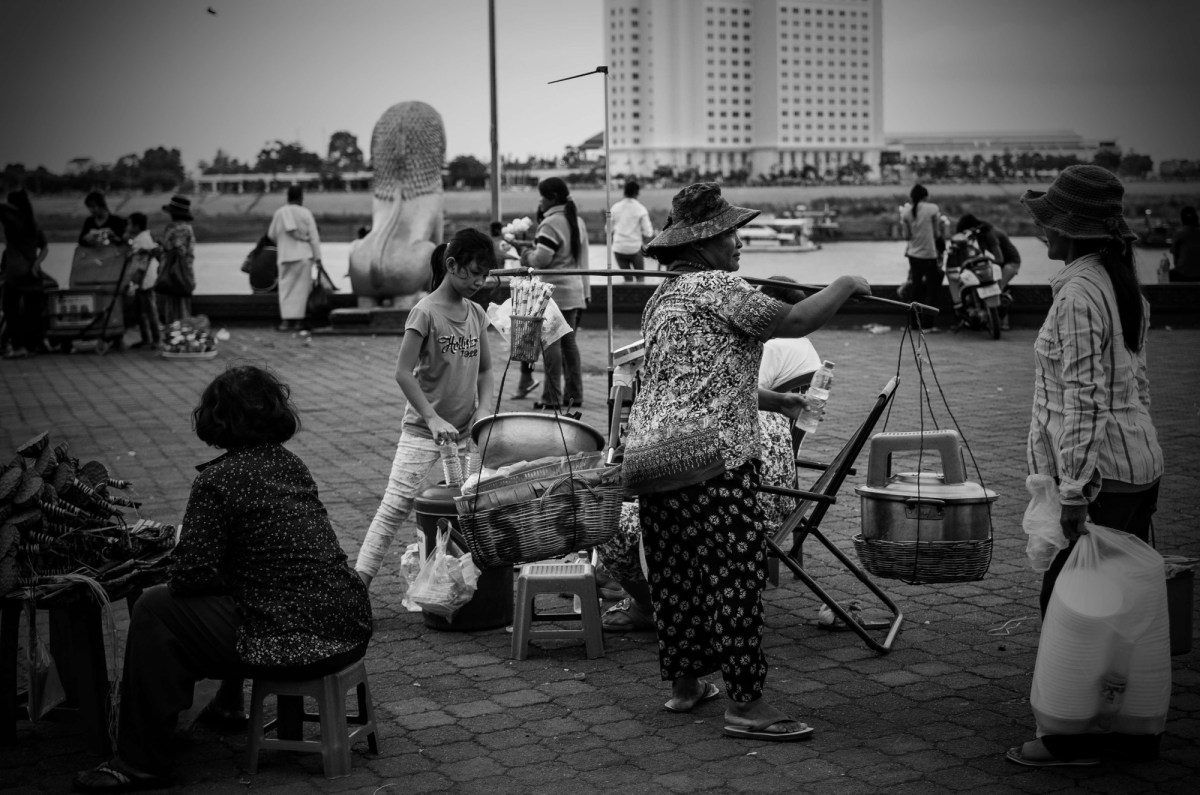
 Entering Cambodia the pervading message from all sides painted the warning message of a poor country: watch out for scams, it’s a bit of a mess, internal troubles are rife. Admittedly Siem Reap booms on the tourist dollar and the riverside promenade of Phnom Penh is the essence of wealthy Cambodia but even through these tinted lenses Cambodia spreads its wings far beyond the poor country that, in truth, it really is. Or are our expectations just getting used to less developed countries? A broad paved promenade in Phnom Phen positively explodes with life; children launch into informal games, families enjoy the cool breeze and grand lawns of well kept gardens showcase the royal palace. Cambodia has many faces; past greatness, recent tragedy, present struggles just a few but none of those are the faces we see now. Sharply dressed young boys and girls hang out with their mates in orange monks robes displaying no social separation based on the fashion of the day. Is it possible that Cambodia, this story of great bounty gone sour, just might have a burgeoning cosmopolitan sunrise about to break the horizon?  
Charlie Winn

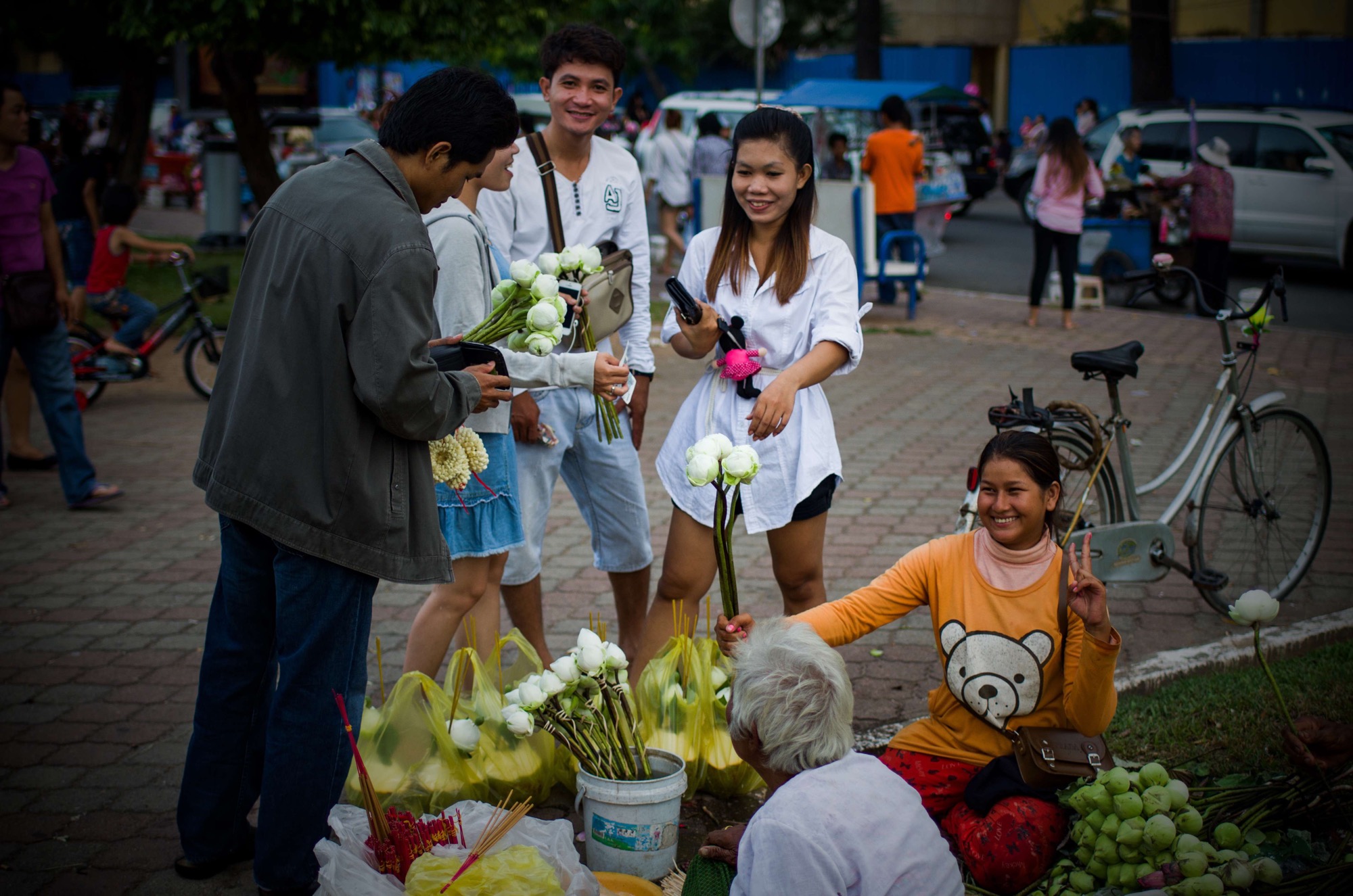
Buying lotus flowers to present to a Hindu god in the temples of Phnom Phen, Cambodia

  Emboldened and enlivened with positivity for the faces we’re seeing and stomachs so blessedly stable it’s time to get back on the street food wagon. We know that it’s a ticking time bomb this eating off the street but we can’t help it, we’ve been walking past delicious food for so long that the declaration can no longer remain just a threat, today is the day; It’s time to start the meat-on-a-stick festival. Like stringent calorie counting dieters on a designated monthly ‘fat day’ we’re pigs at the trough with a basket loaded up with fish cakes, fish balls, spring rolls, chicken drumsticks and noodle soup. Meat really does taste better when it’s wickedly skewered on a stick and drowned in hoi sin, chilli or fish sauce; or all of them. Cambodia is already far more than the warnings predicted. 

 The many faces of Cambodia are on show in just this one day but there’s one we’re going to stare into the eyes of tomorrow that threatens to steal the glory, the fun, the promise and the hope away from all others. There’s a gap in the chronology here, a little space missing like so much of this country, wrenched away and dislocated from a path that all the other faces tread. Upon entering Cambodia I reflected on Cheav, a juggernaut of a person who I’m not only lucky to work with but to call a friend. He was born in the same year that this countries darkest period began. His story carried him to Australia and on a different path, shunted sideways like a car blindsided crossing an intersection along with the rest of his country; violently, suddenly. He was one of the lucky ones.  

Charlie Winn

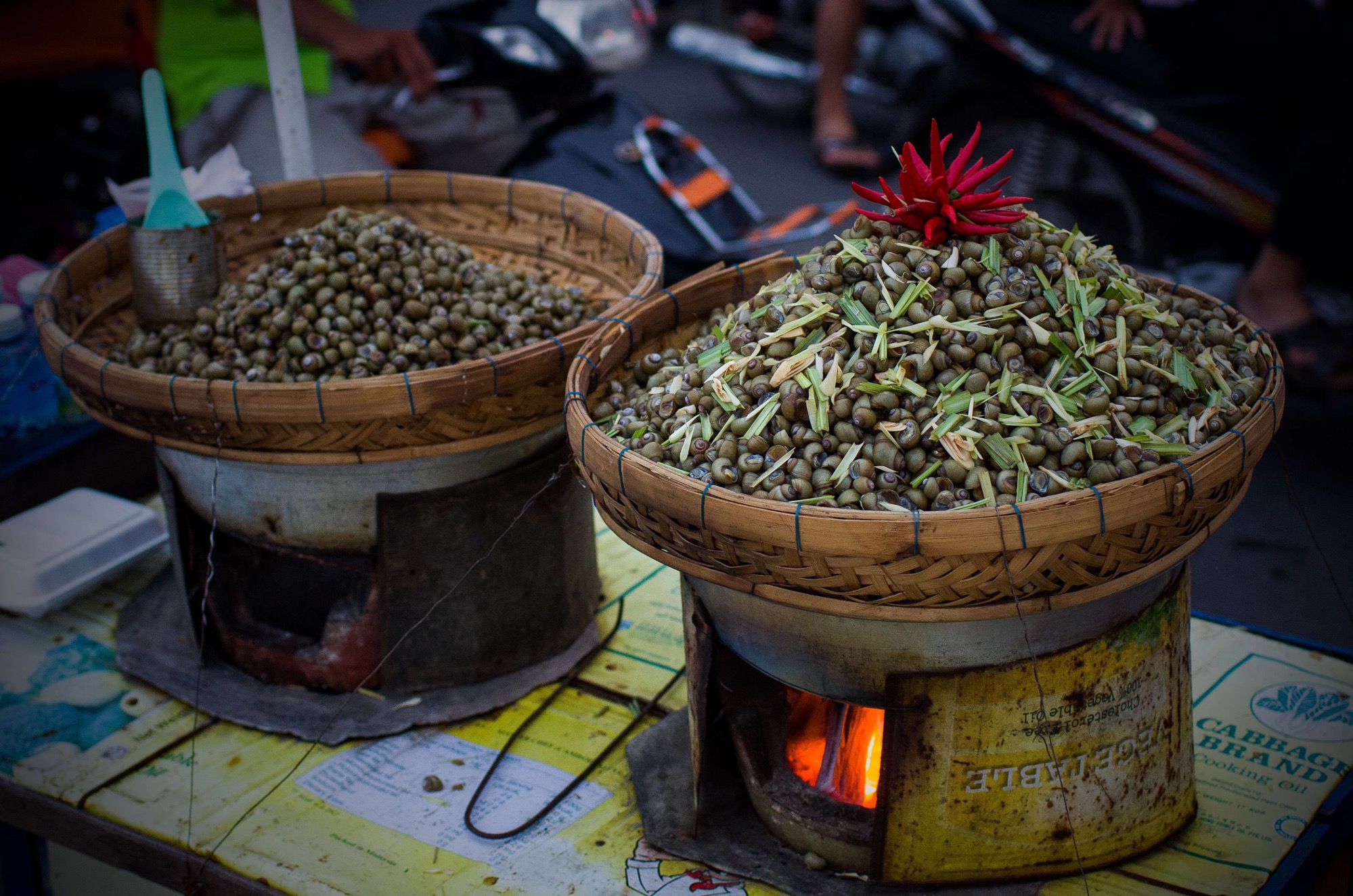
Braised snails with chili and ginseng, streets of Phnom Phen, Cambodia

  It is easy to feel like we’re metaphorically in a room, the faces of Cambodia like a gathering of friends, we all know there’s another face in the dim corner so easy to ignore, the outsider we need to talk to but find no joy in doing so. We know that avoiding that face forever serves no purpose beyond the temporary comfort of denial that we indulge in for just one more day. Our room of faces that all look a little like Cheav: past grandeur, new found optimism, cheeky confidence and modern chic take one final cheers to the clink of beer glasses before we all welcome back the dislocated chunk of history to the crowd. None of us like his face but we all want him closer, now ready to let go of the false security of insecure denial. His name is S-21 and tomorrow we will seek escapism no longer, tomorrow the crowd of many faces that is Cambodia grows by one. 

What you’d rather be seeing – Angkor Temples, Siem Reap, Cambodia

The temples of Angkor Wat and around were so photogenic that there is no way we could put all of the good pictures in the couple of posts we did.  So here is the best twenty.  Enjoy.

Statues and vistas:

Charlie Winn

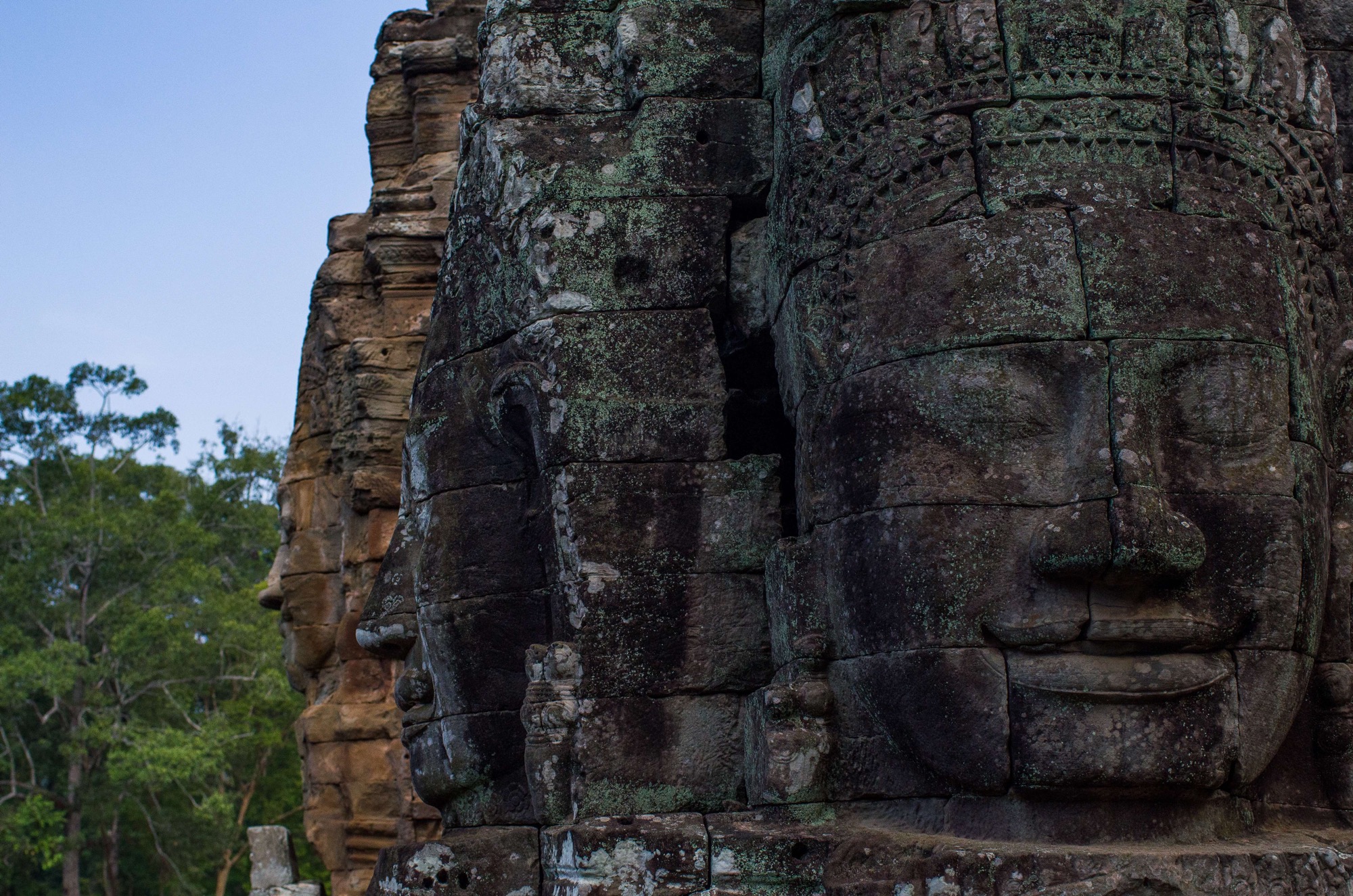
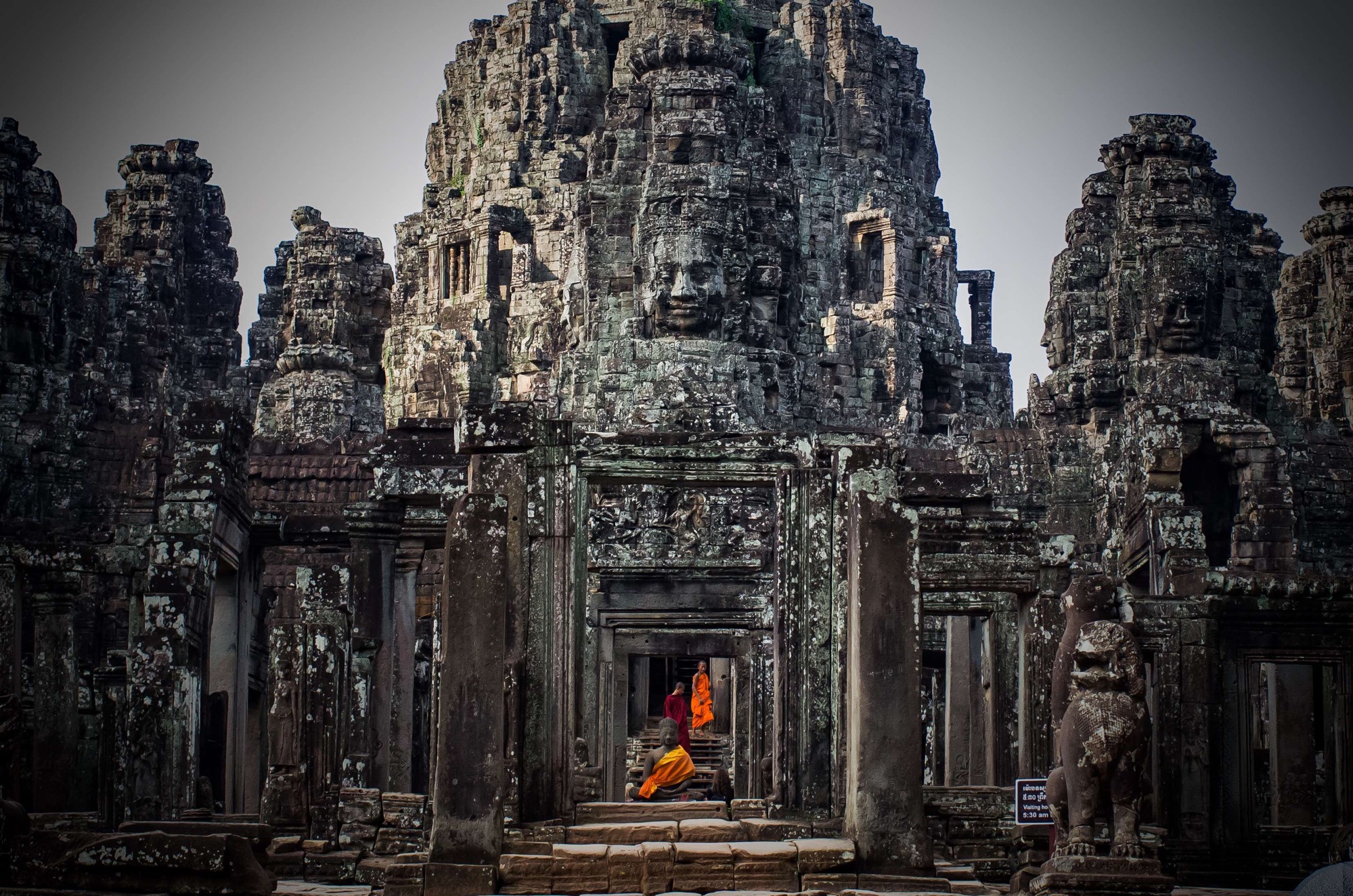
One of the 52 spires on Bayon temple. Angkor Temples near Siem Reap, Cambodia

Charlie Winn

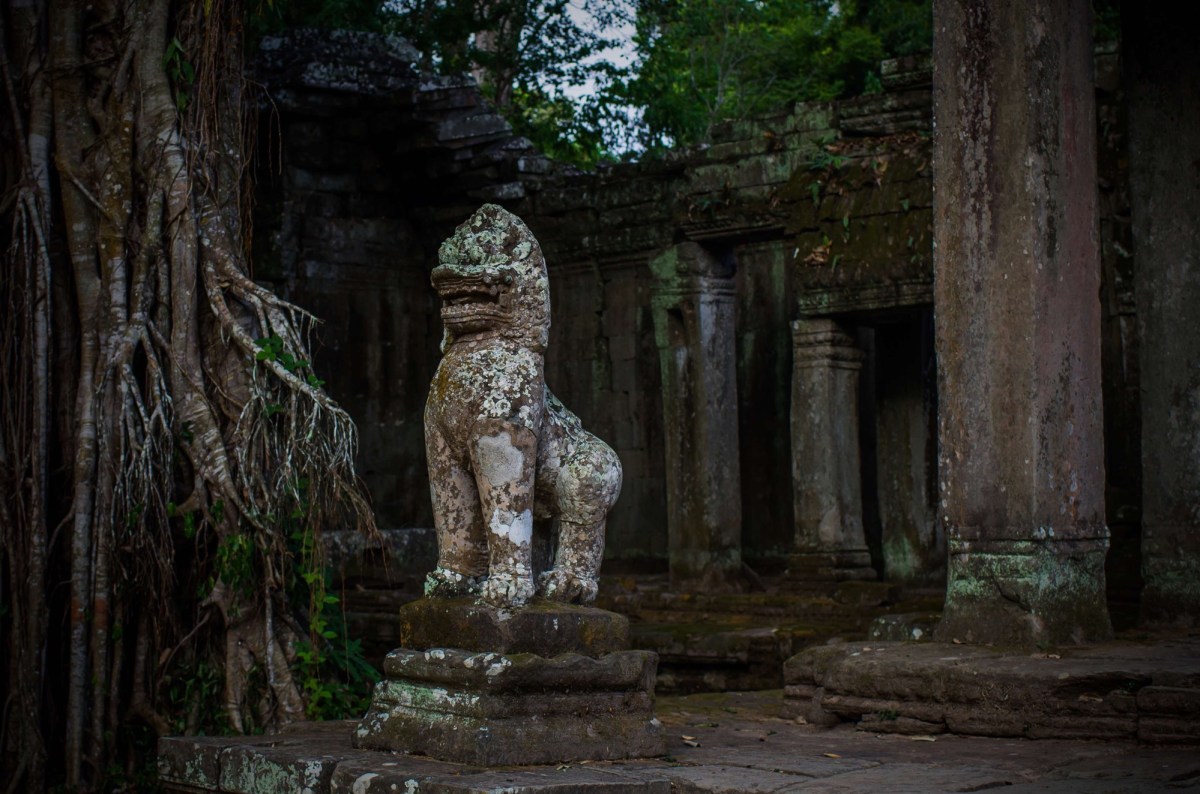
Lion statue guarding the southern entrance to Preah Khan temple, near Siem Reap, Cambodia

  
Charlie Winn

View into the central stupa of Preah Khan temple, near Siem Reap, Cambodia


Charlie Winn

Southern gate of Preah Khan temple at first light, near Siem Reap, Cambodia

People:

Charlie Winn

Steve enjoying sunrise over the eastern gate of Angkor Wat, near Siem Reap, Cambodia

  
Charlie Winn

Cambodian guides taking selfies, Angkor Wat, near Siem Reap, Cambodia

   
Charlie Winn

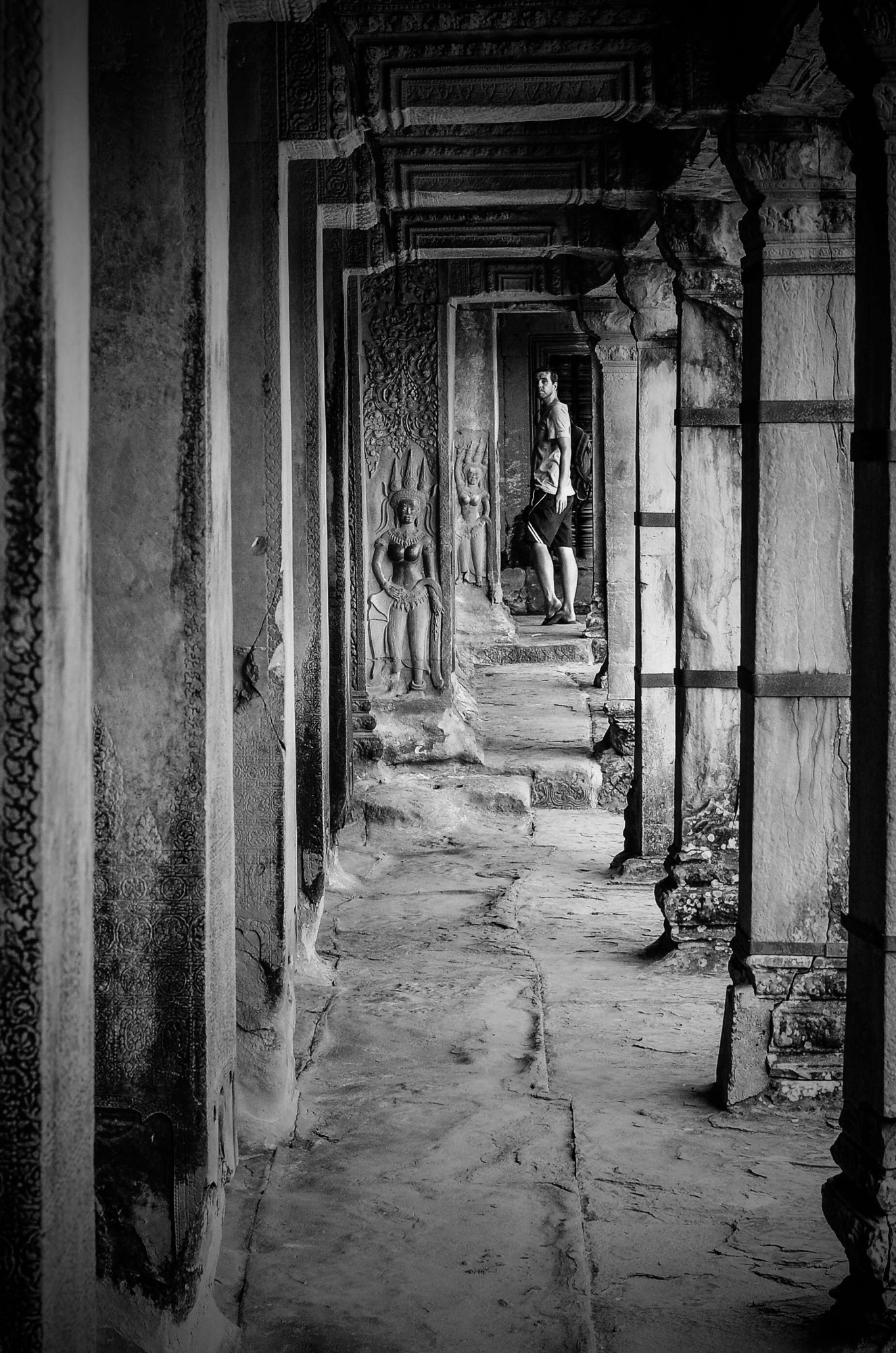
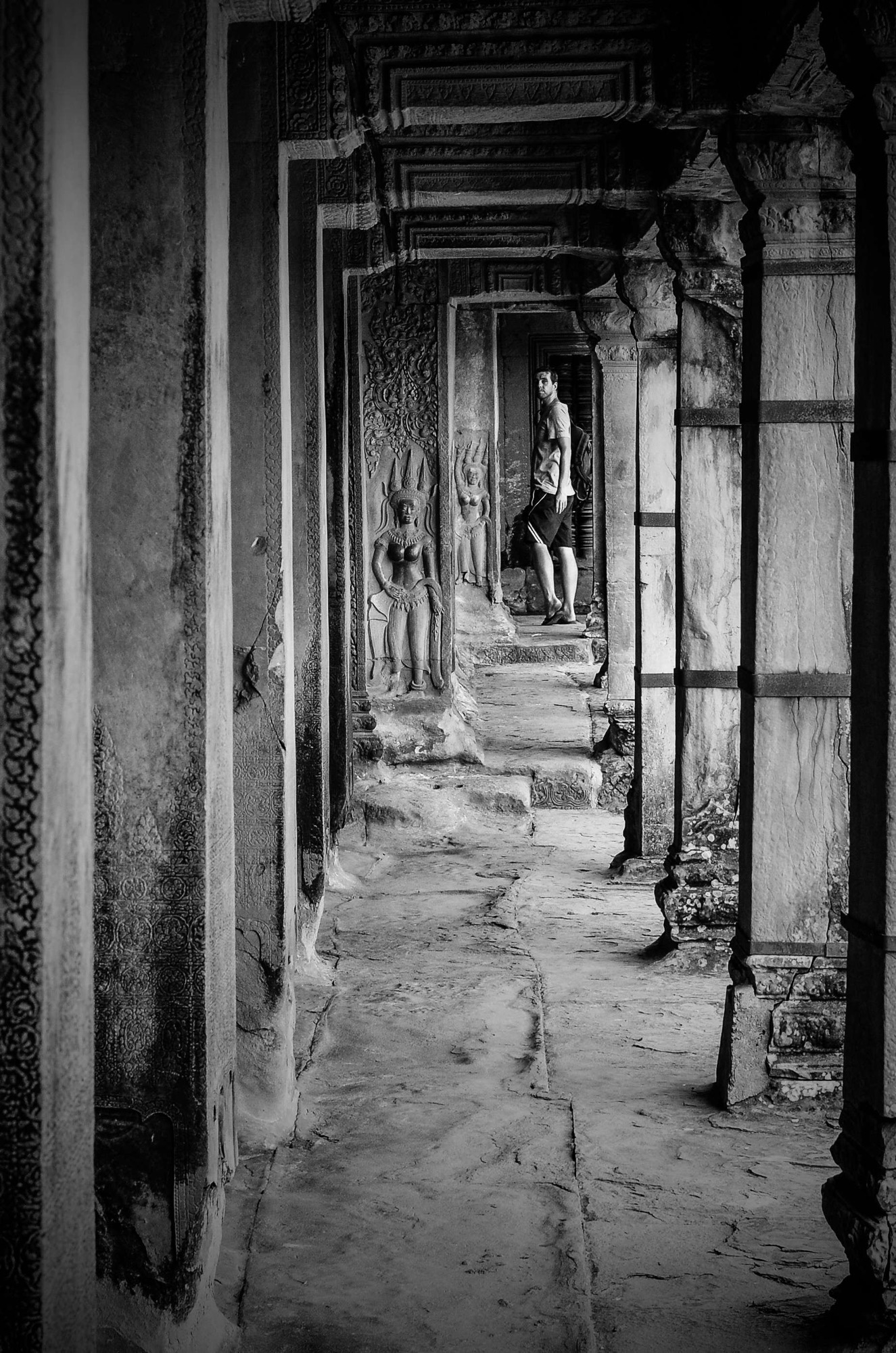
Steve discovering the vast corridors of Angkor Wat, near Siem Reap, Cambodia

  
Charlie Winn

Three visitors, Angkor Wat main tower, near Siem Reap, Cambodia

   
Charlie Winn

Monk visiting Angkor Wat, near Siem Reap, Cambodia

  
Charlie Winn

Monks discovering Bayon temple, near Siem Reap, Cambodia


Grand temples, fine detail: 

Charlie Winn

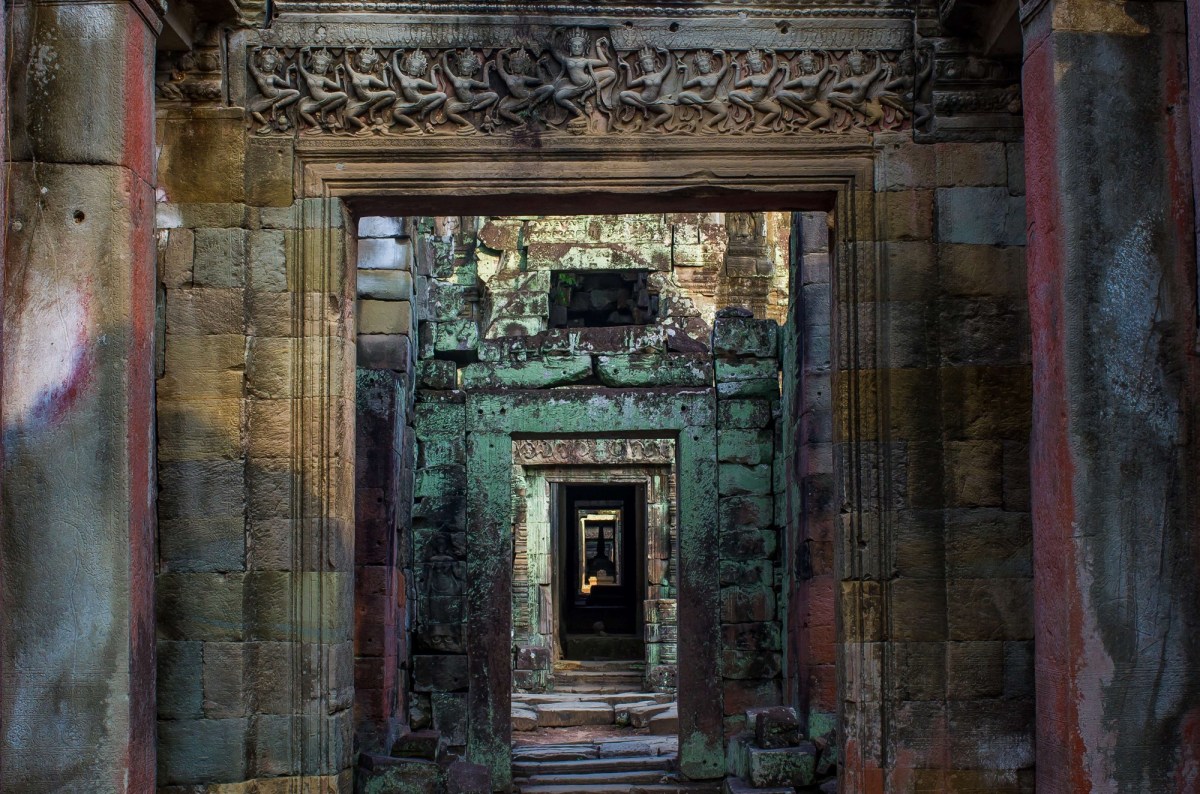
Incredible intricately engraved lintel, Preah Khan, Cambodia


Charlie Win

Sunrise on the central sandstone stupa, Preah Khan temple, near Siem Reap, Cambodia

Charlie Winn

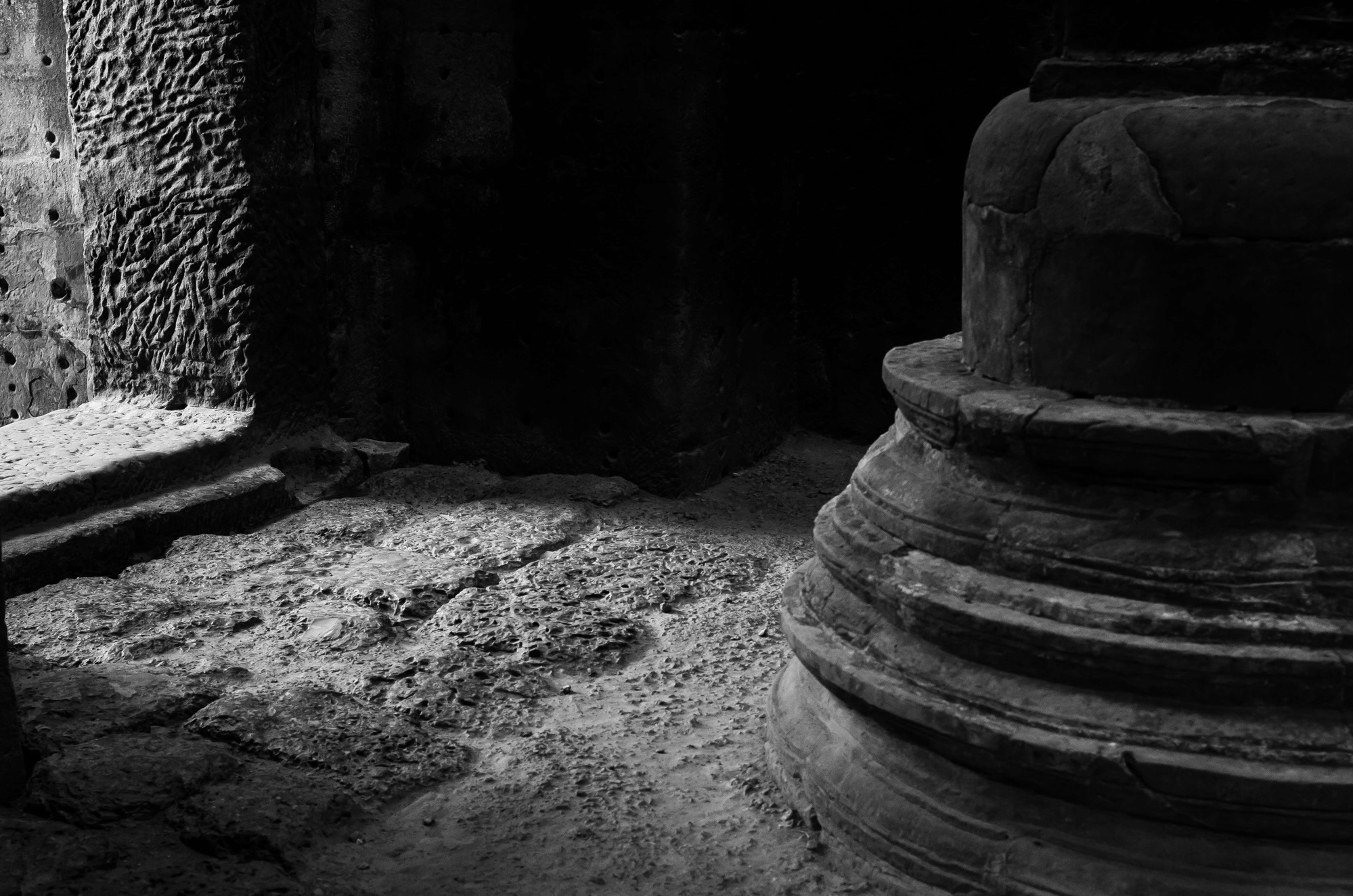
Detail of the feet of all columns in the long corridors of Angkor Wat, near Siem Reap, Cambodia

  
Charlie Winn

Pigeon living in one of Angkor Wat’s spires. Near Siem Reap, Cambodia


Temples overgrown:

Charlie Winn

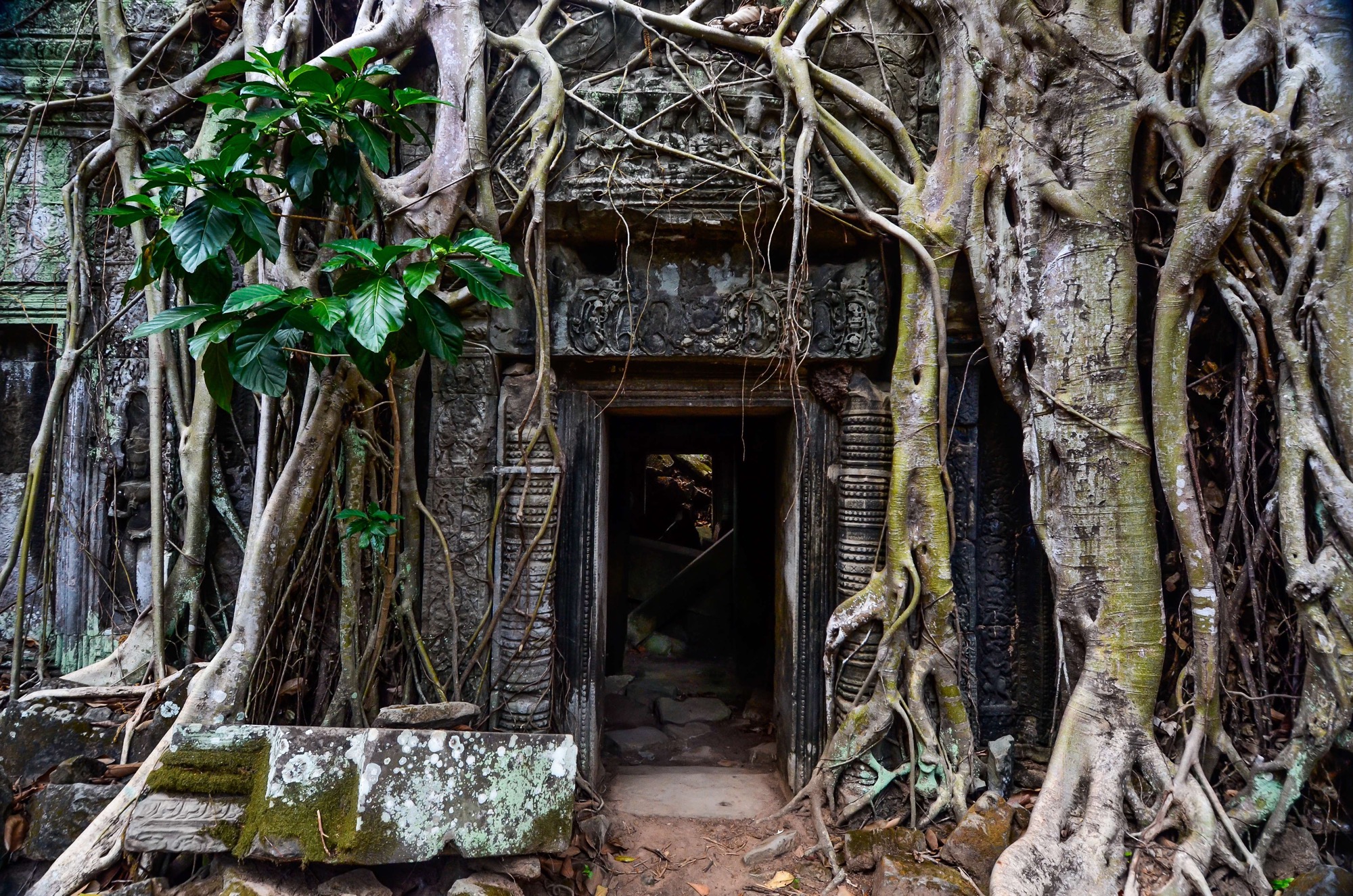
Are the trees roots holding up the temple or the other way around? Ta Prohm (Tomb Raider temple), near Siem Reap, Cambodia


Charlie Winn

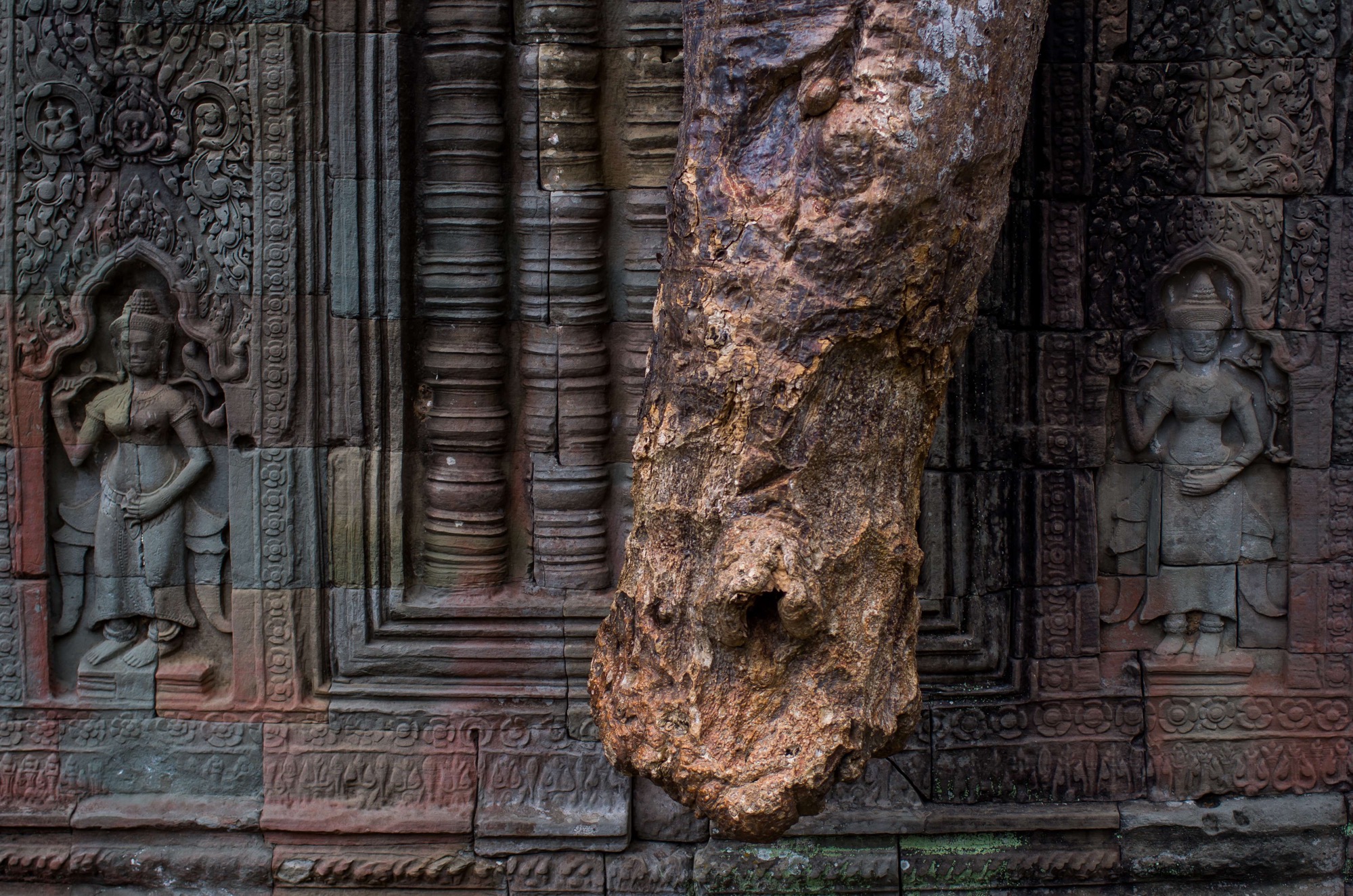
Broken off Spung tree root. Preah Khan temple, near Siem Reap, Cambodia

  
Charlie Win

Sprung tree roots searching for soil. Ta Prohm temple, near Siem Reap, Cambodia

  
Charlie Winn

Trees and stones, Preah Khan temple, near Siem Reap, Cambodia


Sunrise: 

Charlie Winn

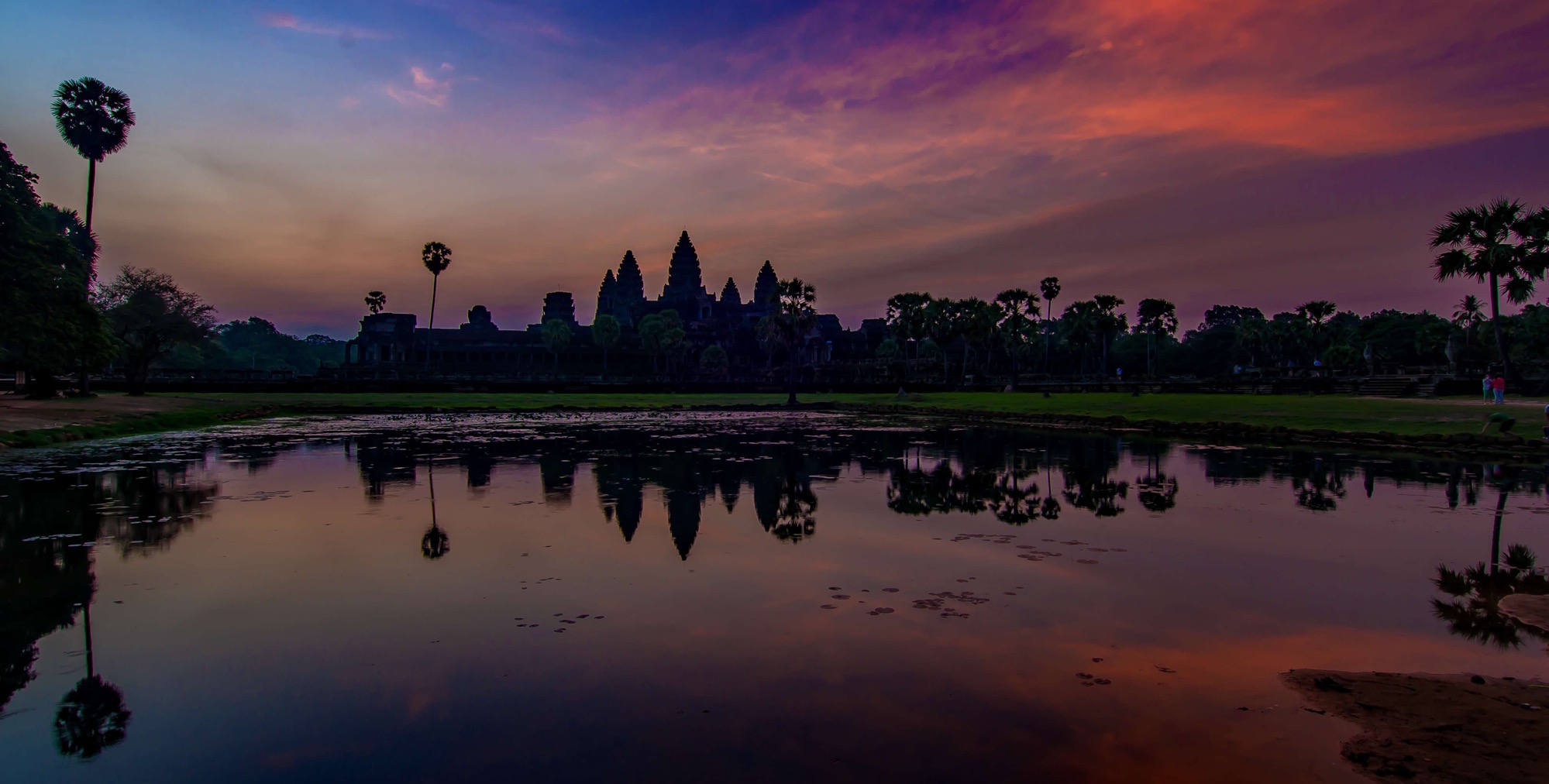
First light, reflection ponds Angkor Wat, Cambodia


Charlie Winn

First light silhouetting Angkor Wat, Cambodia


Other “What you’d rather be seeing” posts. 

While you were working – iPhones, Siem Reap, Cambodia

 Back again like moths to a flame; we were whisked away yesterday by the imaginings of a vivid and lively Angkor Wat from times gone by on the whispers of thousands of ghosts that used to call this place their home. This morning there are no whispers, no crazy declarations from King Jayavarman about being the king of the world; what we can hear though is the din of a market world stirring with the first glowing halo to pick out the domes of Angkor Wat, just a silhouette for now. How easily the imagined world of the 12th century collides with the present, at five am the beaming face of a young boy is offering me delights from his market stall, number four, just near the reflection pools in the immense grounds of Angkor Wat. I know what year it is but for a little longer I’ll indulge myself in time travel, we could be 900 years ago.  

Charlie Winn

First light, Angkor Wat, Cambodia

  Sitting at the edge of the famous pools we’re awaiting a sunrise that has repeated this scene over these iconic towers possibly 350,000 times. Will sunrise 350,001 be a special one? Like the billions of visitors and residents before now we stare on as the dance plays out once more, this time it is special, it is unique and it’s just for us. Angkor Wat slowly moves forward from the shadows of an outline to take shape in the celestial spotlight that shines once again, a mirage of the 12th century no longer. From the centre of the greatest empire on earth at a time to adorning the national flag, the spires of Angkor Wat have long existed in the realms of mythical adoration; they still do. 

 Originally built as a Hindu temple the years have introduced Buddhism as Angkor Wat moves with the times while the slow centuries roll by. With the sun blazing the sky in full flight we scurry off to see the temple, heading for the often glimpsed but seldom visited eastern gate. Temples of this era always face east but in an odd quirk Angkor Wat faces west which leaves the often famed eastern gate bathed in the first rays of morning light and all alone. Indeed we are alone and that familiar Angkor feeling comes rushing back, such a powerful feature of this place is how it drags your imagination to the time when it was at its height refusing to stand still as just another jumble of pretty stones. In a way Angkor doesn’t come forward in time to you, it drags you back to it. 

Charlie Winn

Sunrise over Angkor Wat east gate, Cambodia

  As much as Angkor Wat has occupied a day and a half it remains just the centrepiece of this city, a city in itself but a centrepiece none the less, we’re off to have a walk around the greater city of Angkor; Angkor Thom. Where Angkor Wat stands on a semi-island of its own Angkor Thom feels more like a continent, the distinction between a moat and ocean is a blurry one here, the mind boggles at the labour required to carve out this approximately 9km river nearly 100m across. But carve they did and the greatest urban centre to grace our planet before the industrial era comes into view as our tuk-tuk scoots under the tight entrance of the southern gate.

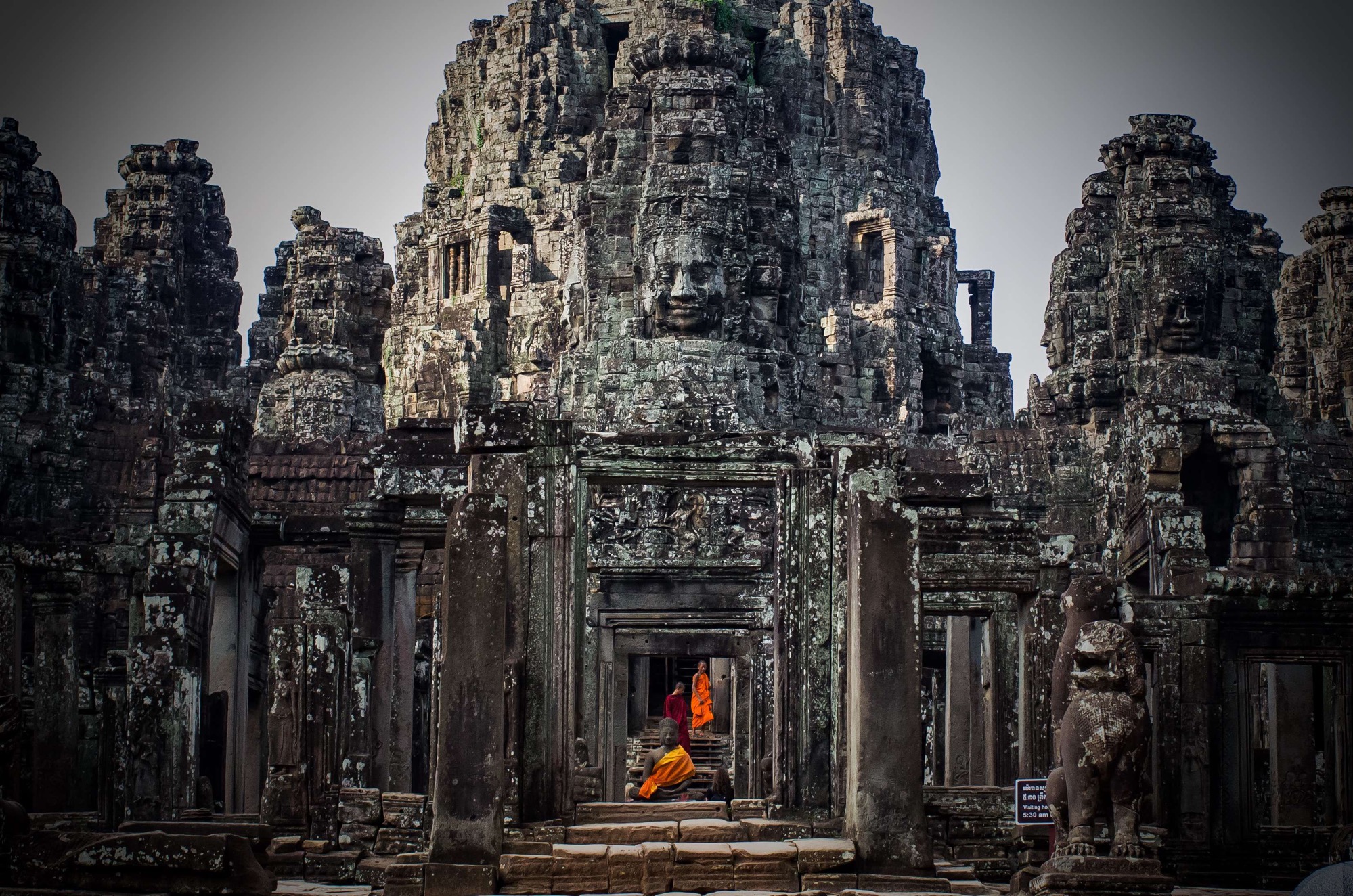
 The centrepiece of the main city is the Bayon temple, strictly a buddhist temple its 52 clustered spires rear up like a game of building blocks with not enough lounge-room floor to space them out. Clustered tightly together this complex weave gives a hint to the vastness of the Khmer empire, once 52 provinces, now just 24. Where once the great empire swallowed up much of what we now call Thailand, Laos and Vietnam the modern nation of Cambodia is shrunken and withdrawn on first impressions but not at all without notable spark and charisma. Siem Reap is the epitome of a blossoming new city and sitting so snugly beside the pinnacle of the empire it once was it’s hard to avoid the feeling that after recent turmoil Cambodia is no longer content to shrink in on itself. Time will tell as it always has, the slow centuries continue to turn. 

Charlie Winn

Monks visiting Bayon temple, Siem Real, Cambodia

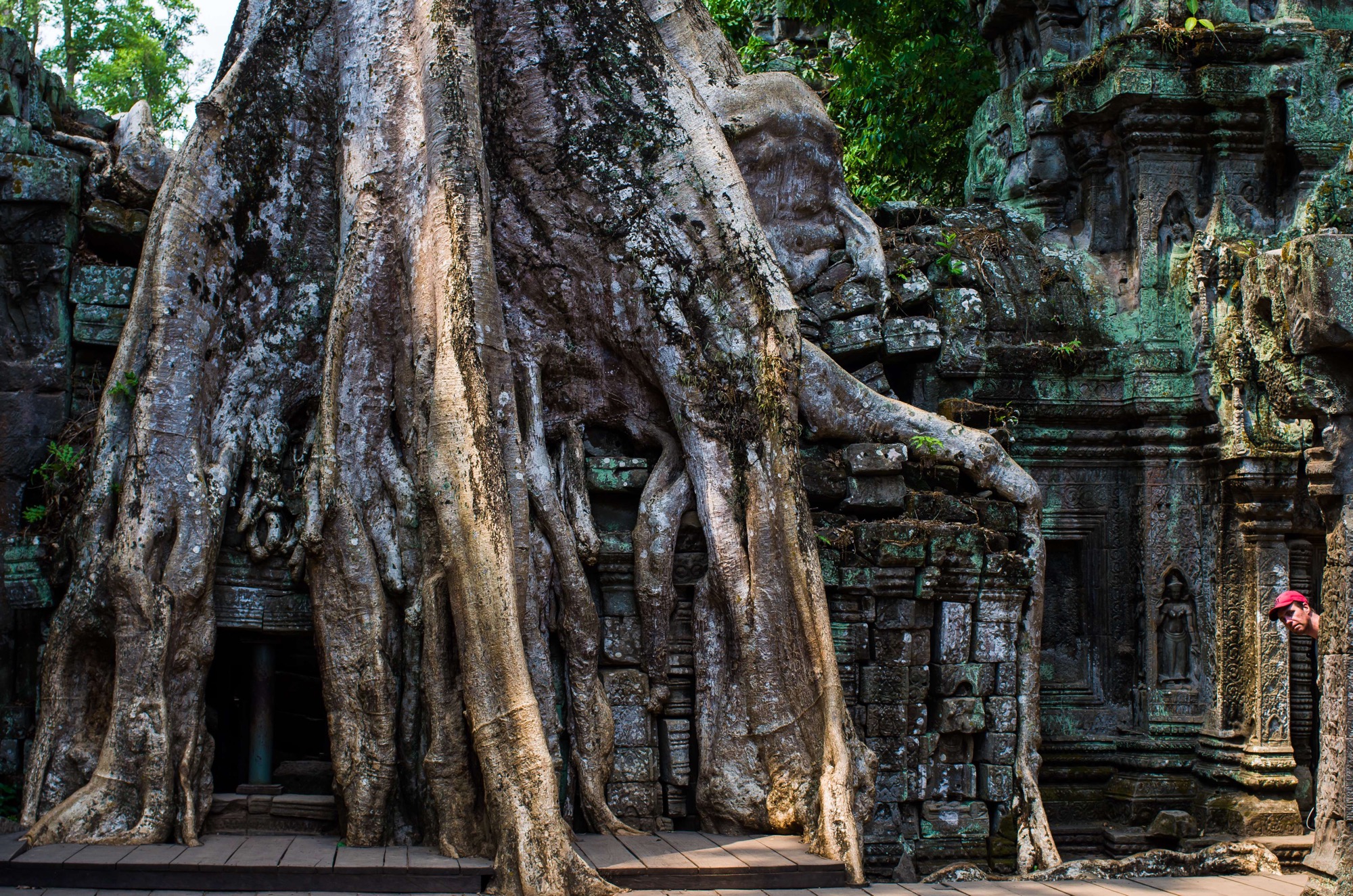
  Through the elephant temple and the temple of the leper king we gather together a sense of the grandeur of this city; minor temples are enormous. In this temple-o-rama that is the greater city of Angkor there is one place among the many temples that must be seen, Ta Prohm. Often called the tomb raider temple on account of the Hollywood film of that name being set here, Ta Prohm lies in a state of semi-surrender to the rambling jungle; here in lies the appeal. Spung trees are a strange plant, they send down tendril roots to search for soil in which to bed, from as far up as the seed happens to germinate. In Ta Prohm the ages of Angkor are all on display; centuries of grandeur, centuries of slow decline, centuries for seedlings to sprout on top of walls and roofs alike to begin their search earthward for nourishment. 

 It’s hard to tell if Ta Prohm is holding up the trees or if the trees are holding up Ta Prohm. It’s so easy to see why it was chosen as a Hollywood set, no amount of artistry could create the eerily enchanting atmosphere that seeps from every crack in this place in the moments before a tree root can grow into it. Dappled shade replaces the harsh Cambodian sun as the scales balance delicately between human architectural grandeur and natural conquest; it feels so apt that no one side is quite winning out here.  

Charlie Winn

Roots holding up Ta Phron, or Ta Phron holding up the sprung tree. Siem Reap, Cambodia

  We’ve been driving for hours, indeed we’ve been sweating like racehorses for hours, and we’re still on this man made island home, the immensity is staggering. As with Ayuthaya in Thailand it baffles me that we know so much about great civilisations of the rest of the world yet have little appreciation for those in Asia who have strong claims for being some of the greatest. This part of the world is typified by countries like Cambodia in some ways, greatness of past conquest cowed to a factory to produce cheap clothing and make iPhones for the rest of us at prices we’d prefer to pay. So sobering it is to think that centuries ago The Khmer were our wealthier equivalent and given easier transport we’d be making their version of iPhones for prices they’d prefer to pay. In a few centuries time, I wonder who’s making the iPhones?

While you were working – I’m King of the World, Siem Reap, Cambodia

 I’m king of the world. This time I’m not drunk and I haven’t eaten a bad mushroom, I really am king of the world, the whole world. I stand with my bare feet connected to the smooth stone polished by a ages of footfalls as the morning light creeps ever slowly toward me through vaulted windows of heavy stone. Imperious air fills my world, the people of my world built their capital around me, around this centre of humanity that I occupy; alone. I am king Suryavarman II and it’s the middle of the 12th century. I hear tales from far flung places of great temples, great seats of power but I don’t need to see them to know that standing here in the centrepiece of my domain, of the world, that they are my subjects. I am: king of the world. 

Charlie Winn

A buddhist monk also being a tourist, Angkor Wat, Cambodia

  Rantings of a madman, megalomaniac grandeur, malaria hallucinations? Probably not actually, king Suryavarman II had in his day more than a strong claim to being indeed just that, king of the world. From as early as the year 802 the Khmer empire began it’s reign with the king at the time, king Jayavarman II declaring himself to be Chakravartin which literally means, king of the world. Jayavarman maybe jumped the gun but a few centuries later when London had a population of 50,000, Suryavarman presided over a city of a million inhabitants. Satellite imaging has since shown that at its height, Angkor remains histories largest pre-industrial urban centre; Standing in the heart of the great temple Angkor Wat, I can only think that Suryavarman already knew that.

 A moat surrounds this seat of power so far away from where I stand now, far enough to make me squint to see it. 3.6km of waterway over 100m across to encircle the staggering magnitude of this single construction, wider than much of the mighty Mekong that essentially cuts the continent of Asia in two. But Asia is just a continent, Angkor Wat was the most powerful seat in the world, oddly enough it seems appropriate for its features to outdo natures scale and scream far beyond a continent not big enough to contain its ambition. It’s in this magnitude that Angkor Wat is most staggering, the singularity of its purpose. Where other great civilisations often cluster temples, shrines, palaces and civic buildings together to form working networks of greatness, as broader Angkor also does, Angkor Wat alone stands in comparison to whole cities as a sole construction.  

Charlie Winn

Steve enjoying sunrise from the east gate, Angkor Wat, Cambodia

  Such concentration of power pulled to this central point is where imaginations simply cannot be contained; we’re not visiting a relic, a monument, we’re transported to another time. Far from crumbling into scattered whispers of a greatness now past, Angkor Wat calls so loudly we can nearly hear echoes of king Jayavarman crying to the heavens “I am king of the world”. Angkor Wat literally means temple city and it’s not hard to imagine it bursting with life, in fact it’s hard not to. The musky scent of incense cuts the steamy air filled with the shrill chanting of the pious, intermittently rising above the soft slippered feet of servants hushing the anthem of those masses, heard but not seen. Markets from the outer rings of the three encircling walls clatter the roaring din of the common folk so distant that their clamour makes no dent to the gentle whisking of those slippered feet on polished stone.

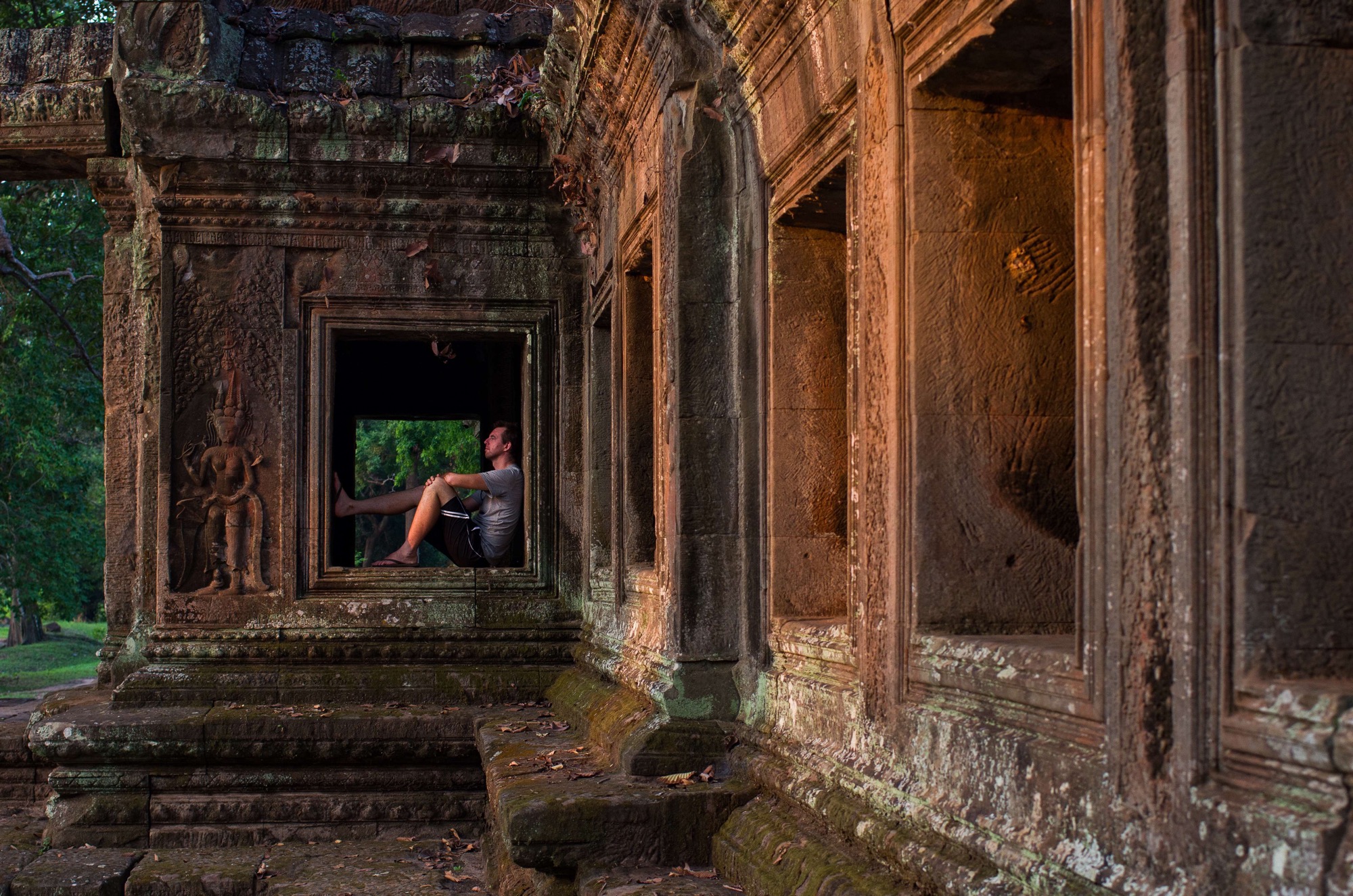
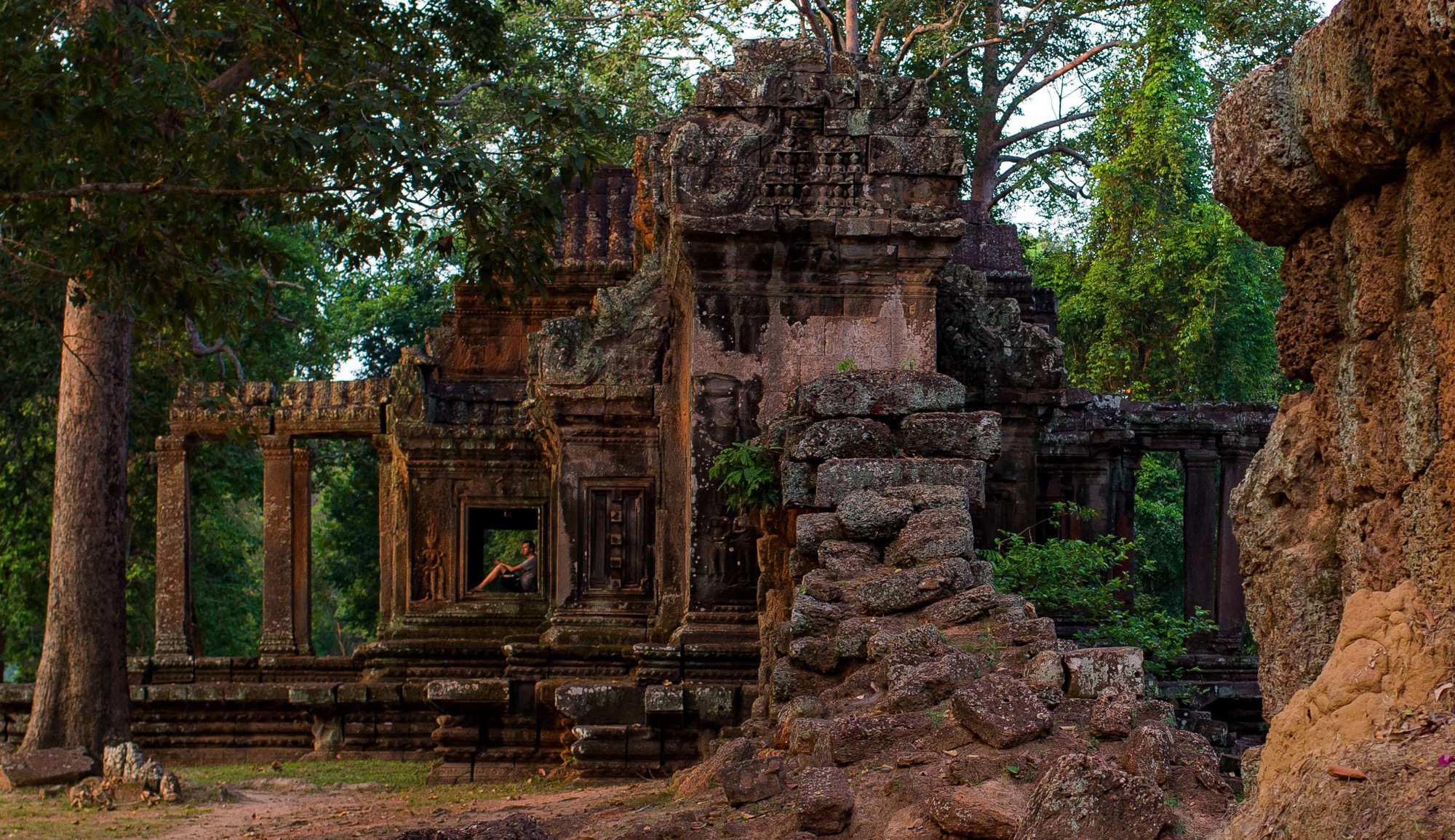
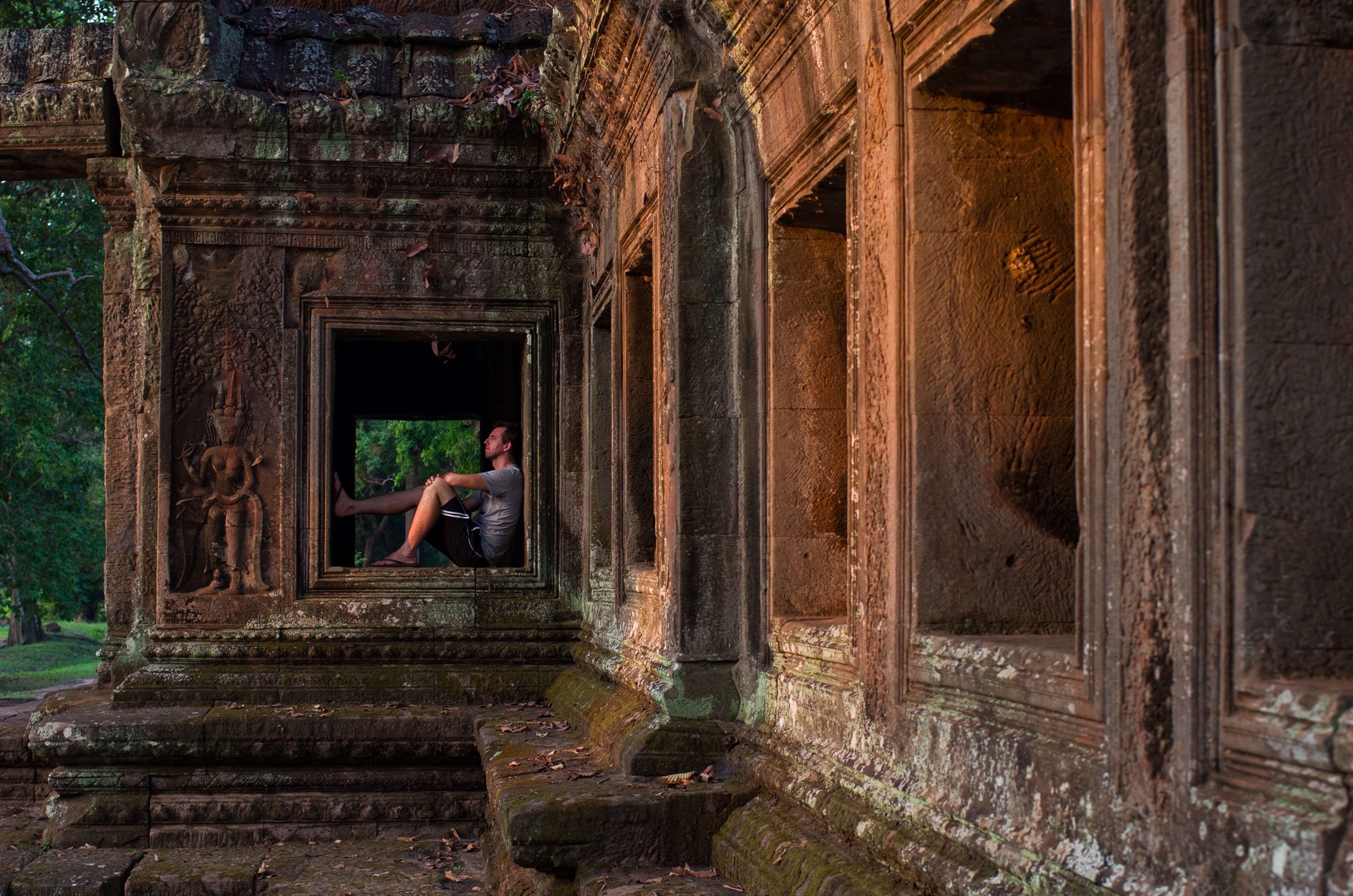
 At this window I stand, my world framed in heavy stone, centuries of stories pitted into a dense tapestry which draws a rushing breeze over still treetops baking in the languid day. Long before much of the world constructed hulking monolithic buildings the Khmer empire walked elegant corridors, sat in breezy chambers and viewed the world from light filled halls of high vaulted ceilings. From this central palace we walk now, down the steps to lower levels farewelling the aristocracy and their servants, into the baking heat below the breezy heights of the crowning spires and outside the heart of the heart of power.  

Charlie Winn

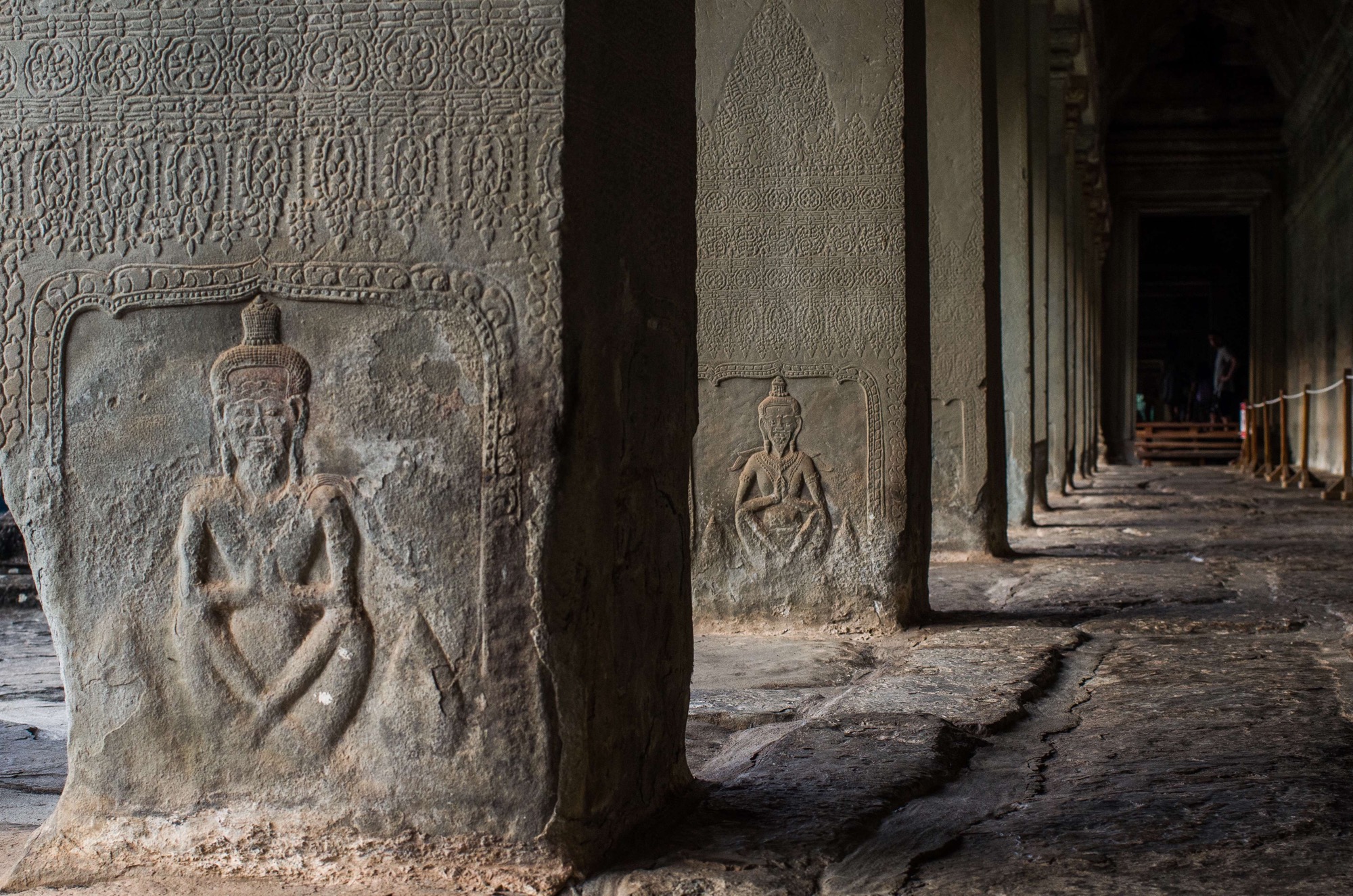
The large, long ornate corridors of Angkor Wat, Cambodia

  Lower nobles and religious mid-weights shuffle around the short distance from the heights to the next wall that sits again on an immense raised platform like an overly elaborate wedding cake. Through the second wall and down again we descend this tapered mountain past the carved battle scene that wraps the domain of the privileged. Delicate forms dance in celebration to the hindu god Vishnu, to whom Angkor Wat is dedicated; not content to build a fortification, Angkor Wat is more acres of artwork built in the permanence of stone, fashioned into a temple to house power. Precise carved columns stutter to an infinity that nearly disappears out of sight on the slow descent away from Suryavarman’s exultations of un-megalomaniacal megalomania. 

 Through the main outer gates, kilometres of grand walls rise high above the moat which, once so far away, now spreads out like a lake, an ocean before us. The heavy fortifications of the western gate shroud our exit from the 12th century; with the blinding light on the other side comes a silence we now hear only for it’s absence. The market stalls, the pious, the meek, the bold, the ambitious and the unseen wage their eternal ghostly lives on the other side of the walls of Angkor Wat. In the blinding light on this side of the wall they are whisked away to childhood imaginings we nowadays need such inspiration to touch.  

Charlie Winn

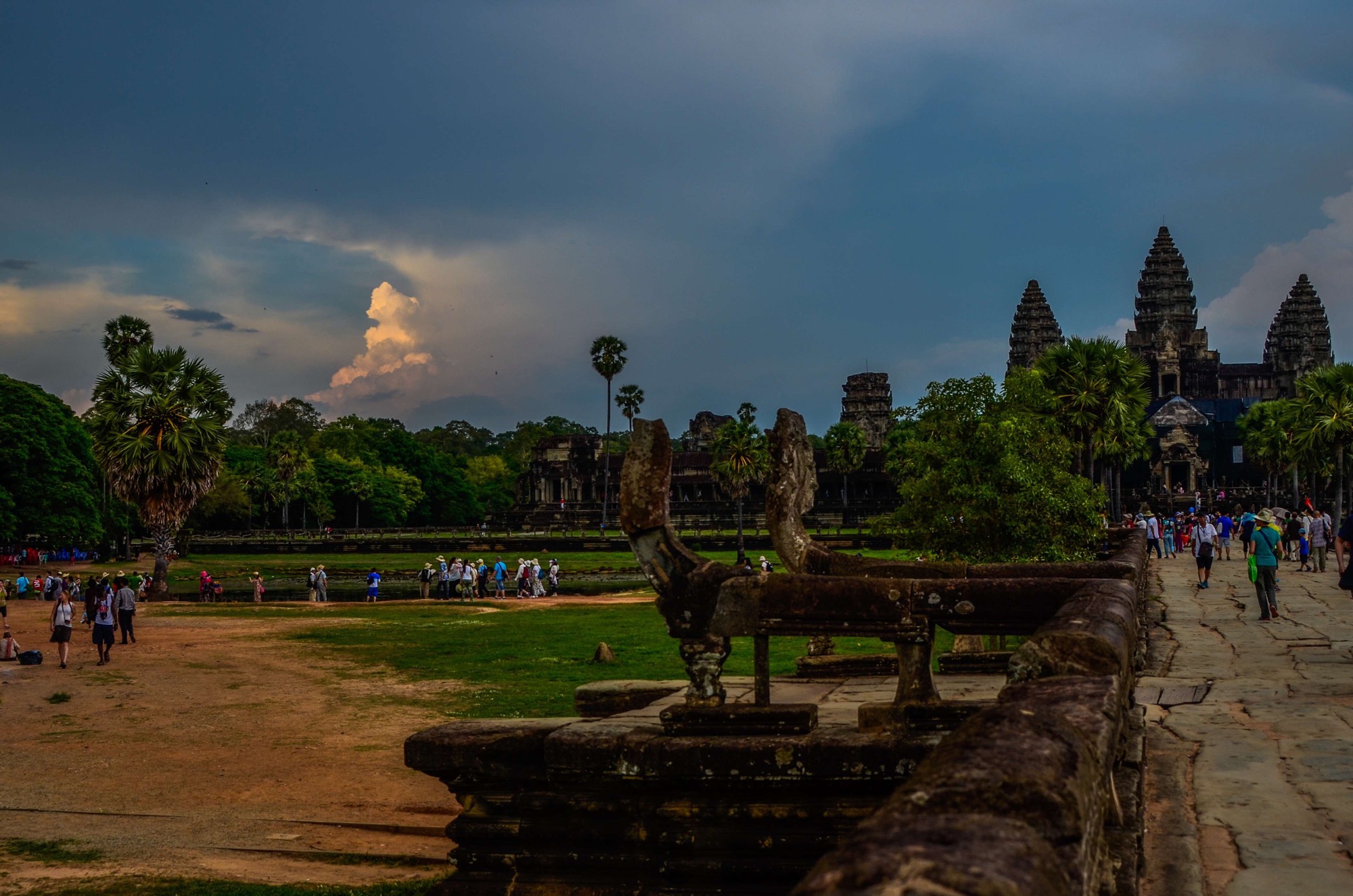
A storm rising to the north in the afternoon. Angkor Wat, Cambodia

  Angkor Wat is a relic, a world heritage site, a wonder; but it can’t be just looked at, it’s a transportation that must be ridden if you can let it. Other relics and ruins we’ve seen inspire grandeur but none have stirred the imagination quite like Angkor Wat. The bridge across the moat leads out like the worlds most intimidating runway and into the silent world that so suddenly feels so silent. The sun beats down so fiercely out here where the common people live, we steal a glance back over the battlements and across the walls to the rising spires at the heart of the heart. It may be a ruffling breeze, or maybe we still hear the words now only just a whisper on a zephyr; ‘I’m the king of the world’.  

While you were working – Holiday in Cambodia, Siem Reap, Cambodia

The face is too cheery for the words that just came out of his mouth. On the other side of a desk that feels more like a school table we’re informed that if we buy our visa at the border we might not make the bus. What he’s saying with inappropriate glee is that if you don’t give me the money you are lost in Thailand and you can’t go anywhere. We’re caught in a scam and it’s game on. Ice glazes our facades, despite being stuck in this one we’re no doe-eyed suckers and this victory is all they’re gonna get. Suitably wary we see no option but to fork over the money but we’re not happy and not going to get taken any more than we already have.

It’s a delicate dance this one, we aren’t certain where exactly we are; they just want money and we just want our bus ride. Through numerous changes of ‘guides’ a simple process of stamp the passport and get back on the bus turns into a sea of sharks circling, waiting for a limb to stick out of the cage. None are on offer. Through unscheduled information stops on a public bench to unnecessary transfers from one guide to another we manage to play the game and more or less win; we’ve been on this trip for too long to be taken easily. In truth it results that apart from wasted time they took from us about 300 baht which is around $12AUD; a huge amount of fuss for so little reward. Or did we just keep our limbs in the cage?

With mixed feelings we stamp the passport and it’s goodbye Thailand, Cambodia here we come. Scams are inevitable in this part of the world, more importantly it’s about knowing when you’re being scammed and minimising the damage. In this respect we’re not sure if we should declare victory for getting away with the minimum loss or defeat at being caught in the first place. With a formidable network of people involved and giving up just 12 bucks we’re leaning on the side of victory as our few hours bus trip turns into an all day cold-war standoff.  

Charlie Winn

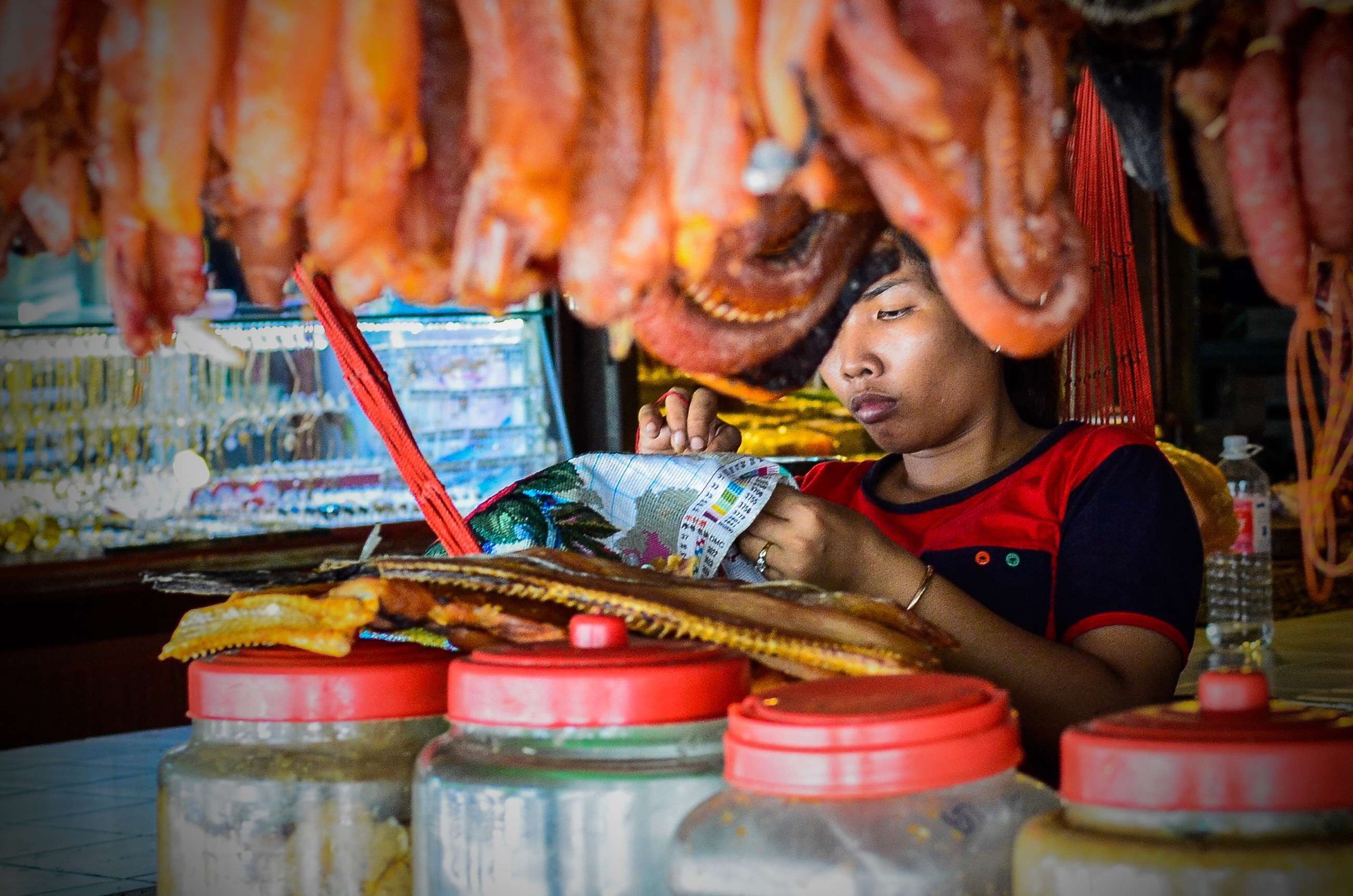
Dried fish vendor waiting for customers inthe customary hammock, Siem Riep, Cambodia

The scam remains on the other side of the border, now hot night air fans our sticky skin as we rattle past flashy hotels in the back of a tuk-tuk. We’re in Siem Reap, Cambodia which to me looks like an upstart Las Vegas plonked in the guts of an economically struggling Asian nation; not a great immediate impressions I must say. With this gentrified polish all around me a tune tickles the back of my mind, from many years ago a song that seems too clear to be calling from that far back: The Dead Kennedy’s (DK’s) punk anthem ‘Holiday in Cambodia‘. Not my style of music nowadays but undoubtedly typical of the band; political, conscientious, intelligent and provocative. The Killing Fields is the term synonymous with Cambodia’s recent history, the song Holiday in Cambodia rains down accusation on the cushioned middle class masses: stop whining and feeling hard done by, take a reality check with a holiday in Cambodia.

After learning much about China’s recent history it’s no great surprise that the the despot Saloth Sar (known as Pol Pot) and his Khmer Rouge party were supported and thrust to power on the back of Chinese support. Much of my history study has faded into the same recesses of my mind that the DK’s occupy but a few remaining snippets are dragged to the fore along with a chorus that repeats like the hard edged poxy hotels that sing by. Cambodia is a small country and in 1976, one year before I was born, Pol Pot presided over a dictatorship that in the next three years would wipe out approximately 25% of this small countries population, approximately two of eight million Cambodians. Take a minute on that thought; 1 in every four people.

Pol Pot’s life spans a greater story but this killing spree wound down largely in 1979; ‘Holiday in Cambodia’ was released in 1980 as a reference to the privileged world on the possible hardships of humanity; Cambodia sadly was the obvious choice. Clips of the verses solidify slowly in my mind, the terror that seems so long ago forms on the discordant vocal stylings of a 70’s punk band who saw the disaster for what it was while Kenny Rogers was trivially singing about the coward of the county and Blondie was whining ‘Call Me’. The words of that DK’s song come to mind in snippets I can only barely piece together, I internally sing along:

Play ethnicky jazz

To parade your snazz

On your five grand stereo

Braggin’ that you know

How the n*****s feel cold

And the slums got so much soul….


Now you can go where people are one

Now you can go where they get things done


What you need, my son:

Is a holiday in Cambodia

Where the slums got so much soul.

As much as Cambodia remains a lasting image of my upbringing it has returned to consciousness in my adult life, Cambodia refuses to be a little forgotten country to me. In 1976, the same year Pol Pot launched into four years of death, Cambodia introduced a life into the world, in Battambang just a little west of here. A boy named Cheav was just one life created to counter the vast number of lives taken away. He was one of the lucky 75% to survive, I say lucky but no one was really lucky in Cambodia at that time; imagine defining lucky by simply being alive. Cheav was lucky though, he stepped foot in Australia in 1983 and after spending time in the notorious Villawood detention centre, luck finally began to take a more complex definition; luckily.

Charlie Winn

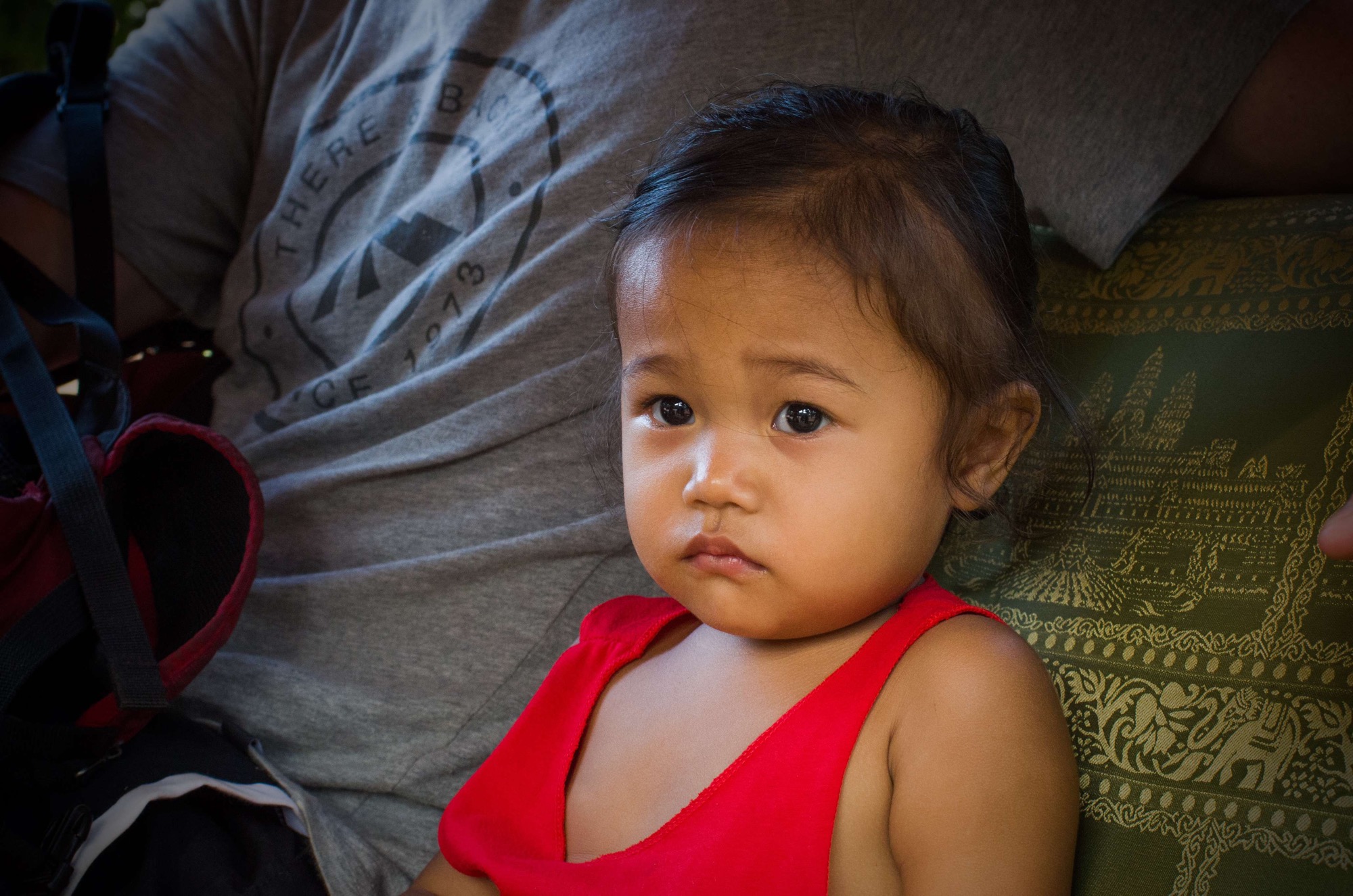
Our tuk-tuk drivers’ daughter who caught amshort ride with us, Angkor Wat, Cambodia

Cheav now drives the technology behind a cutting-edge marketing and print business and his three kids have no idea about his once narrow version of the word luck. The business is my business and from Battambang to Sydney through the Khmer Rouge and via Villawood this one time refugee brings luck to all those who are lucky enough to see that smile that understands the meaning of being lucky. He never offers much about his early years, a smile always seems a better option to him and even though he’s not shy I never push the point. There’s a story there even though he sings another song nowadays and just like the Qantas ad he now ‘Calls Australia Home’.

The clipped hedges and tiled pathways of Siem Reap are the Olivia Newton John case wrapped around the DK’s cassette; along with Ethiopia, Cambodia is the failed state my childhood remembers. There’s many reasons we travel; near the top is to experience and see new things, learn more of our world. I grew up being the person the DK’s mocked as they sang about Cheav, on whom I now so greatly rely and hold so much love for. We’re not just riding to our hostel, we’re riding to live out some words penned in 1980 now so long overdue; what we’ve needed all along and are now about to have is: a holiday in Cambodia.

What you’d rather be seeing – Thailand

Thailand. Close your eyes a minute and what do you see? Cheap beers, bars, beaches, ladyboys, nightlife? Many do and many are so wrong. Like judging a book by its cover, the pages have revealed so much more; Thailand deserves a second look; a proper look. This is what we saw in the short time we had; a better look will come upon the inevitable return, enjoy.

For other photographic collections from this trip see the category “What you’d rather be seeing“.

Muay Thai 

Charlie Winn

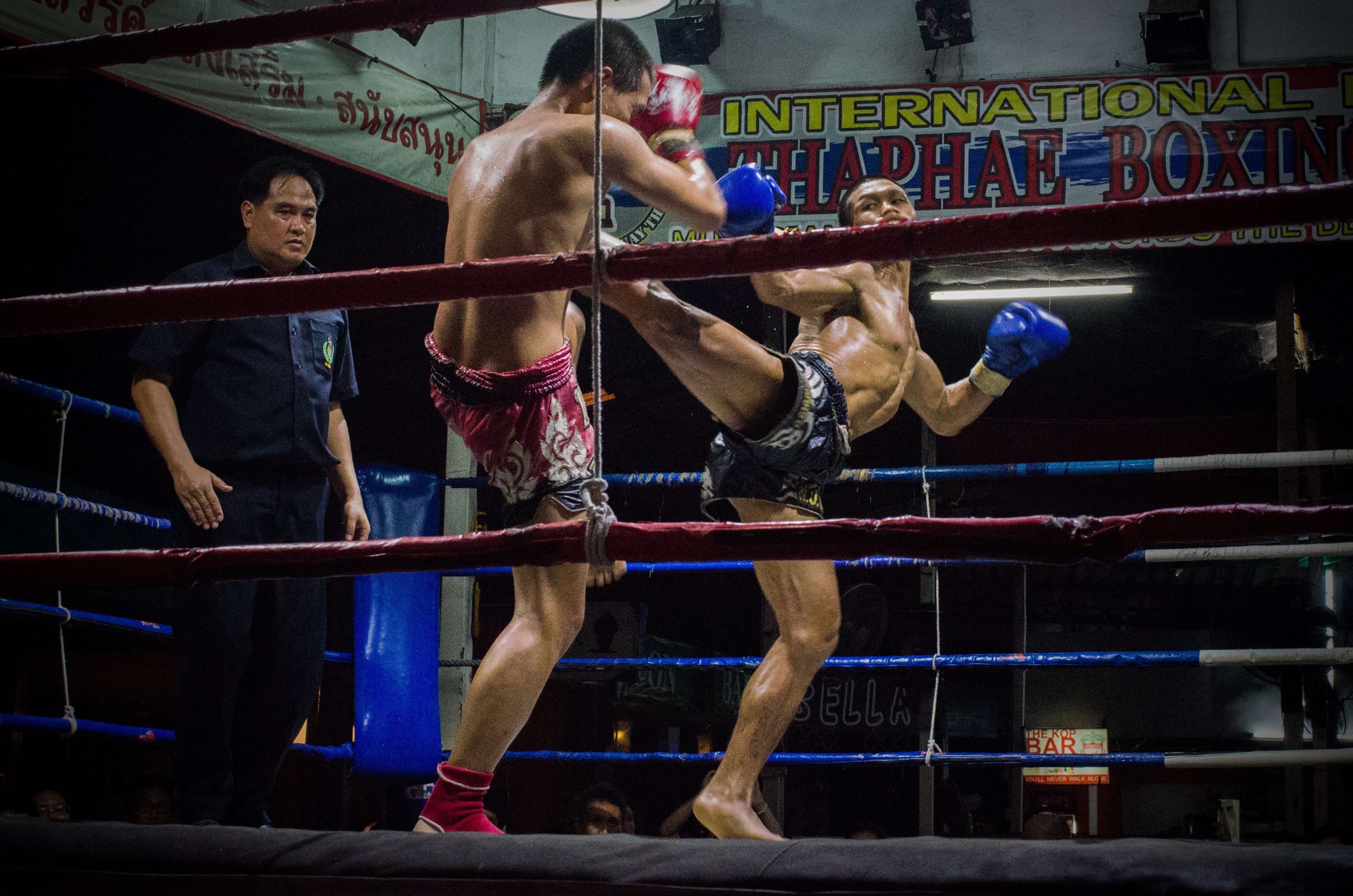
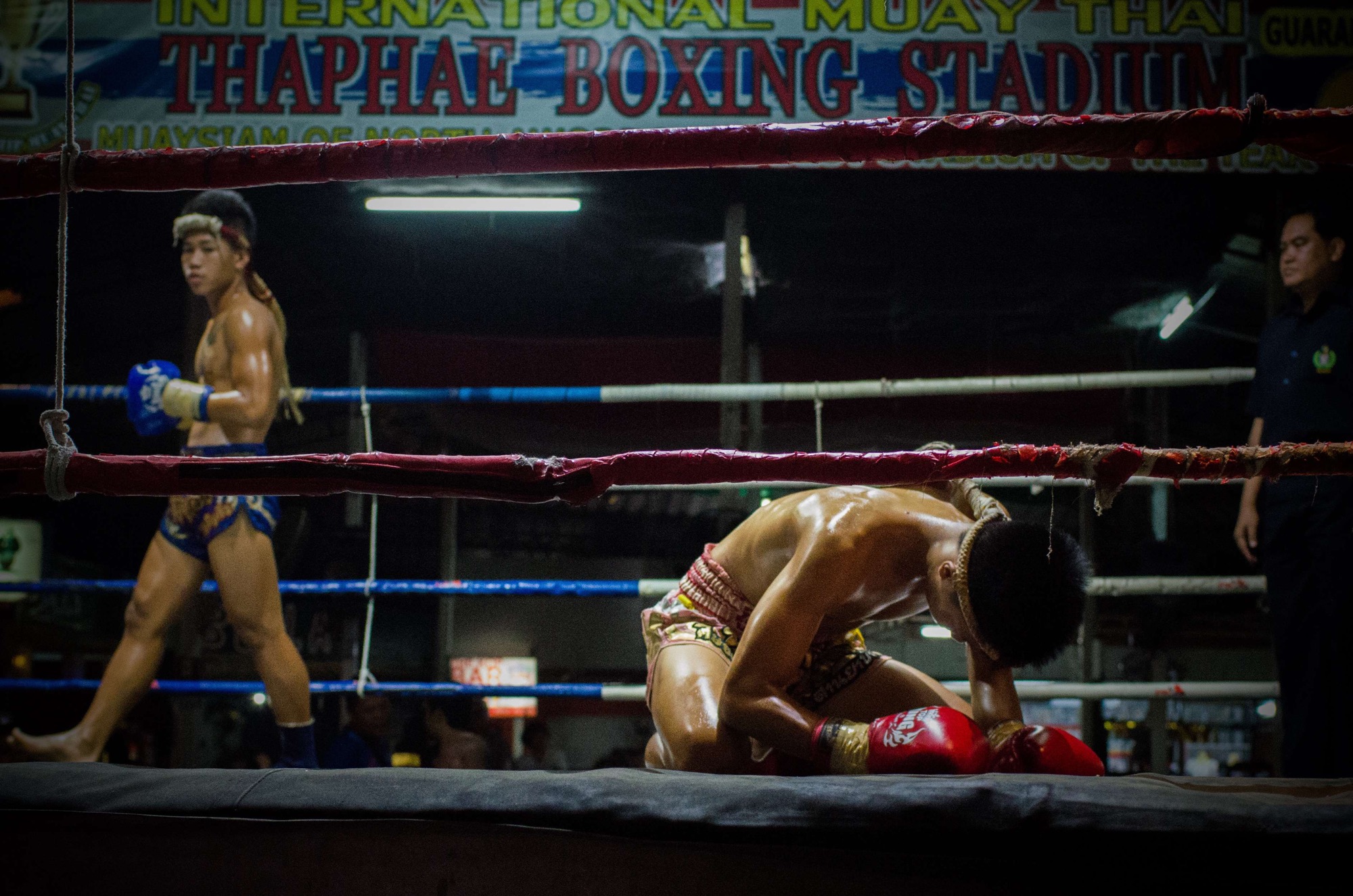
Exhausted boxer post bout, Thaphae stadium, Chiang Mai, Thailand


Charlie Winn

Thaphae Muay Thai Boxing Stadium, Chiang Mai, Thailand


Charlie Winn

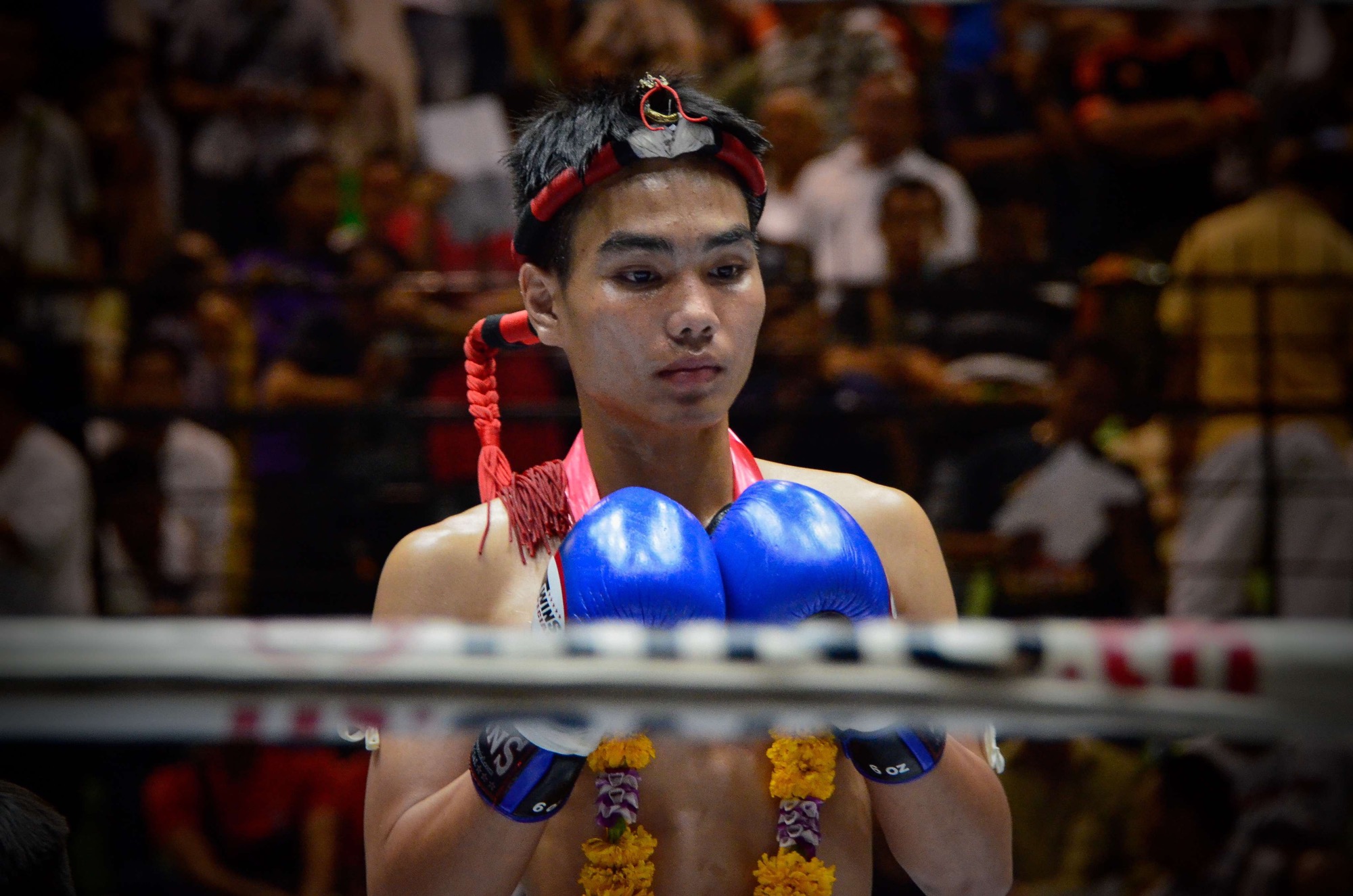
In the zone: Lumphinee Muay Thai Stadium, Bangkok, Thailand


Charlie Winn

Intense: Lumpinee Muay Thai Stadium, Bangkok, Thailand


Charlie Winn

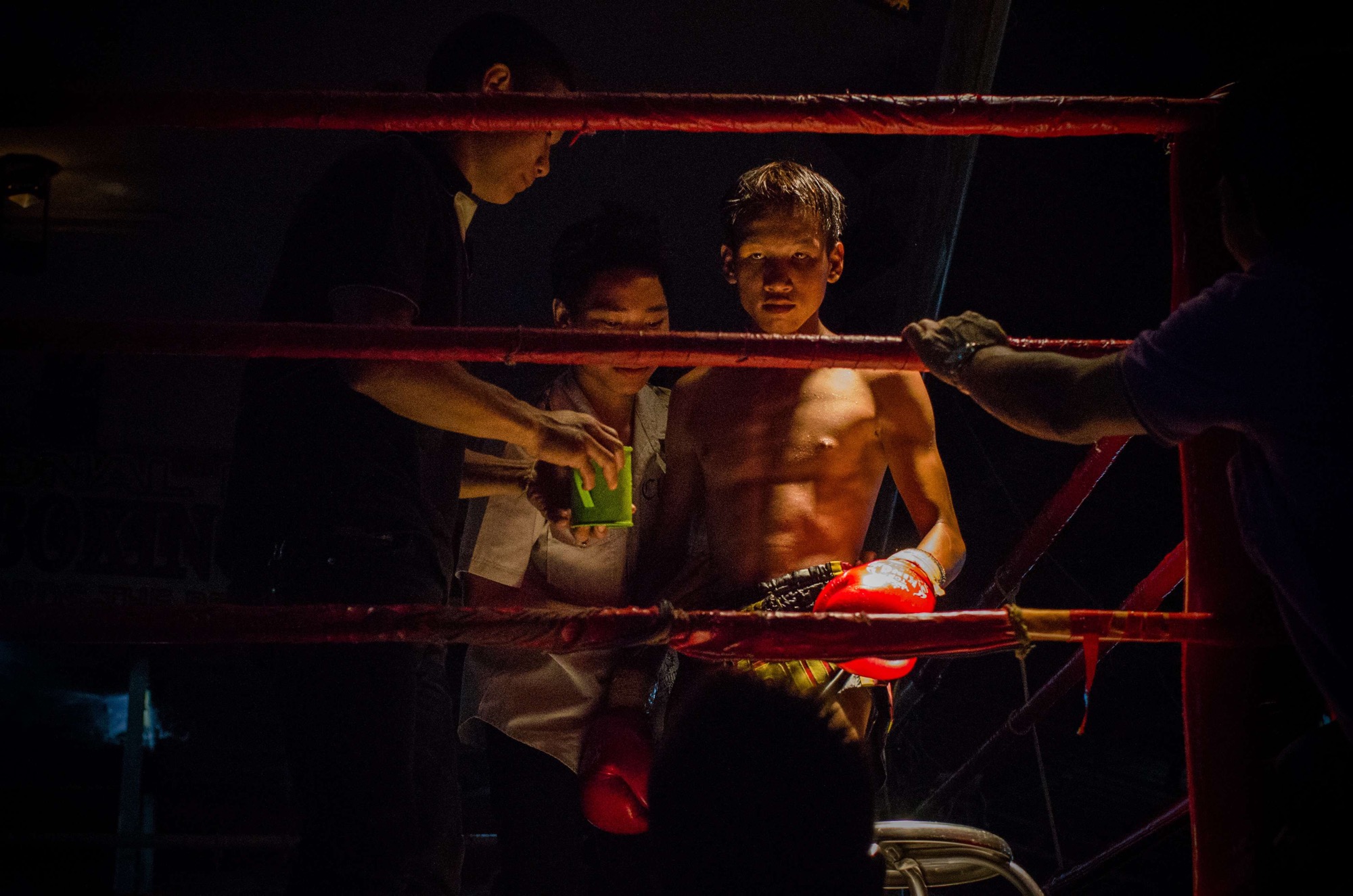
Between rounds, Muay Thai boxer, Thaphae Stadium, Chiang Mai, Thailand


Charlie Winn

Praying during his Ram Muay, mentally preparing for his bout. Limpinee stadium, Bangkok, Thailand


Charlie Winn

Kneeling in prayer prior to his Muay Thai bout, Thaphae stadium, Chiang Mai, Thailand


Temples: past and present 

Charlie Winn

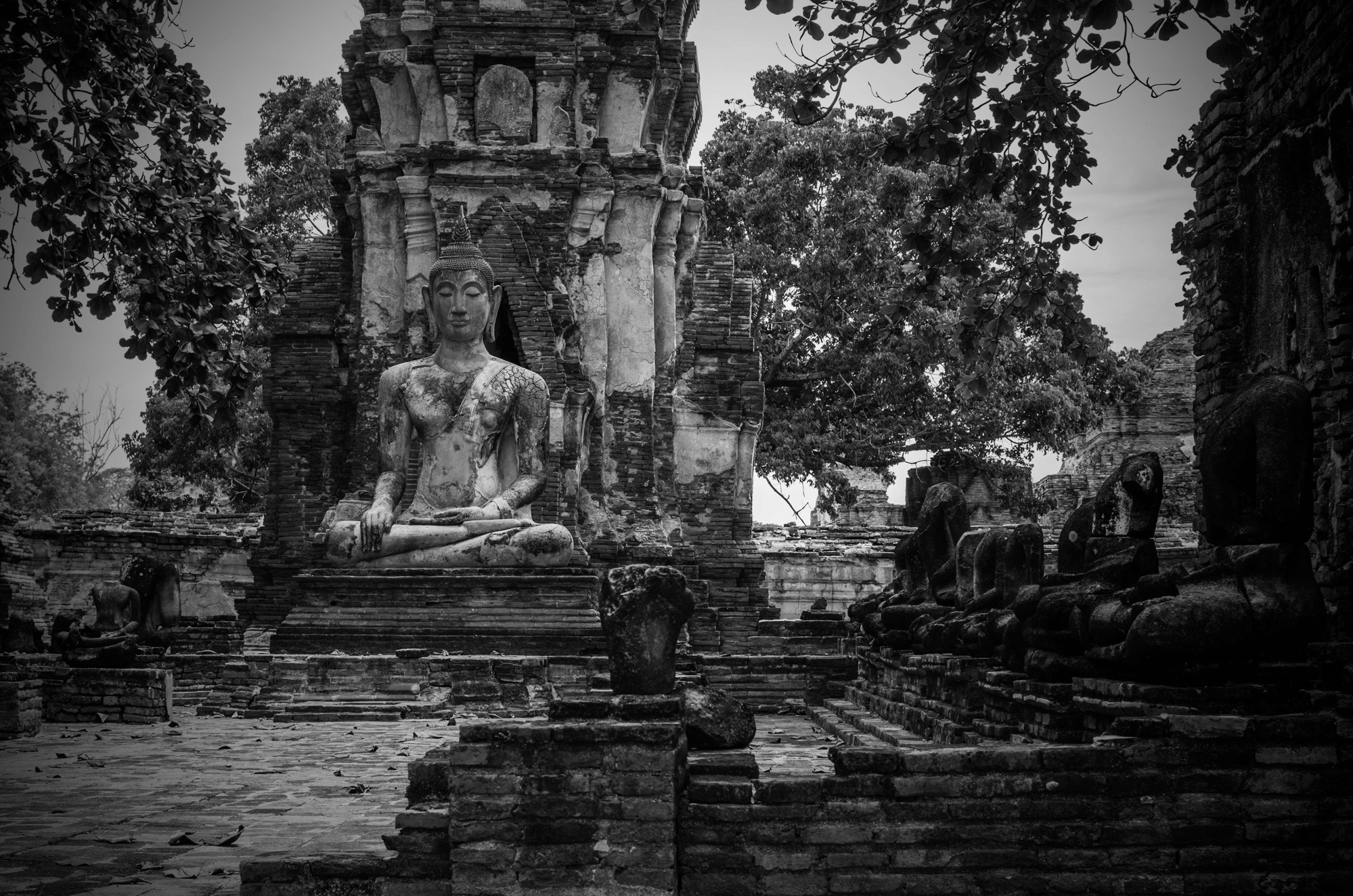
Wat Phra Mahathat, Ayuthaya, Thailand


Charlie Winn

The detail on the temples was incredible: Ayuthaya, Thailand


Charlie Winn

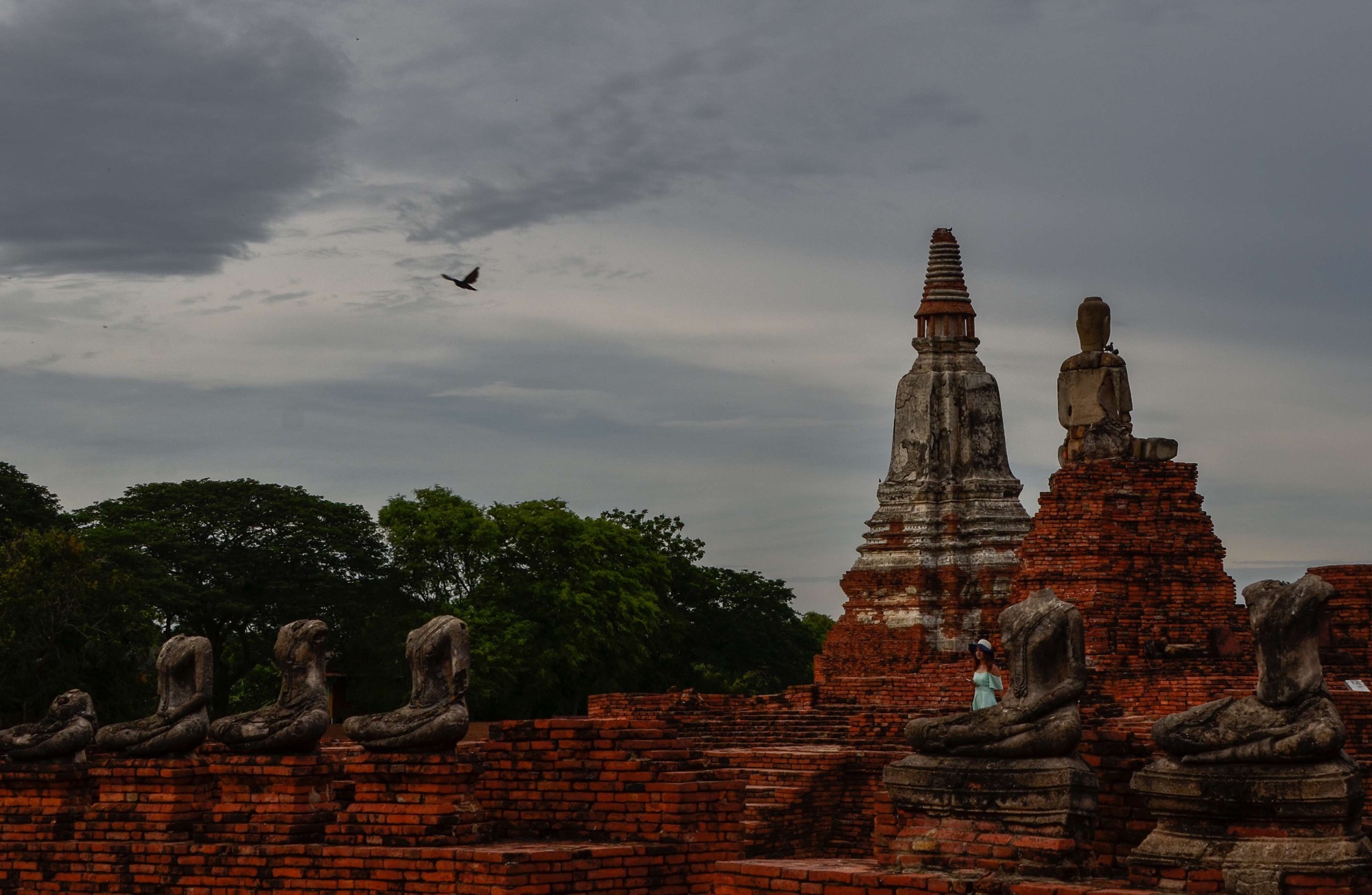
Pigeons and other birds live in and on the ruined temples. Wat Chaiwatthanaram, Ayuthaya, Thailand


Charlie Winn

Sunset at Wat Chaiwatthanaram, Ayuthaya, Thailand


Charlie Winn

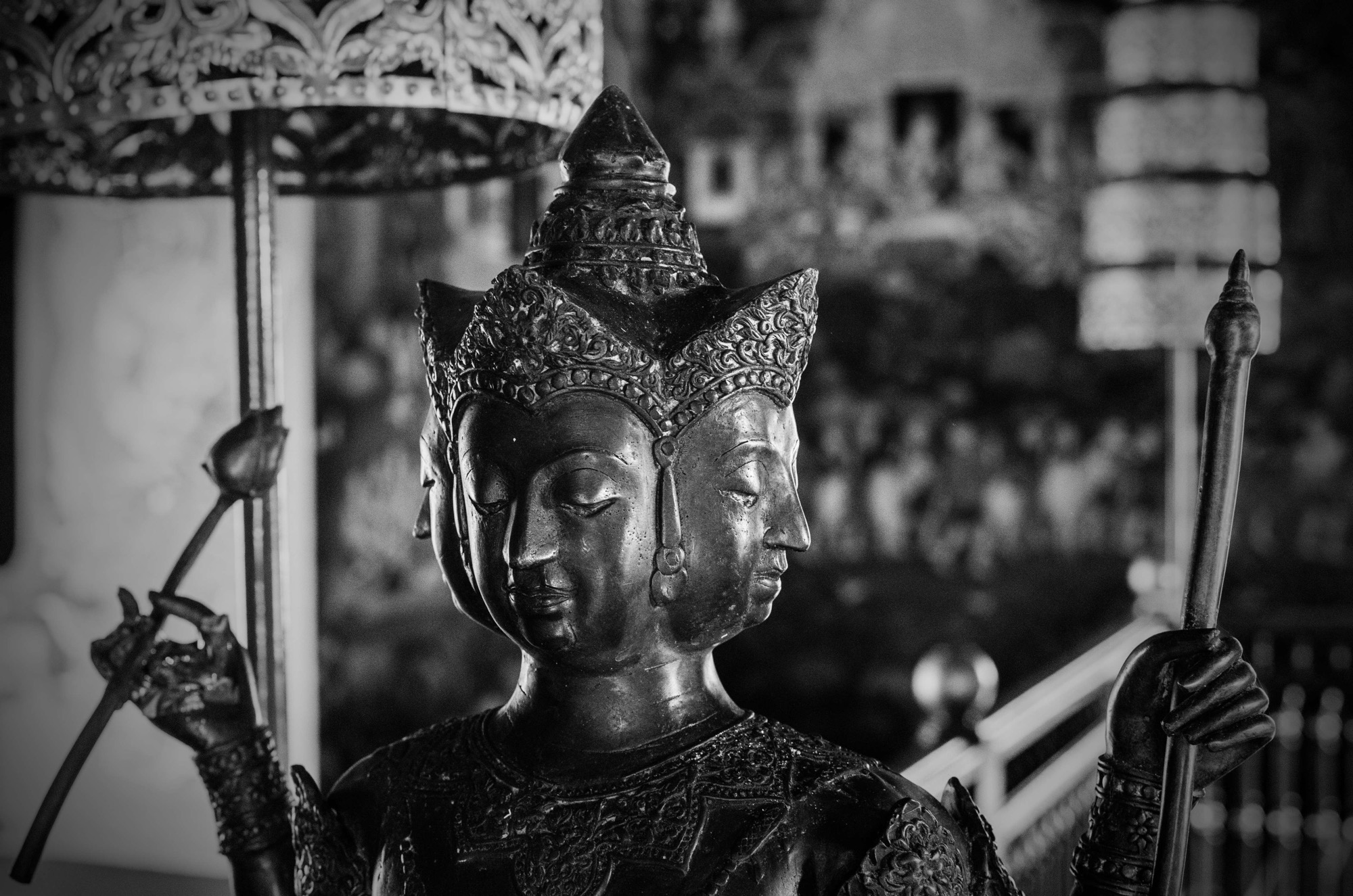
Hindu gods and statues can be found in amongst Buddhist imagary. Wat Phra Singh Chiang Mai, Thailand


Charlie Winn

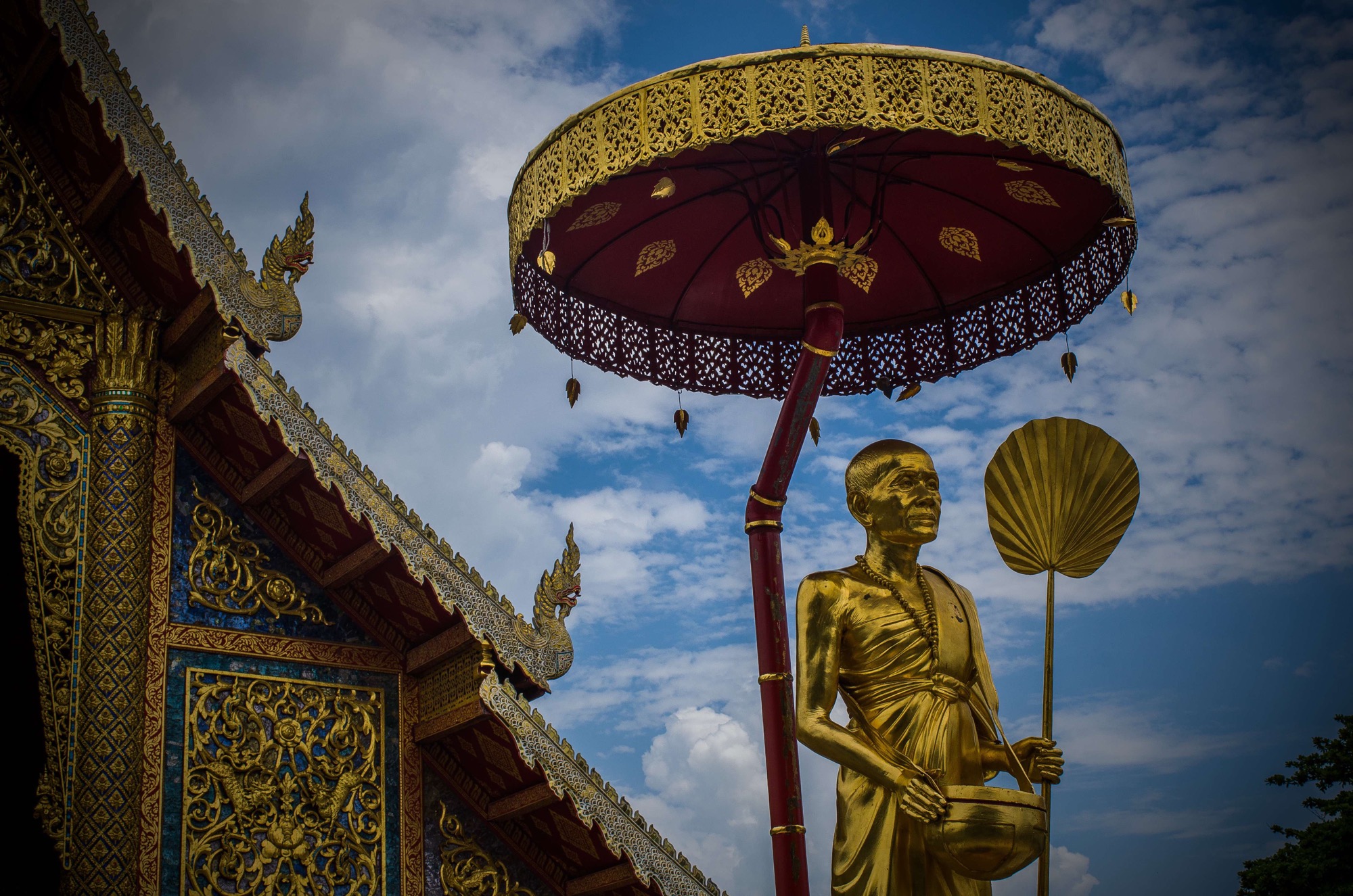
Monk statue outside Wat Phra Singh, Chiang Mai, Thailand


Charlie Winn

Buddha statues, Wat Chaiwatthanaram , Ayuthaya, Thailand


Bangkok

Charlie Winn

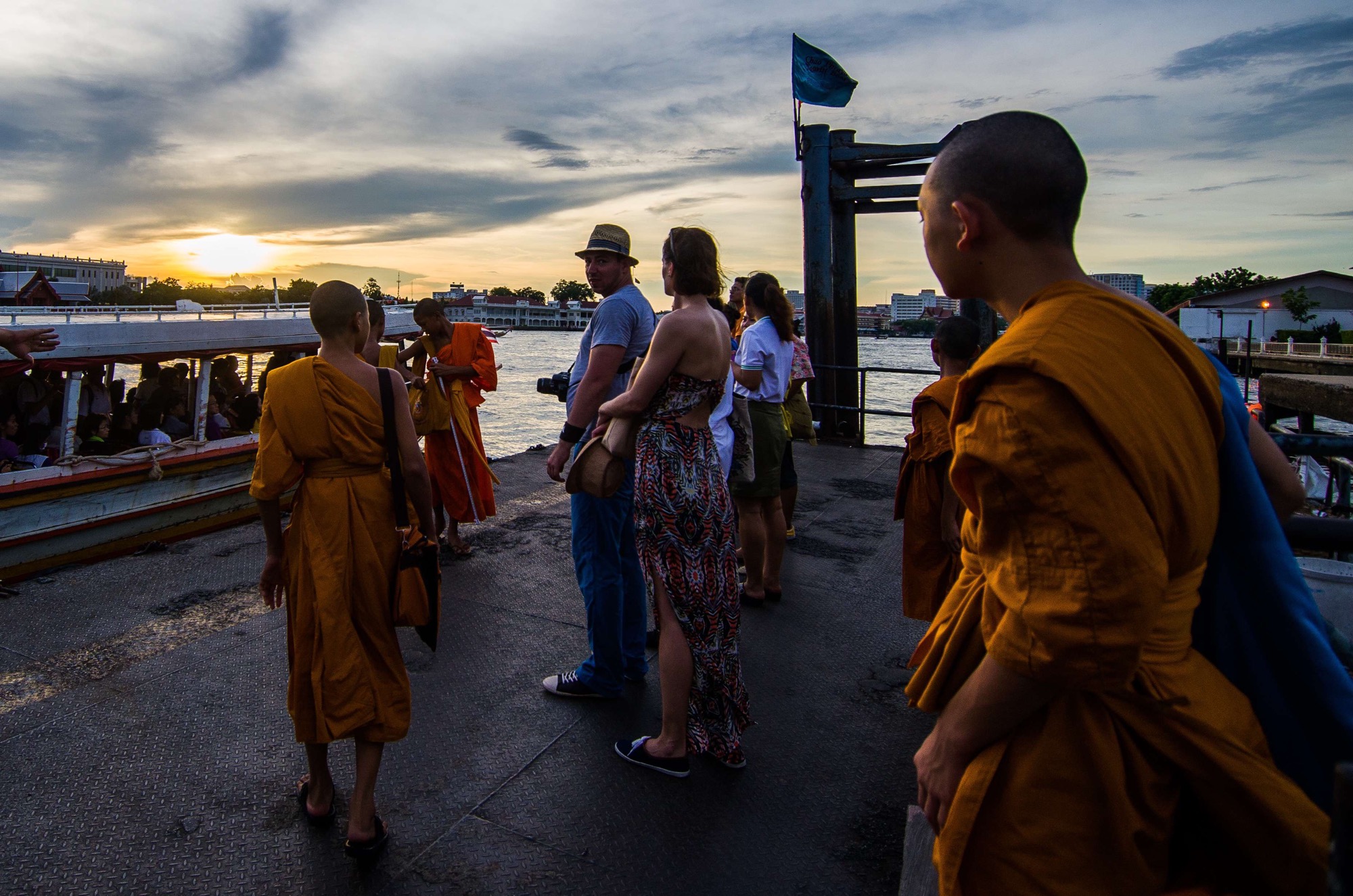
Monks catching the long ferries on the Chao Phraya river, Bangkok, Thailand


Charlie Winn

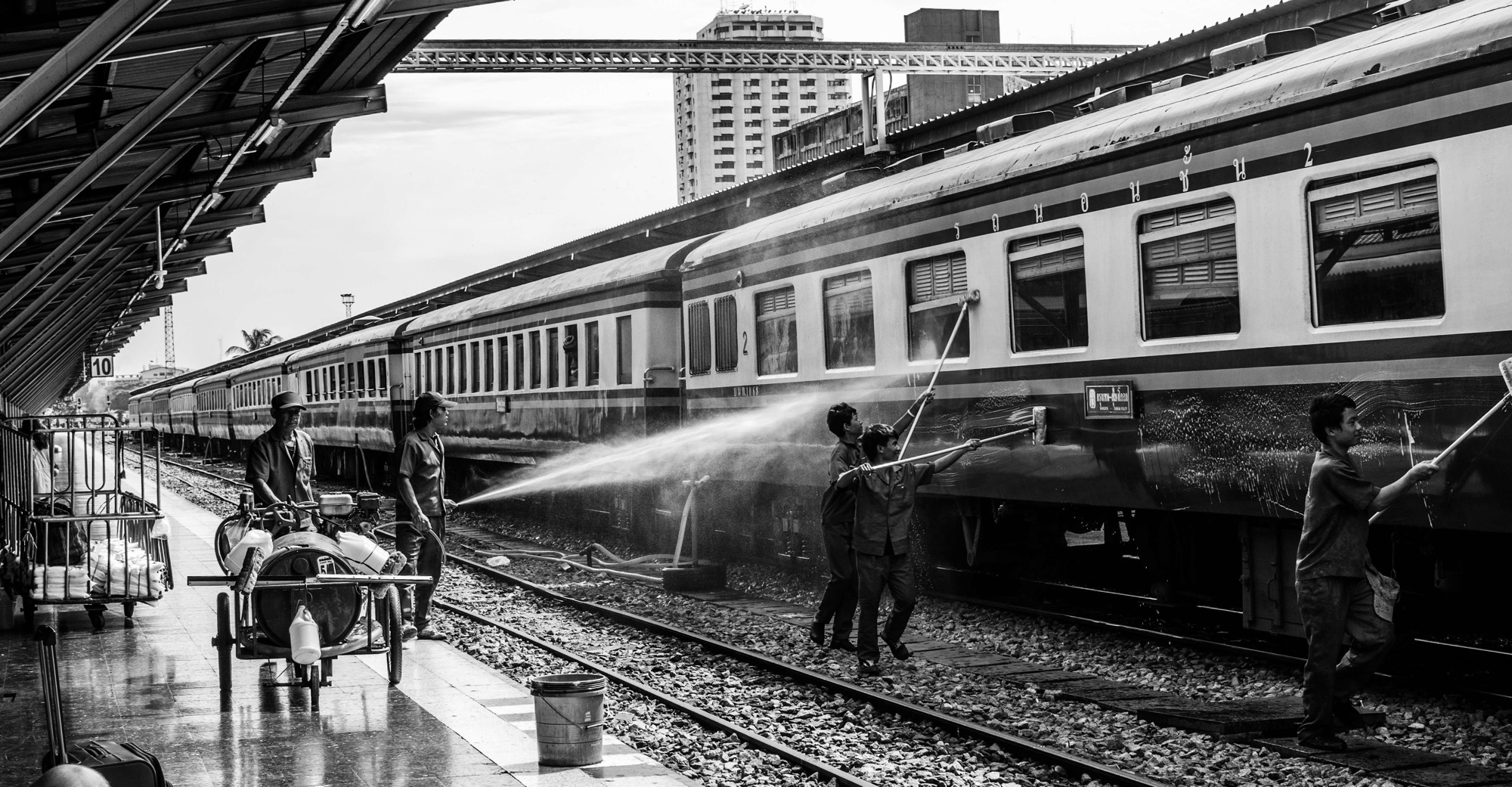
Cleaning the rolling stock, Hua Lamphong station, Bangkok, Thailand

  
Charlie Winn

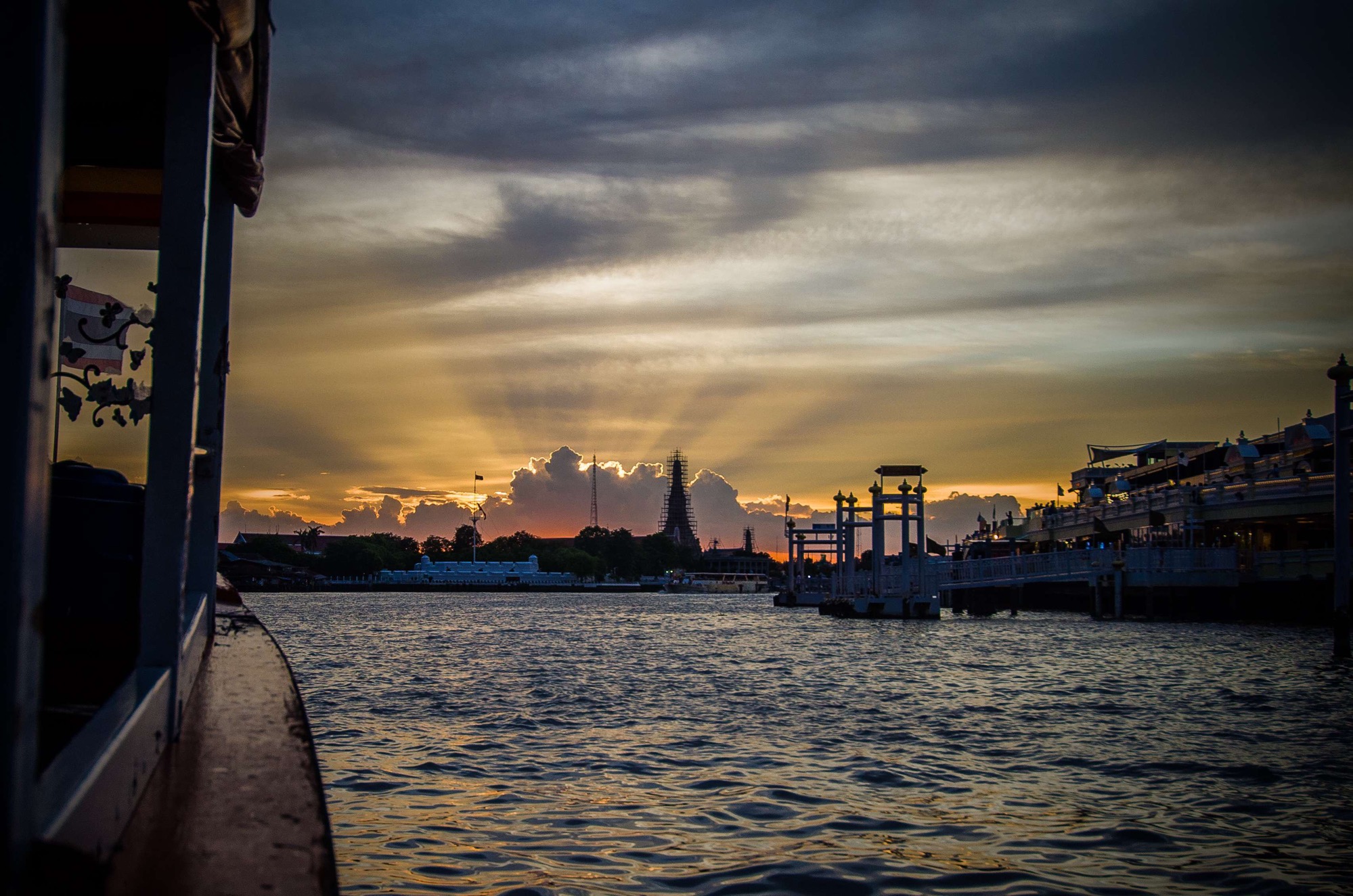
Wat Rakang Kosittaram, from the Chao Phraya river, Bangkok, Thailand

  
Charlie Winn

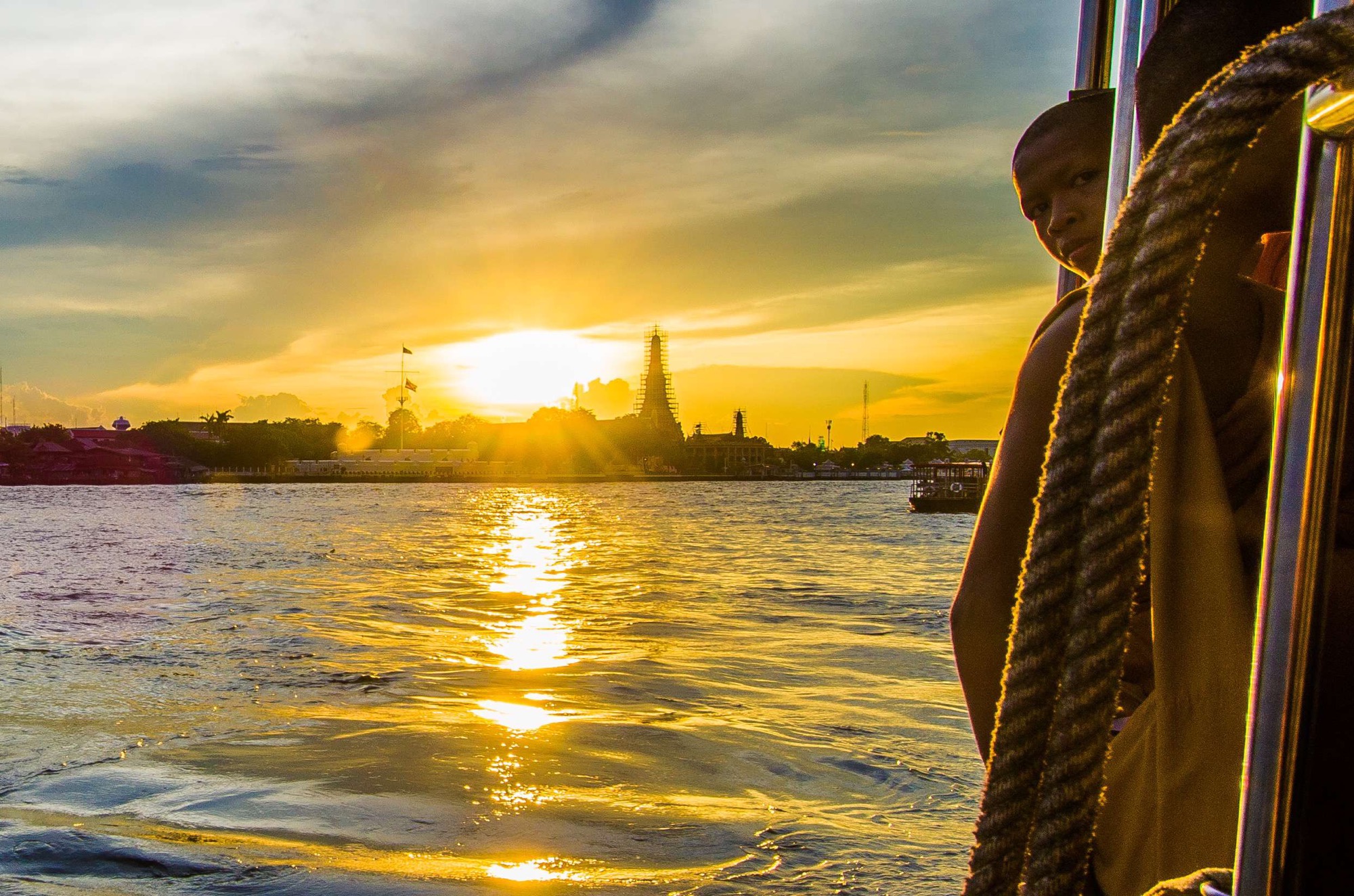
Buddhist monk looking down the Chao Phraya river, with Wat Rakang Kosittaram, Bangkok, Thailand


Thai food 

Charlie Winn

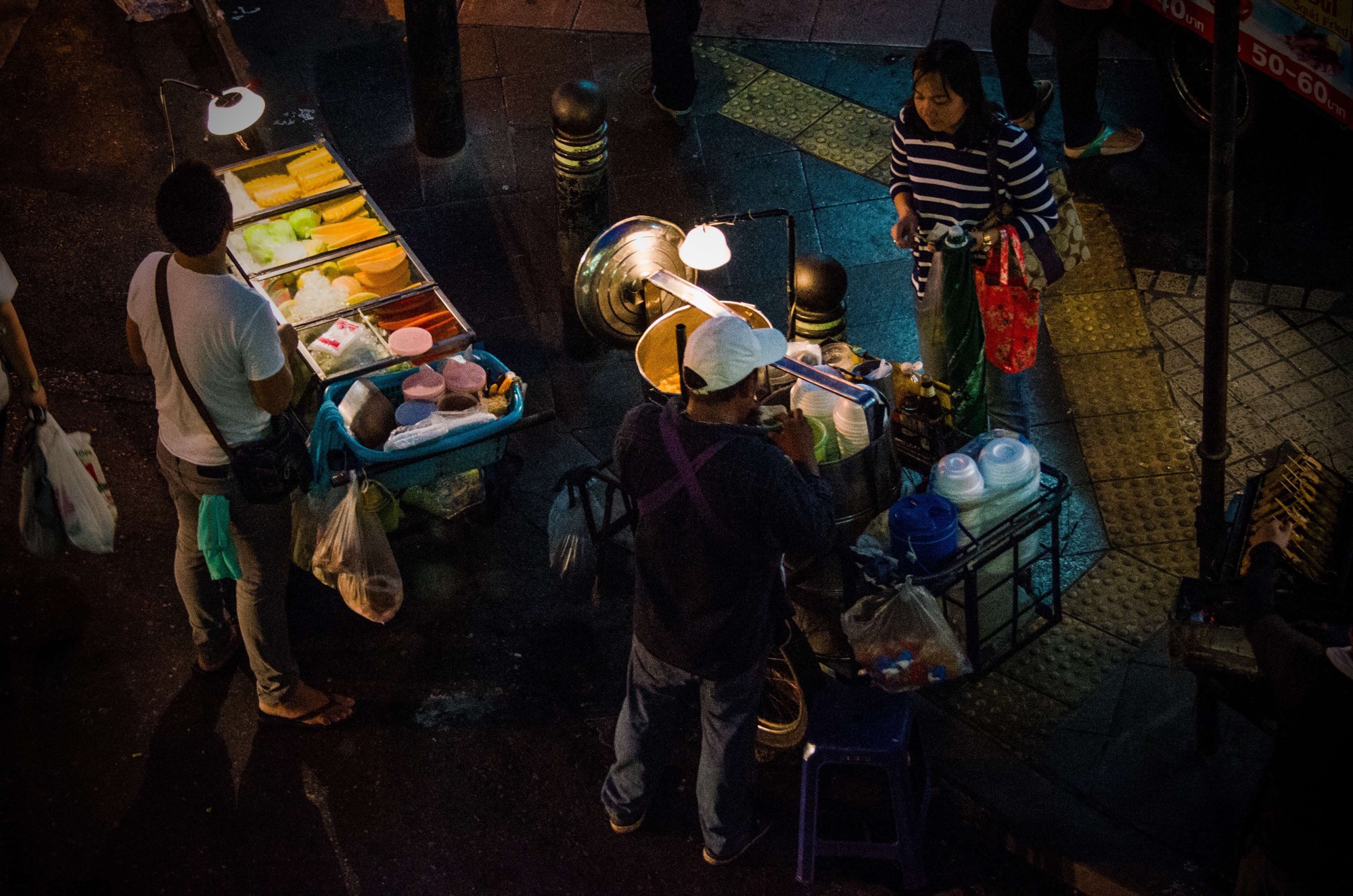
Night food stalls , Si Lom, Bangkok, Thailand


Charlie Winn

Red, Panang, Mussaman and Green Thai curry pastes. Asia Scenic Cooking School, Chiang Mai, Thailand

  
Charlie Winn

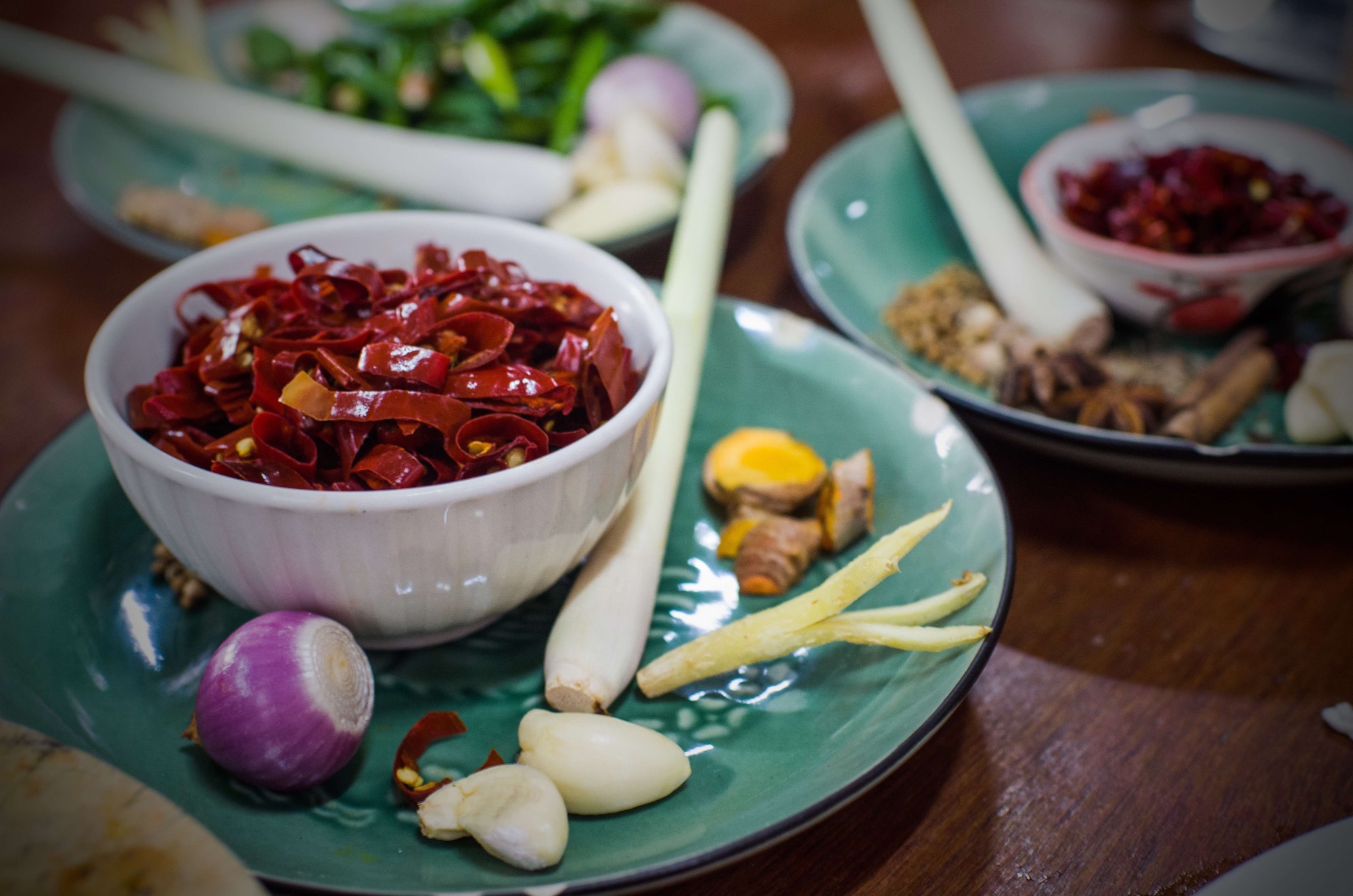
Chillies, lemon grass, galangal, garlic: the essential Thai cooking flavours. Asia Scenic Cooking School, Chiang Mai, Thailand


Newer Posts
Older Posts