Menu Close

Charlie and Steve's Excellent Adventure

Tasting the world one meal at a time

While you were working – Looking Down on the Sky, 7.9th Station, Fuji San

 A dreary day beckons outside while breakfast greets us safe inside the dining room of the ryokan for our introduction to natto. What is natto? The correct answer is that it’s sticky fermented soy beans enjoyed with rice, the realistic answer is more like a combination of vegemite, anchovies and warm beer with the texture of lumpy phlegm. Yes they’re as foul as they sound. One thing that natto does well however is wake us up; we’re padding through the water slicked streets of Gotemba to the convenience store to buy lunch, snacks, WiFi and drinks. Where Japan has often beautiful yet wholly useless cafe’s, the comforting bosom of a convenience store sends us on our way. 

 As the bus departs we’re left on the black gravel lunar-scape that is the base of Mt Fuji, or as we say here, Fuji San. A nervous excitement grips us as usual but more so for the presence of Aki who is poker faced as usual. After years of rugby together we all know each other pretty well, Aki who will run through brick walls and ask for the next one to charge at has no persona of fear but today there’s uncertainty there somewhere. In truth Fuji isn’t the biggest mountain ever, only 3776m, so there’s no great fear of failure to summit but with a whopping one day of nearly 2km vertical ascent we need to pull the reins in on Aki. Given his determination that I would never want to be on the wrong side of, he’s likely to face uncertainty with all out assault and make the six hour walk in two hours. Aki is facing challenge the only way he knows how, banishing any notion of failure, while we’re pulling back the reins of a raging bull and kamikaze pilot all in one.  

Charlie Winn

Steve, Aki and Charlie prior to starting the asent of Fuji San, Japan.

  The early stages of the walk take us scuffing our feet along the black gravel that look a little like a road before the steamroller flattens it, still under the blanket of cloud that has been our last few days. The slope is gentle but up ahead Fuji San ramps up steeply before disappearing into the mist and the other world we’re destined for. Regular stops for food double as a way to moderate the kamikaze Japanese bull that is Aki and take in the scenery that is just now panning out before us; bleak, desolate and mysteriously inviting. Fuji San is of course one of the most recognisable images of Japan, anyone the world over can spot the perfect conical shape of this iconic volcano that graces bank notes, stamps, postcards, songs, poems and countless artworks. But it’s the top, the summit that gets all the accolades, the peak that lies beyond the clouds so far away. 

 The ground steepens, our legs begin to take on some fatigue and in the guts of the thick cloud cover the famous Aki determination grips uncertainty and strangles it into non-existence. There’s no rain, just cloud, fog and the repetitive crunch of hiking boots scuffing into the sandy soil at each step for a better foothold. At about 2500m altitude the fog begins to thin and our suffocated world of cloud begins to deliver us to a life of privilege in the unlimited world where sky becomes forever once again. On a short stop with some chocolate and a fish sausage which is surprisingly good, the world to us is now just this world famous icon and an ocean of puffy cloud reaching out forever.  
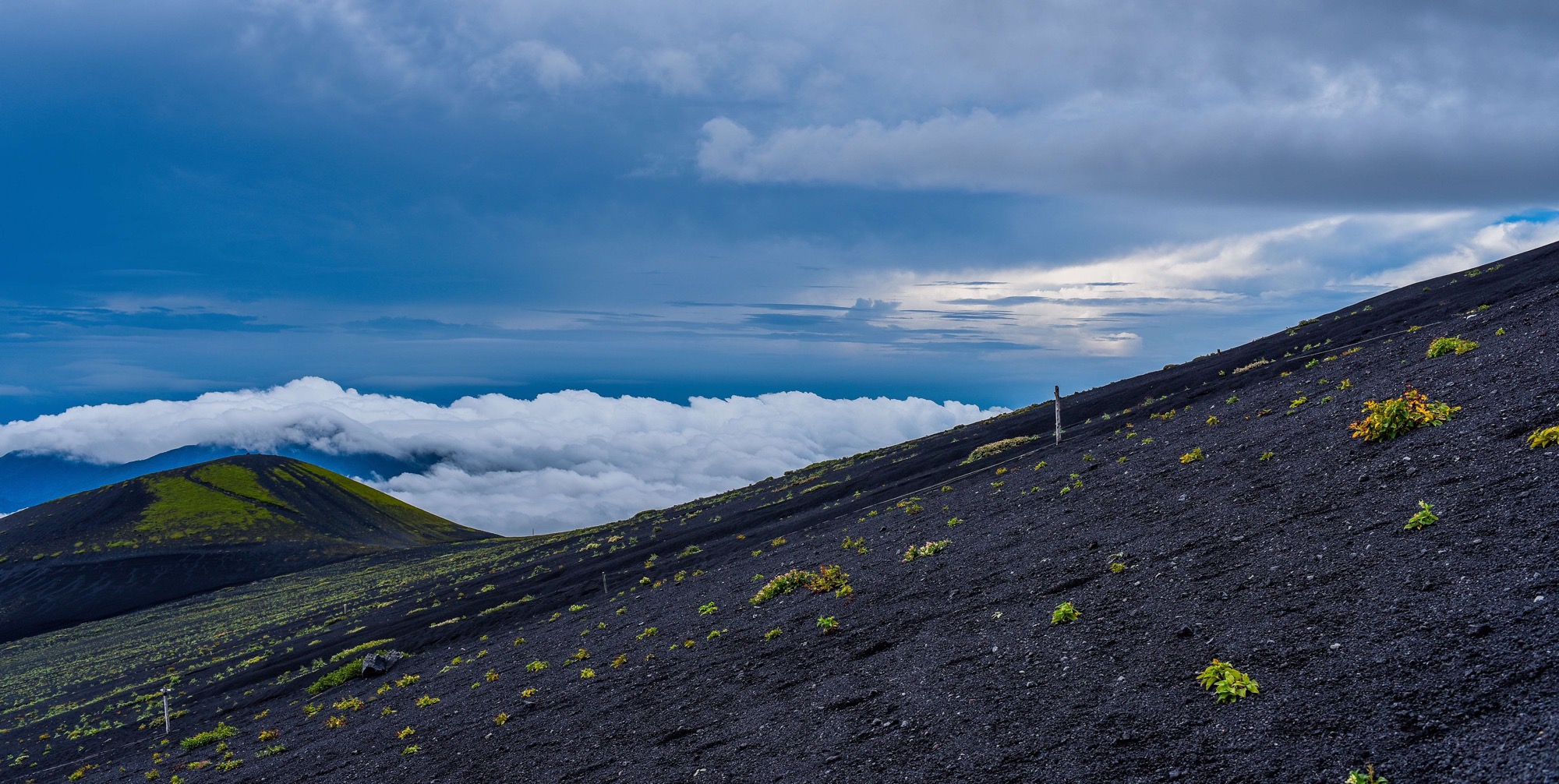
Charlie Winn

Looking down on the sky from Fuji San, Japan.

  We hoped we would rise above the cloud but we never know until we walk, the gloomy day is now for those below us and Aki for the first time gets his glance at what this is really all about. Being above the clouds is an adventure, a trip into another world; like scuba diving in some ways. Below the water we go to a different universe we don’t really belong, where breathing in sends us swimming like the birds to fly with the fish and regress to a previous era of our evolution with fins for feet. Down there in that world of blue we can see the veil of the surface that greets the other world, not entirely removed but in a kind of dream, a fantasy world that we can’t stay in forever as much as we’d like to. 

 On the ever steepening scorched scree of Fuji San a similar feeling of removal takes place. The world below is there, we can see it but the veil of a waters surface persists, this time not in the sharp exchange of water to air but in the gentle graduation between cloud and clear sky. People go to work below that cloud, they huddle under awnings and umbrellas and look upward to the thin slice of atmosphere their imaginations are allowed to inhabit. We’re in our different world now and that veil of separation is clear to see in billowing white plumes that roll on forever. There’s no rain here like down below, the air is crisp in place of humid and the stillness is replaced by a whistling relentless movement, so alive. In this world the summit of Fuji San is not a dream lost in clouds, it’s above us and comes ever closer on the repetitive shuffle of boots on gravel.  

Charlie Winn

Sunset from 7.9th station, Fuji San, Japan.

  We’re at 3030m altitude and no longer flirting with the veil of cloud to our other world, we’re towering above, feeling distant and removed. Or is everything just upside down? The air is thinner and after five hours of taming the raging bull, Fuji San takes over our job for us; there’s only an hour or so for the last push upward but fatigue grips us all as Aki persists almost on his famed determination alone. A global population of billions reduces to a few hundred of us huddling in shelters like 7.9th station that cling to the steep face of Fuji San near the top to scoff down a hearty dinner and enjoy a cold beer. Thirty dollars for a few bottles of water feels like highway robbery but like changing currency to a new country we’re changing currency to a new world as we settle to attempt some sleep in the rarified air near the top of an icon. 

 It’s easy to spot the slightly confused wonder of Aki in this new world for the first time but in truth the excitement is fairly evenly spread, we never get tired of this. On a regular day hiking we climb about 1000m vertically and after nearly 2000m today we’re all a bit smashed; Fuji San isn’t a huge summit but the price has to be paid. Down there below the cloud, the rain feels like such a constant, a part of our world that can’t be denied or changed, a force of nature that underpins our reality. Up here, looking out at the lights of a city beginning to pierce the clouds so far below the jarring wrongness can’t be avoided; the city lights below are the stars through the clouds that should be above. The world we knew, the rules, the forces of nature that just are, and will always be, are proven wrong. On our feet alone we’ve pierced that veil and while a suffocated world persists below we’ve tricked nature and outrun the rain to where we need no breath or wings to feel like we’re flying, just the black scorched earth of Fuji San with no imagination necessary. 
While you were working – Life Beneath a Cloud, Gotemba, Japan

 Kicked out of the apartment at 8am I find myself wandering the streets of Tokyo while Charlie takes a call back home to a prospective new employer, not happy with the title ‘unemployed, kept husband’ it seems. A light spatter of rain gives the city a sheen in the subdued morning hour, there’s little trace of the neon, the bustle, the noise; just workday commuters hunched under umbrellas and punching keys on vending machines for bottled morning coffee. I have about 45 minutes to kill and in any country on this great adventure that means find a cafe with WiFi and see what’s going on in the world. In the country that makes a habit of doing everything perfectly, a cafe as we know it is what brings Japan’s reputation undone and gives credit to the wretched idea of canned caffeine.

 Modelled on American coffee this land of impeccable palate somehow manages to turn out largely watery dribble in the one place that it seems smoking is not only allowed, but a hobby. Tokyo has retreated indoors and I sit on a street corner feeling like the only person stupid enough to be outdoors as I ponder my next move. Shame stares me in the face, literally, there’s a Starbucks across the road; I feel dirty even saying the name. Dirty or not, it’s unlikely to be a smoke booth and has a good chance of offering WiFi, which in this tech crazy nation is a surprise rarity. Self esteem is overrated anyway, I step through the doors and order a WiFi with a side of watery dribble and a waffle. Keeping up this odd quirk of technology everywhere but not a byte to download, it turns out that the free in-store WiFi is only available if you register from another internet connection. So in sum: I trade my dignity to avoid passive smoking lung cancer to sip dirt water coffee only to find that to get my free internet I need to have internet. I think this is going well. 

 In the time it takes to conclude that Japan doesn’t do cafe’s, my 45 minute exile is up and it’s back to the pad for some debrief therapy; the things we do for love. On this drizzly morning when Tokyo crawled back to bed and called in sick we’re packing to slip out silently leaving a note on the hallway table. Tokyo, you’ve been a treat, but this was never meant to last. We brave the sodden streets that only now rumble with the first signs of life to the bosom of Shinjuku station, one thing that Japan certainly does well as I attempt to replace my coffee and WiFi failure with a better experience on the railway.  

Charlie Winn

Dreary day, Tokyo, Japan.

  More on time than a Swiss watch and cleaner than a high class brothel, Japan rail holds it’s place as one of the world’s great transports. Trainspotters and rail nerds are a force to be reckoned with in Japan and it’s not hard to see why, Japan lives by the extensive network of rail lines that link this nation together like arteries and veins. When I think of iconic transport I think of South American buses, South East Asian tuk-tuks and metro’s like in Hong Kong but with just a few travels on the JR rail network it’s hard to argue a case for any competitor other than for second place. Conductors dressed like aircraft pilots bow at the head of each car before entering and when leaving while quality food is available from the trolley cart to enjoy in your roomy recliner seats; and we’re in the economy section. Yes train travel is not just a means of transport, it’s a way of life.

 All this romanticism bids us farewell as we arrive to meet up with Aki again after his visit to his family. Last weekend in Japan was memorial weekend, described to us as Japanese Christmas where families gather to remember ancestors in the loving company of the family they still have. Memorial weekend has passed for another year and we’re into our traditional hotel, a ryokan, in Gotemba for a very different reason. The drizzle of Tokyo has turned into buckets as we bunker down with a few beers before tomorrow pulling on the hiking boots to go for a walk up a hill. We came here on the rail system that just might be an icon of Japan to climb the mountain who’s icon status can not be questioned; tomorrow we’re climbing Mt Fuji, or Fuji San as we now know it to be called.

 Not only has Aki never climbed a volcano, he’s never climbed a mountain. Travelling Japan with this close friend from home was a privilege to begin with, climbing with him on his first summit attempt, first volcano is also a special moment waiting to happen; that it’s the icon of his nation, Fuji San, makes this first ever summit a special thing for Aki, and by default, us too. Of course he shows little giddy excitement, his stoic reserve is channeled into making sure we are happy and have everything we need; typically his own desires come a distant second place. 

 The rain pours down outside but I don’t believe he appreciates the gravity of just walking through the clouds, using your feet to go beyond the rain, above it. We take turns in the traditional baths, a relaxing ritual as much as a cleansing process that Aki confesses to missing at home in Sydney. Through three showers and two soaks in the huge bath more like a spa, our bodies feel warm and new; after this one experience it’s easy to see why he misses this ritual. It’s lights out for the night, 6am we’ll be rudely awoken; us with bubbling excitement and Aki probably excited too but not entirely sure how to grab hold of it given his walk into a new unknown. We’re already in love with mountains, volcano’s especially and we’re rapidly falling in love with Japan, a nation so readily identified by this perfect conical peak. Tomorrow we’ll outrun the rain to the volcanic icon of this nation to show Aki the wonders of a cratered summit, to the icon too great to live with us beneath the clouds.  

While you were working – Art Imitating Imagination, Tokyo, Japan

What to do in the city with too much to do? Looking into tourist interests in Tokyo is like a gelato shop with too many flavours; shrines, gardens, monuments and museums of every flavour seem to pop up on every other street corner, but today we’re on the hunt for an attraction that doesn’t stand still. There’s no real definition for Akihabara that fits into a few words, it’s a place that is all on its own, it’s Japan and there’s no other Akihabara anywhere else in the world. So instead of trying to encase a word around Akihabara when Akihabara’s identity is purely individual, come for a walk with us into Shinjuku station and board the train to Akihabara. Expectations have abandoned this foray for a lack of alternatives to compare this place to, all we know is that Akihabara is the scene for Tokyo’s otaku crowd, which essentially means geek culture. So come nerd out with us, next station Akihabara; mind the gap.

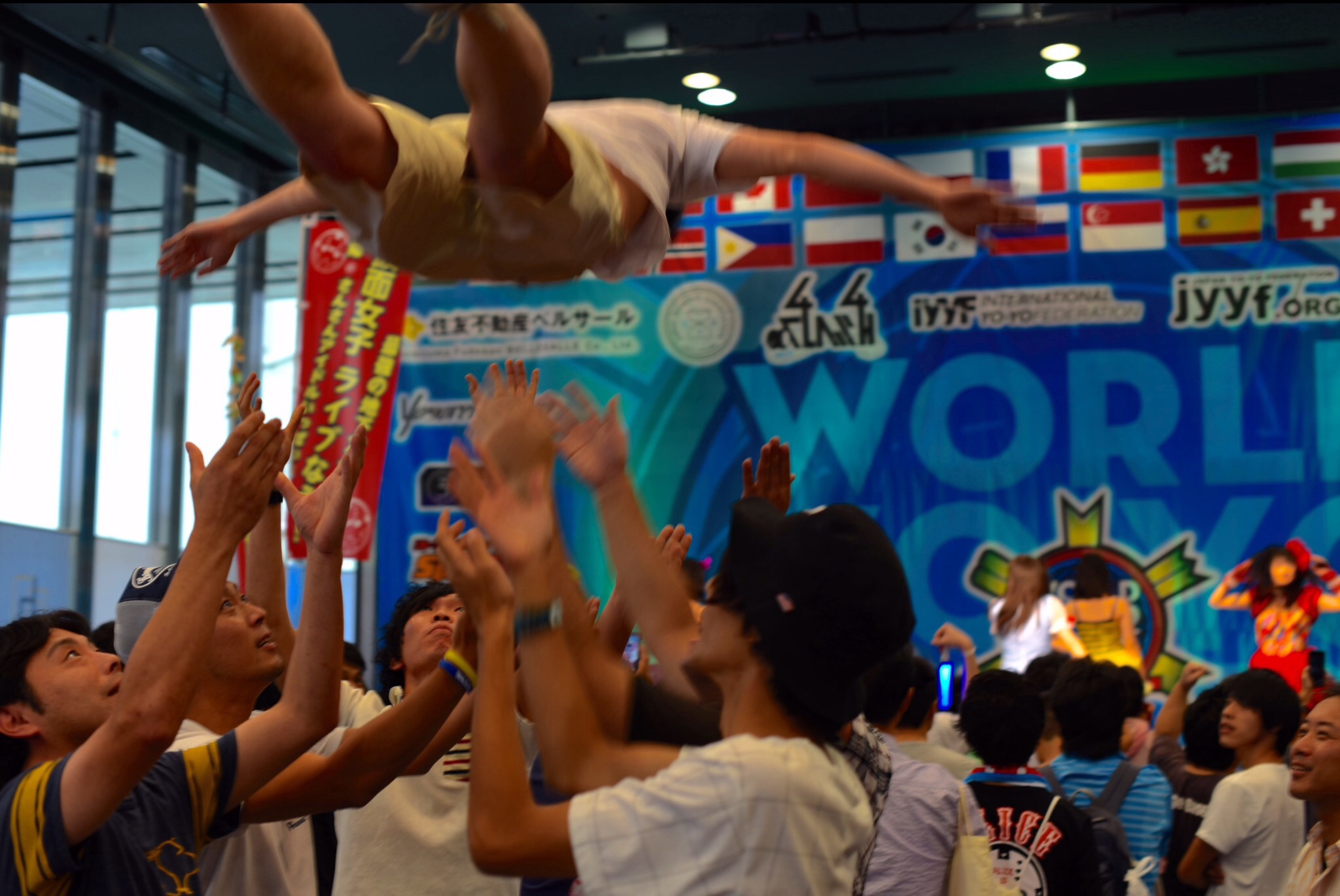
Beyond the overweight foreigners that need to see a little more sunlight instead of their online gaming addiction, the first thing we see is AKB48 theatre and cafe: lets acquaint ourselves with the world of AKB48 shall we. AKB48 originated as an accessible pop girl group with no less than 60 rotating members leaving fans to vote for who appears on stage. What started as a novelty exercise is now a fully blown pop phenomenon with tickets to the theatre won by lottery and nearly impossible to get. We pass the theatre with a giggle and find ourselves among a world championship yoyo exhibition of sorts, yes we’re back in 1980, there’s a band playing and everything. nine girls dressed as awkwardly sexual cartoon characters rock out to choreographed moves to a rabid crowd. There surely really is nothing else like this in the world.


Charlie Winn

A Guy getting tossed into the air as the crowd goes wild for AKB48, Akihabara, Japan

 
This is cheesy saccharine pop at it’s worst, or best, I can’t tell; all we can do is stare, the US army in Iraq had no idea what shock and awe really means. Another traveller leaves the crowd of inappropriately enthusiastic forty something men who know all the words and pump their glow-sticks in the air with the fervour of a high school groupie equally stunned, he can only shake his head. Yes, we are to believe this is the one and only AKB48, there can be no mistake. Apparently there’s plenty of girl fans their own age but it’s in this crowd that an odd quirk of Japanese culture presents itself here like nowhere else; plainly put, outrageous kooky sexuality. There’s some criticism of AKB48 for sexualising girls as young as 13 and watching the fervour in the crowd for what can be nothing but naughty schoolgirls anything but pure, the criticism seems more than just a little justified.

In an overall conservative culture we walk from a hotbed of a concert that seems to double as a gathering for the local sex offenders watch-list shocked and in awe; I think. Herein lies just a slice of what makes Akihabara so unique and special: wildly permissible sex gets a green light and for the many guys, and some girls, the kinkier the better makes no dent on their otherwise sacred social personas. It seems a perfect conservative reputation is absolutely necessary to succeed in education or professional life but in certain realms like anime books and concerts like AKB48, no reputation is tarnished.

Charlie Winn

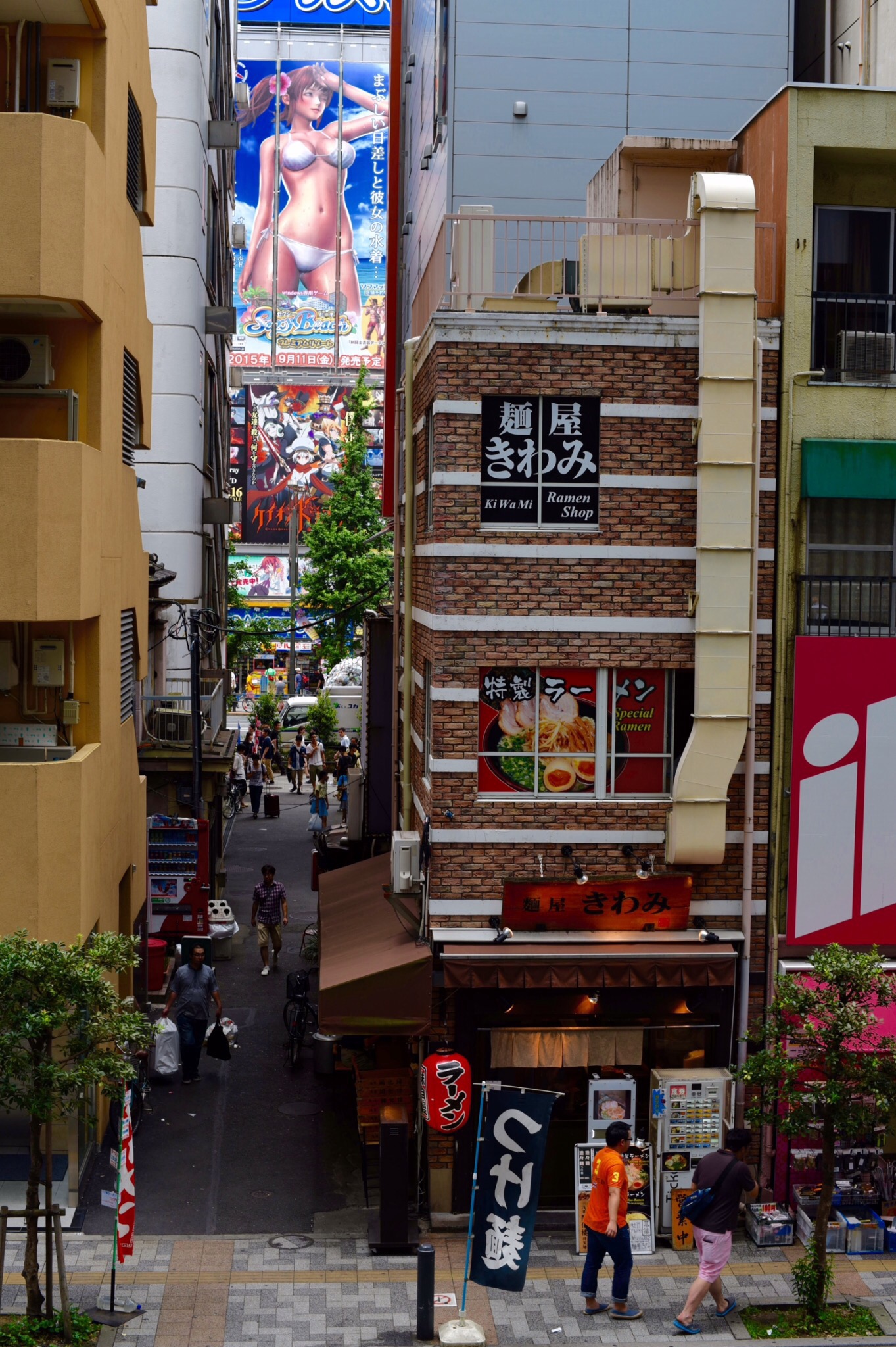
Sex and everyday life, Akihabara, Japan

 And sex does rule the world we find ourselves in, there’s a seven floor sex department store that’s boldly on the tourist map and lets just say that if someone has ever had a kink for it, it’s available at M’s; enough said. Billboards and indeed entire buildings are loaded with images that are nothing short of animated fantasies but old ladies and kids alike mingle with the AKB48 fan base like it’s nothing new, no sexual boundaries exist within these very defined forums. There’s none of the famed school-girl underwear vending machines anymore, vacuum sealed for freshness, but in the streets of Akihabara it would feel like nothing out of the ordinary at all. Take a sexually confined culture, give them a door to walk through and watch the stampede.

Sex is everywhere and nowhere here, in truth it’s all anime and manga books, the animated world that is distinctly Japanese. Wild sexuality crosses paths with ninjas, fighting robots, samurai demons and everything in between drawn in a distinct style that is nothing short of captivating art. Stunning imagery feeds a style and lifestyle that goes far beyond just sexuality and it’s this world of stunning imagery that captivated me as a kid. Ok the sexual bit wasn’t missed either but it’s a whole culture and in this format sexy sits alongside stylish, cool, whimsical, violent and emotionally complex narratives. To our eyes, otaku is defined my anime, or maybe it’s the other way around and sex is astutely just a part of life and given just the amount of focus it has for most people that we pretend not to notice.


Charlie Winn

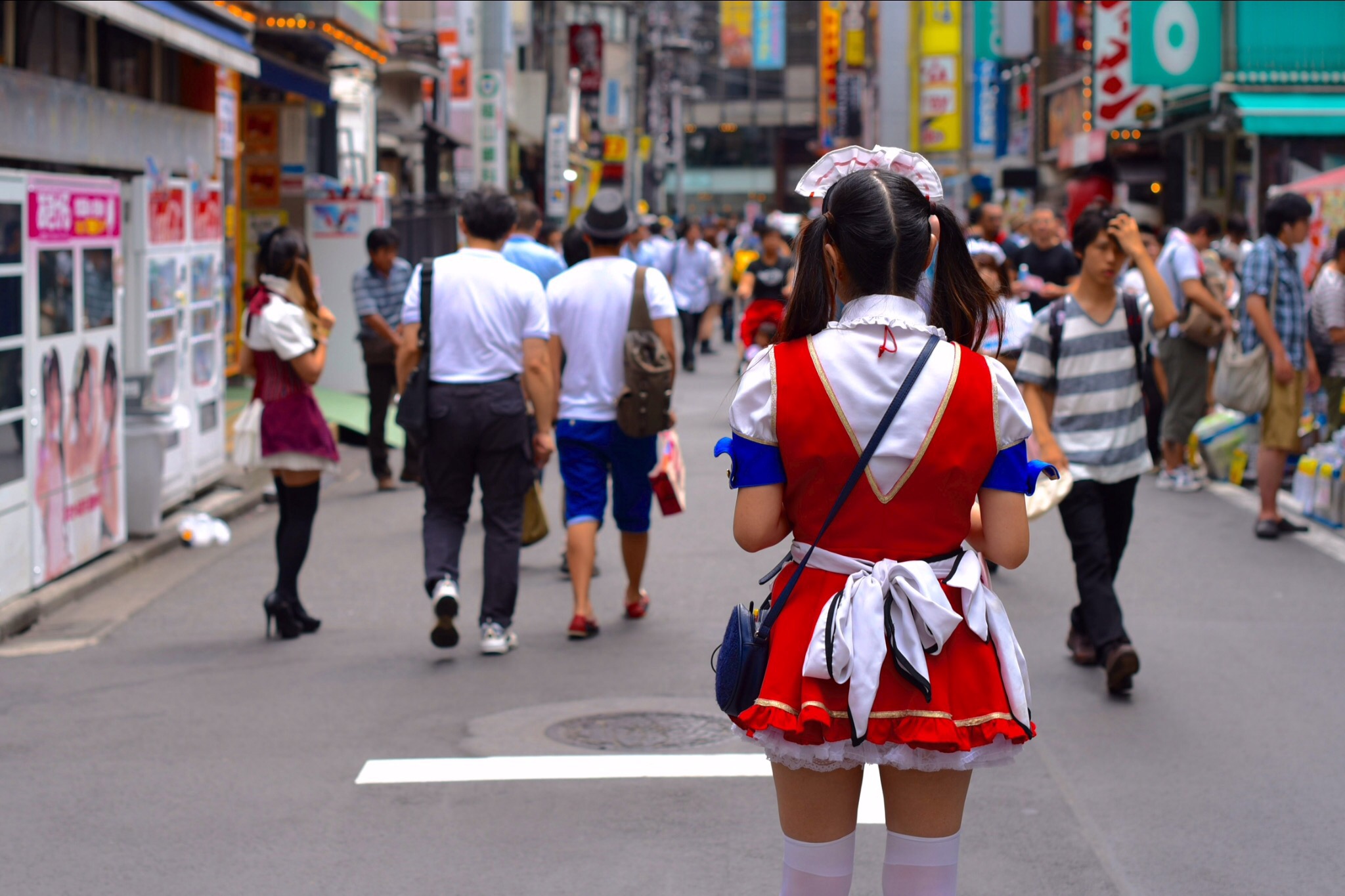
Life imitating art: Otaku girl in costume, Akihabara, Japan

 
From a world where imagination not only becomes real but has a postcode, return with us to the real world from restaurants and theatres dedicated to animated characters and their queues that run down the streets. The cafe with staff dressed as French maids who treat you like master or lady is no more, nor are the businessmen and women carrying shopping bags of comics, sex toys and popular fashion all together as casually as fruit goes with vegetables. Yes a world of unlimited imagination that bursts out in all directions, not afraid to be different is behind us now as the train doors close to take us back to the very definable world of Shinjuku. The party area; it seems so boringly simplistic.

Over a stunning bowl of ramen in nearby Harijuku we take stock of a real world that seems so simple now, so describable. They say that naked is porn and nude is art; the first view that caught our eye was sex but there’s no argument that otaku culture is art, stunning cultural art. The art exists beyond the page, the poster, the TV screen; the otaku art lives in the enthusiasts that define it. Art imitates life in the imagery we saw all around us and life returns the favour in the people that walk the Akihabara streets. Still Akihabara evades an easy definition; it’s where imagination leaps from dream into reality and dances with art to make a reality far beyond what the imagination that created it ever dreamed of. Art all of a sudden seems so linear.

While you were working – Eternal Sunshine, Tokyo, Japan

 Beyond the ocean of iconic cultural markers Japan has thrown up for us there lies a far greater history that paves an unbroken road to the Japan we know today. In our lifetimes Japan has long held it’s allure as a nation of wonder but before that Japan was for a long time an imperial might with a long history of invasion, occupation and destruction clouding it’s history. Through pristine high-tech train stations it’s all modern world splendour until the western gate of Tokyo station reveals a patch where even the relentless skyscrapers take a break, the imperial palace of Tokyo. 

  In comparison to other great ruins and castles we’ve seen on this trip, the moat walls form perfect lines undisturbed by time while immense stone walls rise up from the waters with typical Japanese perfection. The powers that built this beast were never conquered, never abandoned their seat of power and never self destructed. Japan’s capital moved from Kyoto to Tokyo over time but that never stopped Japan reaching its influence far and wide, initially spreading to parts of China, Korea and Russia. This relatively localised domination kicked up a gear as the world ignited in WWII and Japan made bold plays further into China and throughout Asia including Vietnam, Cambodia, Thailand, Brunei, Borneo, PNG, Guam, Dutch East Indies, Singapore, Hong Kong and more. The beast had awoken and even Australia was attacked in Broome, Newcastle and Darwin but thanks to the shared efforts of Australia and PNG the Japanese forces were largely stopped short of an all out attack on Australian soil.  

Charlie Winn

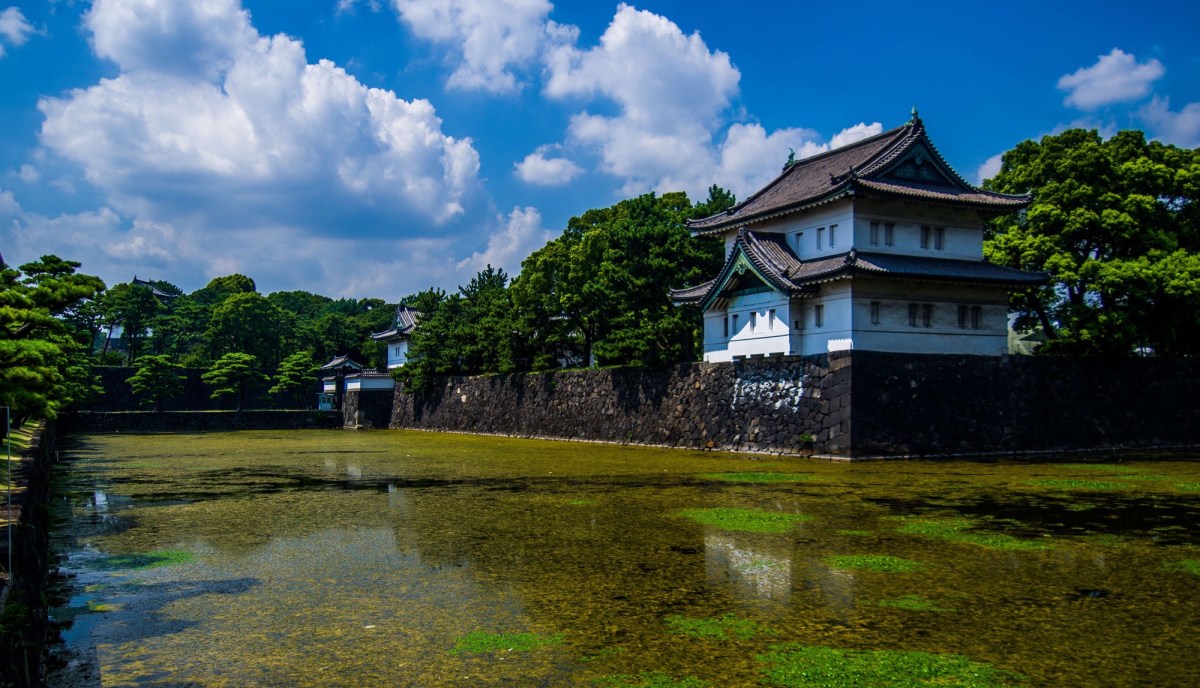
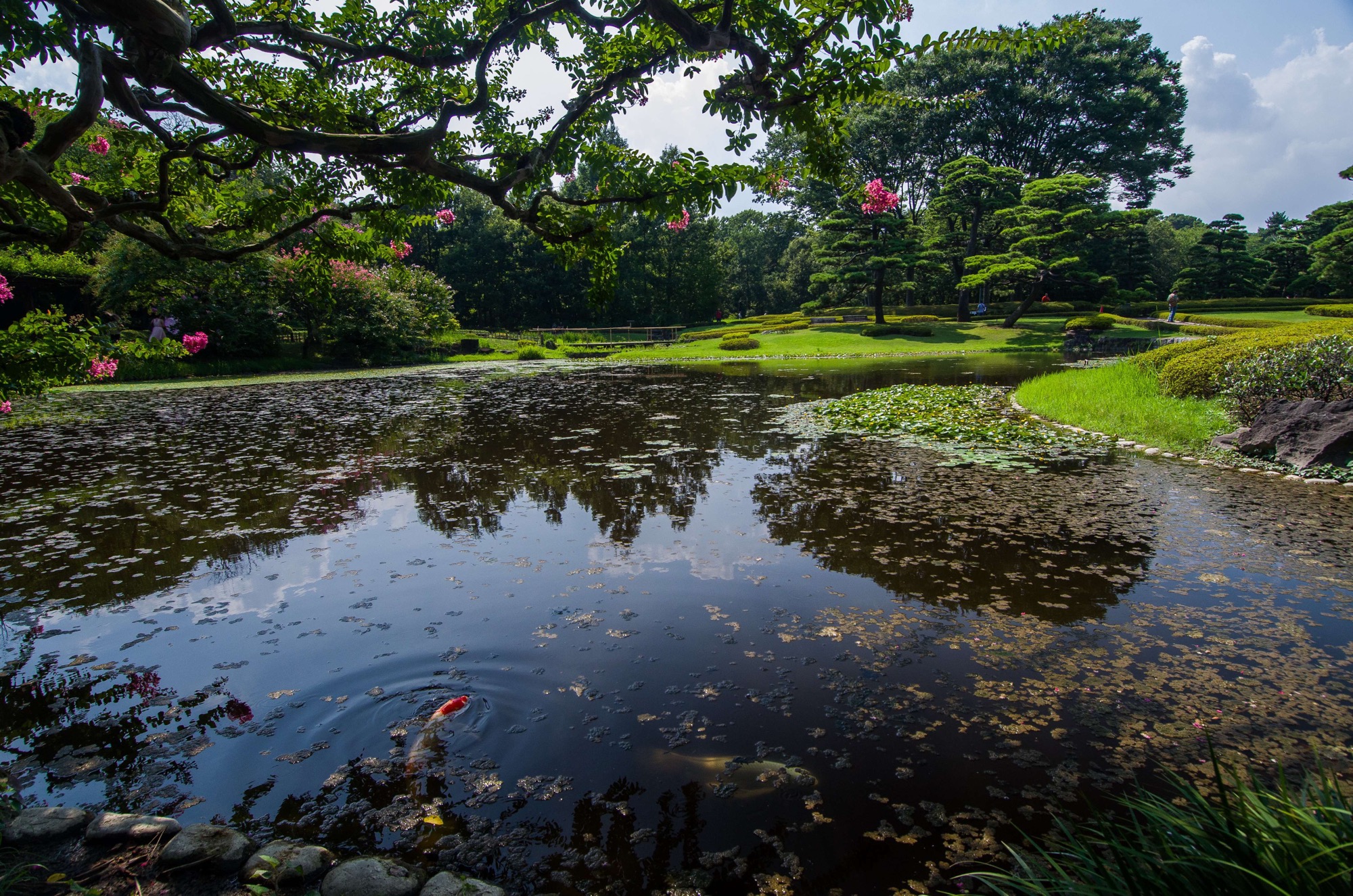
East gardens of the Imperial Palace, Tokyo, Japan.

  Of course then there was the famous Pearl Harbour. To understand the horrific and obvious military blunder that was the bombing of Pearl Harbour we need to understand the hubris of Japanese imperialism, this is where the story of Japans rise and fall truly takes shape. For centuries the shogun family known as the Tokugawa ruled feudal Japan despite the Emperor in Kyoto being the official ruler. The Shoguns had never sensed threat, never faced genuine opposition and certainly never been defeated; The emperor was more or less divine, invincible and the might of Japan was assumed. This traditional romanticism to hierarchy was of course misaligned with modern reality and when the rising beast of Japan poked the American bear the blind assumption of invincibility met a harsh reality check in Hiroshima and Nagasaki. The rest, as they say, is history. 

 Just like the imperialistic ambitions of the former Japan, the imperial palace is now a modern rebuilt relic, only the grand walls we stare at now are true reminders of not only the power but the beauty that has always been Japan. We tour the magnificent east gardens, the only section of this colossal space open to the public to take a snapshot of the elegant dance between power and grace that outlasted the powers that created it. Through large lawns of formed trees the city rears up but the wall of skyscrapers reveals not a single logo to face the palace in this neon mad city; reverence to imperial might remains in muted form.  

Charlie Winn

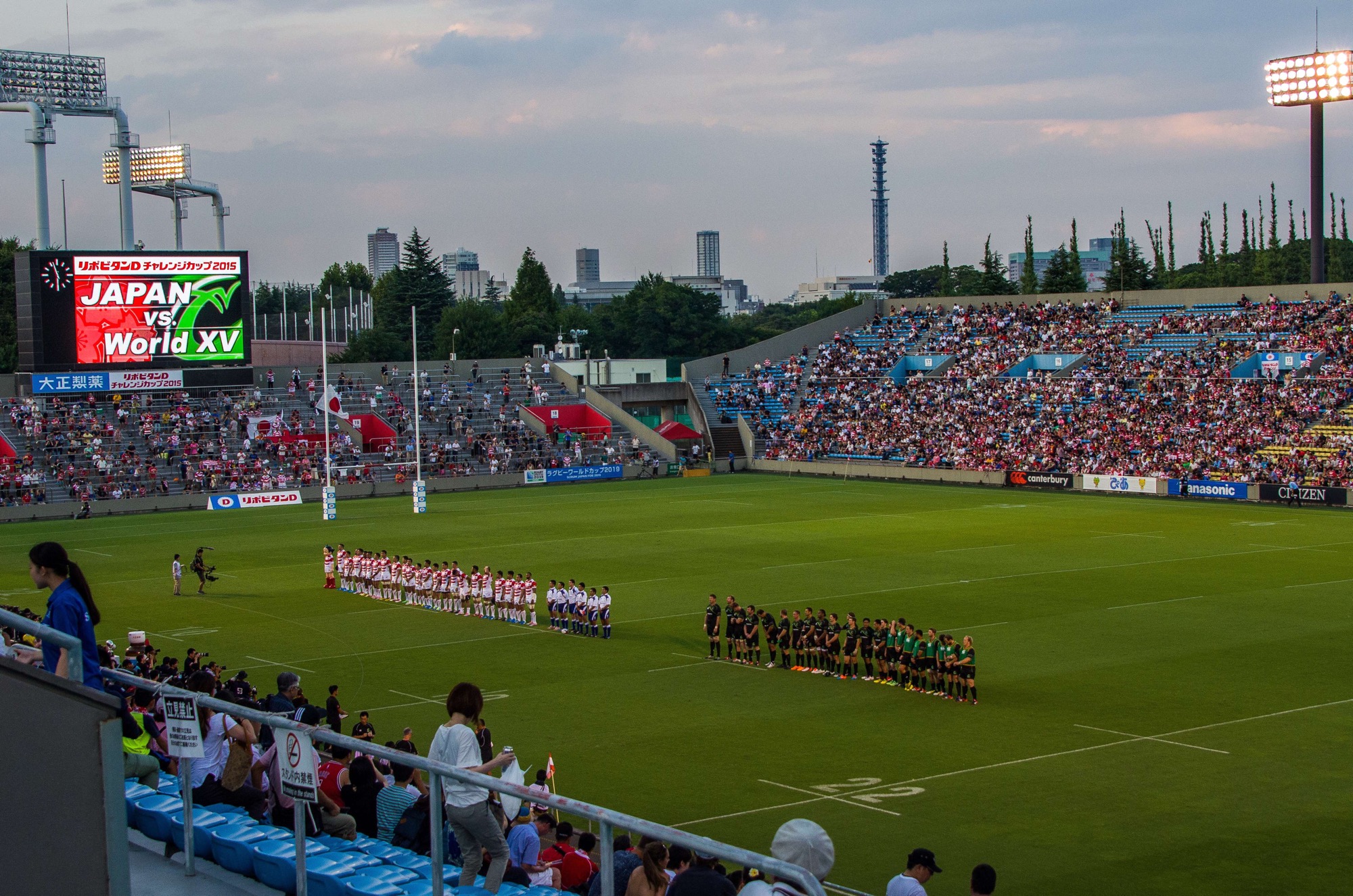
Teams line up for a minutes silence for the 70th anniversary of the end of WWII, Tokyo, Japan.

  Of course this history remains unbroken even though Japan was occupied for the first time in its history after surrendering in WWII. Centuries of build up and a cataclysmic fall on the back of gargantuan hubris brings us the Japan most of us know today. A demilitarised Japan threw its might to industry, technology and economy while clinging tight to it’s more peaceful ancient traditions to make the unmistakable mish-mash of refined cultural perfection and modern pizzazz that can be matched by no other country. In recent times Japan can only be admired for its virtues, but it’s hard to ignore that this nation of wonder has more than enough shame in its story, a shame that some accuse even current Japan of not acknowledging completely. 

 Stepping away from the palace we embark into what we commonly call ‘get Charlie food now or someone’s gonna end up in tears’. Through the ultra posh district of Marunouchi we pass up sandwiches that need a mortgage to buy and make the dash back to Shinjuku to watch some rugby. From the severe imperial heights of Japan’s Tokugawa shoguns we barely avoid a Charlie hangry meltdown with some ramen noodles before it’s off to the game. In a twist of fortune, Japan is playing a world XIV team as a world cup warm up and with 14 Aussies in the team we can’t pass up the chance to watch a game of rugby in Japan. After the Argentinian ticket fiasco that defines Latin inefficiency and an inconvenient South African schedule It’s finally game day.  

Charlie Winn

Berrick Barnes kicking a penalty goal for the World XV Vs Japan, Tokyo.

  Through bustling crowds that keep to the rules too much to feel like a crowd as we know it, we pour into a perfect stadium through a procession of impeccably dressed ground staff bowing at every pass. This is not quite the raucous affair of going to the footy at home. We sit politely and cheer for Japan along with the typically restrained crowd that barely raise a fist pump at a Japanese try despite the mildly wild gesticulation of the Japan mascot; guess who that might be? If you said Astroboy you get a gold star, yes the Japanese rugby team mascot is the cartoon boy hero that shoots rockets from his bum; only in Japan. Sadly the world XIV wins comfortably but as the saying goes, rugby is the winner on the day as the sun sets over the perfect grass and a crowd filing out of the ground in perfect order. Japan has given us the live rugby fix that no other nation has managed; and we bought the tickets from a convenience store which still feels strange. 

 From the historical might of the legendary shoguns to a national sporting team with an animation boy mascot from Saturday morning cartoons the link from imperial Japan to now seems to be time alone. Japan’s not invading anyone anymore, not reaching for power across the globe, the rising sun was eclipsed after attempting to shine its light on too great a domain. But just like any eclipse, a moment of calm is followed by light from the same sun that never went too far away. Japan invaded the world again more effectively than the might of the shoguns ever could with Japanese culture, technology, cars and style sweeping the world from this small island nation. After the war the world stole away the guns but not the power, the rising sun may have been eclipsed for a time but still it sits high in the sky, nowhere near a horizon to settle behind. 

While you were working – Super Dreams, Tokyo, Japan

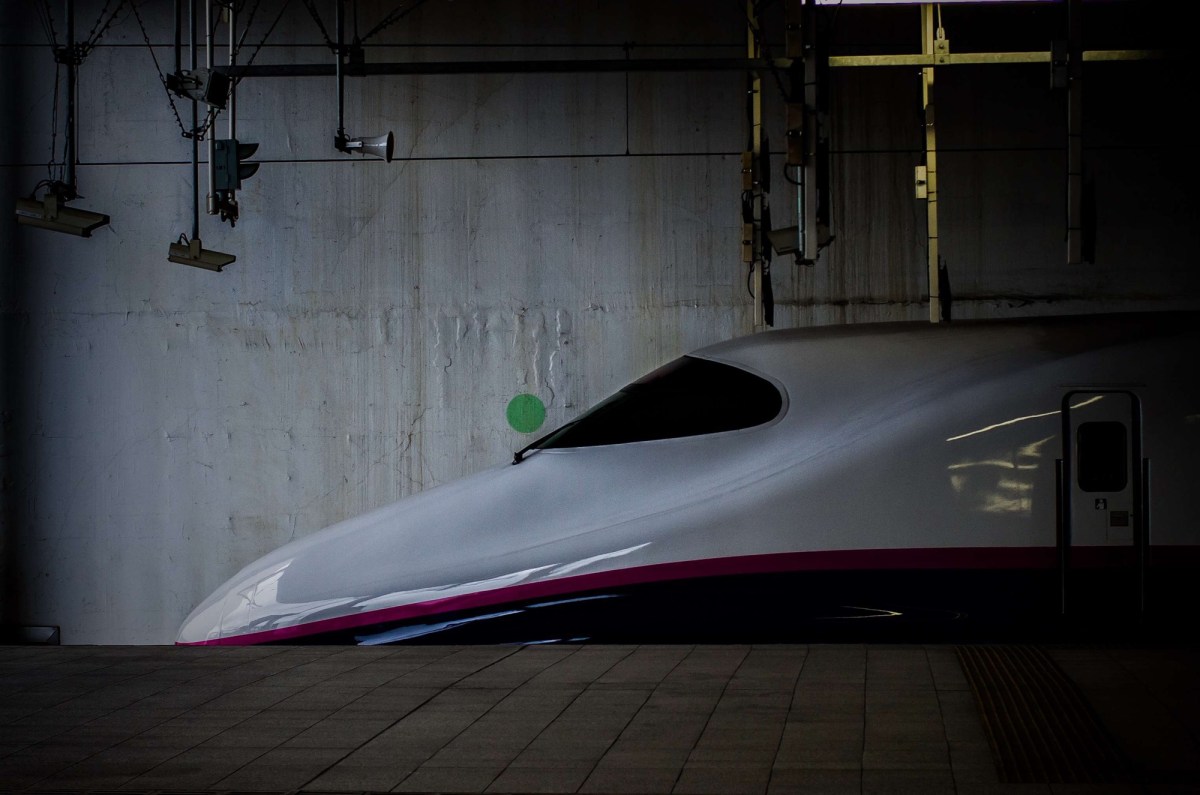
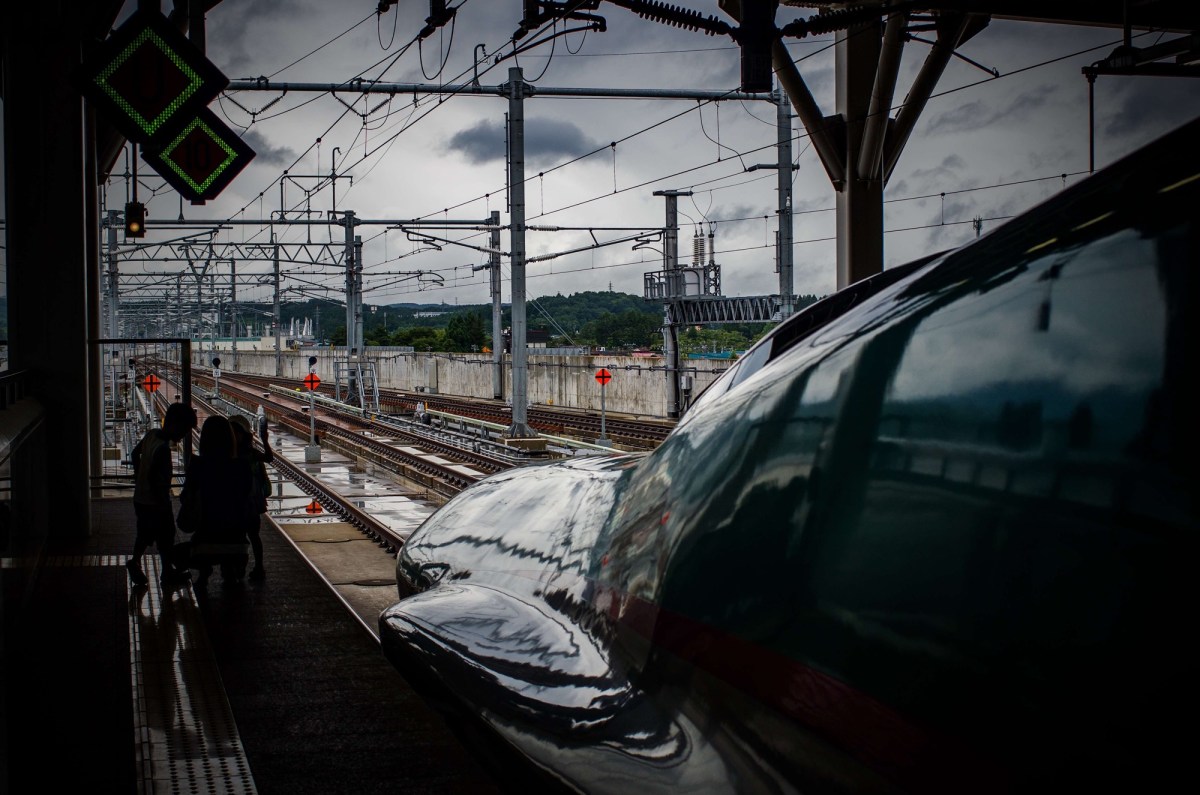
 What’s Japan, what makes this huge little country stand so boldly on the world stage? Surely that question posed to ten different people would draw ten distinct answers, as distinct as the many facets of what makes this nation the character that it is. For many of our generation the romantic seed of Japan was planted with the Shinkansen, the revolutionary bullet train in 1964. On a huge loan from the world bank that still wasn’t enough, the team developing the project earned themselves the moniker of ‘the crazy gang’ such was the Shinkansen’s ambition. originally called the Yumi no Chottokyu which literally means the super-express of dreams, the Shinkansen was to the world a window into what a high tech future might be, in 1964 that first bullet train reached top speeds of over 320km/h and in doing so forged a new pathway into history yet written and vindicated the crazy gang for dreaming big. 

 Japan has a checkered history of ruthless imperialism but that was a long time ago for those of our generation. It also has a dubiously honourable recent war history but again that all happened before Charlie or I came to this world. For people of our generation, our consciousness beyond clinical history books began with this nation that launched into a sophisticated high tech world that we couldn’t believe, this mysterious place where dreams were possible and the amazing happened regularly. We’re now boarding the first wave of ‘Brand Japan’ to flow across the oceans from the post war Japan we grew up with, the Shinkansen. 

 We’re not train spotters, we see them lining the tracks to take photos of the super express of dreams, but we’re excited none the less. On a childhood infused with superhuman Samurai, Shogun and Ninja, anime cartoons, techy gadgets and robots, mysterious Geisha, brash Sumo, Imperious Mt Fuji, cool hairstyles, futons and Zen Gardens; Japan was more than just the Shinkansen, it was a land of imagination and wild dreams for our childhoods. From the massive list of influences that stamped our formative years this is tick-box number one, the Shinkansen surges us forward to the neon lights of Tokyo and a whole hearted dive into the land of dreams, the land that shaped my childhood imagination like no other.  

charlie winn

Shinkansen, Sendai, Japan

  To the second, the Shinkansen pulls up on time into Tokyo station and we do the mad dash across the platform to our city train blinking excitedly at the buzzing world around us. Stepping out of Shinjuku station past the guard that delivers a formal bow and a passing hand ushering us through the gate we’re immediately thrust into the blinking crazy world of Tokyo that defines this populous city. Tight streets extend at haphazard angles decked with more twinkling lights than a gaudy Christmas tree while a world bustles beneath a tall skyline as endless as the sky it reaches for. People bustle along these heaving streets as only Japanese can, with restrained deference to order that doesn’t feel like bustling at all.     

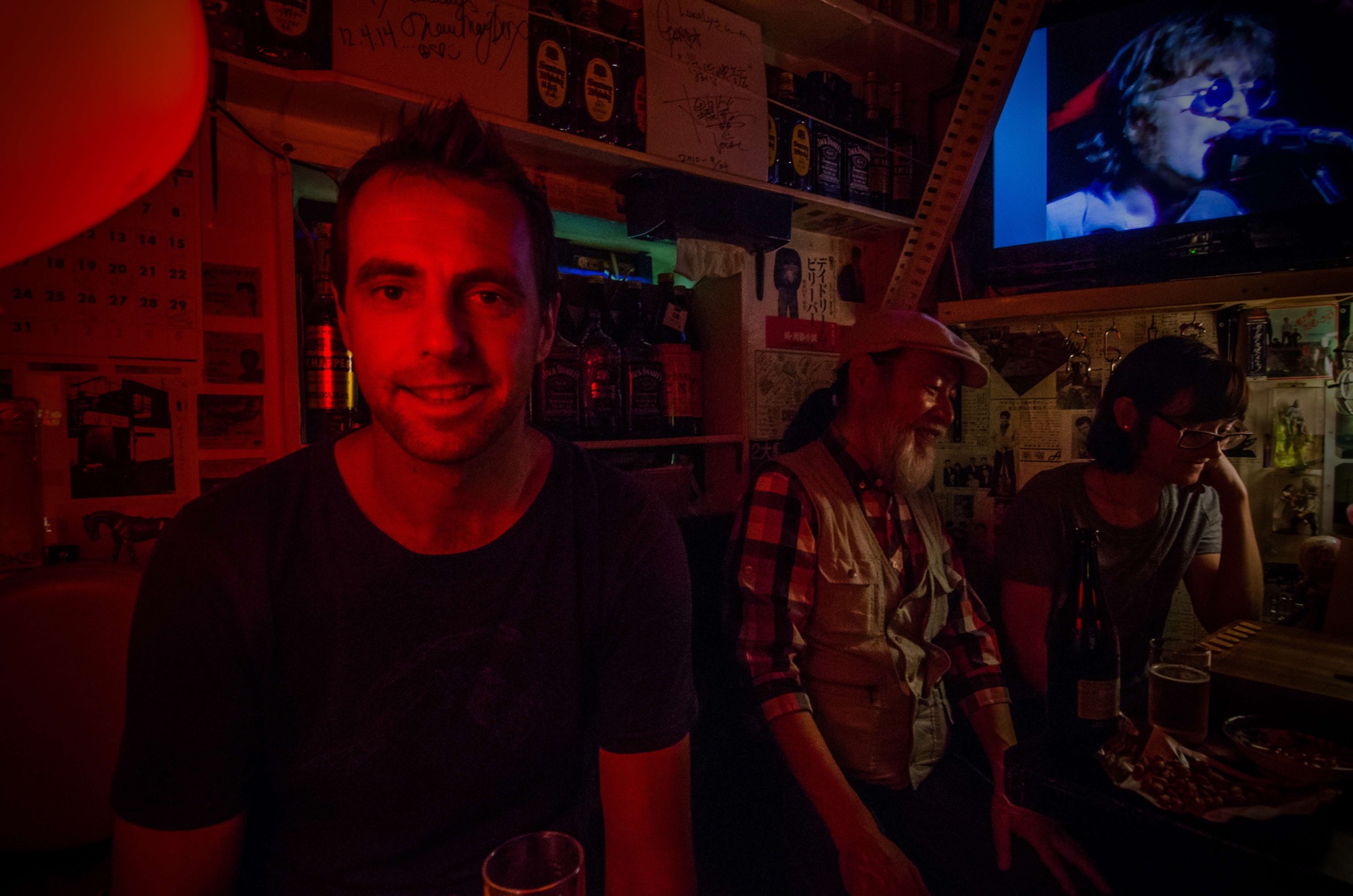
 We find our apartment remarkably easy but I guess this is Japan, the wild chaotic world we often seek out has not visited these shores for centuries, there’s street signs and everything in a nice twist of convenience. Bags dumped we face up to, and tick off ideal after ideal from this nation of imagination; Tokyo pocket bars are a must, and the next box to be ticked on this list a lifetime in the making. Walking past laneways choked with mysterious doors leading to bars for no more than five or ten people we eventually launch into a tiny space with chairs for just six and order a beer. A lone girl shells pistachios beside us while a wise looking old man with a white beard waits patiently behind a bar cluttered with animation drawings, baseball memorabilia and vintage beer ad’s sunk into the shadows that occupy this little room in large slices. 

 We order two beers and soak up this broom closet that is this famous style quirk of Japan; Tokyo, we have arrived. In no time the girl is doing her very best friendly hustler impersonation and we’re on guard for the possible scam. No pistachio’s thanks, no I can pour my own beer, no we’re not buying you a drink. As the not so smooth hustler changes persona to her very best naughty Japanese school girl it all becomes clear; she’s not a hustler at all, just barking up the most wrong tree in the forest. Short skirt pulled up high, straight legs push out a perky bum as she leans in expectantly to Charlie with a pistachio clenched between teeth of a too innocent smile. It appears this naughty schoolgirl needs a spanking; I presume. To say that she didn’t get the reaction she was after is an understatement as she leaves in a rush to bark up less inappropriate wood.  

Charlie Winn

Steve in a pocket bar, Shinjuku, Tokyo, Japan.

  We were downing our beer to make a swift exit but with the evacuation of the Japanese Chrissy Amphlett we’re soon joined by another couple of tourists and there’s two tables of Japanese chess going. The reserved man who looks like a more Japanese version of Mr Miagi from the Karate Kid movie takes a seat to teach us the game and in no time it’s five friends in the best man-cave bar on earth. Scratchy Beatles songs backdrop glowing orange light from spaceship style retro lamps as we slip through another glorious Japanese beer in a space that these tiny bars are world famous for. A lifetime of ornamentation from Mr Miagi surrounds us, this is his life, his anime characters, his baseball team, his music, his world drawn to this tiny room and tonight we’re his exclusive guests. 

 Beyond the torrent of influences Japan produced to tint our youth, we have an adult world of temples, architecture, hot springs, crazy game shows, mountains, gardens, cuisine, sake and so much more to taste, feel and explore in just the remaining few weeks of this great adventure. On the super express of dreams we rocketed from, through and into a world exploding with influences and style too big for a lifetime to dream of, let alone experience. The Shinkansen, the bright lights of Tokyo, pocket bars and even a brush with the wildly permissible kinky Japanese sexuality fill this day, a handful of world renowned icons in a few hours. Welcome to Tokyo. As fast as we can think of icons distinctly Japanese, more endlessly form up behind those we can name. Japan is a land of icons but more, it’s a land that exists for adults and children alike in the rarified air of imagination. 

 The super express of dreams surely could only come from Japan, the nation of super dreams. So what is it for you; computer games, photo happy tourists, powerful industry, feng shui design, haiku poetry, cherry blossoms and box hedges? Keep dreaming up iconic markers because things people have barely dreamed of fall from the sky like rain in this dream with no waking moment, the moment we’re just calling Japan for now.  

While you were working – Childish Notions, Hakodate, Japan

 Atop this mysterious nation of imperial history sits an island, Hokkaido, our introduction to Japan. A culture built from fantasy and mystique refined over centuries. Before we plunge into the high tech neon world that is ultra-modern Japanese mainland we must farewell the frontier island of Hokkaido where the clearest water in the world forms in volcanic craters and the crazy end of Japan’s obsession with the weird and wonderful takes a breath. Clear air and a sense of calm passivity pervades the lapping shore of Hakodate, the port city that acts as a gateway from the wild frontier island of Hokkaido to northern Honshu on the mainland. Behind us rears a mountain in emblematic fashion of this exotic nation above a city of small apartments in modern buildings dappled with ancient culture. It’s Japan, but not the Japan I have dreamed of since childhood, that’s across the water on the mainland; just one sleep away. 

 Excepting a short period of political occupation after world war II, Japan has remained a sovereign nation never conquered by an outside force, the end of the silk road where the culture of Asia is cherry picked to refine the desired parts to the edge of perfection. While Hokkaido might not be the source of many of Japan’s fashions that the rest of the world holds dear, this wild frontier island full of natural beauty and harsh land is an essential part of what makes Japan the nation it is. The Ainu people are the original inhabitants of Hokkaido and until the mid 16th century had little contact with the mainland, upholding a vastly different culture to the imperial might from The southern mainland.  

Charlie Winn

Desending the cable car from Hokadat-yama, Hokadate, Japan.

  With 20% of Japan’s land mass but only 5% of the population Hokkaido retains some of the original frontier sparsity of it’s reputation even though colonisation was in full swing form the mainland as far back as 1868. The reason, among others, was to prevent occupation from Russian population through Japans link with Asia, the Kuril islands. Japanese with limited futures, second sons and the suddenly unemployed samurai class, flocked north sandwiching the Ainu in the lang grab between mainland Japan and Russia. By the start of the 20th century the Japanese population in Hokkaido reached 1,000,000 and the Ainu were reduced to second class citizens in their own land. In 1899, Ainu people were granted Japanese citizenship but their traditions were squashed under forced assimilation, women were no longer allowed tattoos and men were forbidden from wearing earrings signalling an end to an ancient culture. Is this all sounding a little familiar?

 But fortunes do change, even if a little late. In just 2008 the Japanese government recognised ethnic minorities in Japan and the Ainu denial was over with official recognition as an ethnic group with distinct culture and language. The Ainu culture is making a comeback in recent times but after more than a century of forced assimilation who’s to tell how much is lost forever. Through turbulent power struggles, occupations, cultural eradication and subsequent recognition, Hokkaido remains a land of pure wilderness against all odds. From the top of the mountain overlooking the city of Hakodate which sticks to an isthmus of land like sand wedged in the belly of an hourglass it is Japan; but the Japan of my adulthood, not my childhood. 

Charlie Winn

Steve enjoying Hakodate harbour, Japan.

  Past the lapping waters of the harbour we walk slowly back to our room; small, minimalist and partitioned by the iconic screens of timber and paper, even though the paper here is white plywood. Tatami mats line the floors to greet our bare feet as our indoor slippers are left the other side of the screen. In this guesthouse we transition from space to space never allowing our feet to touch the ground until we reach our room of sparse cleanliness. The furniture that is here is from the same era as the unattractive buildings, just a small lap table and dresser undersized as if for children leaving the room clear of clutter and distraction. Japan is famous for tiny living spaces and in this small box of blank canvas we snuggle up in remarkable comfort within this cocoon of shattered limitation. 

 The world universally lauds Japanese aesthetics; design, fashion, craftsmanship and elegance call to the world with their precise restraint. In this tiny little room a sense of comfort and limitless opportunity abounds, there’s nothing my eye draws to other than simple straight lines and clean white shapes hemmed in by walls so thin they don’t feel like walls at all. In this letting go of clutter the world seems so attainable, handing us over to dreams where possibility is endless and doesn’t stop at the things that we already possess.   

Charlie Winn

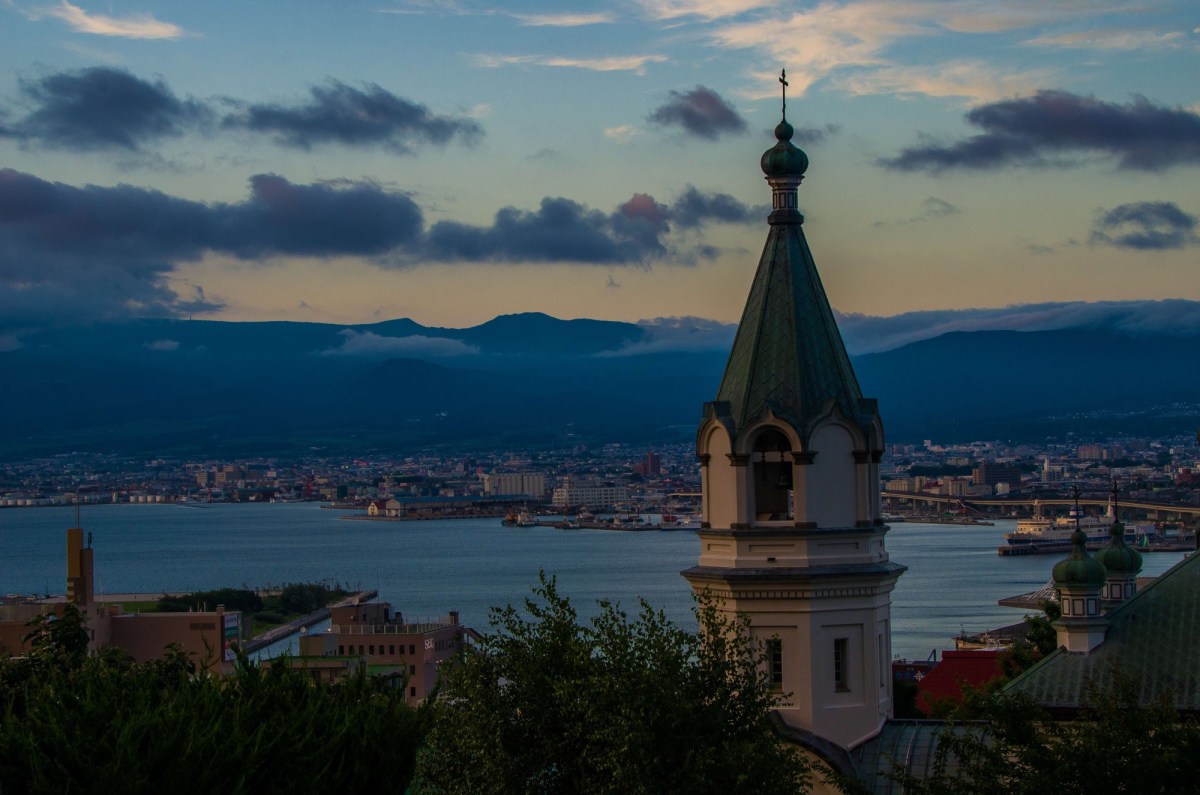
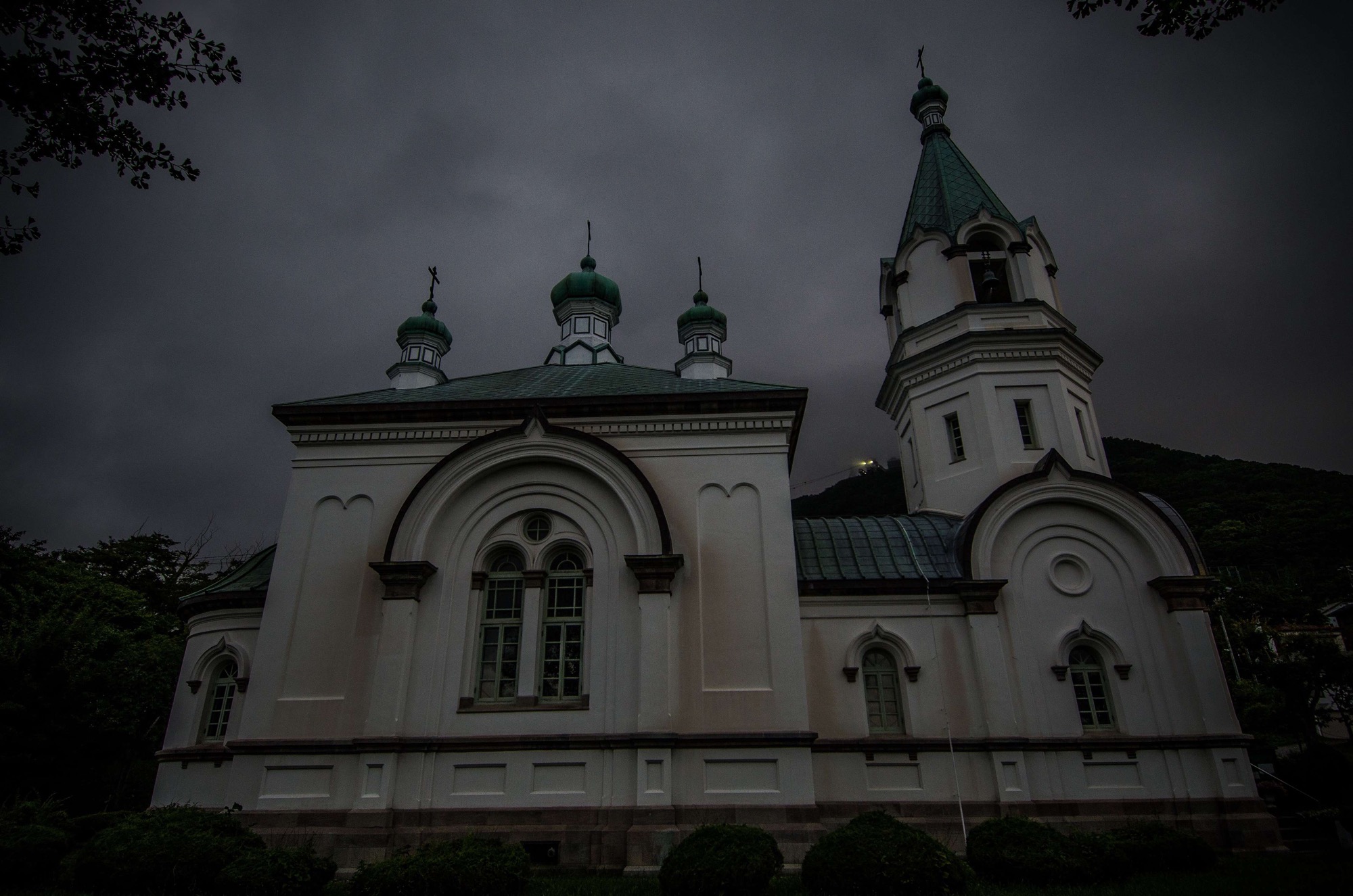
Russian Orthodox Church at dusk, Hokadate, Japan.

  Tomorrow, after dreams that reach far beyond this small room with walls too thin to contain them we’ll leave the Japan my adult self craves for the Japan of my childhood fantasy. The Shinkansen, the bullet train was such an unbelievable notion to me as a child and tomorrow we’ll bullet on the fantasy train of my childhood to the exotic world of my childhood in Tokyo. Usually I go to sleep surrounded by hanging photographs, wardrobes of clothing; possessions of all sorts but not tonight. Tonight there’s nothing but me and Charlie in this blank canvas of unlimited possibility that promises a tomorrow my childhood dreamed of so often; I dreamed so often but somewhere along the way I stopped dreaming and started noticing everything else I already had. 

While you were working – Convenient Convenience, Sapporo, Japan

 It’s the day after the storm, the food storm that is; last nights dinner still seems like a strange side effect of an illicit drug binge; we had a surreal experience we still can’t describe but we’re sure it happened. Depressingly clear headed we are into the day after finally braving the complexities of a Japanese toilet. Lets just say that I could possibly get used to gently warm water kisses on my bum, and what’s more exciting is that I know which button that is. Through our apartment building that seems lifted from the pages of a 60’s architecture failure list we descend in the humid elevator at the centre of this building that has little or no ventilation, obviously built for the cold Sapporo winter with little regard for the steamy summer. 

 And so the trend repeats in Sapporo, strangely enough it’s a bit of an architectural wasteland calling back to a boom time somewhere in the 60’s or 70’s before humanity realised that buildings can look something other than ugly. In a very Japanese way however all is not lost, blooming garden beds burst with colour and impeccable cleanliness greets us at every corner. Just like some US cities Sapporo architecture is from a generation ago and hasn’t moved on but unlike those oppressive US cities the people here definitely have moved on bringing Sapporo to the cusp of possibly an art-deco paradise. Is there such a thing as an art deco paradise? We can’t say that this blocky, straight building style is for us but surrounded by Japanese perfection it’s far from oppressive. It’s not ugly but it’s not beautiful; it’s a kind of minimalist salvation of a possibly bad situation making it a thing of it’s own.  

Charlie Winn

Advertisments for Sapporo beer in the Sapporo beer museum, Sapporo.

  One unmissable feature of this city stuck in another time is the technology dripping off every available corner, post and shopfront. Vending machines shoot you out tickets for everything imaginable as robots make their first claim for world domination in Sapporo Japan; And Sapporo is considered a quaint city by Japanese standards. The mind boggles. Oddly enough, the robot obsession doesn’t come across as impersonal, it’s convenience backed up by impeccable human politeness and courtesy. All this technology doesn’t seem to clash or get in the way, it’s just all very; convenient. 

 What else is rather convenient is the convenience stores, the regular emblem of tautology best avoided if you can help it. But not in Japan. Our first night with Ken and Aki we were introduced to convenience sweets, a ritual of swinging by a convenience store for creme caramels, coffee jelly, cheesecake and a whole range of other goodies on the way home from a night out. To say that going into a convenience store goes against the grain for us is an understatement but since then we’ve had takeaway meals of self esteem supporting quality from right beside the milk fridge. We even bought tickets to the rugby from a convenience store, selecting seating and everything; and you guessed it, from a vending machine. 

 The time travelling exercise of Sapporo continues on our way to the Sapporo beer museum as we stop by a convenience store for a very convenient lunch eaten on a very conveniently placed bench. Strolling streets that I can only describe as bare and free of clutter, we eventually arrive at the museum standing prominently in red brick before manicured lawns and gardens. Now this is where this era of architecture belongs, with an edge of gritty industrialisation against elegant touches. Inside, all the hints of Sapporo’s mish-mash come colliding gloriously together as minimalist chic meets industrial hipster cool. Oh and the beer tasting menu is outstanding, there’s no shyness to make beer taste like beer instead of bland swill to appease a bland audience here, Sapporo beer lives up to its world class reputation with ease.  

Charlie Winn

The mandatory photo in front of the Express train engine, Sapporo, Japan.

  From the highs of the Sapporo museum to the lows of our heat tube turned into a stack of shoeboxes we stroll the rolling clash of this ugly city made beautiful, or at least something in between. In truth the beauty is not in the streetscapes, it’s in the nooks and crannies, the laneways and elegant spaces behind the discrete facades. Fo much of the year Sapporo is drowned in snow making the locals experts at functional facades and dazzling inner wonderlands. Even in our building, inside the room there’s a level of comfort that’s not easy to achieve for a space this small, but I guess that’s just very Japanese right? From six weeks of Vietnam where the world lives on the streets to Sapporo where the streets are stripped bare for the spaces behind, we’re having to adjust quickly to a new way of perceiving a beautiful world and what spaces in that world are for living.

 Beautiful or not, the thing that has been nagging at me all day is this notion of vending machines, robots and self serve convenience in relation to making life better, easier, even happier. It’s the age old question: does technology make us any happier? I often think that it doesn’t. In searching for a simple life of abandoned clutter and distraction I’ve pushed to make my life just that, simple. In just a few days, Sapporo has thrown a spanner in the works with convenience stores that aren’t just cheap crap made expensive and machines that don’t remove humanity, instead giving more time for it. So where to from here for the post modern latte hippie soap box tirade faced with convenience that’s absurdly convenient? Reject modern trappings in favour of a simple life, or allow the trappings to make life simple?

Gluttony Expedition – Top of the Pyramid, Sapporo, Japan

 The morning of the rising sun, our first Japanese dawn; I had to use that cliche just once. In truth there’s little romantic glory about this almost hangover fatigue that welcomes us to our tiny apartment that’s a little too hot, but who cares, we’re in Japan where beauty is an asset of even the ugliest thing. Toilet time is a negotiating process, there’s more buttons on this thing than the average TV remote and it’s a little intimidating I admit; I can lean over a cliff or wade through a cesspit Chinese squat job but give me high tech buttons and I just about shit myself, literally. I did find the flush so I’m about as content as an old fuddy finding the on/ off button on the flash new flatscreen and just watching one channel, the ABC of course. 

 A morning of sight seeing with Ken and Aki, our Japanese mates from Australia, begins with a trip to get our rail tickets sorted before breakfast noodles see us into the day with Japanese efficiency. Noodles for us have become a tradition of finding a tiny plastic chair and sitting on that space that’s somewhere between road and footpath shared by scooters, pedestrians, bikes, food sellers and whoever else feels like joining in. Not in Japan. We’re stopped at the door to negotiate the maitre’d, a vending machine no less. We smash a few buttons, pick our food, the coins come back out; lets have another try. Have we been out of the developed world that long? Eventually tickets spit out and we make our way into a perfect capsule of neatness to hand over our tickets and sit down to our noodles in a flash. Somewhere between sweet, sour and salty but not really any one in particular, the broth holds our noodles, beef, egg and seaweed in a light start to the morning that has us reaching for identifiable flavours and substance and finding nothing but a gentle satisfaction we can’t quite pinpoint. 

Charlie Winn

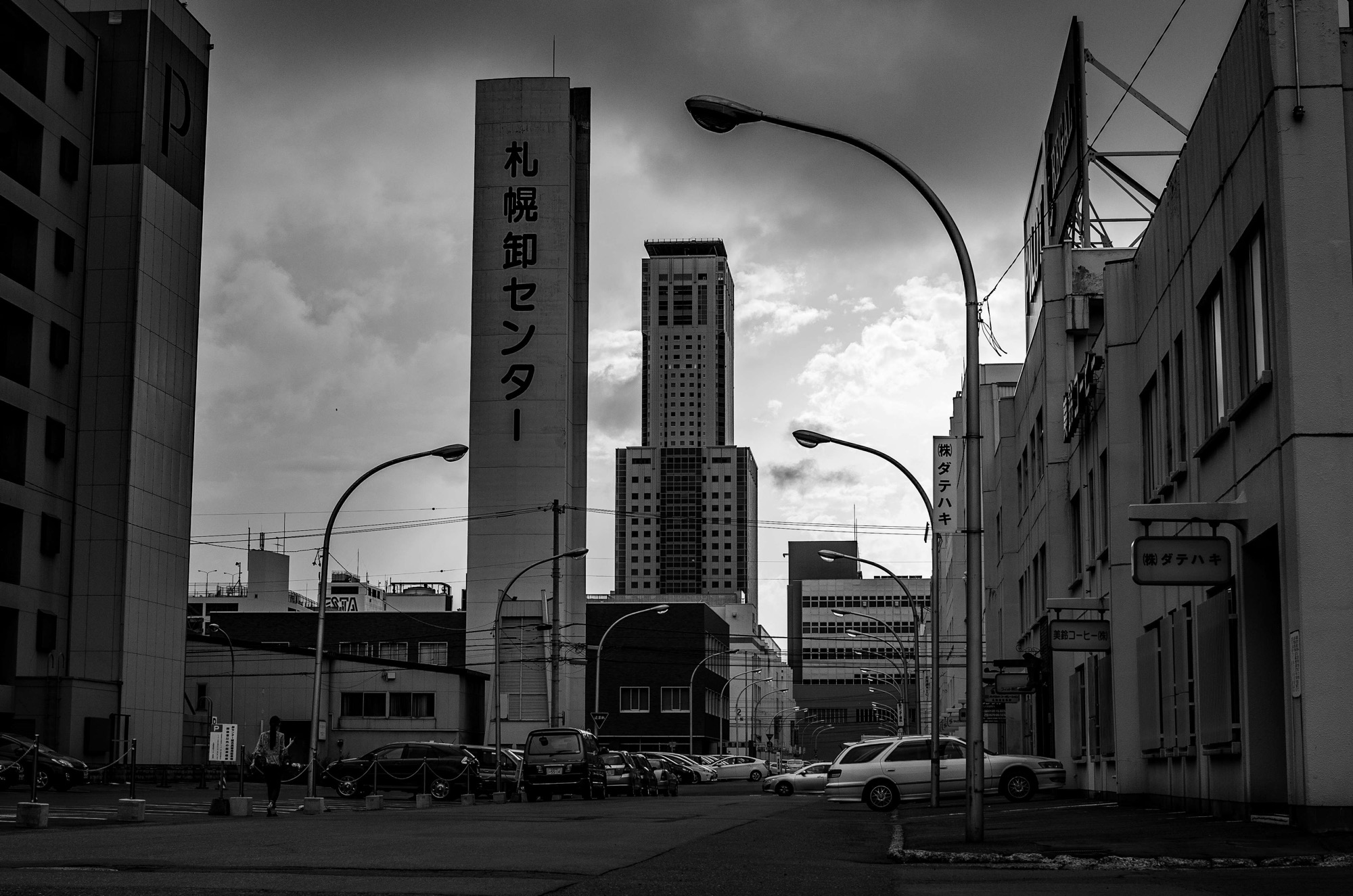
The streets of Sapporo, lined with dated architecture.

    Pouring rain has us bunkering down in town but really all thoughts are to tonight, the beginning of the festival, my festival; that’s right it’s my birthday and this means a flash dinner. The university botanic gardens are an interest to these wannabe gardeners and the market lunch is delicious but the shadow of food looms large; we’re soaking up the sights but all we really want to do is soak up some food. Some more food. Charlie has cleverly outsourced my birthday tradition to Aki in a show of dubious romance and even he doesn’t know where we’re going, adding mystery to interest. We part ways with team Japan for an afternoon nap. The moment is nearly upon us.

 In the Sapporo version of a red light district that feels more like a shopping mall we wander perfectly clean streets looking for our restaurant. We do a fair bit of wandering, even Aki and Ken can’t find this bloody place, what chance would we have had? Aki disappears, Ken is lost, we’re amused and all together this is going really well, we’re standing on a strange street gutter laughing to ourselves at the luck of having team Japan with us. Eventually Aki emerges from a small laneway and we’re on, it seems that directions are not always so simple in Japan; like operating a toilet.

Charlie Winn

The most expensive fish to be found in Hokkaido, Japan.

 
 Through the short three panel curtain that covers just the top of the door we emerge past the discrete facade into a minimalist wonderland. A straight edged bar of clean veneer runs two sides of a small room lined with hand made pottery that belongs in a gallery, clean walls that belong in a gallery and sake bottles that belong in our bellies. Our places are set with a small piece of coarse grain paper emblazoned with a watercolour cherry blossom topped with fine chopsticks resting on a small polished arch of stone. I lean over to Aki, ‘This place looks great Aki’. ‘I’m really nervous, I’ve never been in a nice place like this before’ comes his polite, very Japanese reply. In that one comment our journey into the fine point of beauty just became intimidating. 

 Sake comes to us in a rough green ceramic jug for us to pour out into our small bowls that are equally hand made pieces of art. First course of crabmeat if followed by fish sat in a well of broth atop a vegetable somewhat like a choko but with a reviving fresh flavour. To say that this dish is clean is not going far enough, it’s like a full body detox with a hint of fresh ocean spray like a spring seaside morning. The sake similarly dances in our mouths like a fine white wine but with the acid replaced by an alpine waterfall; there’s flavours all around but they elude names I can find leaving memories of feeling and emotions in their place. Aki is physically fearless on the rugby field but he’s decidedly unsettled now and this experience is beginning to show why. 

Charlie Winn

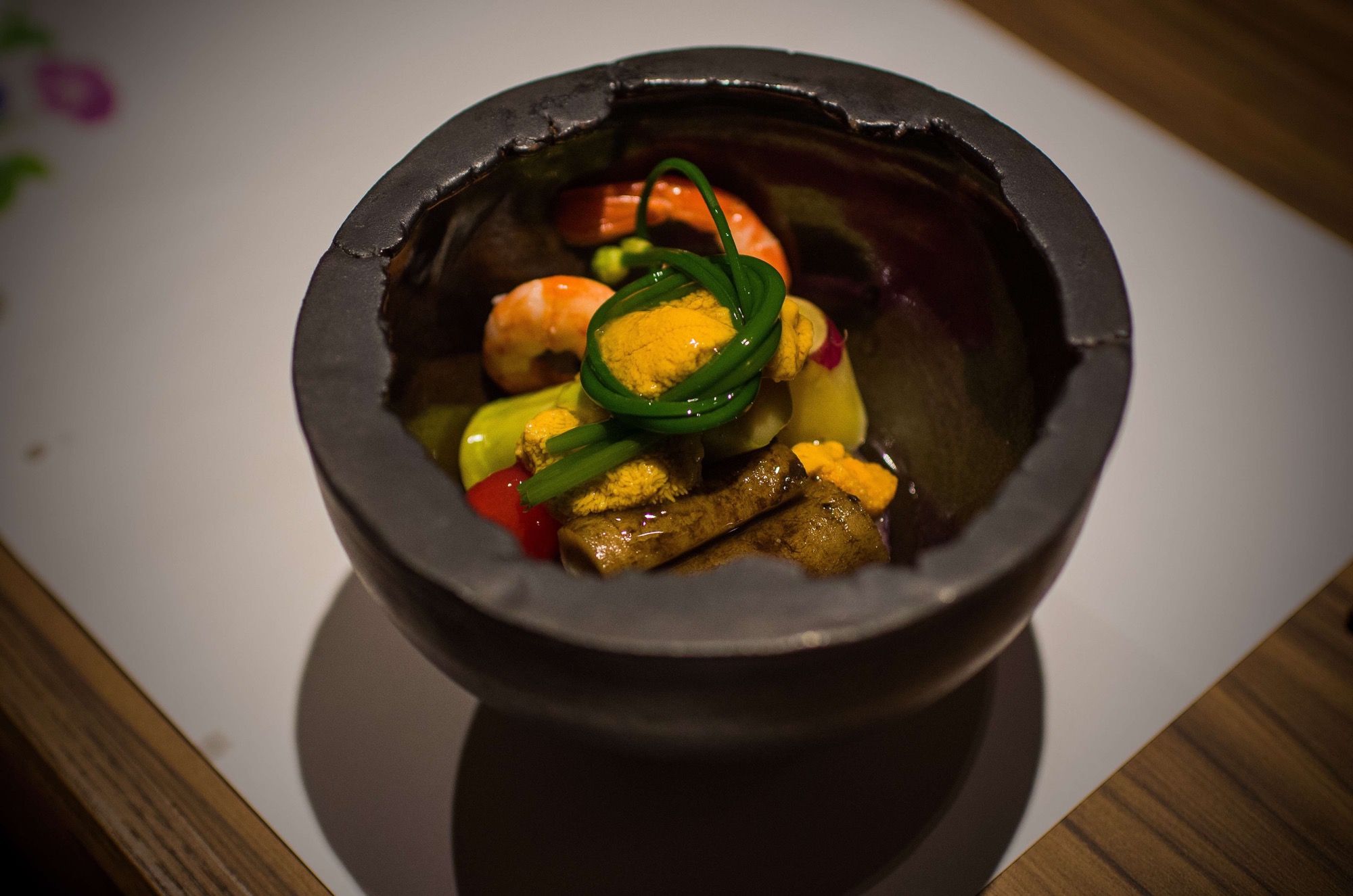
Sea urchin tops root vegetables, magnificent.

  Our detox is followed by the most elaborate plate of sashimi I’ve ever had, finally some flavours I can identify; at least I hope. It would be an insult to say that the fish melts in our mouths, that’s not true, each piece is the exact texture it’s meant to be as we feel the space within our mouths with an awareness like never before. Annoyingly each piece has some kind of marinade or seasoning I can’t find a memory for, the fish is there but kissed with a glint like reflected sun off a still pool. Again we feel and sense in place of the process we usually call eating. Aki is still nervous.  Second sake is from Aki’s home town, a slightly more vibrant version of a sour fruit that ends up being sweeter than you first thought and of course, there’s a different type of perfectly marred ceramic cup for this one. Grilled fish turns out to be the most expensive fish in Hokkaido and comes rolled up with the charred head staring straight to us and glistening in juices. It’s often said that in Japan everything is made into an art form; before us we have proof. Hokkaido is also the home of Japans best seafood, the cold waters produce an intensity of flavour not often found elsewhere; I never knew air could taste so refined. It’s fishy, salty, oily and a touch tart and at the same time it’s not quite any of these things at all as the flesh disintegrates faster than an uncooked meringue in our mouths. A salty kick resides for a moment in our mouths just as you think that fishy flavour might go a step too far to nurse our tongues to the safety of subsided flavour. Aki looks no more settled. 

 This is all too much, I need a bathroom but disaster strikes, I’m confronted by an array of buttons with no English; what if I press the wrong one? A few false starts send jets of water in curious directions but thankfully there’s no indoor fountain before eventually the relieving flush. Now it’s not only Aki feeling nervous. But the embarrassed nerves are mine alone and don’t last as we flow through course after course of evoked sensation rather than just flavour. We often sit in restaurants chatting about how we would do this at home, sometimes about how we might make it better, but that relies on having the first clue about what we’re tasting; here it’s beyond us. Sea urchin tops root vegetables and chives in a thick juice that is part ocean freshness and part woodland texture. Again we’re delightfully confused and Aki is perspiring notably.  

Charlie Winn

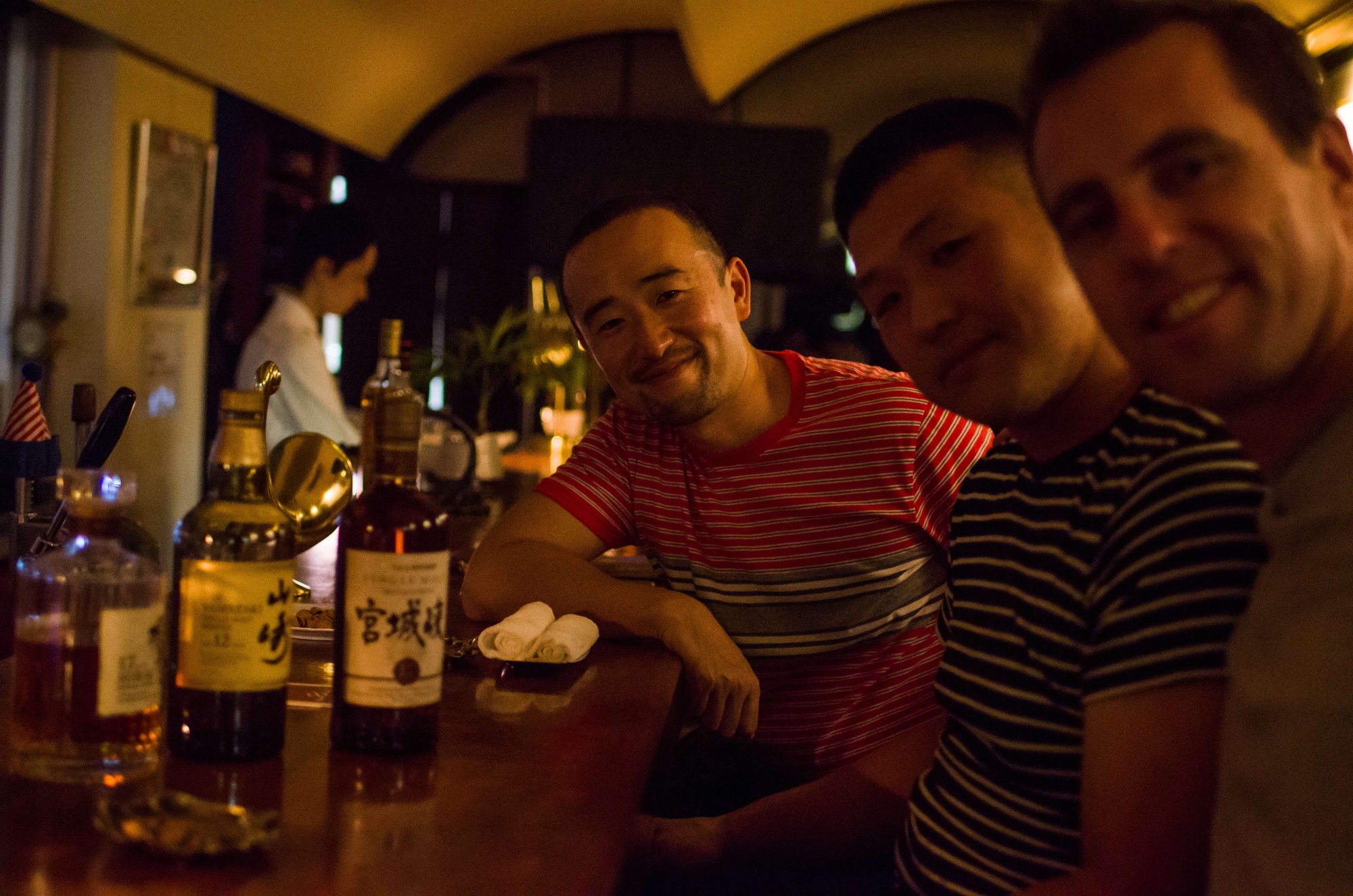
Ken, Aki, Steve and myself enjoying Japanese whiskey just to round off the wonderful experience, Sapporo, Japan.

  But all good things do come to an end, seven courses later and we’re in a seventh floor bar tasting Japanese whiskey to reminisce on what just happened. Aki confesses to the reputation of the restaurant that only had nine customers for the night to place meaning to his nerves and gravity to our recollection, his desire for our satisfaction revealed as the source of his nerves. It’s an easy argument to make that the Japanese are the masters of seafood, if not food generally, placing us already in the uppermost wedge of the food pyramid. Take that Hokkaido is the home of fine fish in Japan and the upper point of the pyramid just got even pointier. In this uppermost few percent by just being in Hokkaido we were treated to the few percent of that few percent in what has a claim to possibly be among the best seafood experiences in the world. 

 It could be the best seafood experience in the world and it very well might be the best seafood experience of my life. Still struggling to even identify what we just had it seems rude to just call it food, it’s an experience I’ve never had before, a whole new thing all together. Charlie’s outsourcing has worked a treat and Aki can finally stop feeling nervous, I don’t know what that was but it’s barely debatable: we’ve just had the best dining experience of our lives.  

While you were working – Dorothy and Toto, Sapporo, Japan

 The time has finally come, the cyclone that is Vietnam has swept by leaving us blinking wide eyed at the hard white light pouring down upon us at the departure gate. So often travel is preceded by anticipation leaving the moment of departure to finally fit like a keystone upon many weeks or months of predication, but not now. In the revolving door of passport stamps and single serve packaged food this year of transits and gates ticks one frontier to another with, at times, little more fanfare than going from home to work. The hard light drags us into a realisation we get excited about a little too late, like the shock of a door smacking you in the bum after you’ve already made it through. Tung, team Vietnam, has seen us off to the airport and as he waves from the tiled floor he’s allowed on, to us on the tiled floor he isn’t, I wonder if he thinks of the impact he’s made on us, not just the impact we believe we’ve made on him.  

 In the cultural vacuum of air travel we’re afforded the bare minimum reminiscence of a nation that has taken us by storm. The adventure, the chaos, the food and the minimised ego view of the world are so close to us but in those moments of air conditioned plastic functionality they seem so far from grasp, Has the cyclone passed by us or are we just in the still eye of the storm? We mentally race to catch up, just moments ago we were in the thrum of an intense cultural immersion and with little mind to leaving it behind we’re too quickly into this inhuman vacuum: we’re crash victims in a silent coma that didn’t see the bus coming.

 From the hard light illuminating Tung, a young Vietnamese guy dreaming of getting his first passport to do exactly what we take for granted doing, there’s a light in this dark slumber, the lights of Sapporo Japan and we have precious moments of descent to ready ourselves for awakening. We search for those weeks or months of daydreaming only to find a bare cupboard long since left vacant of dreams from the land of the rising sun. And so we are here, in Japan, the one country I personally dreamed of coming to above all others in this trip as well as all others on this big blue planet of ours and all we can do is play mental catch up barely believing we’re here already. It’s a new language but going from not understanding anything to not understanding anything isn’t noteworthy; we’re here, we’re somewhere but where exactly is that? 

Charlie Winn

Ken and Aki: two good friends who live in Sydney meeting us in Sapporo, Japan.

  Chaos is replaced by order, energy with passivity, fervent noise with pensive silence, exuberance with restraint. The first tentative steps on Japanese soil has us spinning back into the world punch-drunk and disoriented, the barbaric crush to a baggage carousel that seems to define our species doesn’t even exist. Are we still in that coma or have we indeed emerged from the cultural slumber of travel? After a few patchy hours of sleep on planes and airport seats we’re in a new world that refuses to be tangible enough to signal a sharp wakeup, a passing of the cyclone that seems not to have even started. After nearly a year of countries on the ‘developing’ list it’s so odd to not see litter; in fact we can’t find any if we look for it. A year spent chasing managed chaos, rough edges and the gritty side of our wild world hasn’t prepared us for the refined perfection of Japan, it doesn’t feel entirely real. 

 The vending machine spits out our train ticket a little too easily, the signage is clean and doesn’t end in a wrong turn or mistranslation, a gentle hush surrounds our world of absent smells and an odd lack of things that need to be fixed as marks so much of our recent life. The train doesn’t rattle, it departs on time, to the second, and slips by retro style housing in a sombre setting that looks like the 70’s or 80’s but too clean and maintained to be from that time. Where is this place, are we that travel tired, have we woken up yet? There’s no sign of the high tech cliche, just a strange disorienting twilight zone midpoint between the vacuum of travel drone and the wild pulsing life to which we’ve become accustomed. 

 Traffic police use elegant tweezers to pluck a stray cigarette butt off the ground reinforcing my belief that globally smokers are inherently selfish, but in this act there escapes the first hint that we might be back in the real world, not an experiment into perfection. A hint only, the traffic policeman formally waves his baton, the traffic promptly responds to call an elegant bow more akin to a stage musical; reality as we know it threatened but only momentarily. Still we struggle, for us the ‘real world’ has been definable by invaded senses, vibrant noise, chaotic motion, unmistakable smells but here we are in a world where our senses are left as a gift for us alone, a world that keeps a distance possibly too polite.  

Charlie Winn

Ken, Aki and Steve checking out the fish market of Sapporo, Japan.

  Bit by bit the world does come into focus before the blinding wake up makes the etherial sleepy drift of the past few hours all too real, Ken and Aki are walking to us arms outstretched for an all too human hug. Friends from home in their native Japan, familiar people in this oh so unfamiliar setting soon becomes familiar enough over beer and a table barbecue with more lamb than we ate in our entire six weeks in Vietnam. Sapporo beer is world famous and after the largely cheap swill of the rest of Asia, Laos excepted, the first piece of sensory invasion comes all too welcomely, Sapporo beer is all it’s cracked up to be. 

 It might not be the real world as we know it recently but it’s plenty real enough. A clapping and cheering table of people in kimono activates our ears, the sizzling lamb our noses, the beer our tongues, familiar faces our eyes and the warm Hokkaido night our skin; the real world is here and in this moment we have finally arrived in Japan. Japan might well be the land of a lifetime of dreams for me yet despite that welcome sensory invasion it still feels a little too perfect to be true. Somewhere within the storm we’re not sure if we’re Dorothy and Toto in the land of Oz or at the start of the yellow brick road, but we’re definitely not in Kansas anymore. 


What you’d rather be seeing – Vietnam

Six weeks riding motorbikes from Saigon to Hanoi was one of the best things we’ve done on our year, an adventure within the adventure that delivered memories for a lifetime.  The Ho Chi Minh trail in the mountains bordering Laos was incredible but the countryside was at its most amazing due to the people and their food.

FACES:

These are just some of the characters we met on our trip.  There were many more of course including Tung in Hanoi who had quite an impact on us.

Charlie Winn

The mechanics in Vietnam were mostly fantastic, often so willing to help and generous with their time. We got to know a few better than others, this mechanic shop in Hué was a fun experience even after the third visit. Central Vietnam.


Charlie Winn

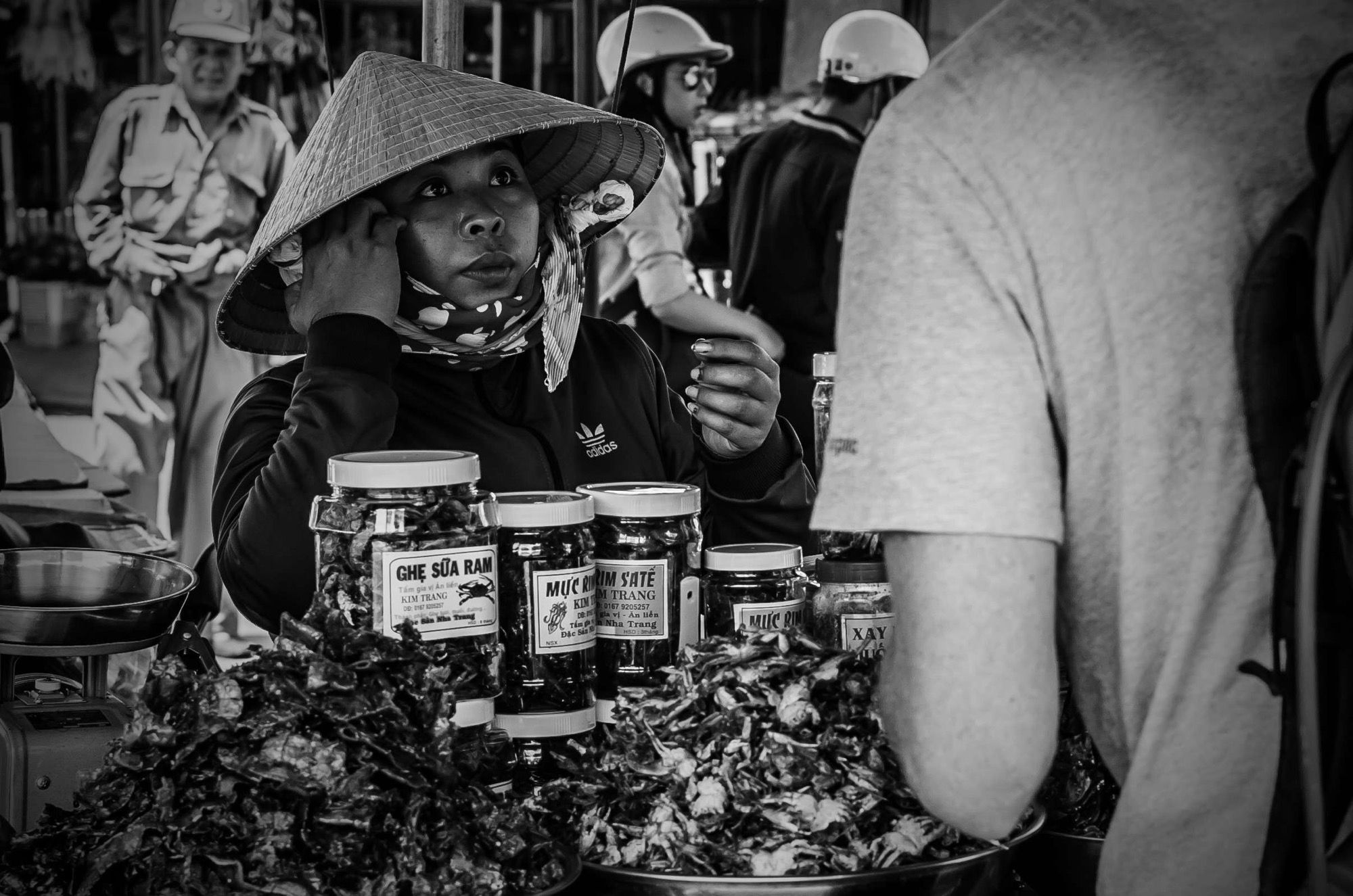
Without language buying food becomes a charade of gestures, mimes and expressions. Some faces say it all with just a look. Nha Trang, Vietnam.

  
Charlie Winn

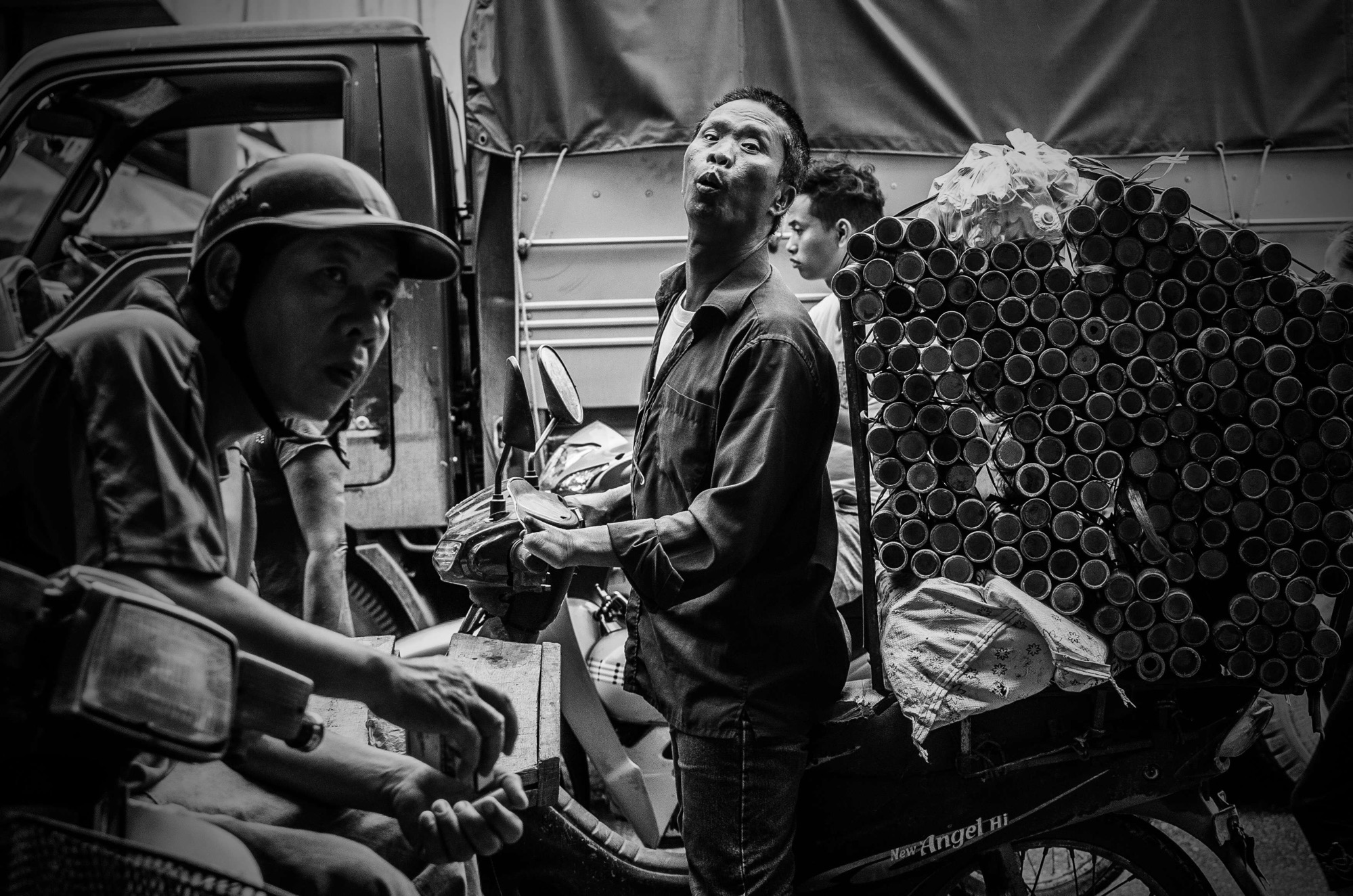
A bamboo delivery man calling out to potential buyers, Don Xuan market, Hanoi, Vietnam.

  
Charlie Winn

Our boatman rowing with his feet, nothing too stressful. Tam Coc, Vietnam.

  
Charlie Winn

Seafood vendors, playing a serious game of cards while they relax following the morning rush. Hoi An market, Vietnam.

  
Charlie Winn

The street sellers have always been an integral part of Vietnamese society while the mobile phone and scooter is much more recent…it appears to us all three are deeply ingrained in this culture that lives on the strets, Hanoi, Vietnam


Charlie Winn

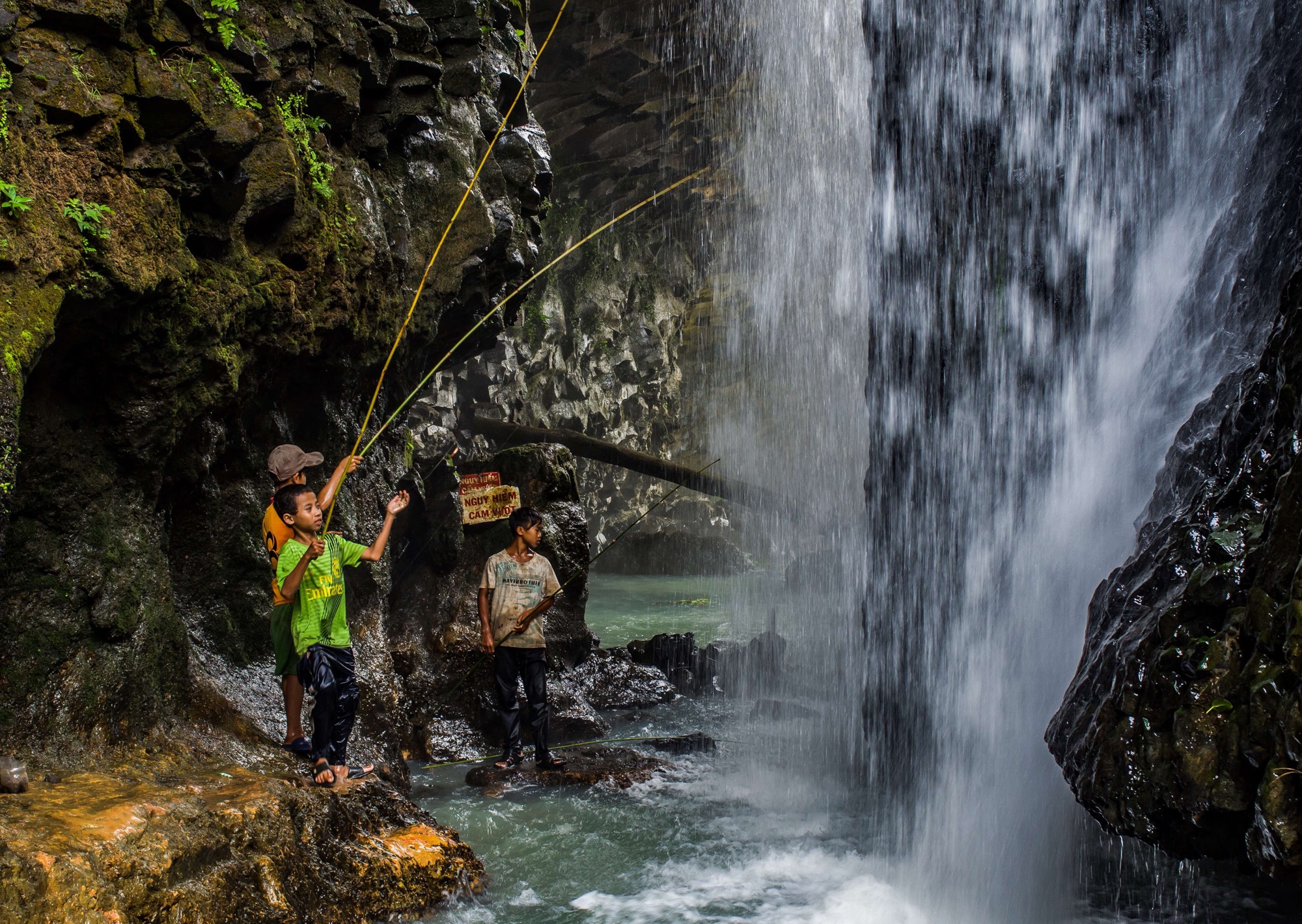
Behind the waterfall is obviously the best place to fish. These boys were having a great time and enjoyed being watched by a curious crowd. Near Buon Ma Thuot, southern Vietnam.


Charlie Winn

After seeing Paradise cave, we were returning to Phong Nha and this young boy was taking the buffalo back to their corral for the night. He asked us to slap a slower buffalo so he didnt have to jump off the back of one. Phong Nha, Vietnam.

 
PLACES:

Apart from the people the places we visited were not only beautiful but full of life, spirit and  of course wonderful food. So much history calls out from ancient times to more recent events in towns and cities that always have more of a story to tell than you see on first view.

The old town in Hoi An came alive every evening with people settimg up food stalls, beer stalls or trying to entice you to go for a boat ride. A lovley place to wind down with a beer. Old Town, Hoi An, Vietnam.


Charlie Winn

The tombs of the old emporers of Hué were grand and intimidating – so we jumped in line to intimdate other visitors. Khai Dinh tomb, near Hué, Vietnam.

 
Charlie Winn

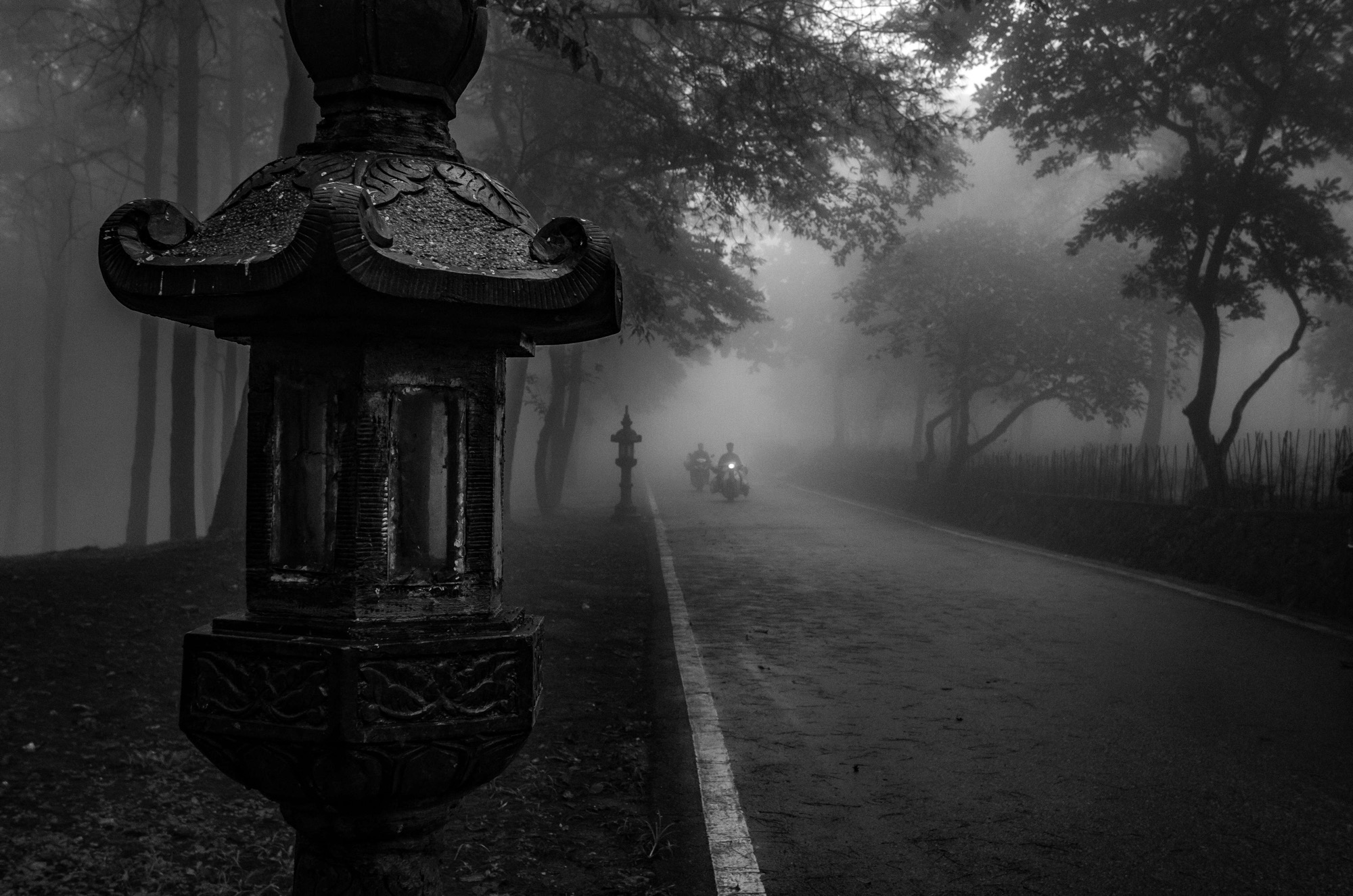
It had been raining all week non-stop when we finally decided to go to Ba Vi national park. A mountain where a French fortification used to be, the fog was heavy as some guys carrying fruit in sacks drove past. Ba Vi National Park, Vietnam.

  
Charlie Winn

Ho Chi Minh is regarded as the modern father of Vietnam. Saigon was renamed and his body lies in state in Hanoi. However I feel this image represents modern Vietnam as uncle Ho over looks the modern skyscrapers where banks and many foreign capitalist companies now reside. Ho Chi Minh city, Vietnam.

  
Charlie Winn

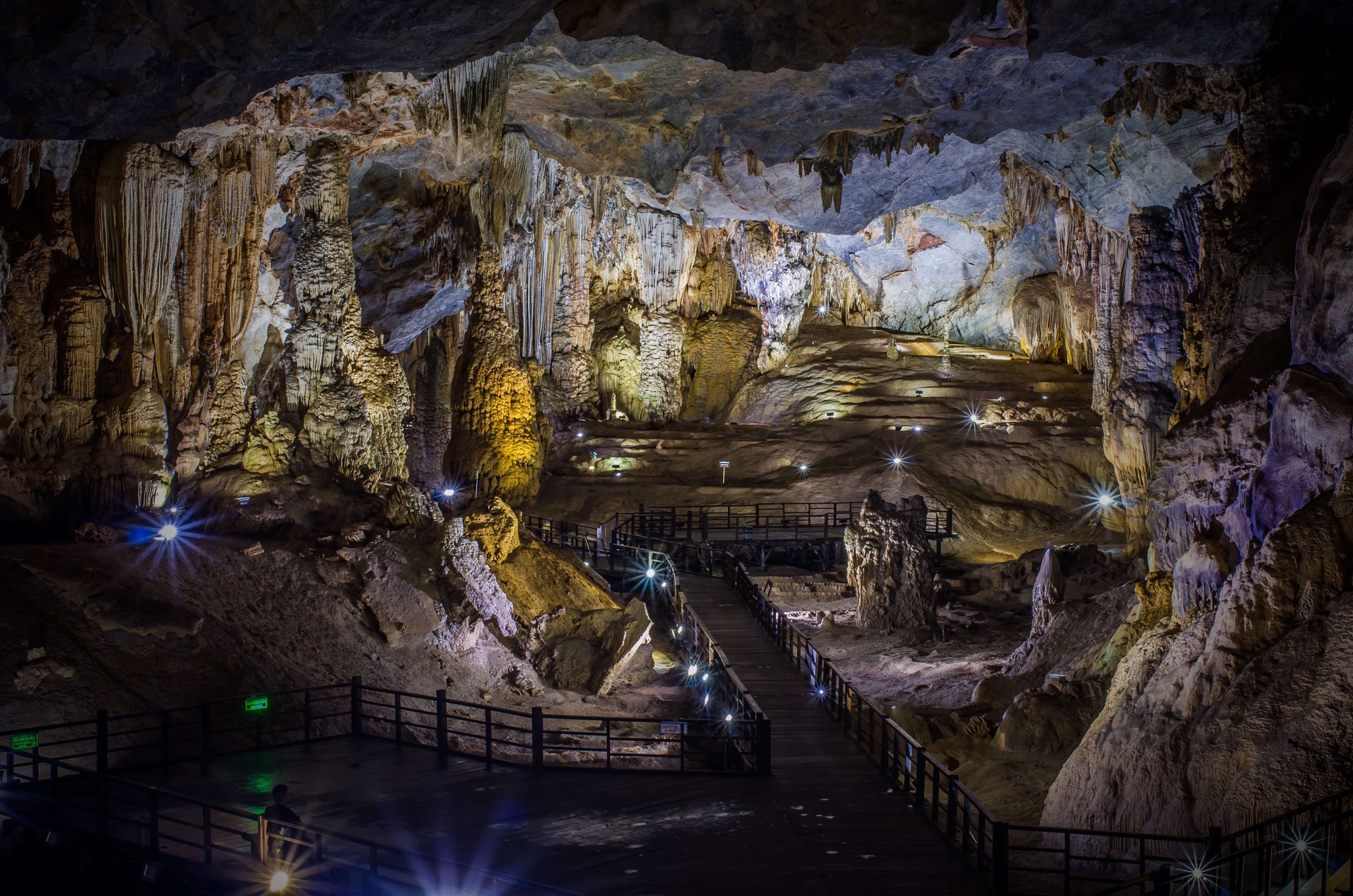
Paradise cave in Phong Naha national park is so much larger and more breath-taking than this photo shows.

  
Charlie Winn

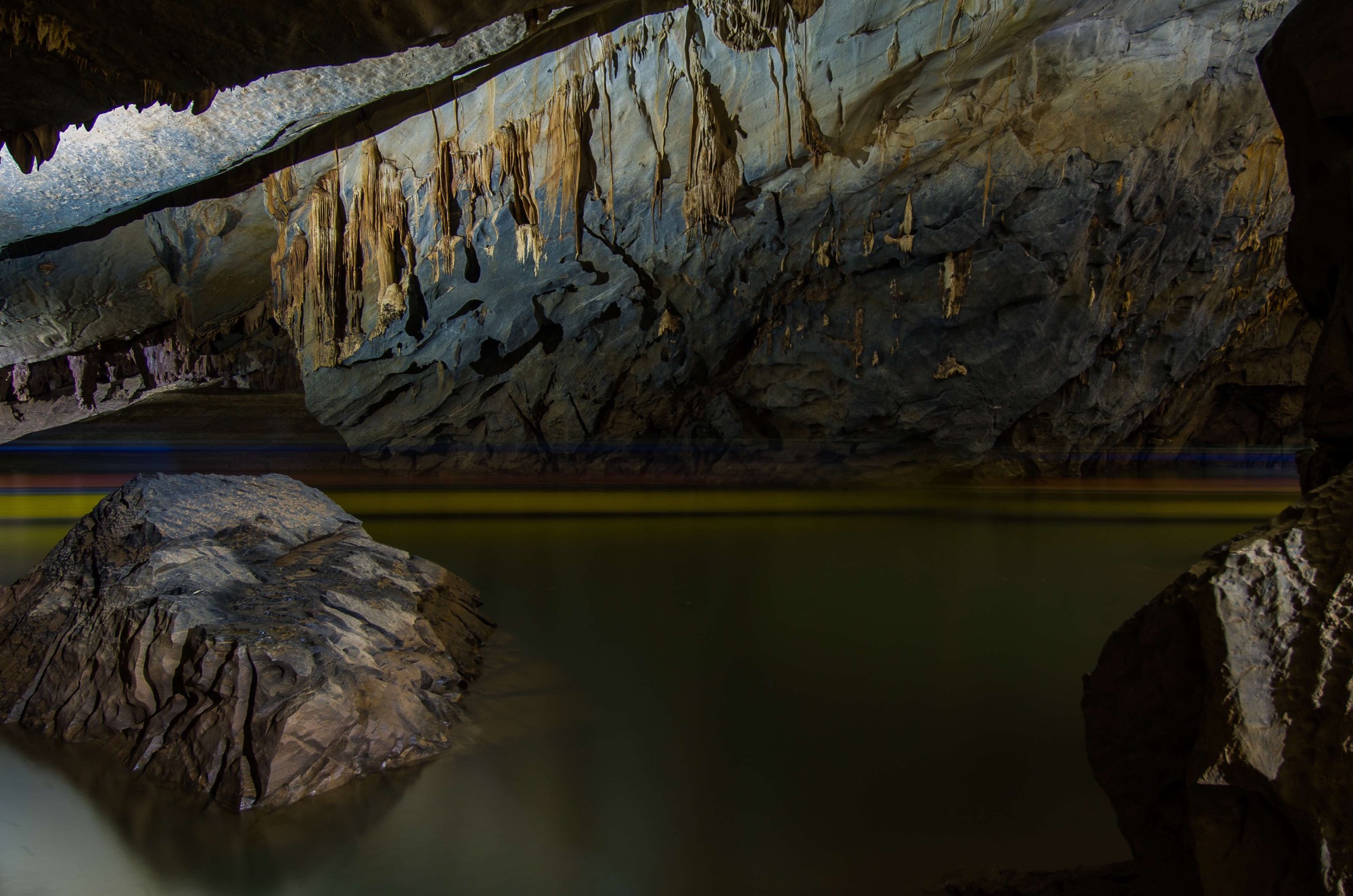
The slow boat into Phong Nha cave is a slip into stillness, silence and tranquility. I tried to capture this mood with a long exposure of a boat drifting by, Phong Nha, Vietnam

  
Charlie Winn

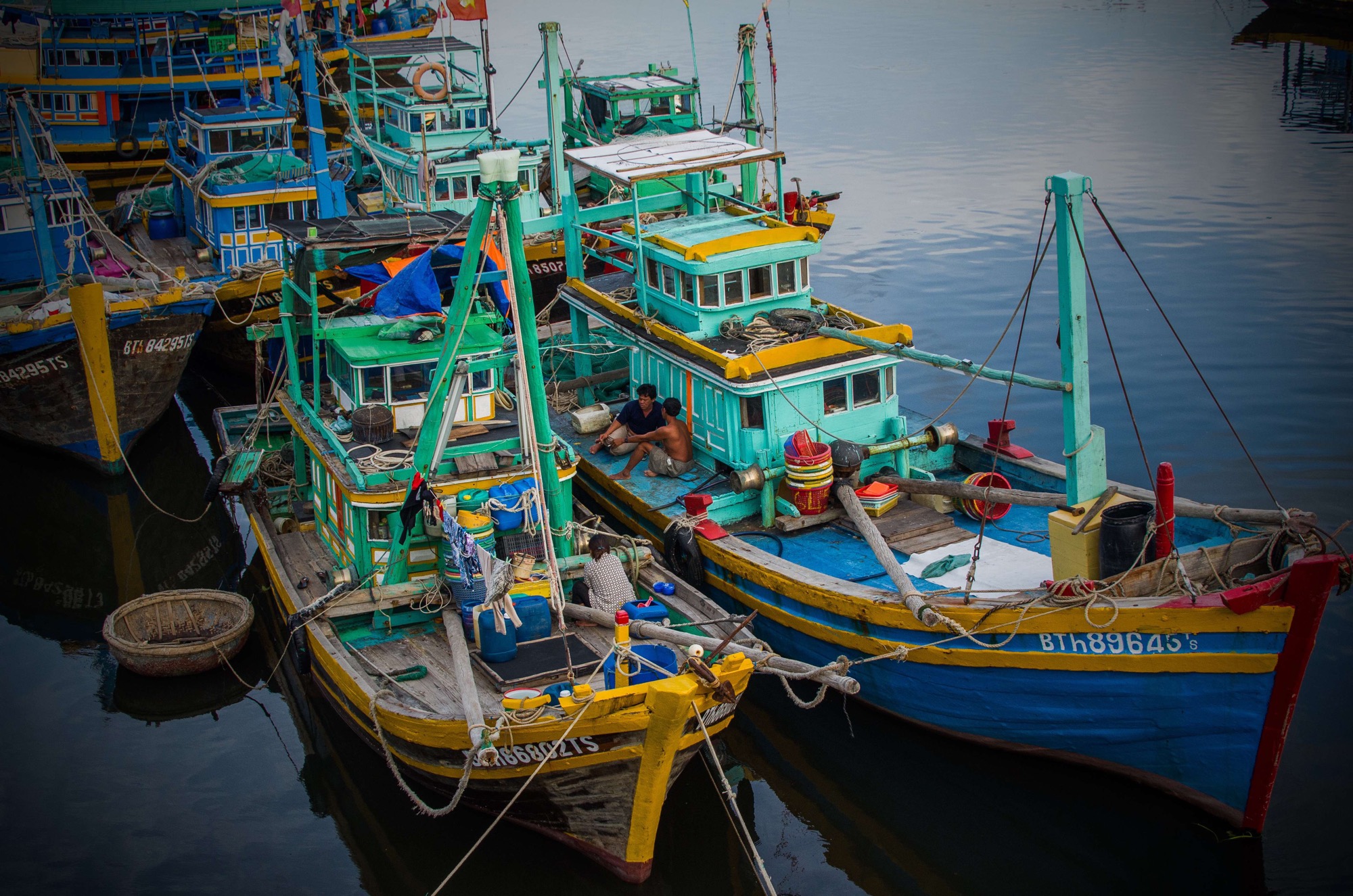
Low tide river banks choke with colourful fishing boats but life on the water continues even at rest, Near Mui Ne, southern Vietnam

  
Charlie Winn

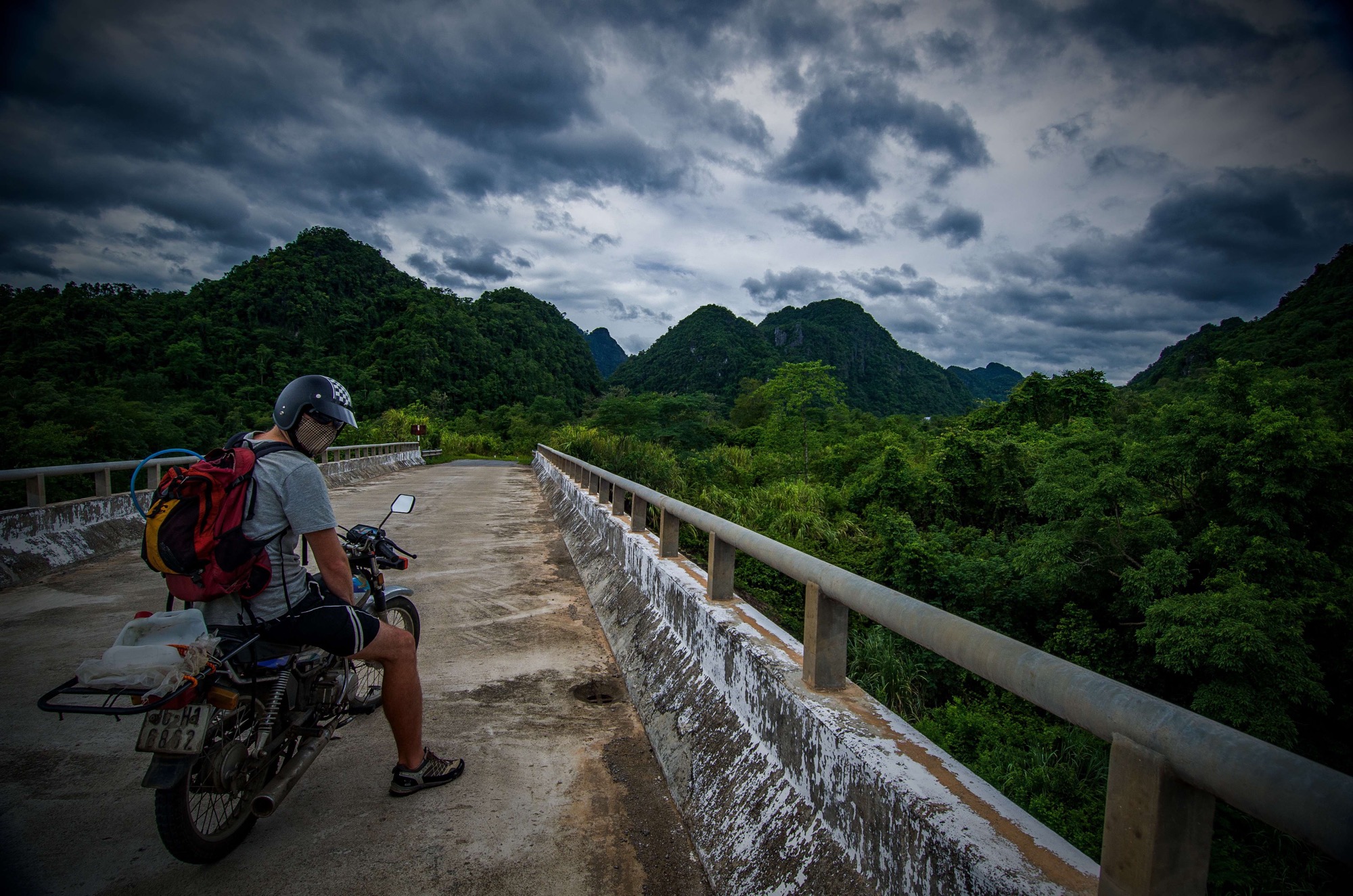
In dramatic scenery it often felt like we were channeling the frontier adventure of Mad Max, the classic Australian film, the road warrior takes on the Vietnam mountains, Near Khe Sanh, Vietnam


Charlie Winn

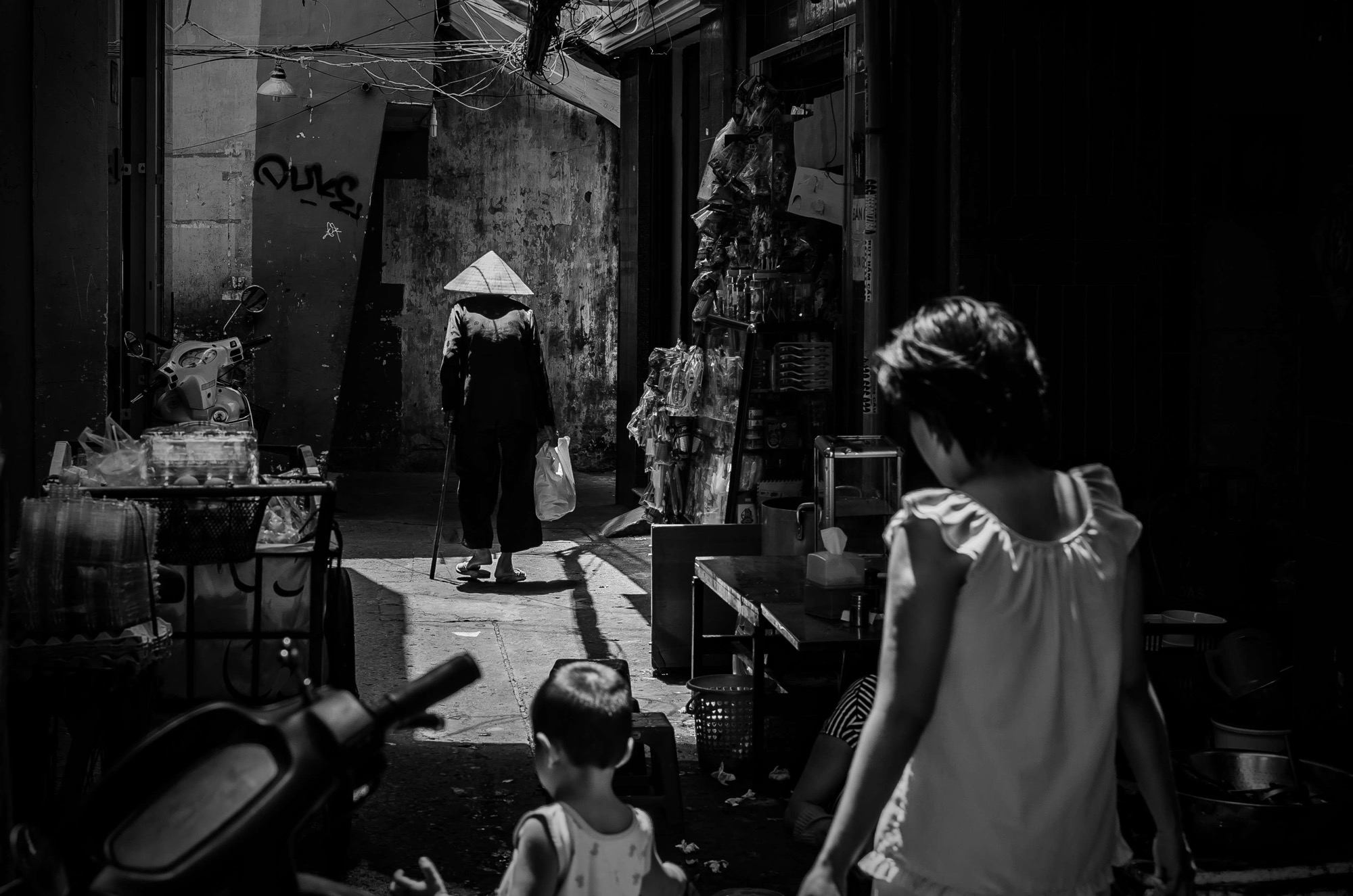
Laneways in Ho CHi Minh city are more than they seem. They’re loungerooms, kitchens, parking lots, markets and more, Ho Chi Minh city, Vietnam

 
Charlie Winn

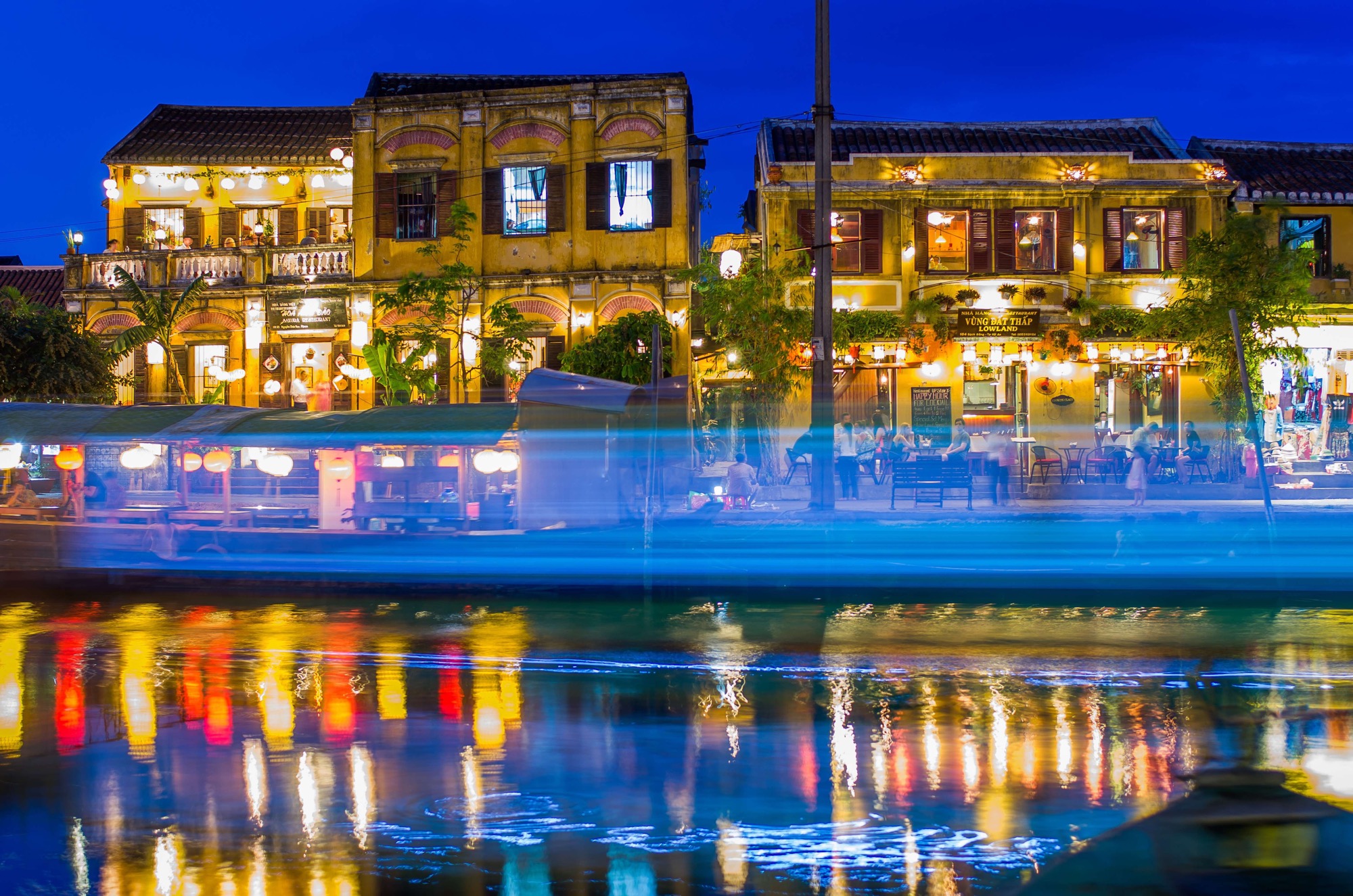
Hoi An old town, a UNESCO world heritage site lights up at night. The motion and life of the river contrasts so strikingly with the old town facades, Hoi An, Vietnam

  
Charlie Winn

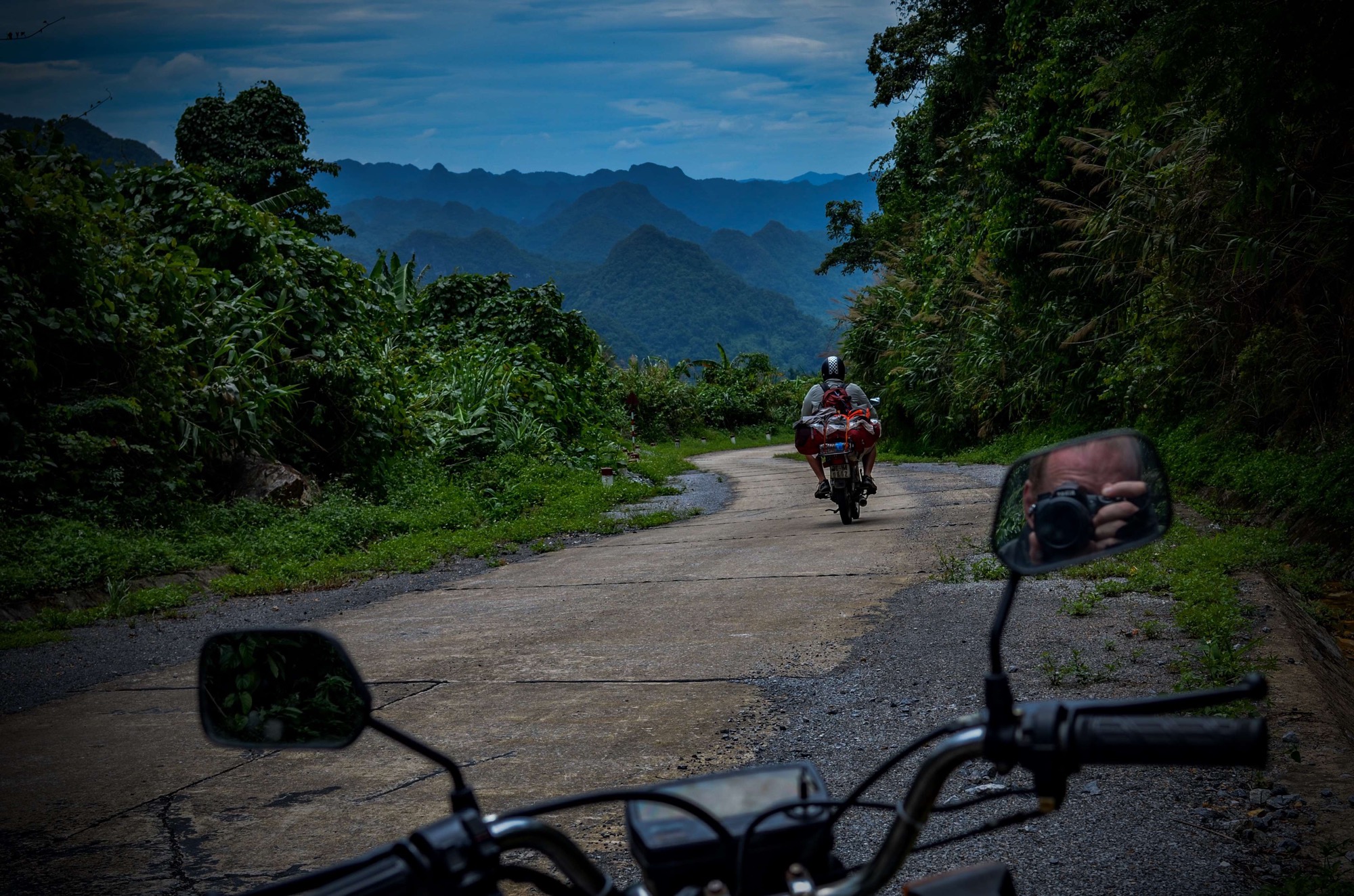
Self portrait of a photographer staring at the mountains and the road trip that defines this country for us, Near Phong Nha, Vietnam


FOOD:

People and places make a country however in Vietnam the food and the Vietnamese’s love of food can’t be ignored or left out.  So the photo’s below represent the Vietnamese’s dance with food and how inextricably it is woven into the country.

Charlie Winn

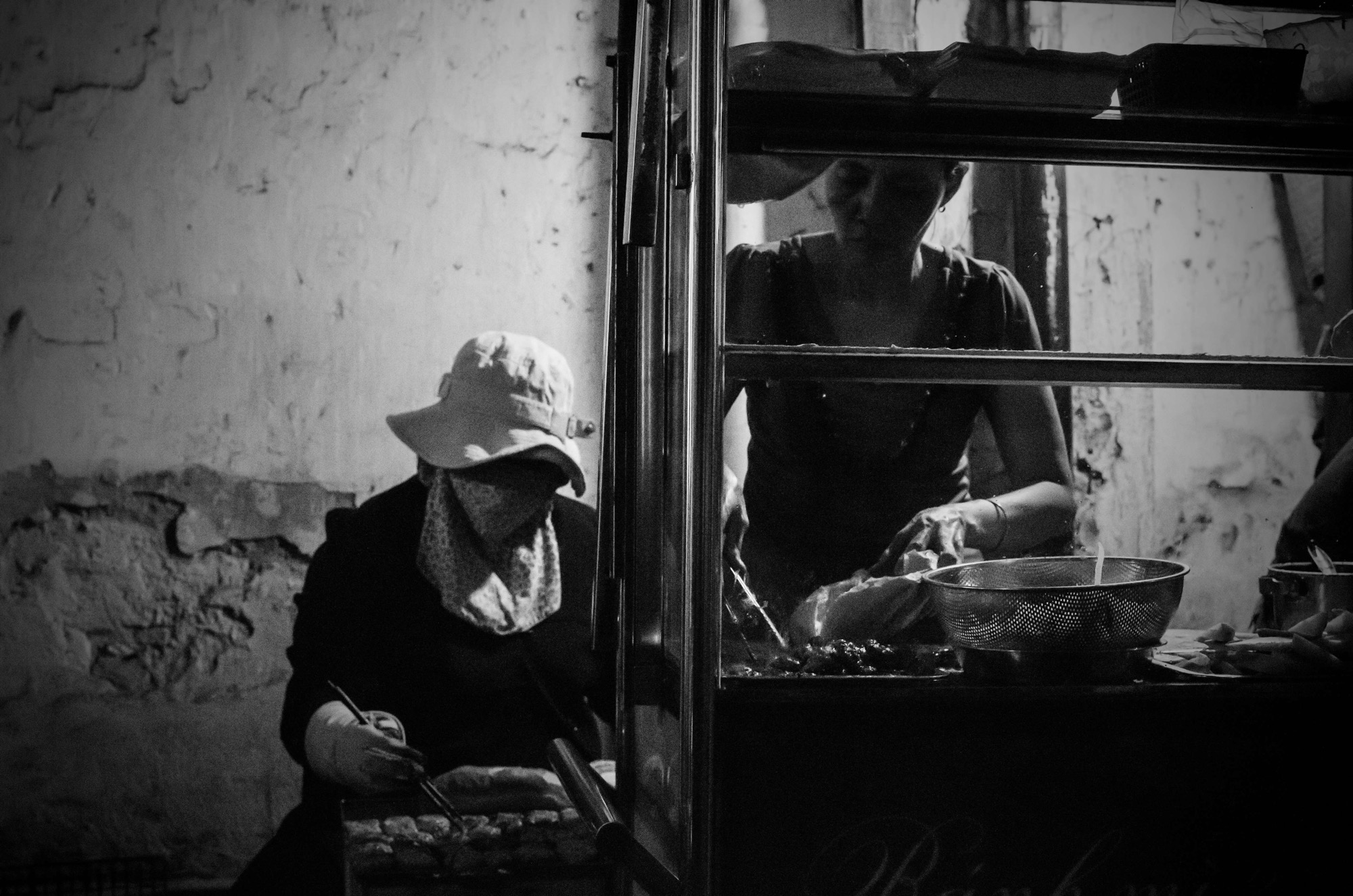
Our first taste of street food, a discrete alleyway crawling with customers for baguettes from this mysterious character we dubbed the Dark Heron due to her sharp snapping chopsticks, Ho Chi Minh city, Vietnam


Charlie Winn

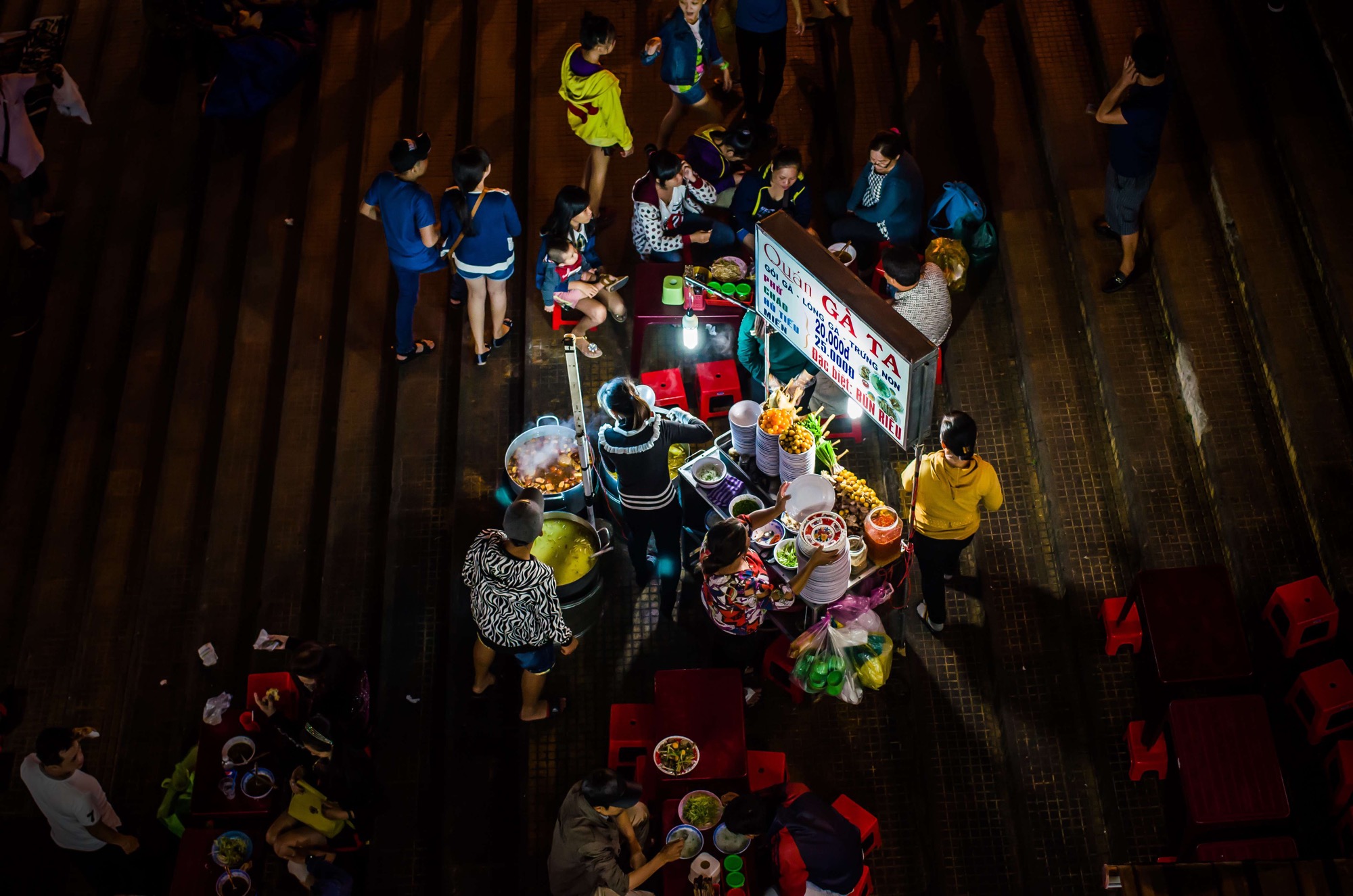
Food stalls in the amazing Dalat market are like islands in a raging river; the world flows all around and flocks towards them, Dalat, Vietnam

  
Charlie Winn

On guard. Food vendors are feisty and customers need to be firm or else end up buying more than bargained for, Hoi An, Vietnam


Charlie Winn

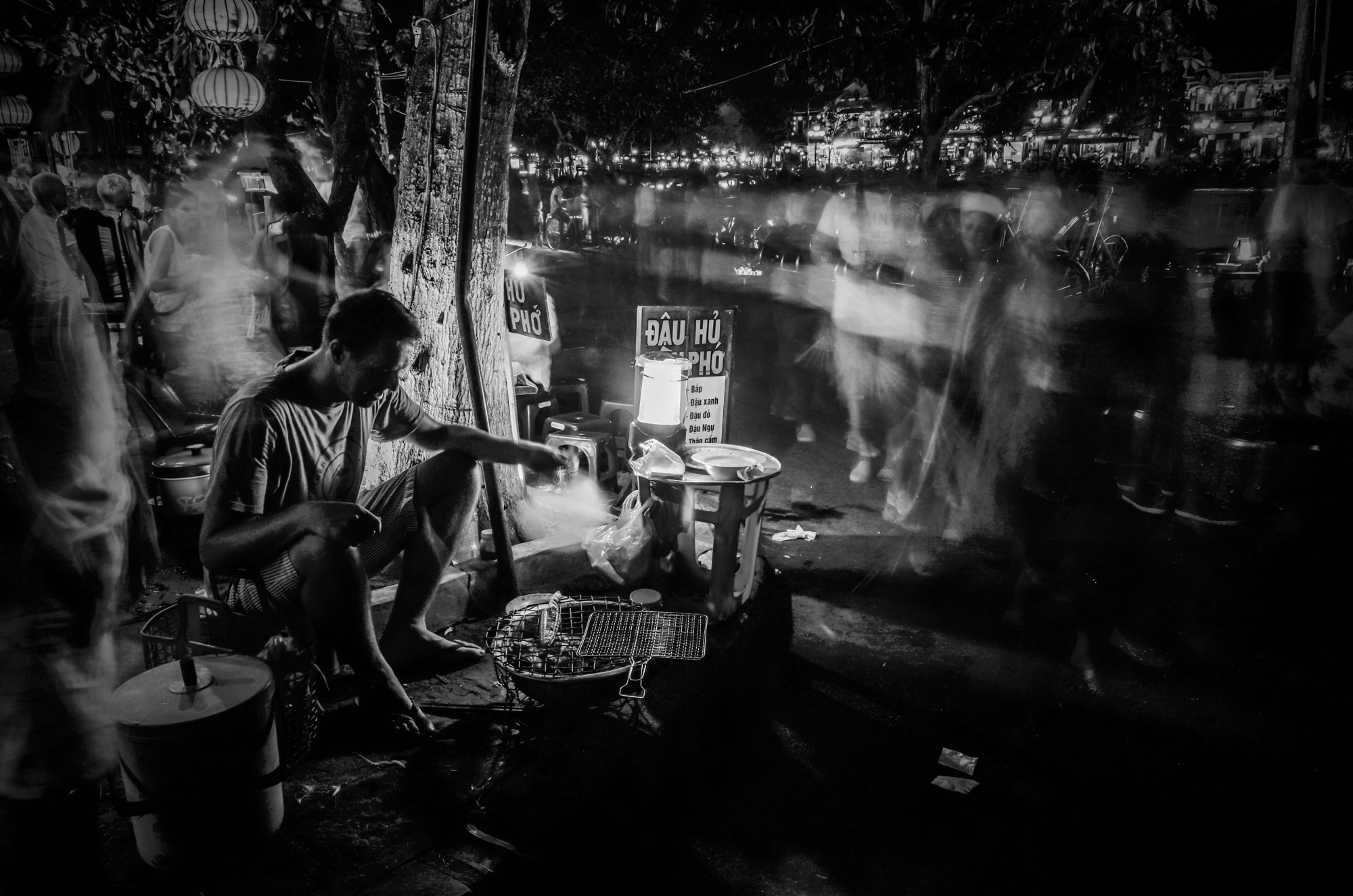
Steve showing the loacls how it’s done as the busy riverbank of Hoi An stops for no one. He did burn the corn though, Hoi An, Vietnam


Charlie Winn

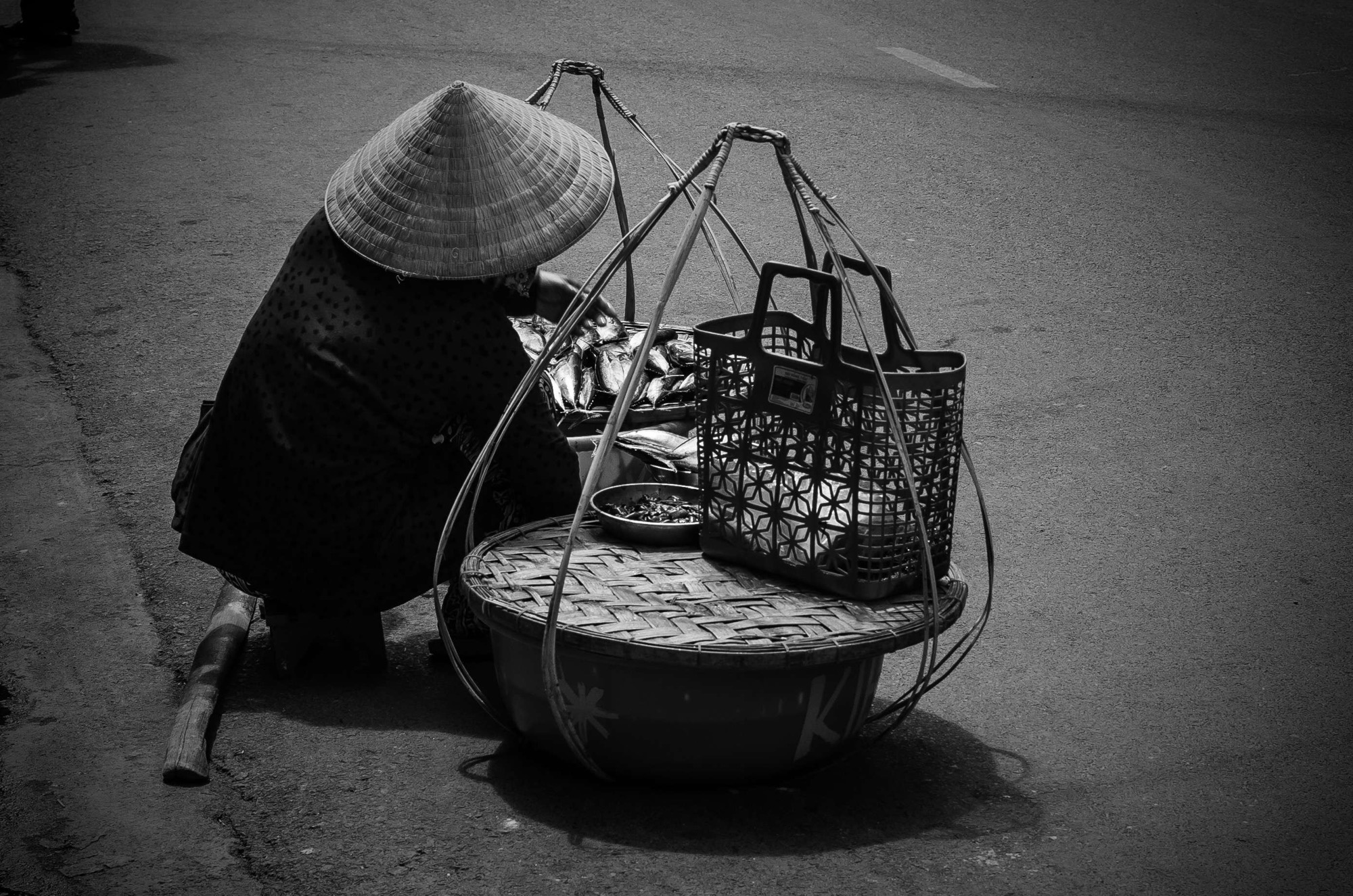
From swimming to in your bag in seconds, selling fish is fresh, frenetic and a sight to behold, Dalat, Vietnam


Charlie Winn

An iconic scene of simple beauty, Vietnam is loaded with symmetry, elegance and humility, Nha Trang, Vietnam

Newer Posts
Older Posts