Menu Close

Charlie and Steve's Excellent Adventure

Tasting the world one meal at a time

While you were working – Handsome Bully, Pokhara, Nepal

A green plastic table lays out before us, a timid fidgety man vacates a seat on our approach unbidden making way for people of some import that doesn’t feel like us; he doesn’t seem to know that. The will to defy the inaccuracy of false praise still sits at a higher elevation as we take our place on cracked cement pavement, matching green chairs that will never see an early retirement dutifully cradle yet another weary traveller. The smells of life outdoors doesn’t invade but gently knocks at the door, no discernible scent other than a concoction of life not wealthy enough to have indoor comfort opting for the outdoor alternative; life painted into that cracked cement pavement. Our own outdoor life blends seamlessly to become a street somewhere too close by, the swarm of chaotic traffic thrusts past to the warring sounds of horns and voices only slightly more subdued than usual. 

Besi Sahar used to be the famed starting point for the greatest trek in the world, now it floats adrift days walk from the source of a former glory it will never reach to again. Adventure and purpose have been chased up the hill from this place by the hungry best of our world, left behind are its droppings to litter the cracked pavement; we feel so in-place here. A reptilian man stands on the same pavement but somehow above us awaiting our order also quite in-place under the canopy of power lines imitating the trees now long gone. Five days of exercised willpower have brought us here through aftershocks, night time false evacuations and a trip in the back of a jeep more akin to a violent amusement park ride without the cheerful padding. Left behind are the hopes and aspirations for adventure as we embrace a perverse joy at being thrust into this environment we wish to not know so well: our demise, our corruption so elegantly framed in the life of a plastic green table. 
 

Charlie Win

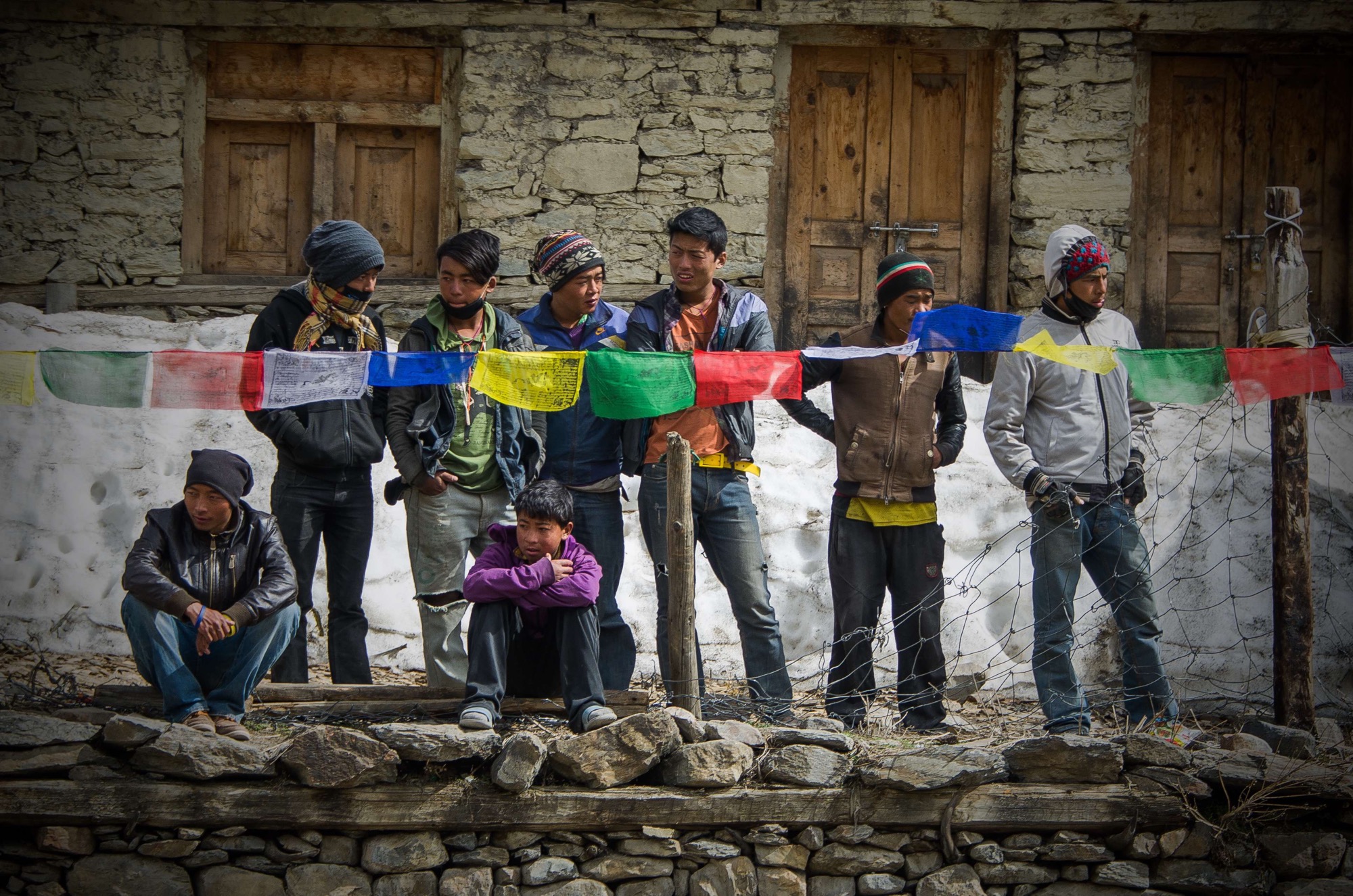
Manangites hanging out.

 
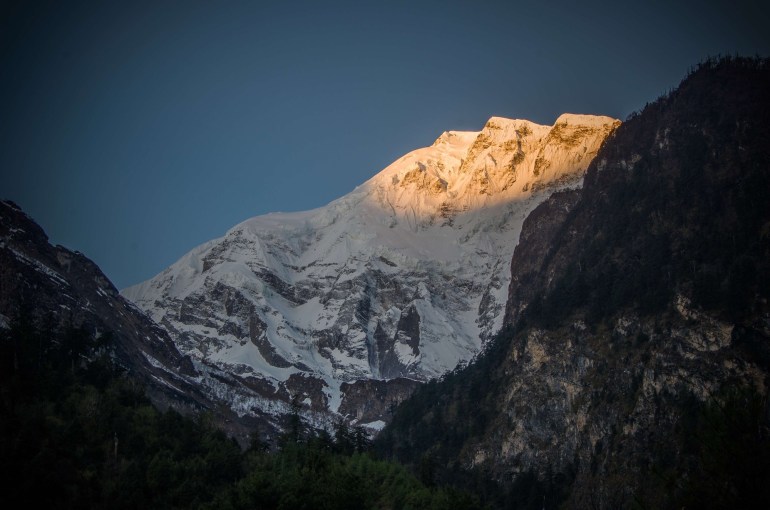
Holding onto glimmers of my own failed attempt to climb Cotopaxi in Ecuador, the passing of Thorung La was for days a vindication I marched toward. Not of my own failing this time my ego calls in desperate defence of itself, we remain cast down yet again with nothing of a sense of victory we sought and I needed. We climbed to the shoulders yet again, the head of the conquest in sight to be chopped off for a trophy. Poised to strike, the mountain shrugged and from its shoulders we fell; the hunted became the bully in a languid hunch aimed not even at us. Down we fell, a himalayan shrug casting these would be Jacks down the beanstalk leaving the bully to stand still mockingly above us, head so ignominiously attached. Cast down we’re still full of admiration for the handsome bully that has thrown us aside so casually: our own sense of aggressor worship as unstoppable as our tumble to this pavement.

Under the upper branches of fading signs and beside the steepling cliffs of decaying brickwork we stalk our domain for a way out, not feeling so in-place with stomachs full. Charlie is the enraged tiger in a circus of years passed, the feeble four legs of a timber stool thrust to his face now a procession of buses going everywhere we don’t want to go. Our bus is not due for another ten minutes but it’s not the time that enrages, it’s the loss that remains after the bully has had his way casting us to this mess from which we still look upward in awe. As the tiger rages in vain, this tiger rages a similar vein. A rattly mini bus pulls to the cracked cement and the timid fidgety man gently gestures to us before pointing to it; still a word doesn’t pass his lips, anchored still to his place where we displaced him.
 

Charlie Winn

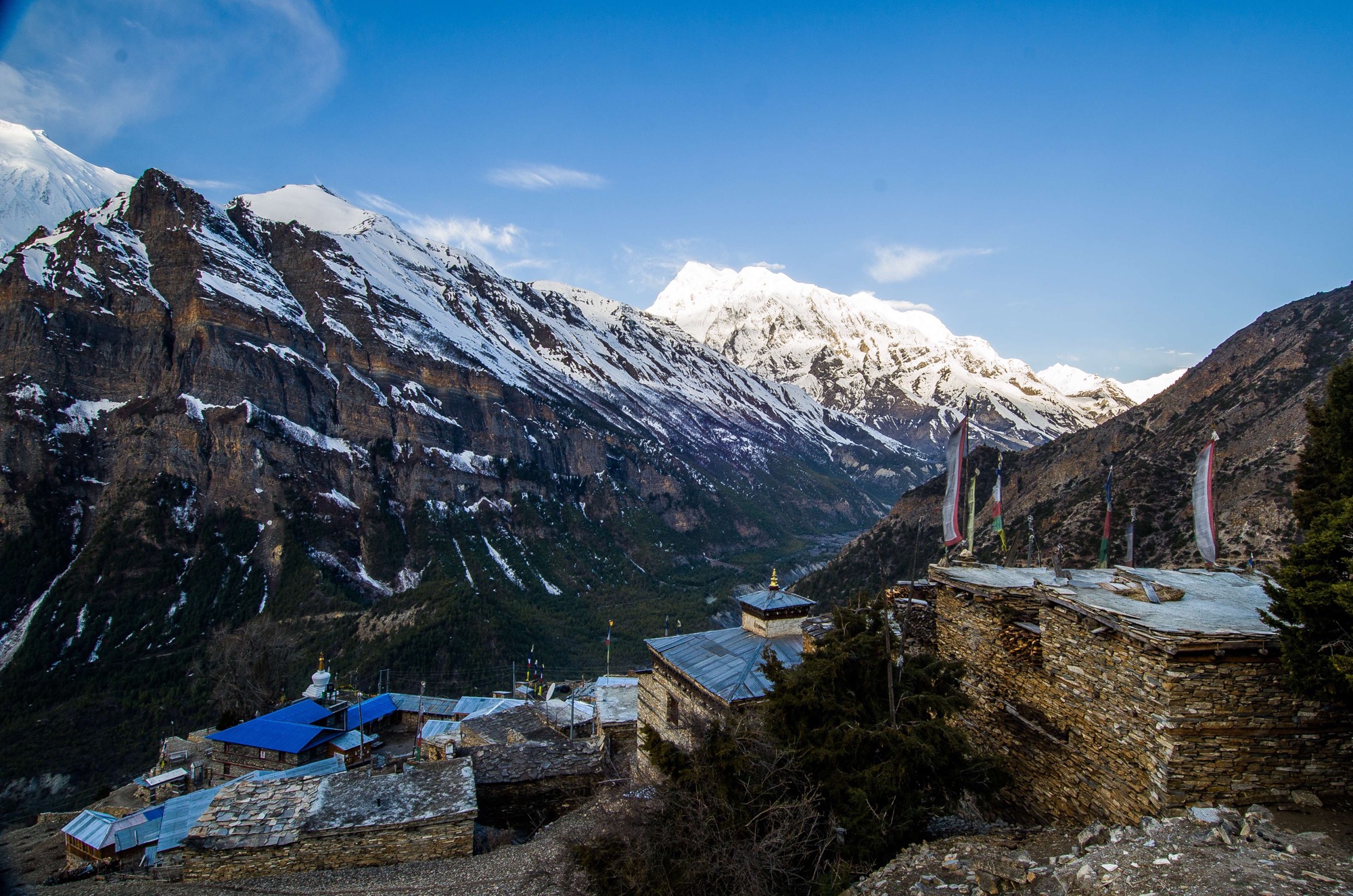
Gyaru town at sunrise, Manang Province

 
And so the book of mixed emotion turns its final page. There were highs, the bully did for a time embrace us to show us all the glory and uplifted sense of standing that comes with being held close to him. But as bullies inevitably do he cast us down so irreverent to our distress and so we limp away still buoyed by those moments held in his favour and so forlorn for the times forced out of it. The walk, the jeep, the bus and now the taxi is the journey required to achieve an inadequate therapy; so fitting that the taxi loses a clutch to remain in second gear before failing entirely to coast in silence to an acquiescent death at the doorstep of our hotel. 

It’s a dubious healing; warm blanket, smooth floors, hot water and a toilet trifecta: a seat, it flushes and we can put the paper into the toilet. Oddly this seems such a thrill. We’re in a cocoon of luxury preparing to be spun in thread and submit to the shelter of a world so far from what we chased; chase. There is no healing to do as such, nothing more than the reconciliation of a want to be near to he who has discarded us. The warm dreams of a comfortable bed will tonight be filled with the icy warmth of the mountain still with its head so fixed. This world of no cracked cement can be so irrational; even more so trapped by the allure of a handsome bully.
  

While you were working – Not Jealous, Chame, Nepal

After a hateful night sleep that entailed more nauseous sweating than sleep I’m up into a new day and feeling definitely worse for wear, a rolling stomach has me in no shape for walking. Pisang isn’t an inspiring town with no electricity and therefore no contact leaving us cold, uncomfortable and isolated. We need to move down the hill to less chilly places and internet but I can barely muster the energy to walk to the dining room. Chame is the goal for today and the only way I will have a good chance of getting there is without carrying my pack, the weight would tip me over the edge of a walk I’m nervous about making even without it. With a little negotiation with the guys at the guesthouse they offer to ride our bags down on the back of a motorbike for a reasonable fee; problem solved but I have now committed to making it to Chame with no option of faltering short.

Charlie Winn

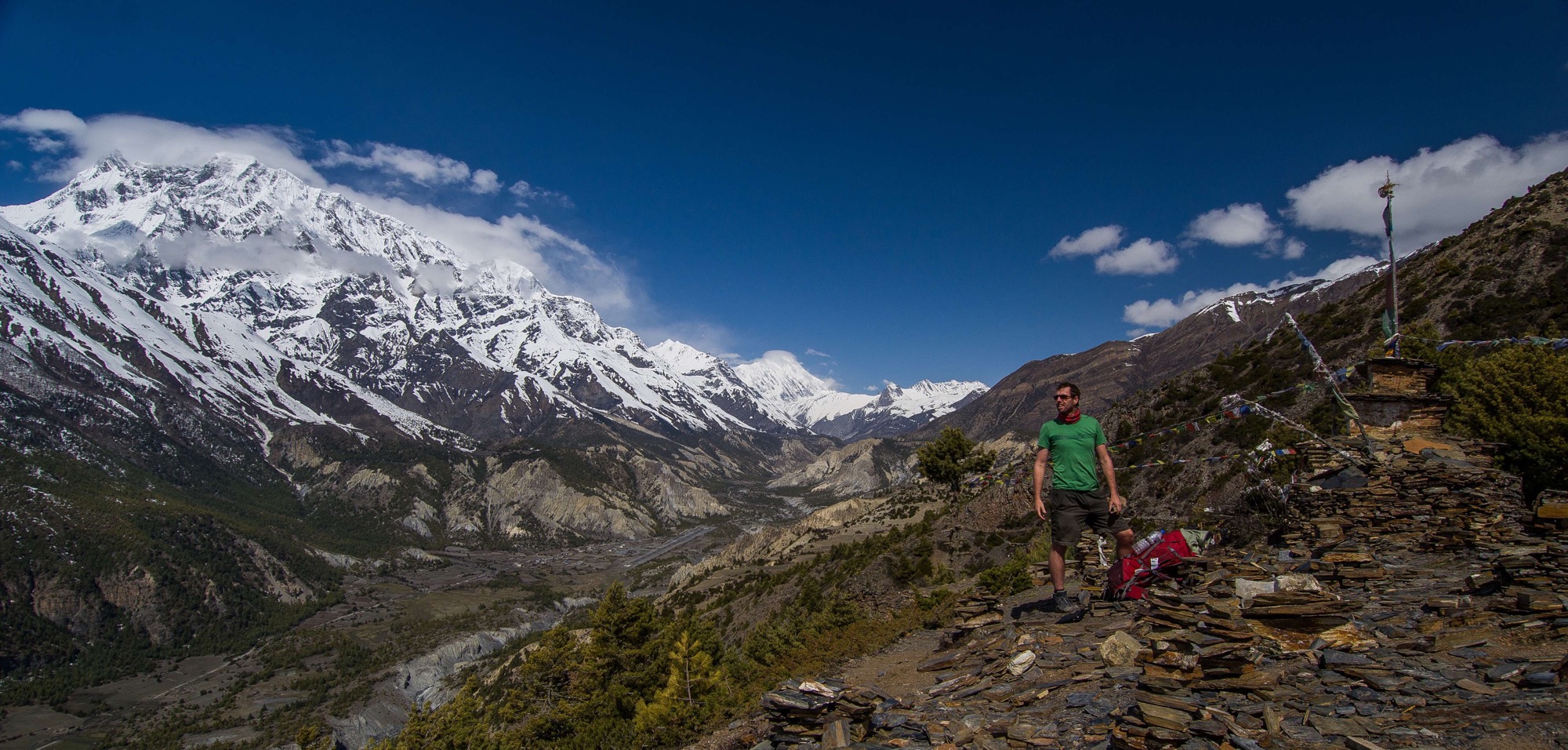
Steve on a healthier day, admiring Annapurna III, Manang, Nepal

So we abandon Pisang for the town of Chame which has far greater hopes of the services we need. Walking is a challenge but without the pack we make slow but steady progress to Daikur Pokhari about an hour down the road and roughly a third of the way. The road is a ghost town, we’ve seen one bold jeep on the road in place of the scores of other days, not a single walker has passed us and most of the buildings we pass seem closed for business. The effects of the quake are further reaching than we often think of, this tourism dependant area has had it’s livelihood slashed in the rumbling of the earth in the second busiest time of the year for these people that need the income. Small groups of people sit outdoors huddling around radios listening for news with concerned faces and pensive postures granting more credence to a crackling voice from a radio than anyone wants to give. 

The walk down the hill has taken on a vastly different complexion to the walk up, gone is the anticipation, the buzz of hikers, people sharing photos and warm happy hosts. In place of all the atmosphere that encompasses these towns we find no hosts asking us in for lunch, no cheerful ‘namaste’ greeting and no sense of appreciation for this amazing part of the world. We came up the track in one of the worlds most uplifting and inspiring places but we come back to the same sights yet the balloon is deflated, saggy and wholly unrecognisable. The pace is slow on account of my illness but still we push inspired by need rather than desire; we need to get out of here, we’re not wanting to be here.

Charlie Winn

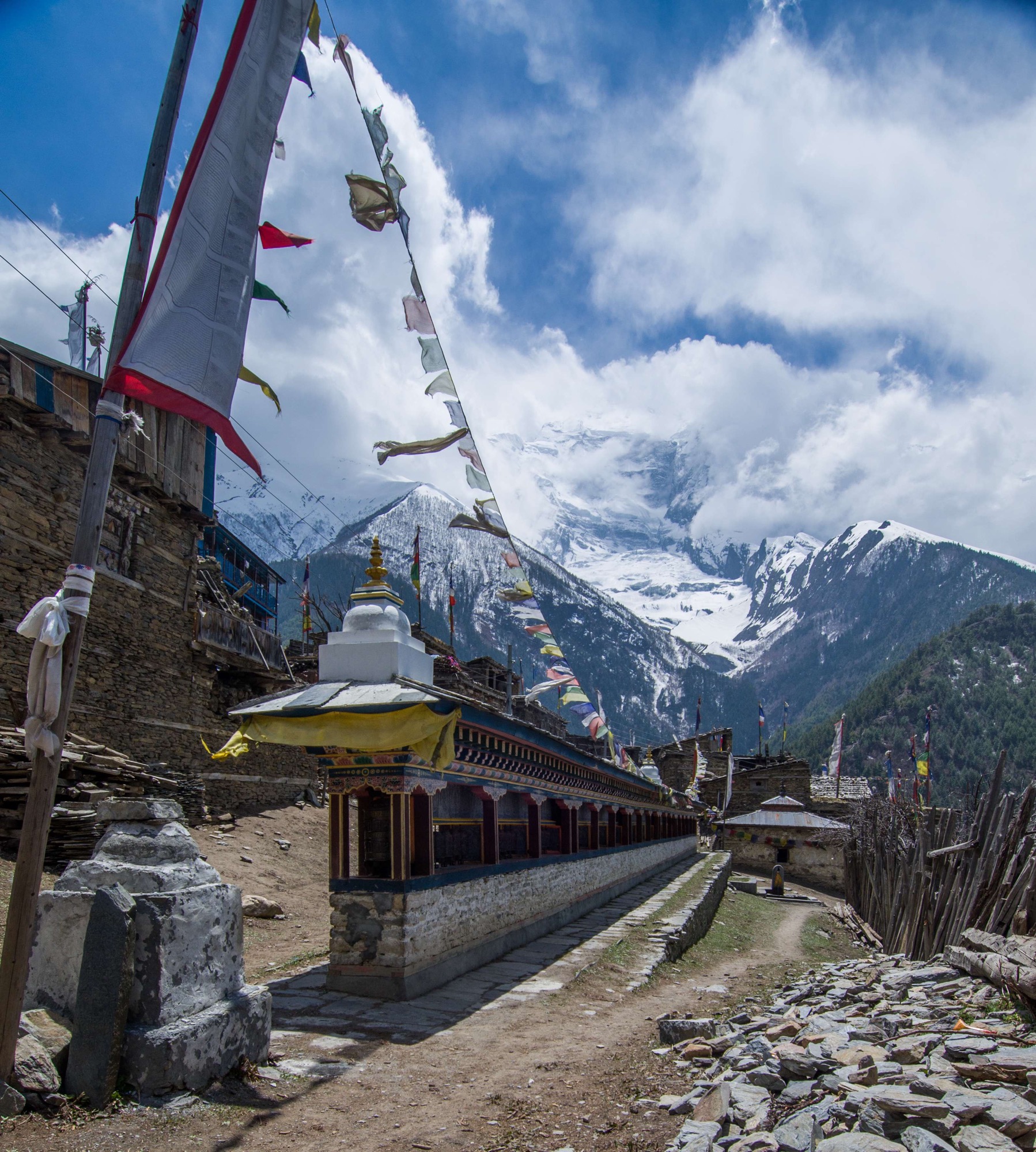
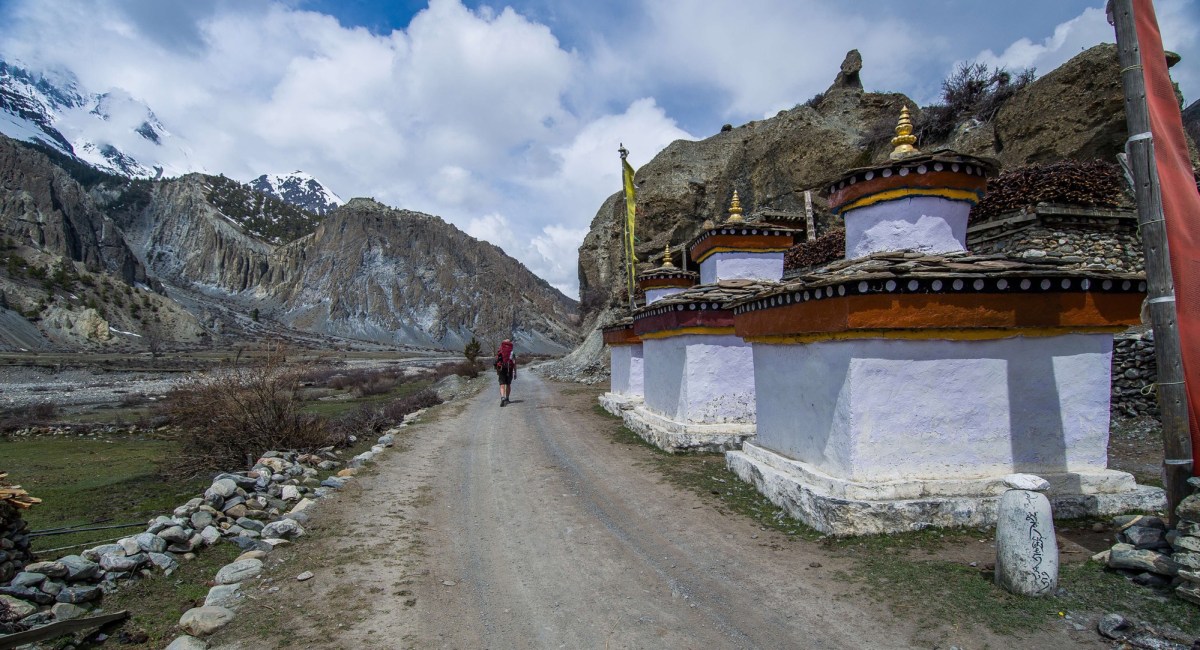
Prayer flags and prayer wheels under the Annapurna range, Nepal

Just after Daikur Pokhari we pass through a massive overhang, hundreds of metres of rock lie above us and there’s no other way, we have to go through. With small cliffs opposite the river tumbling down stone and sand in a never ending dribble of debris we’re reminded of our vulnerability at the worst possible time. Indeed the next hours walking is under massive cliffs, about 300m of rock rises up from our road nearly vertically as I muster as much willpower as I can. Our host passes us on his bike and after a quick chat he carries on to drop off our bags at the designated guesthouse. 

This walk is just a little too long for me, I’m flagging badly but need to carry on, every few hundred metres calls for a sit down to rest below cliffs of stone and debris in a world that can rumble at any moment. We can’t stop but I can’t go any faster our constant dilemma. Our host is now coming the other way, Charlie pays him and chats while I sit bent over on the road vomiting last nights dinner, this is not my prettiest moment. There’s not long to go with Chame surely close and although not making it isn’t a danger this is by far the toughest day walking so far. It turns out that our host had taken the time to book in our room, carry our bags upstairs and brought our key back to us in what is now a typical Nepali display of care and sincerity. In the face of his nation suffering such destruction there’s always a space for someone in need it seems. With so many variants of culture in Nepal the mountainous region here is the very typical buddhist culture influenced from Tibet that a western mind imagines, the wise principles of buddhism don’t seem to be lip service at all.

Charlie Winn

Steve admiring Annapurna II, Nepal

The death toll is now up over 4100 and rising, the disaster keeps getting worse and worse. We’re in a relatively unaffected part of the country in statistical terms but it’s far from unaffected, we see a photo of a temple that we were on top of just a week ago that is now in rubble thankful that we’re this far away, we could so easily be two of the 4100. In a comfortable place in a town that has a small hospital and a military chopper we’re recovering tomorrow on a much needed rest day for me. Collapsing onto a bed sick and in desperate need of a shower I won’t have I can’t help think of the sad situation we’re in. Our blog is called ‘BitJealous’ in attempt at cheeky fun at those at home but right now when it comes to us or indeed anybody in Nepal there’s no one jealous, nothing to be jealous about at all.  

While you were working – Lucky, Pisang, Nepal

It’s the day after, but not really. The quake like any other of it’s kind continues with little reminders of our vulnerability, a small aftershock at 5am was missed by us sound asleep but has the town in a buzz. Today we will finally be taking the step away from the road and embarking on the steep ascent to Thorung La which lies still three days hike away into the clouds and behind the jut of land that hides our path from us. Such mystery hangs in the air of the upper reaches, a pathway is hidden from us and the northern mountains have been hidden in cloud since we have been close enough to see them. Breakfast is shared with Tom, a young Aussie guy from Brisbane who’s unrestrained excitement sees him off early, the intoxicating grip of Thorung La has him firmly also as he charges out to beat us to Yak Karka, our next stop on the way up the hill.

Charlie Winn

Morning view of Annapurna II enroute to Manang, Nepal


First step for us before embarking on the journey into the world of snow and altitude is to take a check in with the tourist information office to double check that the pass is open. A slight wobble in the plans, communication is cut from above and no one knows what’s going on. It’s recommended to stay put in town until more information is known much to our disappointment but we grudgingly acknowledge that it’s good advice. Where yesterday morning the town was a gathering of small groups of hikers any small division between groups has dissolved in the need to find more information, it’s a feeding frenzy with more rumours than facts. Internet has been knocked out, only a few people get small slices of information from phone lines that are as reliable as travel insurance, that is to say basically we’re collectively getting nothing of use.


What seemed so certain this morning slowly gets picked apart; apparently Pokhara is destroyed, then Pokhara is fine, the epicentre was near us, then it was in Chitwan, 20 people died on Thorung La yesterday, then there’s no casualties in Manang province. The flood of info-rumour is akin to the avalanches we saw yesterday and still we are cut off from the world, unsure, stuck, frustrated. But there is life, some Kiwi guys tell us that a guesthouse now has Wifi going, we charge off to make sense of this situation and tell family members at home that we’re safe after forking over an offensively high fee. The only consistent rumour thus far is that Kathmandu and the Everest region has been hit pretty hard with casualties up to 1800 so we fear that people at home might know there has been a quake and might worry.

Charlie Winn

Carrying pine needles back to the village, Manang, Nepal


We’ve never felt so popular in our lives. The faint line to the internet lights up our iPads with messages from home and mothers beside themselves with worry. We have emails from the Red Cross, reporters, Charlie’s mum even had a TV news team on her front doorstep; apparently people at home have heard of this after all. A flurry of emails, messages and posts to whatever we can get our hands on not only calms people at home but also for the first moment in a long time takes our immediate thoughts away from Thorung La. I still have no idea how to spell Thorung La, I’ve seen it spelt so many different ways but however it’s spelt it has now moved from the glorified triumphant perch it once held and now moves into a mystical realm of possible unattainability. We have eyed Annapurna for four years and the pinnacle of that is Thorung La, we refuse to admit that it might be snatched from us, we must get over the pass somehow.


Our world is a whirling throb of uncertainty, the emotional version of the quake itself as we settle down to eat some food and try to make sense of our situation that becomes more and more grave by the moment. It’s in the air as heavy as the nervousness of other hikers but we refuse to look at it, face up to it, give it a name; we might have to turn back. I think we both know that we will have to but ambitions held for so long aren’t wiped away so easily, even an earthquake that has brought a nation to its knees isn’t enough to immediately kill the ideal. Lunch of biryani and vegetable curry presides over a realisation that comes like giving up our own dignity, we have to go back. Some trekkers are holding out hope and many will go over the pass but nearly any Himalayan tragedy has begun with foolhardy placement of ambition over good sense. We breathe deep telling ourselves that it’s just smarter to choose safety over brave romance.

Charlie Win

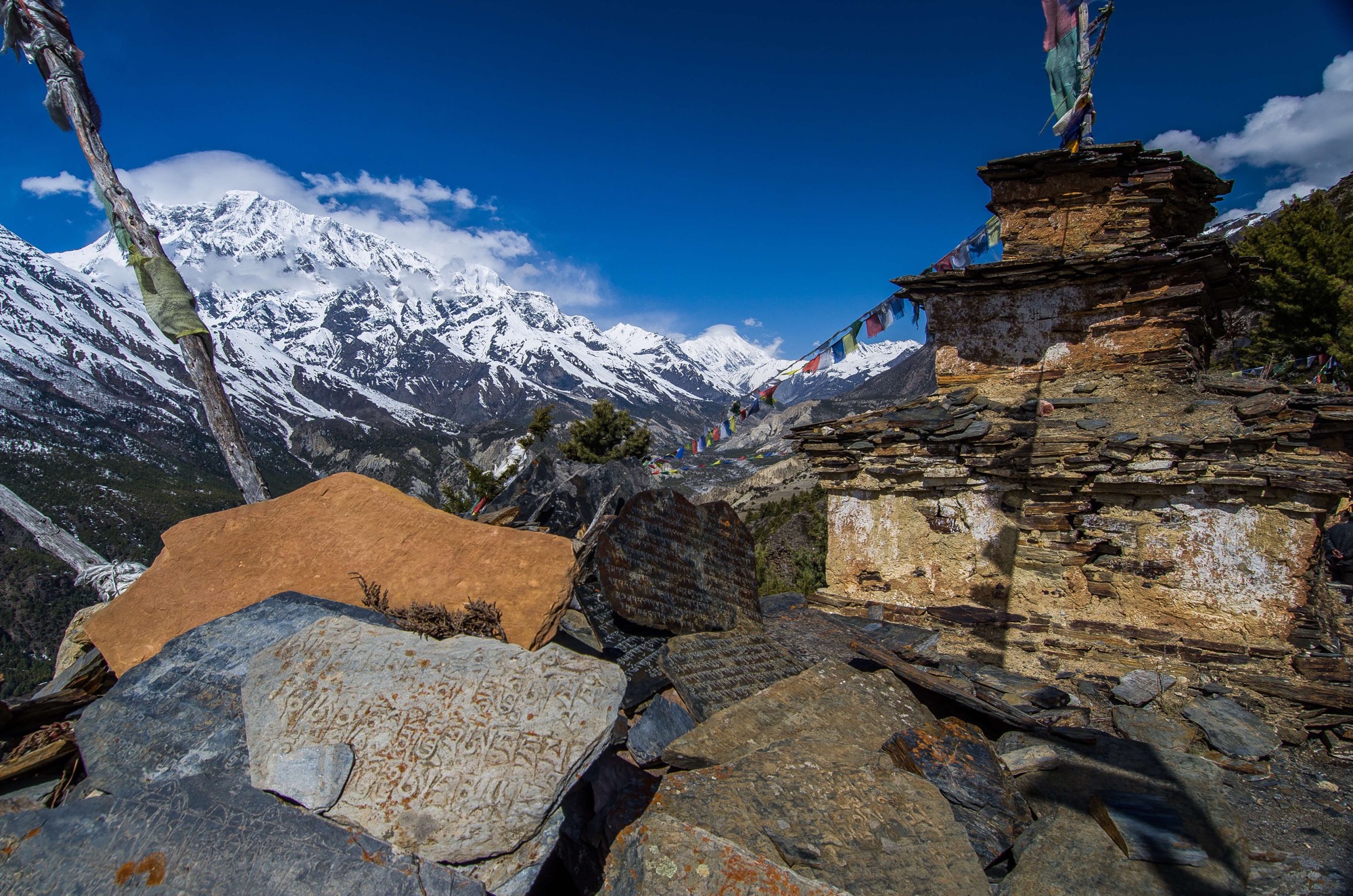
Mani stones and prayer flags with Annapurna III in the background, Manang, Nepal


And so we turn our backs on Thorung La, a goal four years in the making. With the interruption of development Annapurna has remained hidden to us apart from relatively small glimpses. The two week odyssey of amazement has been reduced to small slices of it’s breathtaking promise squeezed into too few days and now the greatest jewel in the crown will be more than hidden, for us it won’t exist at all. Concluding that we must turn back we metaphorically tear off the scab and start the walk downhill eager to get out of this pool of uncertainty and take some action. We’re disconsolate but masking this over is the perspective of the greater event; casualty numbers will rise daily like a sporting score, Tom disappeared into nowhere and it will be days before anyone will hear from him. On top of it all is that Nepal is suffering. Possibly the most tough, sincere and helpful people we’ve met so far have yet another challenge they don’t deserve. Safe in Pisang and with a moment spare our disappointment takes on a tinge of guilt, our disappointment is released in the face of the fates of thousands. We don’t feel disappointed anymore, we just feel lucky.  

While you were working – A Himalayan Shrug, Manang, Nepal

After five days of slogging it up the hill we have come to that big red circle on the calendar page, rest day. We have just a 30 minute stroll from Braga to Manang but not before a little poke around old Braga, our first moment of free time cannot pass without a little exploration. At the top of old Braga a commanding view of the pastural fields in the foot of the valley lays out before us among the crumbling remnants of this old town. Hopeful of having a look into the gompa we meander around decaying walls on well worn paths looking for someone with a key. A young guy carrying a staggering weight in a basket strapped over his forehead tell us that the key will be available at lunch so for now we content ourselves with a nice view from a town that will see better days than this one.


After five days covering nearly 70km the little stroll to Manang is exactly that, just a little stroll. Being the official end of the vehicle road, it’s a path for walkers only from here on in, we’ve been heading roughly west for the past few days but after Manang the days get shorter as the elevation gets higher on the northward push. Today is for rest, coffee, cakes and recovery, from here the focus is all about Thorong La, the pass over the mountains before we can descend once again, the highest walkable pass in the world. Thorong La has a high point of just over 5400m above sea level, still 2000m above where we are now and into genuine altitude sickness territory. We’ve been enjoying the walk thus far with only a little mind to Thorong La but now it’s unavoidable, the monster under the bed won’t stay hidden any longer.

Charlie Winn

Entering Manang, following a guy carrying his plough and herding his oxen. Annapurna, Nepal

 
Rest days couldn’t be any better, the town of Manang bustles with hordes of trekkers and locals alike. After five days of walking, the end of the road spells the end of ready contact with civilisation, there’s only wilderness before and above us with a final deep intake of thin air the last step before the steep ascent begins. We need to acclimatise for now so in place of the tough slog of the last five days it’s firmly bums on seats with an apple roll and ginger tea to while away the afternoon. There’s a horse shoe shaped building wrapping around us, three storeys of weathered grey stone and timber beams  whispering a tale of centuries past in a town that shuns the convenience of a modern world.

 
Small agricultural fields sit across a flagstone path just before us in the first opening expanses of the valley. The Annapurna’s are behind us, their north face all snow and ice tower above us on the other side of a milky glacial river; before us bare rocky scree slopes roll distantly upward into clouds that promise so much yet reveal so little. A sharply cool breeze pushes thin air with an oddly welcome sting of the harsh sun in this place that rips a sense of connection with the world from us. The outside world, what a strange concept nowadays. But isolation is the temptress, we’re drawn like moths to a flame; the only thing tying us to familiarity is this apple pastry before us that seems so out of place here but so wickedly welcome.

Charlie Winn

Group of young guys, Manang, Annapurna, Nepal

 
The scope, the size, the severity of the landscape defines existence here, nothing is small, safe or comfortable. From my small wicker chair that has seen better days I can see over the small fields to a ridge of land we are going around tomorrow before disappearing upward into whatever those clouds are concealing. Rumbles and thunderclaps of moving snow are commonplace in this world of upheaval; but this is a big one, it must be pretty close. It must be extremely close. The air shifting is the first thing we feel, we’re sheltered in the horse shoe of the building yet the shift is like a vacuum rather than a wind, an intangible feeling of air being extracted rather than pushed overcomes us in this already thin atmosphere.

 
Our senses are always so dependable, so secure; but not now. For a moment the world feels like gravity has stopped working and everything we thought we knew is proven so wrong. My flimsy wicker chair doesn’t shift from the ground or lift in any way, it’s remarkably stable to my confusion as I mentally struggle for something rational to grab hold of in this state of destroyed understanding. In an instant that plays out in an eternity the heavy stone horse shoe that encircles us shifts with a fluidity that it shouldn’t, the stone paving below me that has settled over centuries shivers on a Himalayan shrug.


Charlie Win

 Penguins huddling during the earthquake, Manang, Annapurna, Nepal


A second, maybe three; how can so much occur in such a small space of time. Grabbing only what is in our hands we run for a clear space, another small field not opposite us but beside the horse shoe building; we want to see this avalanche, it must be massive. The building swings in great exaggerated movements, Annapurna reflected in the window panes shifts wildly at each swing of a pendulum going the wrong way. We were thinking of an avalanche but all around us, in the icy Annapurna and the dusty mountains alike, the earth rises up rather than falls down. Clouds of dust and snow burst disconcertedly upward in a world turned upside down from every crack and crevice which accommodates a slide.

 
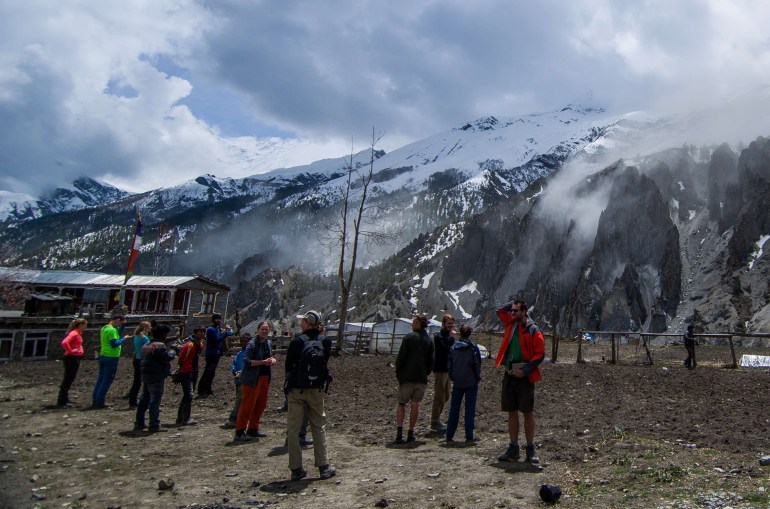
Like penguins huddling for shelter but too concerned to embrace each other we’re in a gaggle of trekkers, a buzzing hive of brightly coloured weatherproof clothing and too many languages. The earth continues to lift up, rising all about us as a weird balance of innocent excitement and slowly permeating concern engulfs the crowd. First we see a few small rockslides, then some more, a billowing cloud races down an icy mountainside as small isolated signs of movement join together to paint a more complete picture. A small voice cries out, ‘is it a volcano?’ from one of the frightened penguins in the huddle. Still no one can place the disorientation of what just happened. 
The movement has slowed, the penguins disperse somewhat with a delicately held grasp on nerves now so uncertain, earthquake is the popular word being hushed. Around us the horseshoe building still stands, the reflection of the Annapurna’s no longer dancing, the fields are still there and with clouds settling a cautious look around town reveals that nothing much has happened here. But we all know it has. An attempt at normality calls for another pastry and to ask a few locals about this, after all the Andes have earthquakes nearly every day in some parts. A terrified face says to us “I’ve been here 16 years and never seen this”. This just got real.

Charlie Winn

Manangs archery featival, only hours after the main earthquake. Annapurna, Nepal

   In those words a strange balance between excitement and concern tipped swiftly to the latter. A celebrated launch into wilderness is now wrapped in severity; isolation engenders two very different emotions on the shake of a mountains whim. We’re just two days from the highest pass in the world where a huge number of people died last October, there’s no communication and we’re five days solid walk from anywhere. On this sobering flip of perspective we oddly seek normality in pastry only to be taken from the comfort of normality and placed into repetition. It’s a cinnamon roll this time but the air sucks all the same. No confusion, no thinking it’s an avalanche, another tremor grips us as we run from the bakery as if it was on fire.

 
We don’t quite understand what’s going on, the severity, the consequences but we know that something big has happened. Distraction is the key for us today, we content ourselves to watch on a few local guys shooting archery in the worlds most dramatic setting before settling down to watch a movie in the a tiny informal theatre in town, Seven Years in Tibet the fitting feature. The film centres around isolated and sheltered Tibet so cut off from the world, we usually exit a movie to return to our modern world but now we exit the escapist world of the movie into what feels like the scenes of the movie itself. The slow walk on the still intact flagstone path still sits alongside the small fields below the mountains but now the overriding thought is not crossing Thurong La, it’s getting out. In the story of Seven Years in Tibet Heinrich Harrer and Peter Aufschnaiter fought so hard to get into the isolated land, tomorrow begins our fight to get out.   

While you were working – Onto Something, Braka, Nepal

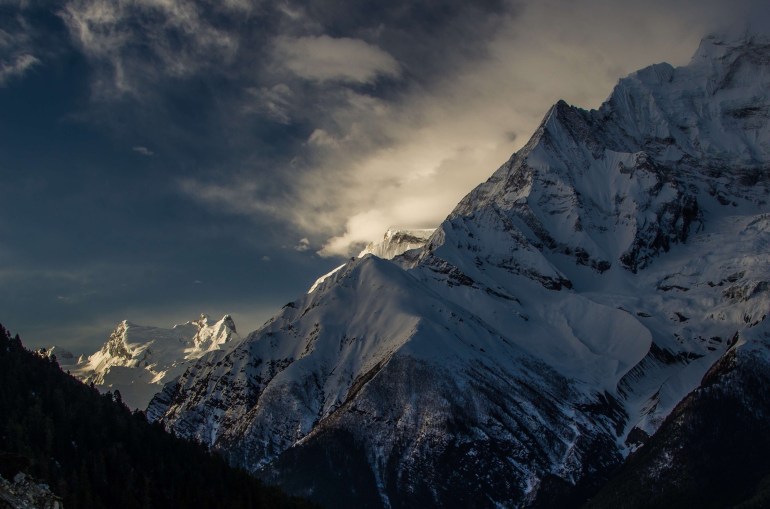
Light comes early in this part of the world, like caterpillars we peel back the layers of sleeping bags to emerge into a new day. We’re perched at the top level of our guest house and before the sun even illuminates the peaks of Annapurna-2 and 3 we can see the monstrous shapes forming a foreboding wall that blots our windows. Only when we get near to the window and crouch down can we see the beginnings of a blue sky forming above a horizon that seems in the wrong place. After teasing us for days but revealing nothing the Annapurna range bares all so unreservedly, Basically the mountainous version of restrained but ultimately lewd catholic sexuality. Annapurna has played coy so far but he’s a tawdry boy after all.


Charlie Winn

Sunrise from Gyaru, looking at the Eastern end of Annapurna-II, Gyaru, Nepal


But a view from a window just will not do, it’s time to climb down from our top room of this big house that boasts rough craftsmanship more like a childhood tree house. Dusty faded timber gives away to a central space which two storeys of rooms are arranged around, a design aiming for a grand courtyard and in a very quaint way nearly pulling it off. A stone floor barely discernible from the timber under years of painted dust boasts a kettle stove and formally arrayed benches not breaking stride with the monotone palate of the space. It’s a page out of an ancient Chinese novel, the neat balconies on the first floor still echo from a century past where families would lean over to listen to the tales of vagabonds, warriors and travelling traders. In that time gone by this place would carry a grandeur nearly out of place in these high reaches, but it’s aims lie in another era along with the lifestyle lived by these hardiest of people.

 
Spat out into Ghyaru town a world of roughly laid stone lifts from the ground with the same dusty grey making it visually vague whether the ground eroded away to reveal the houses or the houses were built on the ground. Walls cave in here and there but a sense of dilapidation is closely evaded and in it’s place the town bellows from centuries past. Prayer flags provide a source of motion and colour in this otherwise camouflaged town, the stupa that lays at the cliff edge, all white washed and brilliant red is the only building worthy of attentive care in a place of abandoned pretence. Men wrestle and scream with two cows pulling a wooden plough through sloping ground just recently unfrozen scraping out a living in a place that seems too harsh to allow it. We’re hurled back centuries to a time when humanity fought and struggled to survive; our track takes us away to our comfortable world of windproof fibres and goose down warmth but for a time we feel like we’re in the world of Genghis Khan battling the windswept plains of Mongolia.


Charlie Winn

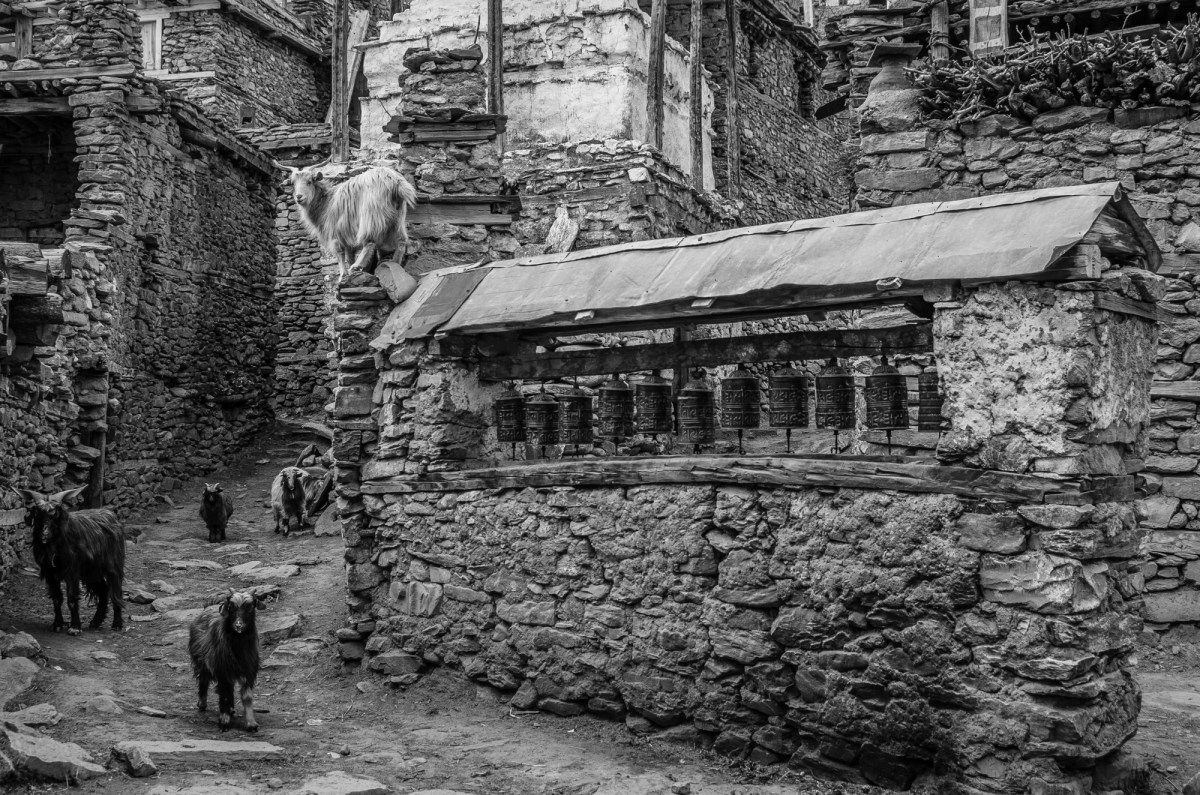
Payer wheel wall, Gyaru, Annapurna, Nepal


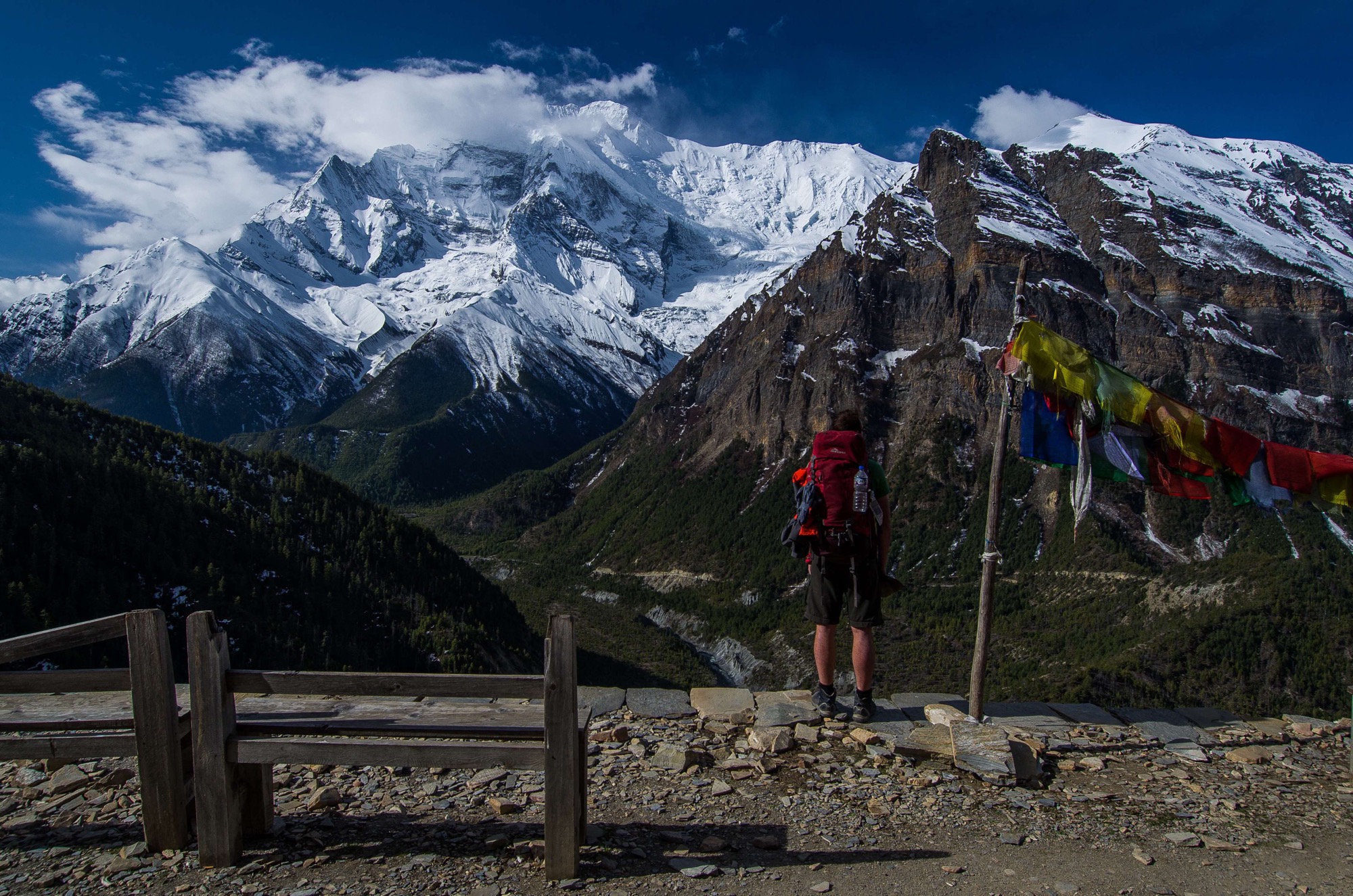
As captivating as the stone maze of Gyaru is the mountains cannot remain ignored. Skirting the high road on the mountain side we have an elevated view of the Annapurna range on a bright clear day, yes all the demure shyness was all for naught, he’s throwing it all out there. It’s such an uncomplicated sensation, this is precisely what we came for. Taking a short rest near a mani wall below the fluttering of prayer flags there’s too many peaks to look at all at once, we’re so uplifted we even chance a cinnamon roll from a small stall plonked in the middle of nowhere on this high trail. It feels so tempting to stay up here but the walking won’t walk itself, there’s a rest day tomorrow before the final push to Thorong La which we can’t keep ignoring for too much longer.

 
Down from the heights we arrive into Braga town for the night on an Annapurna high. Like Ghyaru, Braga sticks to the hillside with the now familiar stone buildings looking both abandoned and charming at the same time. Higher up the hill lies old Braga, now clambered over by a small army of workers in what appears a concerted bid to rebuild. Crowned by a large white Gompa dating back to the 14th century Braga town typifies what we might imagine of a relic from a time past.
We’re in Manang district which has the closest ties to Tibet of any Nepali province and the markers are all here to see. With influences from India in the south and Tibet in the north this progression through the trek has taken us far from the Indian slum feel of Kathmandu and into a more Buddhist passivity, even the appearance of the people has slowly changed as we’ve ascended. There’s still rubbish around but overall the towns are more or less tidy with barely a soul not put to work in some way; life here is a never ending treadmill of farming, building walls or cleaning something. From a platform of basic simplicity the people in these upper reaches are industrious if nothing else.


Charlie Winn

Steve taking in the Annapurna range, Nepal


A very simple way of life persists but clearly not for lack of drive or motivation, everyone seems to work hard which makes me wonder why more effective technologies aren’t utilised? Surviving in this harsh land is not an easy task and not for a lazy or unmotivated people, the only conclusion to draw is that these hardy folk have an affinity with the simple life that they don’t want to let go of. It’s an often posed question of our modern life: does technology actually make us any happier? In our society children are medicated for depression from not coping with the pressures of a connected world; one technology created to solve the problem of another in an endless cycle of managing the potholes of our own development. Maybe the people here who live a life so foreign to a modern world aren’t irrationally stuck to the past, maybe they’re just onto something. 

While you were working – Shedding a tear, Ghyaru, Nepal

A buzz of excitement permeates the village of Chame and the path leading from it. The topic on everyones lips is Lamjung Himal, with clear skies the whole town awoke to the gleaming sight of the mighty peak. For a time we thought it was Annapurna-2 but not quite, that will come hopefully later today. What is for certain though is this game of hide and seek with the Annapurna range is slowly turning in our favour. Edging into higher territory brings the first sight of down jackets, long pants and beanies to add to the buzz. We’re climbing higher and while the minds of trekkers sits currently on Lamjung Himal and Annapurna the unspoken devil in every closet is Thorung La. No one mentions it but we all know it’s coming.


The translation is vague as far as I can tell but Himalaya essentially means the home of snow, or where snow lives; not far out of Chame the first drifts of compacted snow line the path. The chill, the wind, the snow all combine to set the air alight with excitement, so far distant now seem the quasi slums of humid Kathmandu as we finally feel like we’re pushing through the cloud of disappointment of the lower trek. The hints of what we dreamed of for so long are now more than just sparse hints of something we can’t quite grasp, there’s a handover of sorts underway and we’re surging headlong into it. A procession of cars regularly force us off the road but Annapurna is slowly winning, we can feel it. 

Charlie Winn

Lumjung Himal, Chame, Annapurna, Nepal

Strangely enough we started this hike at only 800m above sea level. We all know that the Himalayas have the highest mountains in the world and I always thought that the overall land mass was just simply higher. Where the Andes have huge mountains also, the higher peaks are far lower yet the base of the mountains often sits higher. The Andes are indeed a grand and immense mountain range but in geological terms they’re quite young, the Himalayas are far older and it’s so plain to see up here; big brother still sits high above his younger sibling.


Into the home of snow takes us by breathtaking walls too sheer to seem possible and onto Upper Pisang. The path splits here and the infernal road stays on the lower path, it’s not even a decision to take the tougher, more picturesque high path. A stop in Upper Pisang reveals a bit of a time warp, Nepal style. The brightly painted buildings are fewer, given way to a hillside dominated by rough dusty stone dwellings placed haphazardly together. Charlie dashes up the hill with the camera while tea is coming only to return with an excited buzz, he’s been welcomed by a monk while I’ve been fending off a pushy hotel owner trying to sell me drugs. He even asks if there’s Israeli’s coming because they always buy hash; good to know.

Charlie Winn

Leaving Chame, through the kani. Annapurna, Nepal

Despite the insistence of the local drug pusher we’re off for Ghyaru but not before I run uphill to see the monastery. Rising to a platform I’m taken aback by the sight, intricate woodwork and bright colours frame the monastery which looks over both Upper and Lower Pisang and on to Annapurna-2 barely peeking through a break in the clouds. A cold wind rips at me but I feel no chill, it’s hard to place the well that the emotion springs from: the scale, the grandeur, the sincerity of the young monk, the feeling of being on top of the world. I have no shame in admitting to feeling a little emotional and it seems unimportant why.


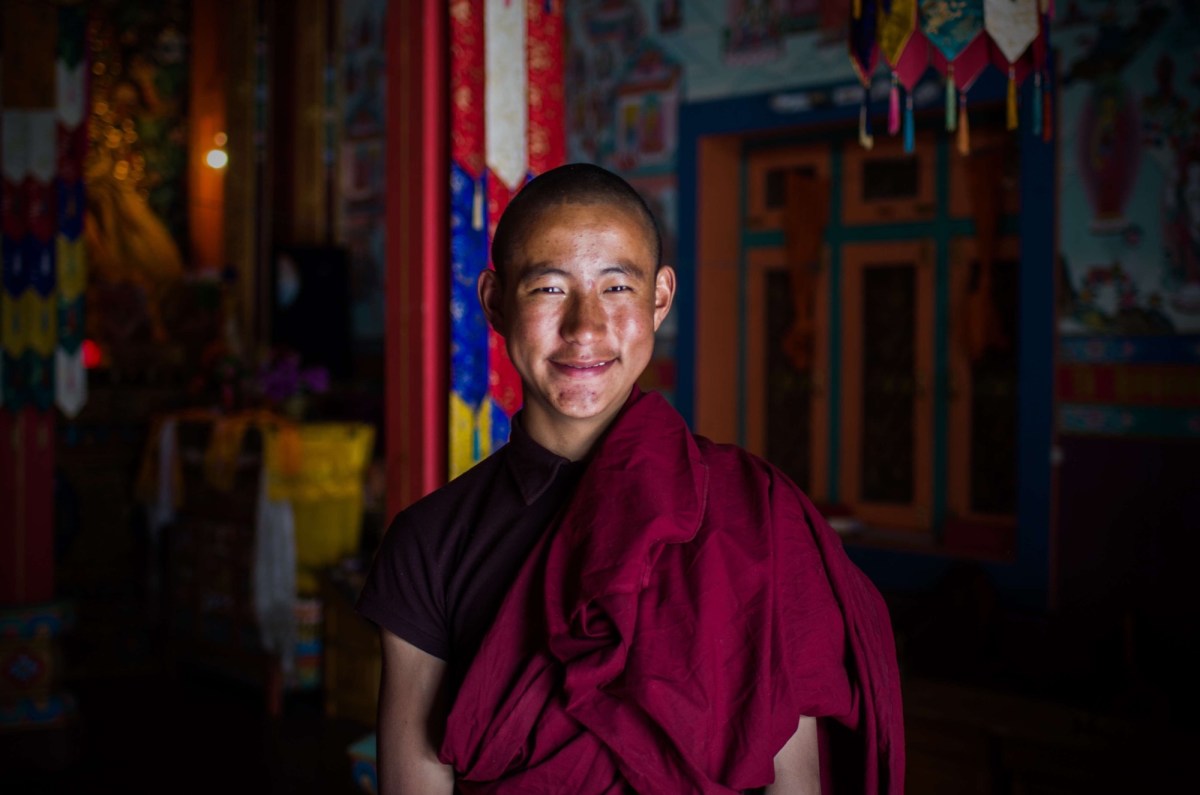
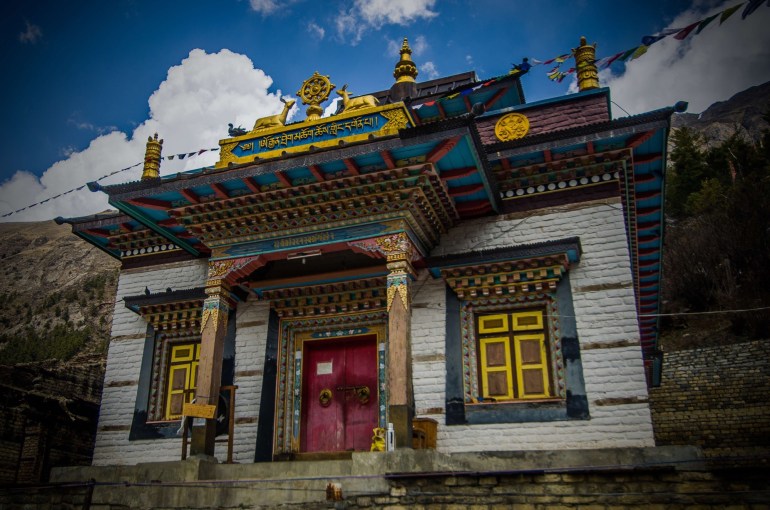
With no small degree of privilege I’m invited into the monastery to a world of warm colour, simple symmetry and a whopping golden buddha. Privilege is just the word, I’m here overlooking the world chatting to a young monk who is going back to Kathmandu very soon to continue study for a further nine years. He laughs cheekily at hearing that Australia has a highest peak of 2280m; his home sits at 3300m. Years of strict study have done nothing to dim a boyish innocence, a beaming smile and youthful inquisitiveness; he wants to know Australia’s capital, do we have open spaces, is it all tall buildings? The inside of the monastery is impressive and the view from the doorstep is nothing short of uplifting, again the flutter of breath and quiver in my stomach grips me as a touch from a desired lover.

Charlie Winn

Buddhist monastry, Upper Pisang, Annapurna, Nepal


After emotionally soaring like the birds before us we’re pushing into the home of snow cured of aches and fatigue, the sharp climb to Ghyaru becomes a relished stroll. Well it’s still pretty tough,  straight up 400m, into genuine altitude air the endless switchbacks are a bit of a killer but nothing is stopping us today. With lungs heaving and legs yelling out to us we can see a stupa above, that’s the town and it’s coming closer and closer, each look back over the valley forces another flutter to the heart. Ghyaru is the highest we’ll be for days still and cresting the final platform of the pyramid like stupa brings gentle flutters of snow to caress our already too perfect world. Tired and uplifted, challenged and privileged, welcomed and inspired, it only seems fitting to arrive at our shelter in the home of snow to be greeted by snow itself.


Like a dam bursting the retained experiences of the last few days comes colliding forth, Ghyaru means yak horn in Nepali, our place is named the more English friendly version, Yak-Ru. With family off studying, two brothers Karma and Raju Gurung prefer the mountain life retreating up the mountain to escape the tranquil but rapidly changing Pisang. With a sunburnt looking face more akin to Mongolian type features Raju’s smile is humble and infectious, such a warm persona to exist in such a cold place. After a good chat he’s off to get food ready before bursting back into the room crying ‘avalanche’. Initially I’m terrified, when a Nepali who lives at 3670m calls out avalanche, I imagine it’s wise to take note. My short spike in awareness ebbs away as he charges outside pointing to Annapurna-2. Like the crashing froth of a wave breaking, a monstrous front hurtles down the mountain to the sound of repeated thunder engulfing a huge part of the mountain in a cloud. Amazing; and it would have a capital ‘A’ even if it didn’t start the sentence.


Charlie Winn

Enroute to Upper Pisang, Annapurna, Nepal


We’ve stepped off of the road for less than a day and already we’ve been in the grip of Pisang’s charm, hung out with a monk on top of the world, scaled to see the home of the Gurung brothers and seen a massive avalanche. We’ve had a dream of Annapurna that has burned for so long quelled so unceremoniously thus far. The feeling of emotional rush feels nothing short of standing in the way of that avalanche on Annapurna, it’s more sensation than we know what to do with. Maybe it’s the beautiful sights, possibly the brush with spirituality, meeting locals might be it, could even be a lack of oxygen in our brains. Whatever it is Thorong La can wait, arrival in Ghyaru is nearly enough to shed a tear, a frozen snowflake tear for us to deliver back to the home of snow.

While you were working – Through the Cracks, Chame, Nepal

Like an apparition there is a glimpse, a suggestion. The world turns again as our booted feet pad the road through the town of Dharapani, but this morning stands aside from the last two. Before us to the west a mountain rears up high, graceful, snow capped and imposing, an awe inspiring view that seems like it’s taken an eternity to arrive. Here we get our first Himalayan lesson, the monster we gaze up to is a foot hill, a mere mound; in the distance a staggering peak reigns over a mountain that seems like it could not possibly be dwarfed but our eyes tell us otherwise. The clouds have parted and as quickly as the gift is granted it’s taken away again, so far this walk hasn’t been such a walking challenge, more a challenge of the mind. Like a welcoming reward for persistence we are treated to a glimpse of what we think might be Annapurna-2, the second highest in the Annapurna range at a whopping 7937m above sea level.


Spurred on by the sight of a real Himalayan giant we surge forward fuelled by a drive we have lacked thus far, the annoyance of the vehicle road is fading day by day as nature takes a gradual hold of its domain the higher we walk. Catching up with the crowds of hikers that skip the destruction below we’re in a greater crowd to accompany the slowly revealing greatness of this place. There’s a bunch of crosses marked over side tracks to give us reason for pause, we think they’re the old track that we would like to be on but we’re hesitant to possibly walk into someones home uninvited. Problem solved, a few porters from another group don’t take a second look and veer off the road up the seemingly forbidden path.


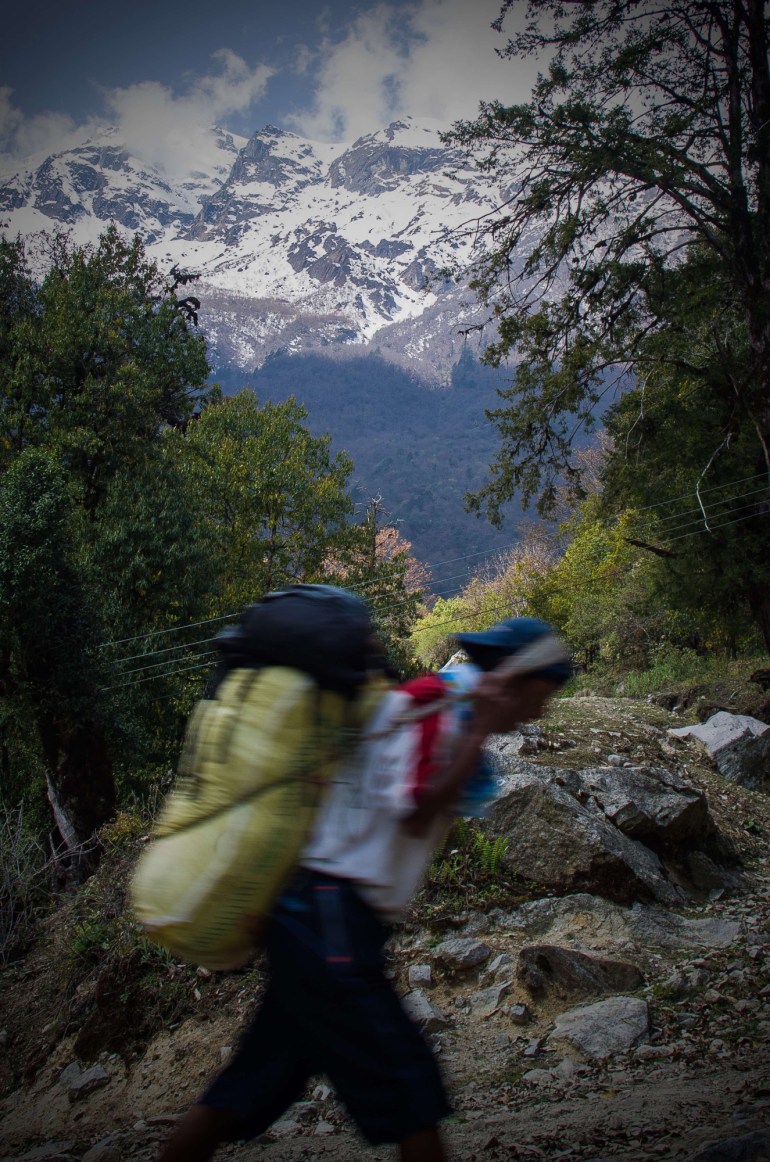
We need no further invitation, up we go on steep stone steps following the porters lumped with huge bags belonging to walkers choosing a more leisurely hike. We keep pace for all of about ten metres, these guys are machines. Every porter we’ve seen is tiny, short of stature with a lean frame but those skinny little legs are somehow built for this stuff. The bags are bigger than they are and with a broad strap lashed over their foreheads they power on at a pace that is nothing short of emasculating, we feel so inadequate.


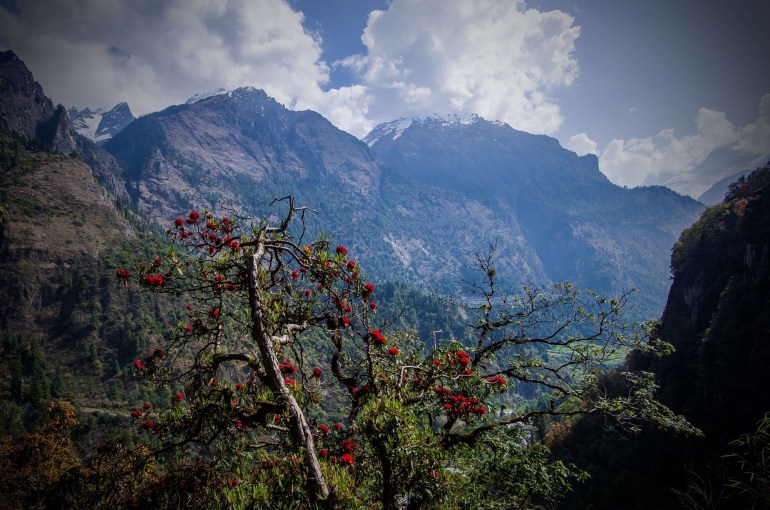
We cross the road at times only to divert straight off it again in no time, at every juncture we’re choosing the forbidding cross rather than the inviting arrow. It defies belief, we wonder why we are being directed onto this road? If Annapurna is drip feeding us encouragement it’s doing a good job of it, we come to our first Rhododendron, part of the reason to come here at this time of year. With a heap of ‘Rhodies’ in our garden the sight of them here where they come from is quite a highlight, the telltale downward turned leaves are crowned by trusses of bright red flowers to set off a backdrop of mountainous immensity, beauty and the beast in Himalayan scale.


This hike is building momentum to us, we’ve only been given the faintest peek-a-boo so far but layers and layers of beauty are being delivered to us as we walk. Oddly enough the next uplifting sight is not a mountain, a waterfall or a tree: it’s a track. Opposite the gorge teams of men lay stones on what can only be a walking path, our hopes soar that one day soon this place can be experienced again away from power lines, hydro stations and a road made for vehicles rather than feet. This does mean that we’re probably here a the worst time, the forgettable stain when development reigns before the corruption can be wiped clean, but we’re happier for the rejuvenation of this area than anything else. In the sighting of one path our own diminished experience is trivialised by the prospect that Annapurna, as a great wonder, might not be sinking into defeat after all.


Like a coma patient slowly showing signs of life our experience in Annapurna is moving from despair and is now showing definite hope. On the entrance to the town of Chame we pass a long mani wall, a sort of median strip loaded with prayer wheels which are more like small drums. Always walking to the left and running your right hand along the wheels the most famous buddhist mantra says a prayer at each turn: Om Mani Padme Hum. It is believed that as the wheel turns the mantra acts as a prayer for you, the six syllables cleansing you from Pride, Jealousy, Desire, Prejudice, Possessiveness and Hatred in this life and rebirth into their realms in the next. The true spiritual meaning is somewhat distant to us but the aesthetic and simple beauty is not. Fine craftsmanship makes a beautiful object and the idea of using a physical prompt to remind us of virtues we should aspire to has a place far beyond a hokus-pocus world of superstition. We spin each wheel as we pass.


Across a bouncy foot suspension bridge that we’re getting quite used to now we take comfort in the wear, hinting at years of stability only to have it taken away by the occasional caved in panel. It could easily be seen as a bit dodgy but inexplicably this place demands nothing more. We saw a team of men chiselling large stones by hand to make a road today, in years from now that road will become a historical marker to a romanticised time as these bridges are right now. Cold rationale can’t articulate the beauty of a prayer wheel, a rough road or a wobbly bridge nor can it quite explain the need to leave some places wild and yet these things seem obvious to a spiritual mind as well as a scientific one.


A great limitation of any mind is the need to conclude, to know. Mystical minds sometimes seek an answer to everything to patch over a fearful space of unknowing regardless of the obvious, liberation delivered in the comfort of blind faith. Plato once said: I am the wisest man alive, for I know one thing, and that is that I know nothing’ liberation in acceptance of the unknown, a pragmatists faith perhaps. I often ridicule the mystical but here the mystical has dug many anchors into rational soil while rationale finds many avenues to appreciate the mystical. The space between the spiritual mind and the pragmatic one melts away into the simple cracks between roughly laid stones. And I don’t care the reason, it’s beautiful and that’s all I need to understand.    

While you were working – Hide and Seek, Dharapani, Nepal

From a nights sleep spent on a pillow of desperate disappointment the sun rises to a day of reclaimed optimism. We’re not really spiritual people but the idealism of Annapurna has reached near sacred status to us, our first day of seeing a desecration of this place was a sharp slap in the face we weren’t ready to accept. With a nights sleep to cast aside four years of idolisation the rubbish bin of expectation is full to over flowing as this day starts anew. There is a repetition in simple life, we farewell our host and tread our first footfalls on a day of walking into whatever we happen to come to just as yesterday and likely tomorrow. In some ways it feels like a first day, once again we feel like we’re getting close enough to Annapurna to sate the years of wanting and still it stays so cruelly just out of reach. 

This bloody road. Unwilling to allow us a gentle emotional escape from the development we share the road with trucks, tractors, bikes and jeeps, acceptance of the road will be our only saviour, ignorance of it just will not do. The road persists unrelenting but the marks of the old walking track are still to be seen, in short time we come to steep climbing steps off the road overgrown with weeds, a past glory just barely hanging on to validity. The road is far easier and faster but each footfall upon it feels conflicted, speed or a wild experience is the internal debate we churn over. The internal dialogue lasts only as long as it takes to look back from ten or so steps that deserve more feet to realise we didn’t have a debate at all. Sticking to the road means ignoring the big cross on our path but it was never an option, directions can be damned.

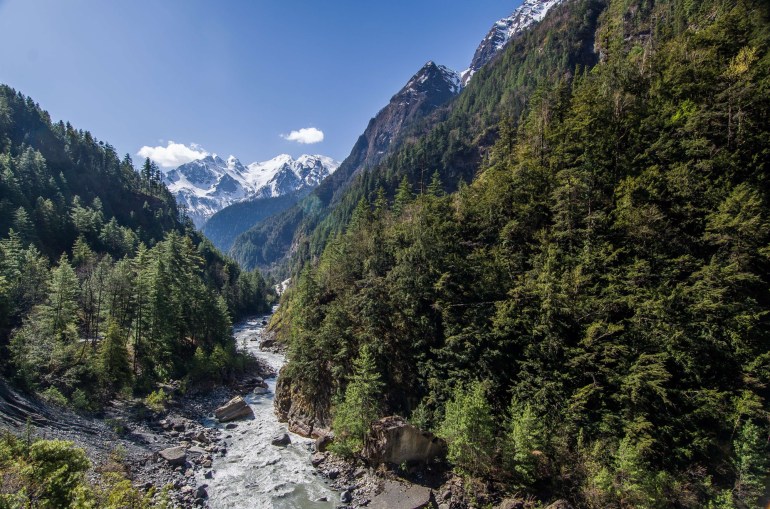
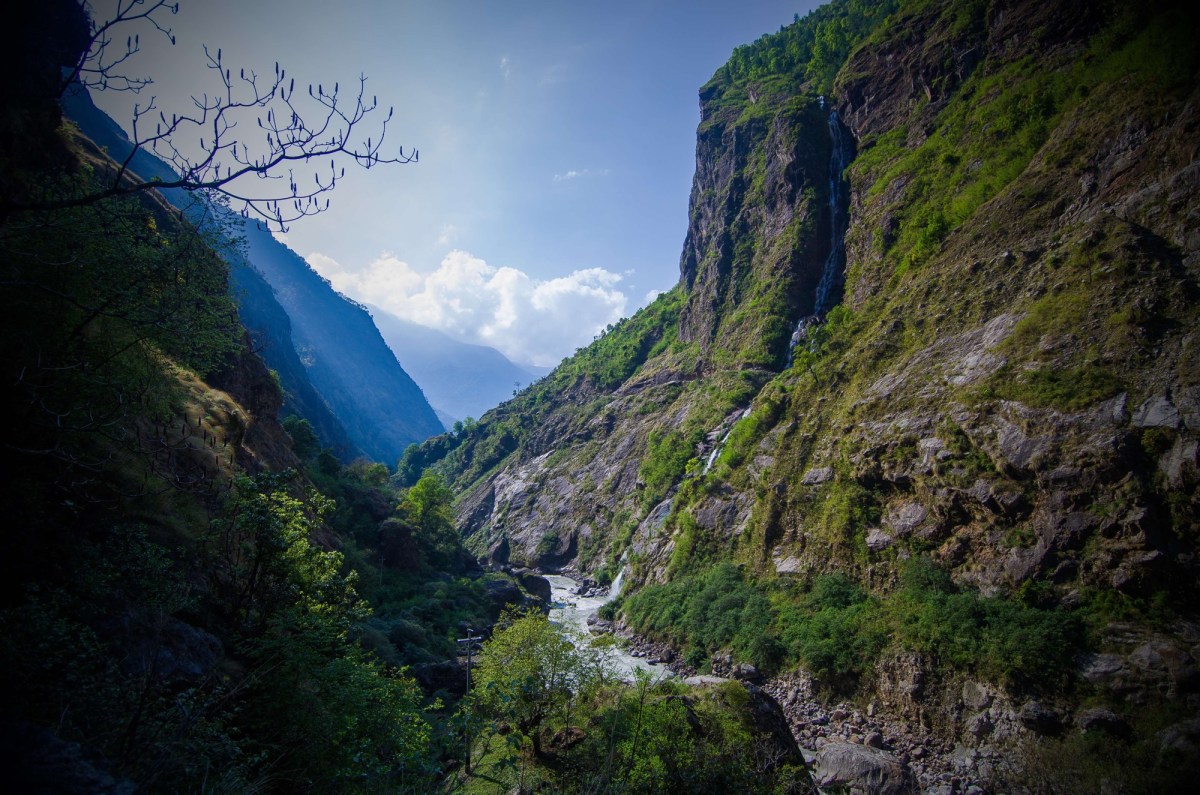
Less than a minute is all it takes to vindicate our decision, the road and power lines are out of sight as we plunge into a dense jungle path that weaves to the contours of the mountain, no blasting required for this track. The open space is no more, we step over small waterfalls and brush through encroaching jungle to a view of the opposite side of the gorge, steep rock cliffs and waterfalls tower above us all around while humanity now seems so distant. We know this is a little detour and we’ll be back on the road again soon but that can wait, we wander through a town of about four dwellings that isn’t on the map. In this most violently steep place people carve out a niche any way they can, this is a discovery we dared not dream of finding. Faded paint on flaking timber and stone walls with age is measured in generations rather than years closes in on a main street of rough laid stone. A quick chat with an old lady gives us a glance with the most traditional and remote life we’ve seen, the road so close seems so far away.

  
We do eventually make it back to the road; where Toyota’s dominate the rest of the world it seems that Mahindra is the truck of choice here, sure enough another Mahindra rattles past with about seven people crammed into five seats. In no time we take another blessed detour to break off the road, the major works have given way at least for the moment so getting off the road is recapturing some small sparks of what we came to see. Huge mountains reach above us in dramatic fashion to shower down powerful waterfalls at every turn over craggy rock peaks too steep to seem real. While the rock faces we look at are dramatic the raging waterfalls pounding over the top hint only to a grander world beyond, and unbelievably above, that water is melting from somewhere. 

On the road again, we’re slowly releasing our hatred of this road even though appreciating the easier walking still seems quite a way off. It is on the road though that we see a working gang producing aggregate for, we assume, the road; possibly a little local income is one positive spin off for this scar we can’t yet find any love for. When I think of producing aggregate I don’t however think of boys, young teenagers, sitting with a hammer and smacking rocks till they split into small enough chunks to go on a pile. Heap upon heap of aggregate stones line the road in what must have taken months to produce, an hours work for one machine played out in a manner that defies the industry downstream. Namaste goes the local greeting as one boy launches back a ‘cheers’ much to the hilarity of the crew. It’s hard, oppressive work but a mirth and good humour abounds, a positive mindset in a scene of harsh child labour where we see no reason for joy. 

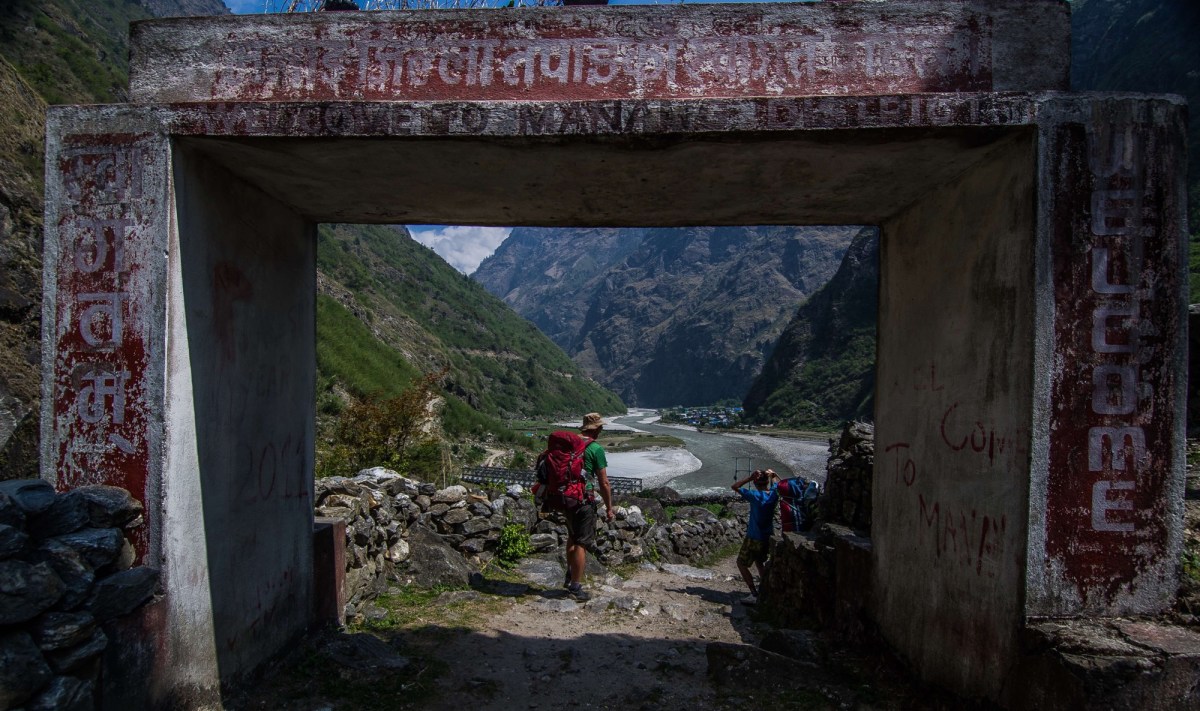
Four hours of hiking brings us to a kani at the crest of a small rise and beyond an open flat pan that holds the town of Tal. A kani is essentially a buddhist archway with three shrines at the top to cleanse the spirits of those that walk through. Through the kani, spirits cleansed, the river opens up to a flat pan straddled by the town of Tal, quaintness set amongst severity that is starting to become the theme here. Through the town of people politely asking us to stop we eventually settle in a small family home of gaudy bright colours that are the fashion for any Nepali with the means to make it so. Soup and momo’s go down a treat but in no time we must move on, a nearly perfectly vertical wall has laid ahead of us for some time now, a precipice abutting the river that exemplifies the drama and severity of this place. we can’t take our eyes off it. 

Like it was all planned this way the immense cliff we have been looking at for hours lays across the river from our guesthouse in Dharapani. The milky churn of snowmelt water roars a continuous hum before a rock wall that seems to have no top, a fully arched back and craned neck is required to see the end of rock and the start of sky. In 24 hours we’ve wiped clean the desperate sadness of yesterday and we’re starting afresh. Thick clouds hide what the waterfalls hint must be there and on this new start it feels like we’re edging forward playing a childlike game of hide-and-seek. The blasphemy of development seems to be lessening as we come closer and closer to finding our so far hidden idol; Annapurna, come out come out wherever you are.  

While you were working – More Wrapping Paper, Jagat, Nepal

Four years of Christmas like anticipation has banked up, the boots are laced  up, packs are packed and I don’t care anymore that I woke up this morning with signs that I shared a bed with a rat last night. The first footfalls take place from the wobbly timber guesthouse and onto the rough stone road to a place dragged from a dream. Well we will be soon, the excitement rages unabated but the visual scene resists our hopes, the road that we thought stopped at Buhlbuhle continues further nowadays so it’s a construction road rather than a hiking path that we now walk. Perturbed yet undeterred we stride on a little quicker than we should, there’s an inspiring world ahead, we just know it, we just need to get through the wasteland that is a Chinese construction company’s playground. 

Annapurna so far is a gift that continues to stay just out of reach, at every point we permit ourselves a hint of joy the promise slips just beyond reach, always perceivable but so far untouchable. Metaphorically we close our eyes and march forward, we’re in a fantastic valley but for now we don’t notice much of it, our world is concrete, bulldozed roads and gaudy signage sliced by the telltale arc of power lines overhead. A procession of construction promises to signal the end of development where nature regains its place at the top of the heap, for now though it’s smothered and scarred. 

At the sight of a hydro-electricity dam we veer right off the path, the biggest piece of construction to date spells a reprieve as we venture into an eternity of terraced mountainsides. So rapidly does a natural world reclaim its domain that we soon forget about the construction, so far ahead are the big mountains and high passes but here already a charm and nostalgia overruns the valley. Agriculture abounds, every spare space is terraced into fluid organic shapes with whole mountainsides bursting with produce. As construction dwindles so does the rubbish, the wild world losing the battle below fights back so vehemently when given the chance. 


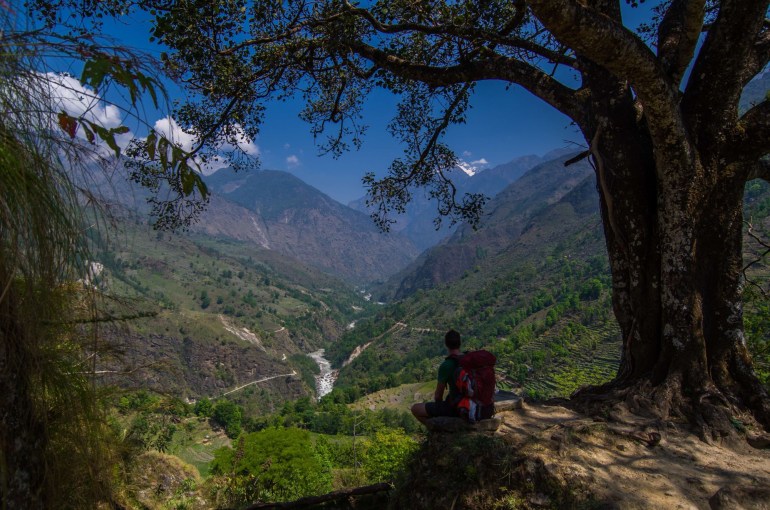
At a small stop for water we have a minute to take in the scene, a scooped out depression in the steep hillside forms a natural amphitheatre too steep for any gallery crowd. There’s a terraced farm leading up to our path and carrying on up the hill as if in one motion, each terrace ends in a crowning lip that sits a matter of centimetres above the bed of soil. Weeds grow out of either side of this natural retaining wall with a padded smooth walking path along the highest point free of the weeds that hold the soil intact.  A root vegetable I haven’t seen makes up the majority of the hillside along with wheat, corn, cabbage, barley and cauliflower, this village of no more than five houses is surrounded by a rich bounty of food. We often think of terms like organic, pesticide free, non-GM, sustainable and all other buzz words but here it’s just called food. A warm sun beats down to cut the chill snap in the air, agriculture is booming and no one walks faster than they have to. I take a seat on the smooth edge of the terrace to hold tight to the narrow but so romantic view of life this simple before a need to move on takes it so unceremoniously from me.

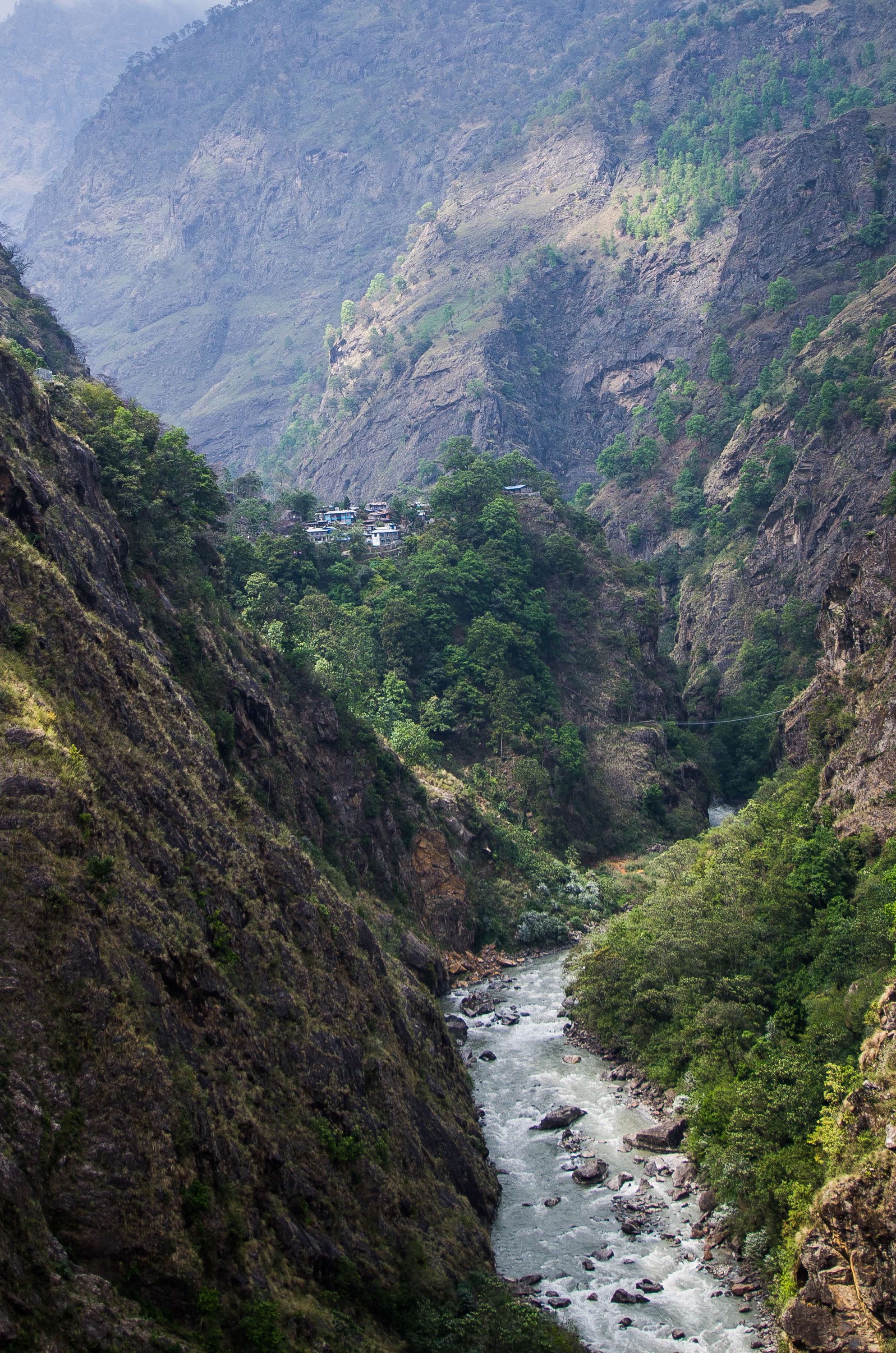
Village after village clings to the ever steepening cliffs as the valley narrows to a gorge. winding through rough stone walled paths we weave not so much past villages but through them until Ghermu, our lunch spot. Over momo’s (local dumplings) and curry we have a chat with the guy who owns the restaurant which is really just his house. We ask about the road and disconsolately he replies so simply ‘It’s very bad, we like a simple life’. There’s a tight debate in our minds: developing this valley seems a travesty but on the  other hand it’s not our place to deny others luxuries we take for granted, it’s their valley after all. Hearing this lament that was mirrored by last nights host though deflates the  sense of balance in our minds to leave an unchallenged negativity to this development. To our shock he tells us that the road now goes all the way to Manang, the day six destination of our hike. We’re shocked and dumbfounded as a little piece of our dream shatters on the floor like a dropped glass at a party.


Farewelling our lunch host we plunge further on; prophetically not long after Ghermu the path crosses the river on a swinging footbridge, olive-grey water churns in a milky froth below as we tiptoe across. We’re now on the road. In the dusty rattle of a jeep bundling up the road the cloud we’d floated on through the villages precipitates and disappears into the sandy road that seems so out of place here. From a concerning start we were delivered to a kind of nirvana and wrenched so vulgarly back again, the gift of Annapurna has been teasing for so long and the closer we get the more it feels like it might never be ours. 


The next two hours walk to Jagat is more of a walk into despair. To the whining hum of a power station we kick at the stones on this abomination of a road while the vistas are scarred by pipelines, concrete retaining walls and sub stations. There’s a scene to inspire awe here somewhere but all we can feel at the moment lies in desperation and sadness, we’re devastated. We tell ourselves that higher up it will get better, later in the track it will be less developed; and it probably will but now that’s cold comfort so hard to hold. We know that the great Annapurna range is still there but the worlds greatest trek that was around 20 days has had it’s head and tail cut off and that’s the best scenario we can hope for. 

Saddened beyond explanation we arrive in Jagat for the night, amazingly enough our guesthouse has WIFI, for the first time on this trip I don’t want WIFI. There will be wilderness up ahead the likes of which we have come for but for now we’re depressed and dismayed. Four years of looking on a map to Annapurna may just become the greatest disappointment of this year. But a spark still flickers, this is only day one and wild places are not so easily cowed, we know this but that fight just seems so far away. Four years of hope refines to an afternoon to change perception, an adjustment too quick for such a shock and a shock too big for the timeframe needed to accept it. We’ve waited so long to open the gift that is Annapurna and now we just see that oldest of practical jokes, just more wrapping paper and a scratchie that has already been scratched to reveal no winnings. Hopes lie in the shreds of wrapping paper we’ve already discarded, tomorrow promises another gift to unwrap but without the hopes that belong to the activity. 

While you were working – Apple Pies, Buhlbuhle, Nepal

After a hateful exercise in restraint we’re finally off to Annapurna today, just saying that seems forbidden such has been the wait. We’ve had a great time in Kathmandu but Nepal has always been about Annapurna, one of the few big items on the travel list that was never at risk of falling foul of the budgeting razor when the planning was taking place. For so long the Himalayas have been a region of the highest romance for these alpine junkies and Annapurna is, along with Everest base camp, the big one, the one we simply have to tick off the list. In truth Annapurna has a decent claim to being the greatest, grandest trek in the world. Romantically to those in the know there is a slang term for treks like Annapurna, the apple pie trails, due to the unwavering availability of apple pie in the guesthouses you stay at. 

Apple pies here we come, it’s a long bus ride to Buhlbuhle, the first town on our route into the himalayan wilderness and a natural world escape beyond anything I’ve experienced. The formerly dampened dream now burns out of control after being so moderated, even the dodgy local bus isn’t enough to dampen our spirits. On this trip we’ve become experts in bus travel but immediately obvious is that there’s nothing quite like this in the long repertoire of our bus resume, a new experience unfolds in an annoyingly long prelude to Annapurna. It’s on this bus that we face another true Asian cliche, they can stuff more people in a smaller space here than anywhere else in the world, it’s a true art; a true personal space destroying artform.

We watch the world go by in various degrees of filth and squalor, the thought I can’t shake is that we humans really can be disgusting animals at times. In contrast we see a constant procession of people washing in public taps, personal hygiene seems to be a huge battle in this world where hygiene seems so unattainable. Bustling through the heavy choking air of Kathmandu our bus conductor struts his stuff, this guy is a real human study all on his own. With a feminine masculinity that only sub-continental men can really reach this pubescent mustachio’d diva is a cross between an early career Diana Ross and a late career Prince. At any stop Diana dashes from the bus to cajole and bustle people onboard, he’s lively, motivated and clearly on the ball, she doesn’t miss a trick.

With the filthy air of Kathmandu easing we exit the grossly over populated valley and in turn the over population decides to board our bus. Miss Prince basically plays human Tetris with scant regard for the shape of the people, theres always space for one more; always. In seats made for Nepali’s who are a shade behind Ecuadorians in the diminutive height race it’s safe to say that Diana ‘Prince’ Ross is over estimating my skills at the game of twister. It’s 90’s cliches roaring back to a bus ride of cultural experience quickly losing it’s shine. 

And on and on the saying goes; six hours become eight, a kid vomiting next to me still smells bad as ever and we’re sardined into a can of gaudy coloured robes, gold jewellery and humid humanity pressing closer than humanly habitable. Through the muddy windscreen of this trip we maintain eyes on the road, Annapurna lies unerring before us to lift us above this trip that would otherwise seem horrendous. Past the checkpoint to the Annapurna region and waiting for our favourite musical gender illusionist to rustle up more fares we’re onto a dodgy dirt track, Buhlbuhle and Annapurna proper. Originally the hike went from the checkpoint at Besi Sahar but development and progress has made the alpine track into a dusty road, not what we had in mind so Buhlbuhle it is.

Charlie Winn

Morning view from Heaven Guesthouse, Buhlbhule, Nepal

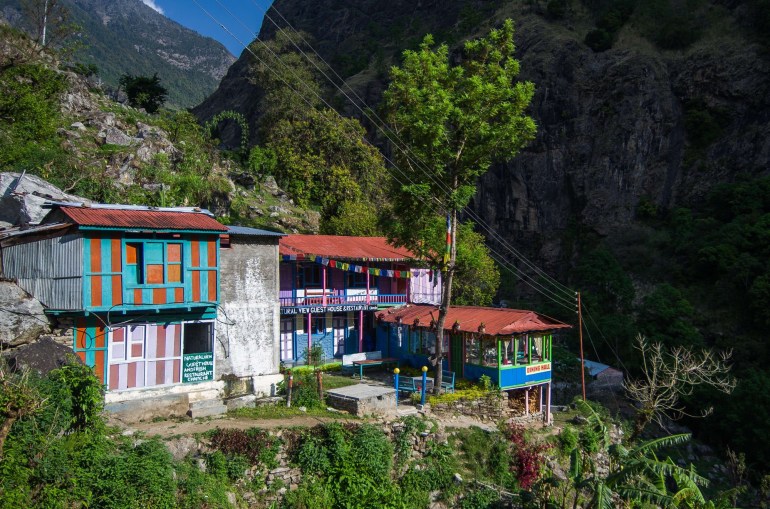
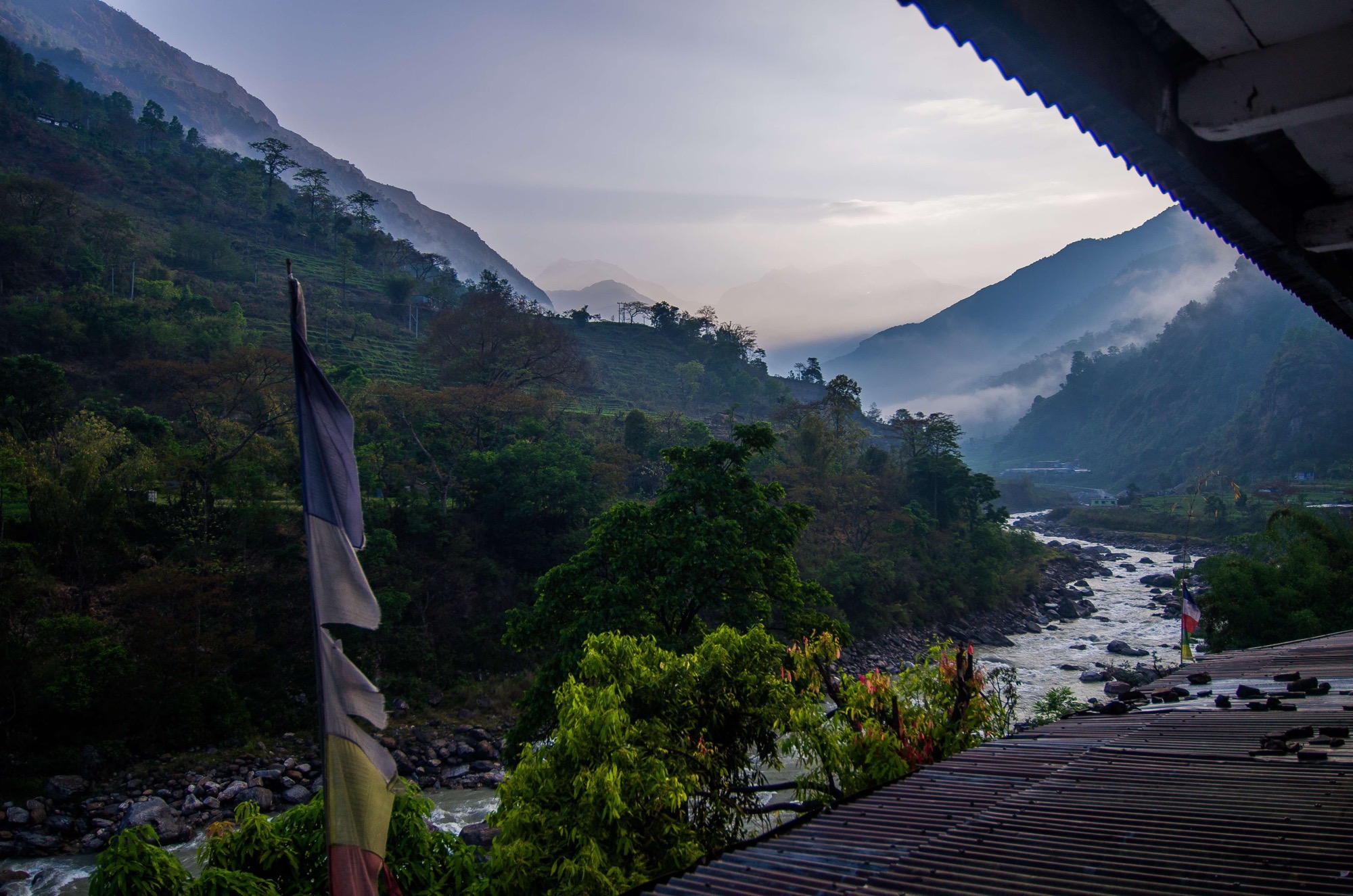
It’s the Christmas present that has waited under the tree for four years, Annapurna now lays before us in a pile of shredded gift wrapping and ribbon stripped of mystery. The ginger tea uplifts our spirits after the bus trip welcome to Asia we didn’t want as we overlook a raging river that thrums the enticing tune of the Himalayas. Heaven guesthouse is also my first try of the famous Dalbhat, simple lentil curry with rice and roti that forms the staple for Nepal, particularly in regional areas. With a beaming humour our host tells us a local rhyme: Dalbhat power; go to the toilet, then you have a shower. And we’re hiking for twelve days, this should be fun. 

Our host leans in to have a look at our photos, she’s interested, interesting and utterly charming, an emblem of simple rural life’s virtues so far from the hectic aggression of Kathmandu. Showing a photo of a Hindu idol in Kathmandu, Charlie asks this Buddhist lady what god it is. ‘We’re buddhist’ she replies in short good humour, oops. Sandwiched between buddhist Tibet and the myriad of Indian gods Nepal is a mash up of salvation for those who choose to seek it. Kathmandu remains a magnet for spiritual nomads but for us the mountains remain our semi spiritual equivalent, mountains are the idols for us to chase. Be it spiritual or otherwise, there’s something in Nepal for the masses and the rest, we’re in search of that buzz, that thrill when a wild world reaches out and grabs you tight. Annapurna we’re finally here, send out your apple pies.  

Newer Posts
Older Posts